For families traveling from Bangkok to Ayutthaya, the practical choice depends less on one ideal mode and more on how the whole door-to-door trip feels. Start by deciding whether you prioritize minimal transfers, easy luggage handling, fixed departure windows, or a scenic, slower trip that can double as sightseeing. Trains are familiar to many families for space and predictable stations; coaches offer direct hotel-to-hotel transfers in some cases; ferries are useful for short river links if your itinerary includes waterside stops; and private car or taxi combinations can save time but add cost. This guide compares those approaches, shows how to weigh terminal fit and transfer friction, and gives a disruption backup plan so families can choose a route that fits kids’ moods, nap schedules, and luggage needs.
How to choose between rail, coach, ferry, and private transfer
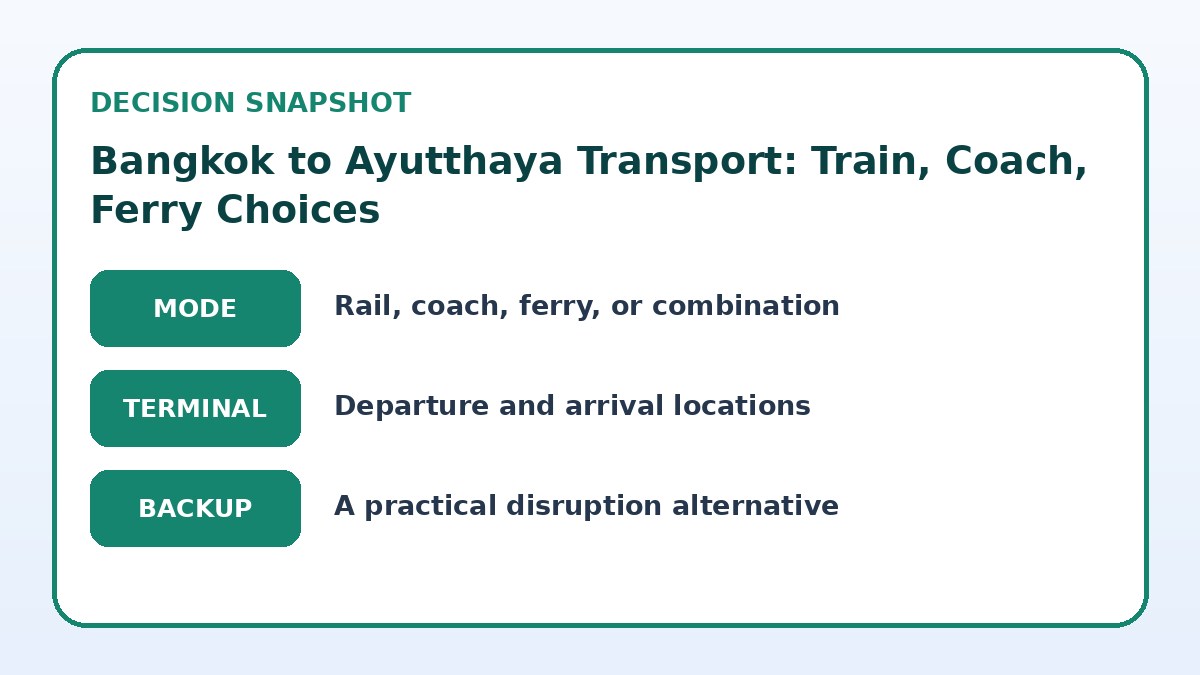
Begin with the endpoints: where you are staying in Bangkok and where you want to arrive in Ayutthaya (historic centre, riverfront hotel, or a specific attraction). If your Bangkok pickup is near a main railway station and your Ayutthaya plans are near the station, rail can cut door-to-door friction. If hotels or family-friendly meeting points are farther from stations, consider coaches or direct taxis that remove that last-mile hassle. Ask: which mode reduces waiting with kids and keeps total transfer steps under control?
Next, stack the family priorities: luggage volume, stroller needs, nap windows, and motion tolerance. Trains usually allow families to move around and store larger luggage on board or on platforms, but require getting to and from stations. Coaches may pick up or drop off in tourist zones and sometimes at hotels, lowering walking and extra rides. Ferries are best as part of a mixed plan when you want a waterside arrival or to break the journey into a relaxed leg. Private hire gives the smoothest door-to-door experience but costs more and may be impacted by traffic.
Choose the end-to-end journey plan
| Journey approach | Best for | Friction to check |
|---|---|---|
| Train-focused itinerary (station-to-station) | Families who value onboard space, predictable station schedules, and easier movement during the ride. | Requires reliable last-mile transfers and may mean extra walking or tuk‑tuk rides at each end. |
| Coach/direct bus itinerary (hotel or tourist drop-off) | Families wanting fewer transfers and a drop-off closer to tourist hubs or hotels. | Subject to road traffic delays and may have limited restroom access during the trip. |
| Mixed route with ferry segment (land + river) | Families looking for a scenic journey and a cooler, more relaxed travel leg between sites. | Often requires coordinating land transfers to piers and managing luggage on and off boats. |
| Private car or taxi door-to-door | Families prioritizing time savings, direct hotel-to-site transfers, and flexible departure times. | Higher cost and variable travel time in peak traffic; verify luggage capacity beforehand. |
Check live intercity options
Look beyond the ride itself and compare terminals, transfers, luggage, and arrival fit.
Terminal fit, luggage and transfer friction
Terminal fit means checking how close the arrival and departure points are to your final on-foot destination. A train that arrives at Ayutthaya station may still require a tuk‑tuk, taxi, or short bus ride to reach temple complexes or riverside hotels, which adds friction for families with small children or heavy bags. Coaches sometimes stop in areas designed for tourist pickups, allowing shorter last-mile trips. When planning, map each terminal to your hotel and estimate the number of extra transfers rather than assuming a station-to-site transfer will be quick or easy.
Luggage handling is equally important for families. Trains generally allow more relaxed luggage placement but watch for stairs and platform gaps; bring a lightweight stroller if you’ll need it. Coaches often handle larger suitcases better—some have underfloor storage—but you will need to be present to load and retrieve items and allow slightly longer boarding times. For mixed itineraries that include ferries, confirm where luggage is stowed and whether you’ll need to carry bags between pier and vehicle; minimizing heavy handoffs will keep the trip smoother for children.
Timing flexibility, scheduling, and family rhythms
Families travel by routine; build your decision around nap, meal, and attraction timings rather than only service timetables. Trains can offer predictable departure and arrival windows, which helps with meal planning and avoiding peak heat at ruins. Coaches may offer multiple daily departures and sometimes flexible pick-up points, but road traffic can blur timings during rush hours. If your schedule is tight around a guided tour or timed-entry site, favor options with buffer time or consider a private transfer so setbacks won’t wreck the rest of your day.
Ferries and scenic legs are tempting for the experience, but align them with when kids are most comfortable being awake and engaged. A mid-morning ferry can be a pleasant break, while an afternoon water leg may conflict with nap schedules. Always build at least one buffer in either direction for delays and allow extra time for restroom stops, snacks, and short play breaks. The more flexible the family timetable is, the more options you’ll have—but tight schedules call for the most reliable door-to-door choices.
Compare the practical alternatives
Use the final page to confirm what is actually offered on your dates and save a workable fallback.
Intercity travel checklist
- Map your Bangkok accommodation and Ayutthaya arrival point to estimate door-to-door travel time, not just ride duration.
- Confirm station, terminal, or pier addresses in Thai and save them offline for driver or taxi handoffs.
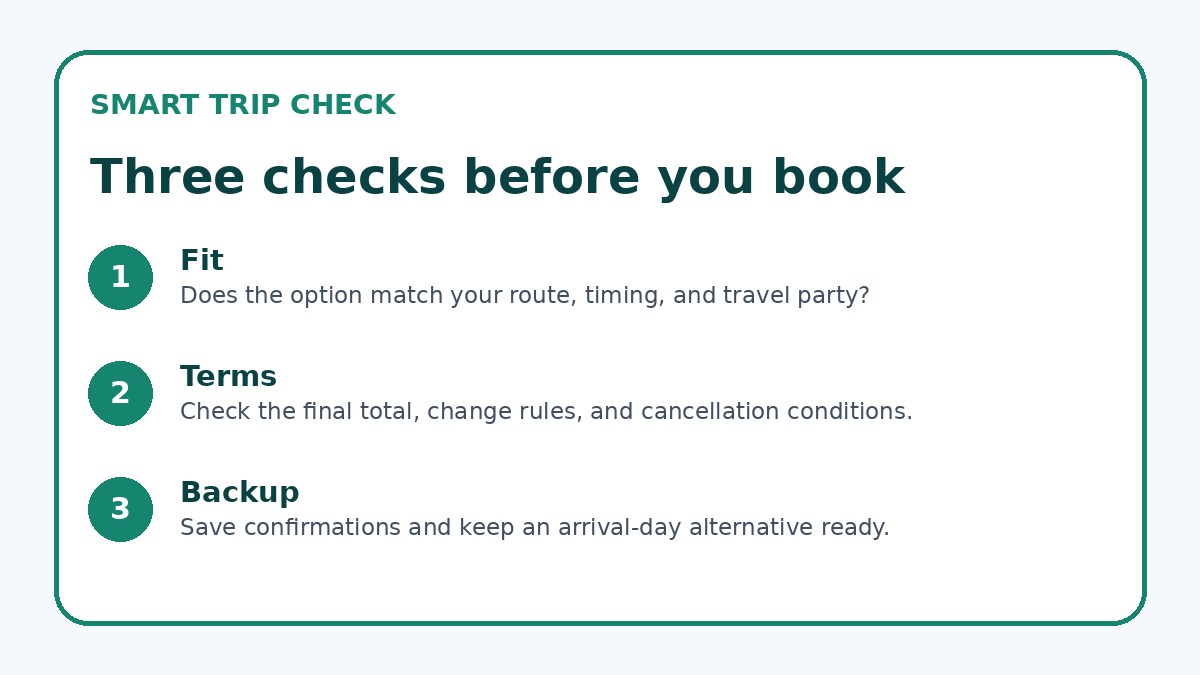
- Check luggage allowances and stroller policies on the final booking page before you purchase tickets.
- Plan buffer time for at least one missed connection and know a local taxi or ride-hail option as a backup.
- Align ferry or scenic legs with your kids’ nap and meal times to avoid travel meltdowns on board.
- Pack a compact first-aid kit, snacks, and wet wipes for transfers where restroom access may be limited.
Disruption backup and practical safety checks
Have a clear backup plan in case of cancellations, heavy traffic, or tired children. Before leaving, note a local taxi service or ride-hail option you can call if a late coach or train causes a missed connection. If you choose a scheduled public mode, find the next two plausible alternative departures and how you’d handle the extra transfer time. Keep digital and paper copies of reservation references and the local address in Thai for drivers to avoid translation issues at pickup.
Safety checks are simple but vital for families: bring a small first-aid kit, ensure everyone has ID and emergency contact numbers, and confirm mobile coverage along your route. For river segments, verify lifejacket policies for children and whether short piers or stairs might be slippery with strollers. When booking, check the provider’s final booking page for baggage rules, boarding times, and exact terminal locations rather than relying on third-party summaries; Trip.com can be used as one of several places to compare current availability and conditions.
Rail & Intercity Transport questions travelers ask
Is the train from Bangkok to Ayutthaya the easiest option for families with young children?
Trains can be very family-friendly because they allow kids to move around and often have onboard toilets, but ‘easiest’ depends on door-to-door access. If your Bangkok hotel is close to a major railway station and your Ayutthaya plans are near the station, the train reduces extra transfers and can be a calm travel environment. However, if either terminal is far from your hotels or you have heavy luggage or a stroller, a coach or private taxi that drops you nearer your final stop may feel easier despite the road journey. Check the station-to-hotel transfer time and accessibility before choosing.
Can I combine a ferry with a train or coach for a more scenic arrival in Ayutthaya?
Yes — combining modes is a good choice if you want a waterside approach without giving up predictable timings. Plan the land legs so you have comfortable transfer windows and minimal luggage handling at piers. Ferries are best when scheduled during times the family is awake and relaxed; avoid forcing a ferry into a tight schedule with little buffer. Always verify where ferries dock, how you reach nearby attractions, and where luggage is stored, and use the provider’s booking page to confirm exact transfer points and boarding procedures.
What should I verify on the provider’s final booking page before choosing a mode?
On the final booking page, check the exact departure and arrival addresses (not just station names), luggage allowances, stroller or child-seat policies, boarding and check-in times, and any required ID or documentation. Also review refund and change policies in case family plans shift, and verify whether seats are reserved or free seating. If the ride includes a pier or river segment, confirm boarding procedures and whether children need lifejackets. For comparisons, you can use Trip.com as one place to see current availability, but always rely on the provider’s final details for operational rules.
Final decision note
Families choosing Bangkok to Ayutthaya transport should decide by comparing total door-to-door time, the number of transfers, luggage effort, and how the trip fits family rhythms rather than picking a mode for its headline speed. Trains work well when stations align with your hotels and you want room to move; coaches are useful for direct tourist-area drop-offs; ferries add a scenic leg but need careful coordination; and private cars deliver convenience at a higher cost. Plan backups for delays, verify exact terminal addresses and baggage rules on the booking page, and schedule with children’s nap and meal times in mind. With those checks, your family can pick the option that keeps travel stress low and sightseeing time high.
Continue planning
Check current options and final conditions
Use the provider page to confirm live availability, the final total, cancellation terms, and every condition that matters to your trip.
This evergreen planning guide was created with AI-assisted drafting and a structured quality review. It does not display live prices, schedules, availability, visa guidance, or provider rankings. Verify current details before booking. Some links are affiliate links; we may earn a commission at no additional cost to you.