Practical answer first: for most families, choose the transport mix that minimizes transfers between door and final destination, balances luggage and kid-friendly space, and keeps one clear disruption backup. That usually means picking either a direct coach or train if you want fewer changes, or driving yourself when door-to-door convenience and flexible stopovers matter most. A mixed plan (drive to a regional station, ride the train, then local taxi) works well when you want to enjoy a short stop en route without carrying all luggage. Start by mapping family pick-up/drop-off points, preferred stopovers (parks, farms, or museums), and how many bags, prams or car seats you’ll manage. This article explains terminal fit, luggage friction, timing flexibility and disruption backups so you can build a robust multi-city ground-transport plan for your family.
Choosing between rail, coach, car or a mixed plan
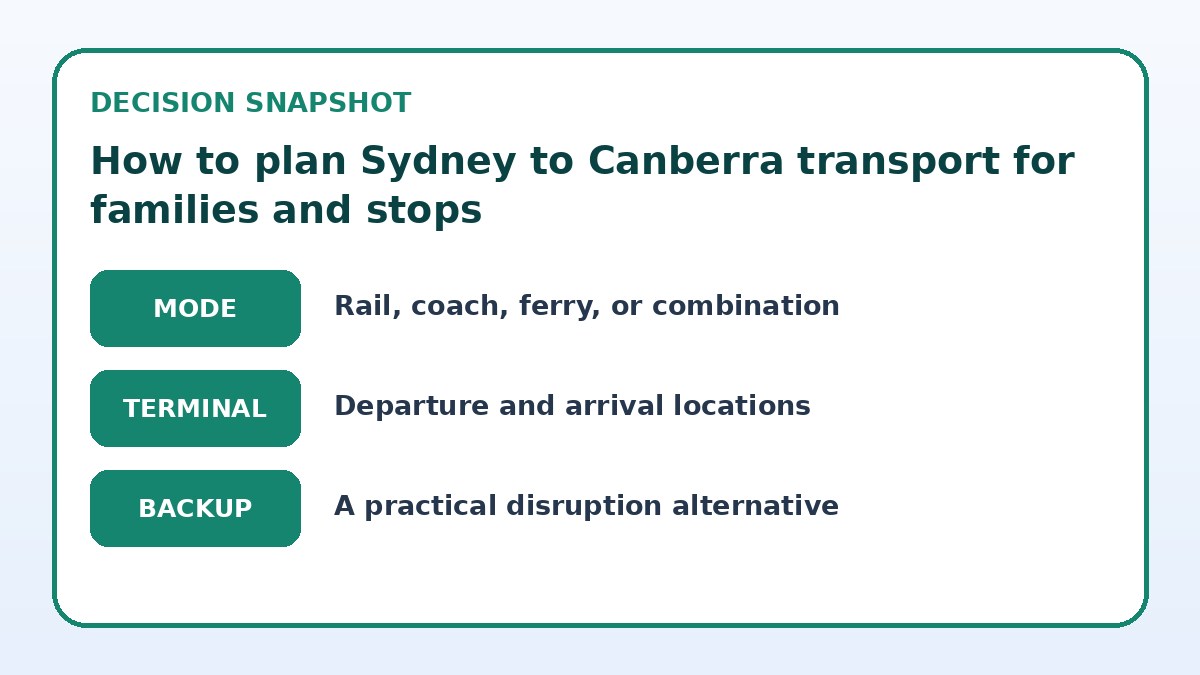
The first decision is which mode reduces overall hassle for your family. Trains and coaches remove driving stress but bring transfer points and station walks; cars give door-to-door control but shift driving and parking to you. A mixed plan—driving to a regional park-and-ride or local station then taking a train or coach—can combine the strengths: fewer urban congestion hassles and a comfortable longer leg for kids. When assessing options, list the number of seats, child-seat requirements, luggage volume, and how often you want to stop for food, playtime or changing nappies.
For families, consider comfort and predictability above theoretical speed. Trains often offer more space to move and toilets onboard, while coaches usually have simpler point-to-point timetables and fewer intermediate transfers. Driving remains the most flexible for unscheduled stops and carrying bulky items like bikes or large prams. A mixed approach becomes attractive when you want to sightsee en route without the fatigue of a full drive, but it does add transfer friction—folding strollers, hauling bags and coordinating multiple check-ins are the tradeoffs.
Choose the end-to-end journey plan
| Journey approach | Best for | Friction to check |
|---|---|---|
| Drive entire route yourself | Families needing door-to-door control, lots of luggage, and flexible stopovers. | You handle all driving, parking and longer stretches without onboard facilities. |
| Take train or coach direct | Families wanting to avoid driving and reduce stress of navigation. | Less door-to-door convenience and potential walking between stations and accommodations. |
| Mixed plan: drive to station or park-and-ride, then rail/coach | Those who want a scenic break or to avoid urban driving while keeping luggage control. | Adds transfer steps—folding strollers and moving bags can be awkward with kids. |
| Public transport plus local taxi for last mile | Families who prefer longer leg comfort but need direct door access at each end. | Extra cost and coordination for taxis; verify child-seat availability in advance. |
Check live intercity options
Look beyond the ride itself and compare terminals, transfers, luggage, and arrival fit.
Terminal fit and luggage/transfer friction
Terminal fit means how well each mode’s start and end points match your family’s door locations. A centrally located train station or coach terminal may be walkable from accommodation, reducing taxi needs; suburban departures often require a short drive or rideshare. Check whether terminals have level access, lifts or ramps for prams and how far your family must walk between platform, bus bay and the street. For families with small children, even a few flights of stairs or a long corridor can turn a simple transfer into a major chore.
Luggage friction includes not just the number of bags but how you move them: can a stroller fold easily and be stored onboard? Will you need to lift suitcases onto racks? If you rely on a car seat, check whether it must travel in a vehicle the whole way or whether local taxis can legally and practically accommodate it. When planning transfers, factor in extra minutes for securing luggage, using lifts, and asking staff for hands-on assistance—these are the small margins that keep children calm and schedules realistic.
Timing flexibility and family pacing
Build your schedule around how your children travel best. Early departures avoid peak traffic but may conflict with sleep routines; mid-day trips often suit mealtimes and nap windows but can hit traffic. If you’re using public transport, pick services with buffer time between connections to absorb minor delays and give time for restroom breaks, snacks and stretching legs. For driving, plan frequent short stops at safe, child-friendly rest areas rather than long marathon legs that exhaust drivers and passengers.
Consider daylight and activity timing when selecting stops on a multi-city route. A midday stop at a playground or visitor centre can turn a transfer into a highlight rather than a headache. If you plan to sleep during a long leg, prioritize modes that allow reclining seats or assign drivers in rotation. Wherever possible, build slack into arrival times at your overnight stop so you’re not racing with tired children and can check into accommodation calmly.
Compare the practical alternatives
Use the final page to confirm what is actually offered on your dates and save a workable fallback.
Intercity travel checklist
- Map door-to-door legs and record exact terminal addresses and likely pickup/drop-off spots for both ends.
- Count bags, strollers and car seats; decide which items must stay with you and which can be checked or left in a vehicle.
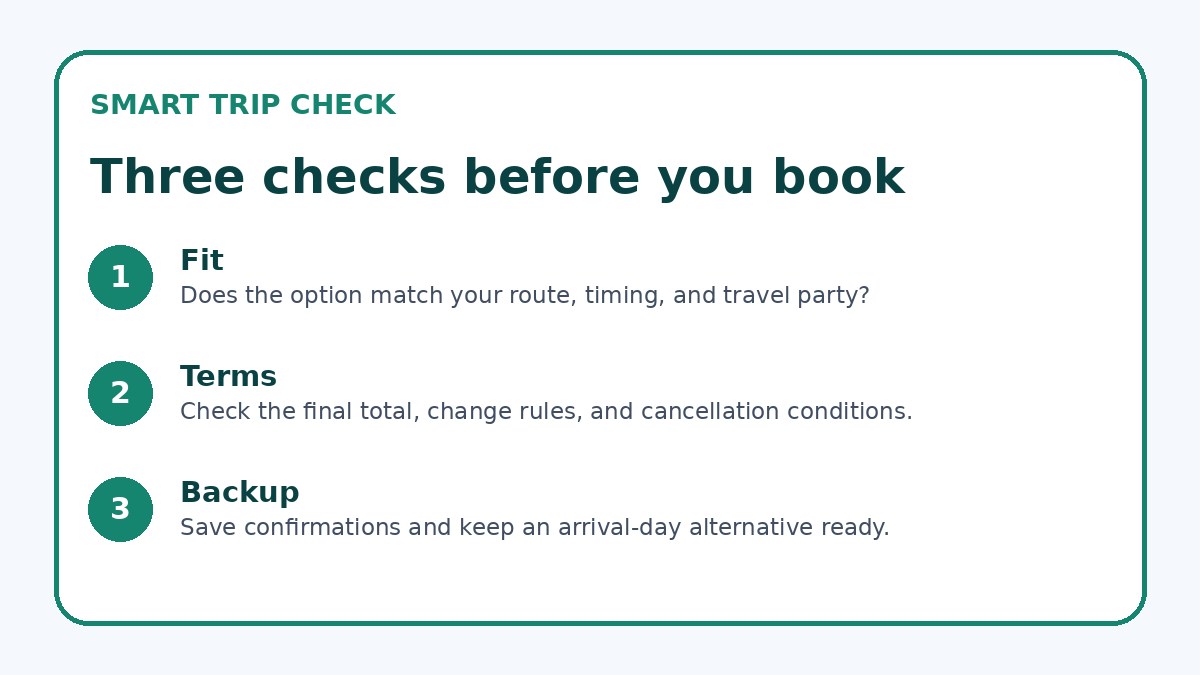
- Identify one disruption backup per major leg and note contact numbers or apps you’ll use to change plans.
- Reserve family seats or request assistance where available, and verify boarding requirements on the operator’s booking page.
- Schedule buffer time between connections—plan for at least one deliberate extra stop for snacks and toilet breaks.
- Confirm last-mile options at arrival: taxi ranks, rideshare coverage or short-term parking for quick unloads.
Building a disruption backup and what to verify before booking
Every family plan needs a straightforward backup: the option you’ll switch to if the primary service is delayed or cancelled. For public-transport-first itineraries, a sensible backup is a nominated taxi/rideshare app that serves both terminals, or a local hire-car desk you can access quickly. For car-centric plans, an alternate involves pre-identified overnight options should fatigue force an unscheduled stop. Whichever backup you choose, make sure it’s realistic with your children—verify vehicle space for seats or large luggage and confirm contact methods for fast rebooking.
Before booking any leg, verify four things on the provider’s final booking page: exact station or terminal addresses, luggage and stroller rules, accessibility or assistance options, and allowed child-seat or restraint policies for that service. If you rely on a connecting provider, confirm the minimum connection time recommended and whether staff can help transfer luggage. You can check availability and conditions on platforms such as Trip.com, but always validate details on the transport operator’s own site or customer service to avoid surprises.
Rail & Intercity Transport questions travelers ask
Is driving or public transport better for families traveling from Sydney to Canberra?
There’s no single answer; choose the mode that matches your family’s priorities. Driving wins for door-to-door control, space for luggage, and flexible stops—valuable if you travel with bulky gear or young children who need frequent breaks. Public transport reduces stress for the driver and often provides on-board facilities, but it introduces transfers and walking at terminals. Compare total door-to-door time, not just the in-vehicle time, and factor in how many times you’ll need to move luggage or fold strollers—those practical details determine which option feels better for your family.
How much time should I allow for transfers when planning a mixed itinerary with kids?
Allow substantially more time than you would when traveling solo: at least double your usual transfer allowance. Kids need time for bathroom breaks, snack prep, changing nappies, and calming down after being moved. Include time for folding strollers, retrieving luggage, and any required assistance from staff. A realistic buffer also protects you against small service delays without turning a connecting leg into a stressful rush. If a strict schedule matters, consider choosing a later connecting service that gives you breathing room rather than the earliest possible connection.
What practical checks should I make on a provider’s booking page before confirming travel?
Verify the exact departure and arrival terminals, luggage and stroller policies, and whether assistance is available for boarding. Confirm child-seat rules and whether taxis or local transfers at your arrival point can accommodate seats. Check cancellation and change policies so you know options if plans shift. If your itinerary uses more than one operator, confirm minimum recommended connection times and whether each provider offers real-time updates or customer support for families traveling with extra equipment.
Final decision note
A family-friendly multi-city ground-transport plan from Sydney to Canberra is about minimizing friction between doors and making thoughtful choices about luggage, transfers and pacing. Start by defining what matters most: space and stops, or avoiding driving and sharing the road. From there, evaluate terminal fit, calculate transfer buffers that respect children’s needs, and pick a clear disruption backup you can execute without drama. Use a mixed plan only if the transfer penalties are worth the sightseeing or comfort gain. Finally, verify exact terminal details, luggage rules and assistance options on each provider’s booking page before you book so the trip unfolds smoothly for everyone.
Continue planning
Check current options and final conditions
Use the provider page to confirm live availability, the final total, cancellation terms, and every condition that matters to your trip.
This evergreen planning guide was created with AI-assisted drafting and a structured quality review. It does not display live prices, schedules, availability, visa guidance, or provider rankings. Verify current details before booking. Some links are affiliate links; we may earn a commission at no additional cost to you.