Start by choosing an area that matches how you’ll spend most days—museums, nightlife, coworking, or quick transport links—then compare hotels by flexible booking terms. For solo travelers in London, that means prioritizing neighborhoods that reduce daily friction: time spent walking between transit and sights, safety on late returns, and easy access to essentials like grocery stores, pharmacies, and laundromats. Once you’ve shortlisted two or three areas, layer in the booking flexibility you need: refundable vs. non-refundable rates, free cancellation windows, and whether modifications are permitted without penalty. Always verify final cancellation and change conditions on the hotel or booking platform’s checkout page before payment; wording and penalties vary and are set by the provider. If you want a quick cross-check, Trip.com can show availability and the booking terms listed by hotels, but treat it as a convenience tool rather than a legal authority.

Check live stays in the areas that fit
Use your dates and party size to compare current rooms after you narrow the neighborhood fit.
Neighborhood fit: choose by daily purpose
Decide the primary reason you’ll be in London—museums and cultural walks, working remotely, theater and late dinners, or easy airport connections—and use that to short-list areas. If museums and galleries are a priority, neighborhoods like South Kensington or Bloomsbury (central museums cluster) reduce time in transit so you can afford a slightly less flexible rate. For remote work, pick areas with reliable cafes, coworking spaces, and steady Wi‑Fi; locations such as Shoreditch or King’s Cross have that infrastructure and offer evening social options too. When you have a clear daily purpose, you can trade a stricter booking term for lower friction in your day-to-day routine.
Solo travelers who want nightlife or late theater returns should bias toward neighborhoods with 24-hour or frequent transport and good pedestrian lighting. Areas such as Covent Garden and Soho place you near restaurants and shows so late nights don’t require long journeys; that lowers the cost of a non-refundable stay because unexpected late plans are less likely to force cancellations. Conversely, if your schedule is unpredictable—flexible work hours, possible trip extensions, or variable arrival times—prioritize hotels and neighborhoods where flexible or refundable rates are available and practical to use without adding long travel times.
Choose an area-selection strategy
| Area approach | Best for | Tradeoff to check |
|---|---|---|
| Stay near major transit hubs (King’s Cross, Paddington) | Arrivals/departures and flexible day trips | Higher foot traffic and noise; slightly less local charm |
| Central cultural districts (Bloomsbury, South Kensington) | Museum- and walk-focused itineraries with low transit time | Fewer late-night transport options; flexible rates may be pricier |
| Evening-friendly neighborhoods (Soho, Covent Garden) | Theater, dining, and late returns with minimal commutes | Noisier nights and smaller rooms; stricter refund needs if plans shift |
| Residential, quieter areas (Islington, Richmond) | Longer stays, relaxation, and lower nightly disruption | Longer daily commutes to central sights; flexible bookings more valuable |
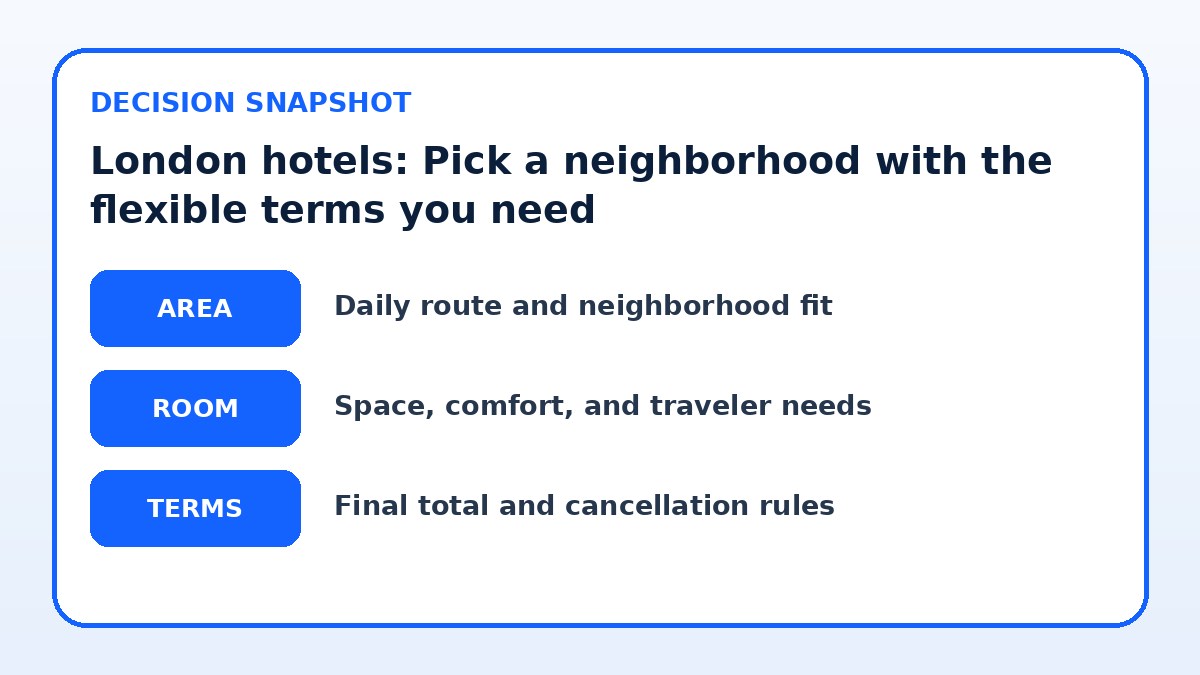
Daily-route friction: transit, walking, and luggage
Map your typical day from hotel to morning plans, midday stops, and evenings. If you’ll carry luggage between stations and the hotel, shorter walks and fewer stairs reduce fatigue; that’s a practical reason to choose areas adjoining major rail or Tube hubs. Some neighborhoods have more direct connections but can be noisier; weigh the inconvenience of noise against the convenience of quick transfers. When assessing flexible booking terms, also check whether the hotel offers luggage hold on arrival or departure days, because that service can replace the need to rebook a different night if timing changes.
For route flexibility—late arrivals or early departures—confirm the hotel’s check-in and check-out policies and whether they offer late check-in desks or key-drop systems. Flexible rates sometimes include late check-out or allow day-use extensions for a fee; verify how these options are charged and whether they require advance reservation. Solo travelers should also consider how easy it is to return to the hotel late at night: accessible taxi ranks, ride-hail reliability, and well-lit walking routes lower the cost of rigid booking terms because day-to-day changes are easier to manage.
Now compare like with like
Keep the same dates, guests, room needs, and cancellation preferences while you compare the final choices.
Room and party needs: safety, size, and solo conveniences
As a solo traveler, focus on room features that increase comfort and reduce the need to rebook: lockable safes, good in-room lighting for work, comfortable desks, and clear noise insulation statements where provided. Decide whether you need single rooms, larger rooms for occasional guests, or suites for longer stays where doing laundry or cooking in-room matters. Flexible booking can be less critical if the room itself supports extended, self-contained stays—kitchenettes or laundry facilities let you adapt plans without changing hotels.
Safety and service policies matter. Check if hotels publicize 24-hour front desk coverage, secure access systems, and emergency contacts, and verify these details on the hotel’s final booking or property page. For bookings with flexible cancellation, keep in mind that some refundable rates still require the primary guest to present ID or the card used to book at check-in. If you anticipate sharing a room with a friend for part of your stay, confirm modification policies about changing the guest list or extending nights without losing your flexibility.
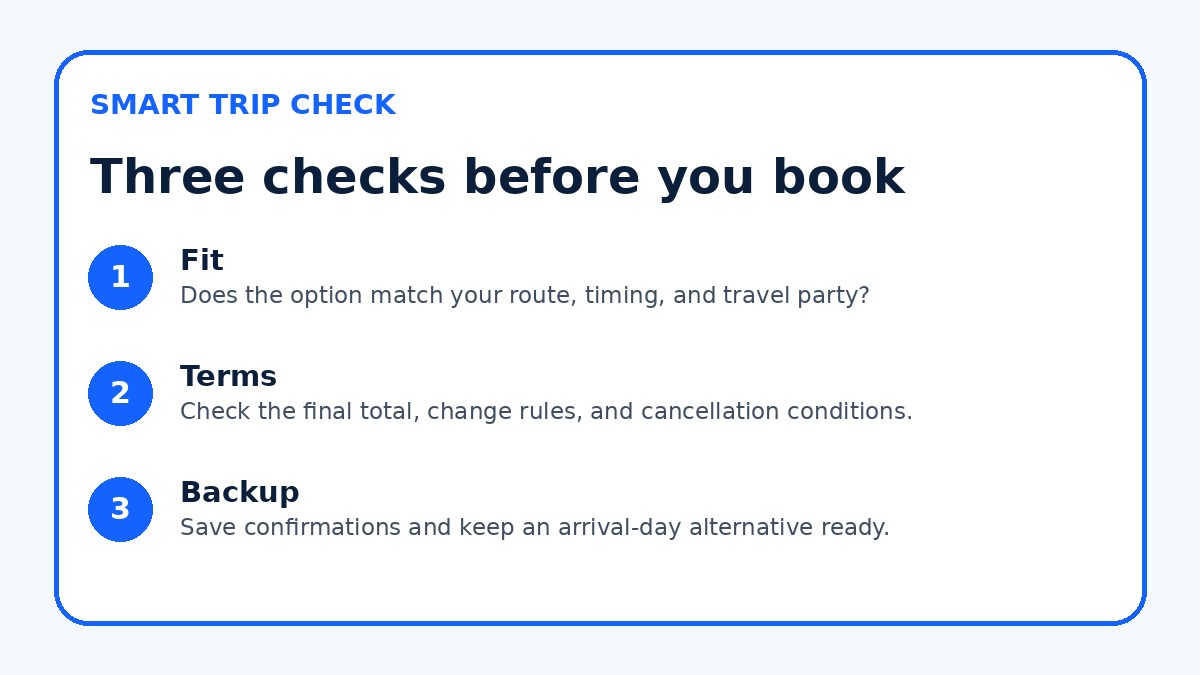
Hotel booking check before payment
- List your top two daily priorities (sightseeing, work, nightlife, quiet) and map them to three candidate neighborhoods.
- On each hotel’s booking page, screenshot the exact cancellation and modification wording including cut-off times and refund method.
- Confirm whether refundable rates require the same credit card at check-in and whether ID checks could affect changes.
- Email or call the hotel to ask about luggage storage, late check-in, and any deposit or pre-authorization procedures.
- Compare the hotel’s policy with the OTA’s policy if booking through a third party, and save both confirmations.
- Plan for a fallback: pick one hotel with the most flexible short-notice cancellation in your shortlist and keep it open until plans firm up.
Final booking terms: what to verify before you pay
Before confirming any reservation, read the cancellation and modification section on the booking page: exact cutoff dates, whether refunds are credited back to the original payment method or issued as vouchers, and if penalties escalate with last-minute changes. Hotels sometimes display a short headline like “free cancellation until X,” but the detailed policy will specify time zones, processing delays, and whether third-party booking platforms impose additional conditions. If a rate seems flexible but carries a non-refundable deposit, verify whether that deposit is refunded under exceptional circumstances like airline delays or medical emergencies.
Also confirm any pre-authorization or security deposit requirements, whether taxes and fees are included, and how refunds are processed. If you book via an online travel agency, compare the hotel’s own website terms with the OTA’s terms because they can differ. When in doubt, contact the property directly and request a written confirmation of the cancellation window and modification penalties; keep a screenshot or PDF of the policy and the confirmation email for reference.
Hotel Guide questions travelers ask
How much flexibility do I really need when booking London hotels as a solo traveler?
How much flexibility you need depends on the likelihood and cost of changing plans. If your arrival and departure dates are fixed and you’ve prepaid excursions, a semi-flexible or partially refundable rate may be fine. But if your schedule can shift by a day or two—work assignments, late arrivals, or extended stays—fully refundable or modifiable rates reduce stress. Also factor in your neighborhood choice: staying near transit lowers the practical cost of a non-refundable night because last-minute changes are easier to manage. Always verify exact cutoff times and refund methods on the booking page before paying.
If a hotel offers free cancellation until 2pm local time, what should I check next?
Look beyond the headline. Check the full policy text for the time zone reference (usually local hotel time), whether a processing period applies for refunds, and what happens after the cutoff—some hotels switch to a one-night penalty while others charge the entire stay. Confirm whether the refund returns to the same card or as a voucher, and whether taxes or service fees are refundable. If you booked through a third party, verify whether the OTA enforces a different deadline or charges administrative fees for cancellations.
Can I rely on third-party sites like Trip.com to compare flexible booking terms?
Third-party sites can be useful for quickly comparing rate types and availability, and Trip.com is an example of a platform that aggregates options. However, booking terms displayed on OTAs may not include amendments the hotel applies directly or special conditions tied to certain room types. Always click through to the hotel’s official policy or contact the property if a cancellation term is critical to your decision. Treat OTAs as a starting point; keep the final provider’s confirmation and policy screenshot as your reference after booking.
Final decision note
For solo travelers planning a London stay, start by choosing the neighborhood that matches your daily priorities—this shortens routes, improves safety, and often reduces the need for last-minute changes. Once you have a shortlist, evaluate hotels by their exact cancellation, modification, and deposit terms; confirm what is refundable, the refund method, and any identification or card requirements at check-in. Remember that a more flexible rate is insurance against disrupted plans, but neighborhood convenience and in-room amenities can sometimes substitute for full flexibility. Before you pay, capture the policy text and confirmation from the provider, and keep contact details handy in case you need to change your reservation.
Continue planning
Check current options and final conditions
Use the provider page to confirm live availability, the final total, cancellation terms, and every condition that matters to your trip.
This evergreen planning guide was created with AI-assisted drafting and a structured quality review. It does not display live prices, schedules, availability, visa guidance, or provider rankings. Verify current details before booking. Some links are affiliate links; we may earn a commission at no additional cost to you.