Practical answer up front: if you carry extra or oversized luggage in Auckland, driving can still be the most convenient option — but only after you confirm fuel policy, mileage caps, and how the company treats excess baggage. Those three contract points determine whether you’ll pay unexpectedly at the counter or run into restrictions on longer drives. Before you book, check the quoted fuel option (full-to-full, pre-purchase, or company refuel charge), the included kilometers per day or per rental, and any explicit size/weight limits or additional baggage fees. If these items look unfavorable, a non-driving plan that mixes public transport with point-to-point taxis or luggage delivery can save money and hassle, especially for short inner-city stays.
Decide whether driving improves your Auckland itinerary
Start by mapping your planned movements: airport transfer, central Auckland stay, day trips (Waiheke, Piha, Waitakere ranges) and baggage handling points. Driving adds flexibility if you plan multiple day trips or need to move bulky gear between lodgings. But if you’re staying mainly in central Auckland with a single airport round trip, public transport, rideshares, or an airport shuttle often reduce hassle and avoid rental rules about fuel and bag size. Factor luggage volume: multiple large suitcases or sports equipment tilt the decision toward a bigger rental or vehicle with roof capacity.
Also weigh pickup and return friction against on-the-road freedom. Airport collections can be convenient but may incur extra airport collection/return fees or tight return windows. If most of your time is inside the city, parking costs and restricted inner-city zones can negate driving benefits. Decide whether the convenience of door-to-door travel (with a car) outweighs the potential extra charges, and whether those charges are fixed or variable with usage and baggage.
Decide whether driving earns its place
| Mobility strategy | Best for | Cost or friction to check |
|---|---|---|
| Rent standard car and accept extra luggage fees | Travelers who prioritize a private vehicle and short-to-medium day trips | May incur baggage surcharges, fuel charges and limited trunk space that add unexpected costs |
| Rent a larger vehicle or SUV with roof box | Groups or travelers with many/oversized items needing extra capacity | Higher base rental rate and possible roof-box rules; confirm weight limits and insurance coverage |
| No car: public transport plus taxis for baggage legs | City-focused trips with occasional luggage-heavy transfers | Less flexibility for day trips and potential higher taxi costs for long regional journeys |
| Hybrid: short-term hire for day trips plus luggage delivery | Travelers wanting minimal city driving but occasional regional flexibility | Coordination needed for deliveries and hires; can be pricier if used frequently |
Check live rental choices only after the route test
Use the exact driver, dates, pickup point, and return plan to compare current conditions.
Route value, fuel policy and mileage — what to verify
Fuel policy has immediate cost implications: full-to-full means you refill before return and avoid refuel penalties, while pre-purchase fuel can be convenient but may leave unused fuel you won’t be refunded for. A refuel service charge levied by rental firms typically covers refuelling plus a handling fee and will be priced on the booking page. When comparing quotes, calculate estimated fuel use from your planned distances and local fuel prices. Remember to confirm who pays for fuel used during a roadside assistance visit or if a replacement vehicle is required mid-rental.
Mileage rules vary: some contracts include unlimited kilometres while others offer a daily or per-rental allowance with per-kilometre fees for overages. For day trips outside Auckland — for example, beaches, regional wineries, or Coromandel Peninsula excursions — estimate total kilometres before you book and check the provider’s overage rate. If you plan to cross regional boundaries, confirm there are no geographic restrictions or additional fees for crossing into other regions.
Compare the full rental conditions
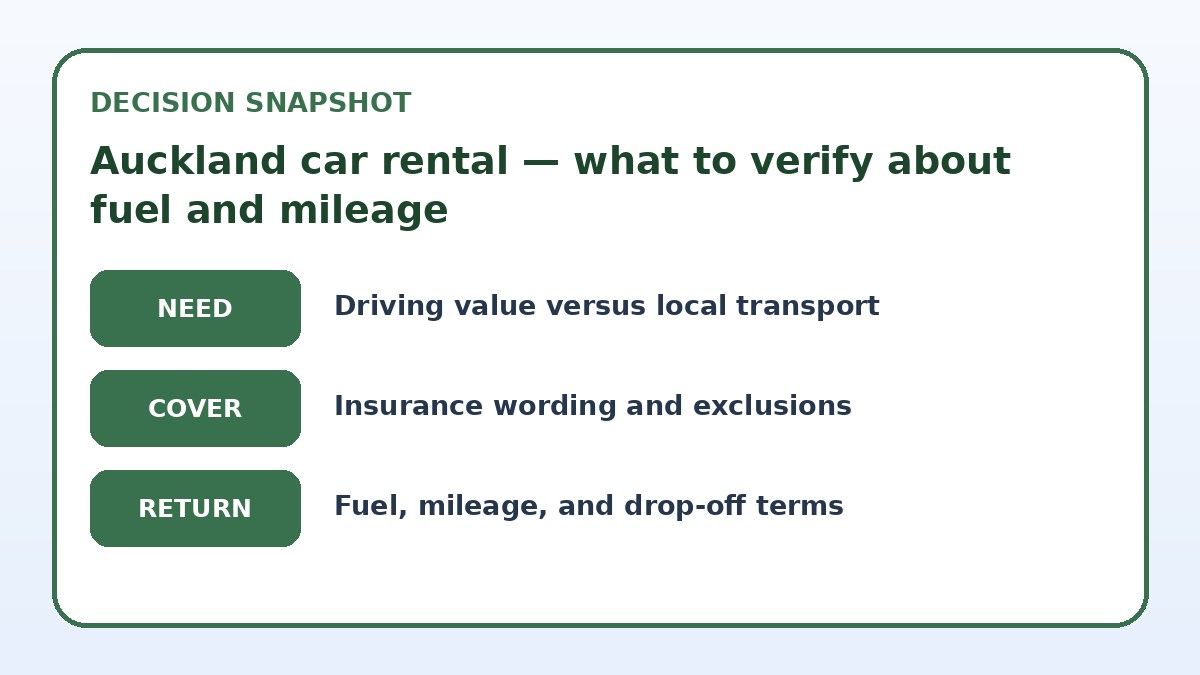
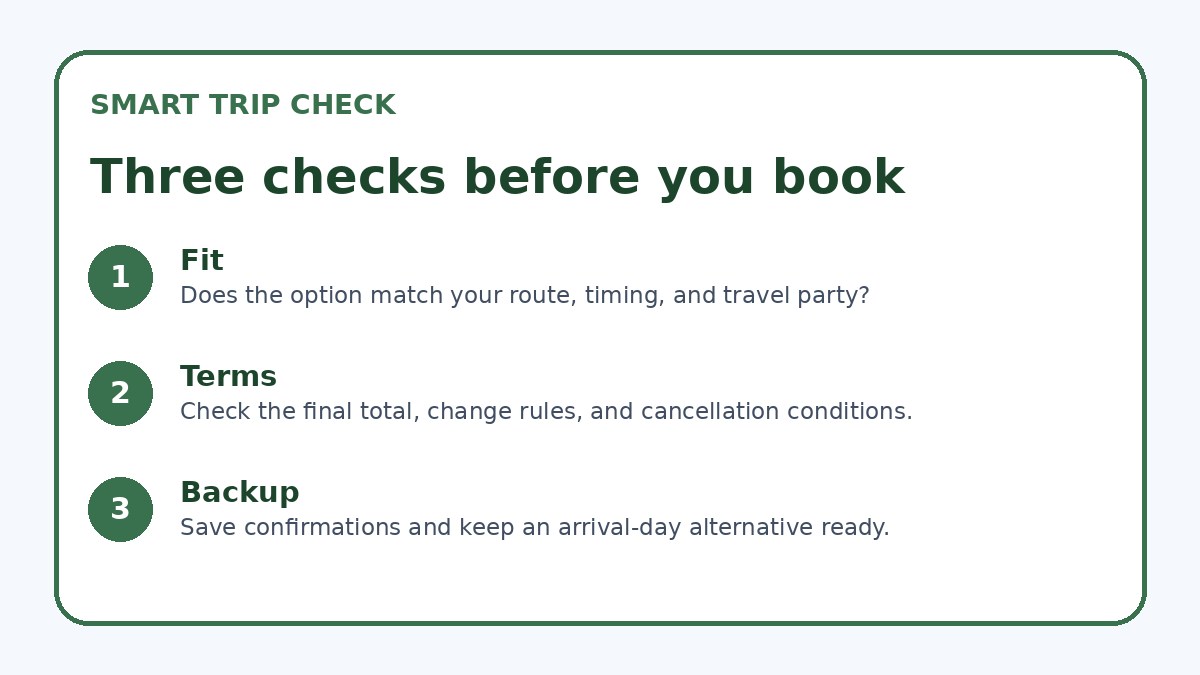
Confirm insurance wording, exclusions, deposit, fuel, mileage, and return terms on the final page.
Insurance wording and pickup/return friction to watch
Insurance and damage waiver language directly affects how luggage and vehicle damage are treated. Read the excess (the amount you must pay for damage) and which incidents are excluded. Some policies exclude damage caused by poorly secured or overloaded luggage, or by using roof racks incorrectly. Check whether third-party equipment like roof boxes is covered by the rental insurer and whether you must buy extra coverage for high-value gear. On the booking page, look for explicit statements about luggage-related exclusions and what documentation is required if you claim.
Pickup and return friction includes additional charges at airport counters, waiting time fees, and the process for reporting pre-existing damage. Photograph the vehicle’s interior and luggage areas during pickup, and get written confirmation of any existing damage to avoid disputes. Also check the provider’s authorised return locations, after-hours drop-off procedure, and any fuel return window rules. These operational details and the insurer’s incident reporting steps are usually listed on the provider’s final terms and conditions page.
Car rental terms to verify
- On the provider’s final booking page, confirm the exact fuel policy label (full-to-full, prepaid, or refuel charge) and read the fuel-charge calculation method.
- Calculate your planned total kilometres and verify included mileage; note the per-kilometre overage fee and how it’s billed.
- Ask the rental company how they define and price excess or oversized luggage, including roof boxes and items stored on seats.
- Read the insurance and excess wording for exclusions related to unsecured or overweight luggage and whether additional coverage is needed.
- Photograph interior and trunk condition during pickup, get all damage noted on the checklist, and retain a copy of the signed inspection form.
- Confirm pickup/return times and procedures (airport counters, after-hours drop, refuelling window) and find contact instructions for roadside incidents.
Non-driving fallback and how to compare options
If driving doesn’t make sense, assemble a fallback that manages extra luggage: combine airport-to-city transfer services with local taxis for baggage-heavy legs, use short-term shared mobility for inner-city travel, and consider professional luggage transfer services for moving bulky items between accommodations. For day trips that would otherwise require a rental, check scheduled coach services or guided tours that allow equipment. Keep a simple budget comparison: taxi or shuttle costs plus occasional train fares versus the total rental cost including fuel, mileage overages, insurance top-ups and baggage fees.
When comparing options, use the same checklist for each choice: total door-to-door time, direct handling of luggage, total estimated cost, and flexibility if plans change. On provider booking pages, verify fuel rules, exact mileage allowances, baggage fee schedules, and insurance exclusions. Trip.com can be used to compare current availability and conditions but always cross-check the provider’s own policy text before confirming. This approach ensures your decision accounts for convenience and the true out-of-pocket cost.
Car Rental & Road Trip questions travelers ask
How do fuel policies typically affect the final bill if I return the car with less fuel?
Fuel policies differ: with full-to-full you refill before return and only pay for fuel used; with prepaid fuel you buy a tank upfront and may not be refunded for unused litres; with a refuel service the company refuels and charges a per-litre rate plus a handling fee. Check the provider’s final booking page to see the exact wording and the rate used for refuel charges. Also confirm whether fuel used during emergency services or replacement vehicle periods is handled differently.
Will my luggage void insurance or create extra charges if it’s oversized or heavy?
Some insurers and rental contracts exclude damage caused by overloaded or insecure luggage and may impose surcharges for oversized items or roof-mounted storage. Look for clauses that mention weight limits, roof-rack usage, and excluded cargo. If you carry high-value equipment, ask whether it’s covered and whether you need supplemental protection. Always document how luggage is stored at pickup and check the insurer’s required claim evidence in case of damage.
If I plan long day trips from Auckland, how do I avoid mileage overage fees?
Avoid overages by estimating total kilometres for all planned excursions before booking and choosing a rate with unlimited or sufficiently high included kilometres. If unlimited isn’t available or is costly, compare the total rental cost, inclusive of projected overage charges, against alternatives like hiring a vehicle only for specific days or joining organized tours. Verify the exact mileage allowance and the overage fee on the final booking page so you can model scenarios accurately.
Final decision note
Driving in Auckland with extra luggage can be the right choice, but only when you confirm the fuel policy, mileage allowance, and how luggage is treated in the rental contract. Start by estimating distances and baggage volume, then compare a standard rental, a larger vehicle, non-driving options, and hybrid approaches using the same checklist items. Always verify fuel-charge calculations, per-kilometre overage rates, baggage fee rules, and insurance exclusions on the provider’s final booking page before you commit. That final check is the quickest way to avoid surprises and pick the option that balances convenience, cost and peace of mind.
Continue planning
Check current options and final conditions
Use the provider page to confirm live availability, the final total, cancellation terms, and every condition that matters to your trip.
This evergreen planning guide was created with AI-assisted drafting and a structured quality review. It does not display live prices, schedules, availability, visa guidance, or provider rankings. Verify current details before booking. Some links are affiliate links; we may earn a commission at no additional cost to you.