Pick the right neighborhood first: it determines how easy your days will feel with children and how often you’ll need taxis or long tuk-tuk rides. For first-time visitors, choose between the Old City for walkable temples and markets, Nimmanhaemin for cafés and modern conveniences, riverside neighborhoods for relaxed mornings, or quieter suburbs if you want big-room resorts and green space. Start by matching your family’s energy level and mobility—young kids and strollers prefer compact streets and short walks, while older kids might value a pool and short excursions. Below I give the practical recommendation up front, then break down daily-route friction, room and party needs, and the booking checks to run before you confirm.

Check live stays in the areas that fit
Use your dates and party size to compare current rooms after you narrow the neighborhood fit.
Neighborhood fit: choose by daily vibe and walking needs
Start by mapping what a typical day will look like for your family. If mornings are for temples, markets, and short museum stops, the Old City’s compact grid keeps walking times low and taxi rides minimal. Narrow lanes can be busy at peak times; if you have a stroller, check recent guest photos or ask the property how they handle steps and thresholds. For families who want café mornings, trendy shops, and a walkable evening scene, Nimmanhaemin (Nimman) places you closer to modern conveniences but adds a 10–20 minute drive to the historic center.
Riverside neighborhoods suit families who prefer fewer intersections and easy scenic walks before breakfast; these areas usually have wider sidewalks and calmer traffic. Larger hotels and resorts outside the center provide roomier family suites and on-site pools or playgrounds, which can be a real time-saver when you plan a slow day in. Tradeoffs include longer travel for temple visits and more reliance on taxis or motorcycle taxis—factor that into how many outings you want to do each day.
Choose an area-selection strategy
| Area approach | Best for | Tradeoff to check |
|---|---|---|
| Old City (central, walkable) | Families prioritizing short walks to temples, markets, and easy daily rhythms. | Narrow streets and crowds can challenge strollers; some quieter, larger rooms are harder to find. |
| Nimmanhaemin (modern, cafés) | Families who want evening cafés, shopping, and a modern neighborhood vibe. | Slightly longer drives to historic sites and riverside walks; plan more taxi time. |
| Riverside (scenic, relaxed) | Families seeking calm mornings, riverside strolls, and scenic breakfasts. | Less immediate access to the Old City; some attractions require short rides. |
| Suburbs / resort zones (space, pools) | Families needing bigger suites, pools, and on-site facilities for downtime. | Longer daily transfers to city sights; more planning needed for excursions. |
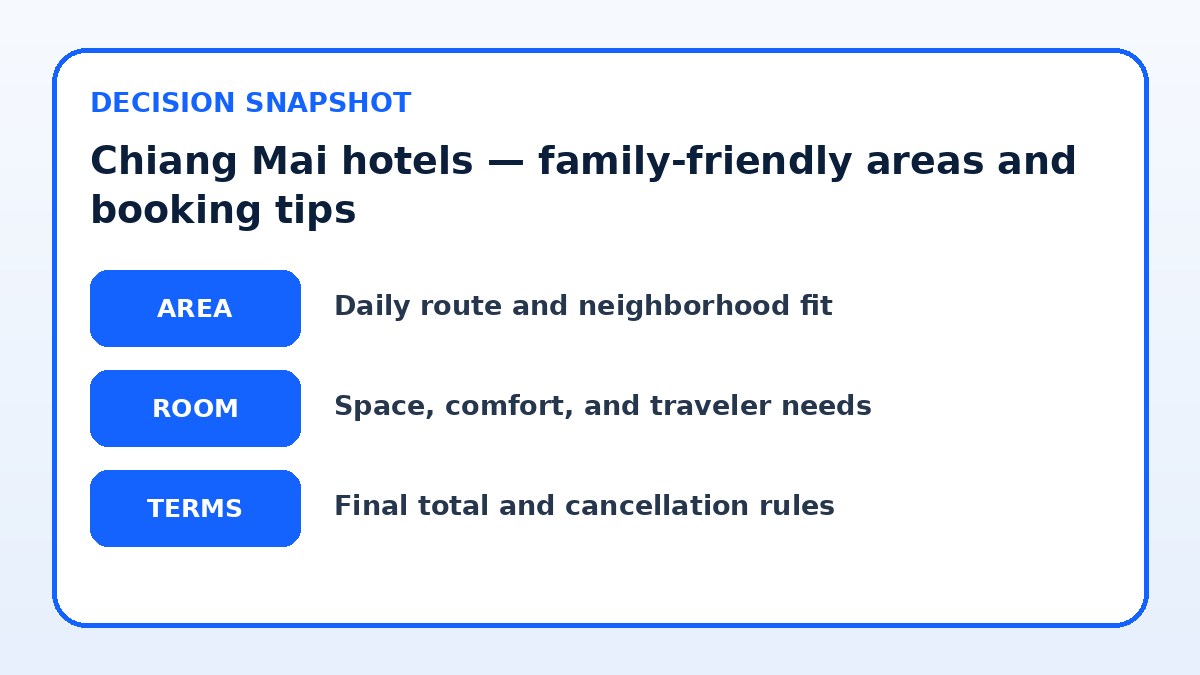
Daily-route friction: travel times, transport, and flexibility
Think beyond geographic distance: Chiang Mai’s traffic patterns, narrow streets, and rush periods affect how long short trips take with children. The Old City minimizes ride time for most central attractions, but sidewalks can be uneven and crowded during high season events. If you plan several short stops with a toddler, staying where you can walk between activities reduces the friction of repeated seat-belting and taxi queues. For Nimman and riverside areas, factor taxi or rideshare availability in the evening and whether the hotel can arrange reliable transport or child seats.
When choosing a hotel, ask about pickup and drop-off services, shuttle schedules, and recommended taxi apps or reliable driver contacts—these details save time when children are tired. If you plan day trips (elephant sanctuaries, hill tribes, or cooking classes), check where the excursion pickups originate; some providers meet centrally, others will collect from your hotel but may charge extra. Decide whether you prefer spontaneous short outings on foot, which favor central stays, or planned longer excursions that tolerate longer daily transfers.
Now compare like with like
Keep the same dates, guests, room needs, and cancellation preferences while you compare the final choices.
Room and party needs: how to choose layouts and facilities
Define your party: families with infants, toddlers, or teenagers have different priorities. For infants, verify crib availability and whether the property can confirm a non-smoking, quiet room away from service areas. Toddlers often need a safe play space and easy bathroom access; ask about room interconnectivity if you want two rooms with a door between them. Teenagers appreciate separate sleeping spaces and reliable Wi‑Fi, so consider multi-room suites or adjacent rooms to preserve privacy while staying together.
Facilities matter: an on-site pool or kids’ play area can turn a half-day of rest into quality family time without leaving the property. Confirm whether pools have lifeguards, shallow sections for small children, and whether towels and pool toys are provided. If on-site dining is important for late arrivals or picky eaters, ask about kids’ menu options and high chairs. Always request photos of the specific room type before booking if the layout is a deciding factor for your family’s comfort.

Hotel booking check before payment
- Confirm the exact room type and bed configuration in writing, including whether an extra bed or crib is included or available on request.
- Ask the hotel to describe access conditions (steps, ramps, elevators) if you’ll use a stroller or have mobility needs.
- Request written clarification of cancellation and modification terms for your chosen rate before providing payment.
- Verify airport transfer options and whether a child car seat is available or you must bring your own.
- Check whether the pool has a shallow area or lifeguard and whether towels and supervision rules are provided for children.
- Save contact details for the hotel front desk and any recommended local transport apps or driver numbers in case plans change.
Final booking terms: what to verify before you reserve
Before you complete a booking, check the cancellation and modification terms so you can adapt plans if flights change—these policies can vary by room type. Confirm check-in and check-out hours and whether early check-in or late check-out is possible (and whether there are fees). If you rely on airport pickups, verify whether the hotel provides transfers, the meet-and-greet process, and whether a car seat can be supplied or you must bring your own.
Verify the exact bed configuration and occupancy limits for the room type you choose, and ask whether extra beds or rollaway options are available and at what conditions. Confirm any additional fees that the property may charge locally for extra guests, city taxes, or deposits—ask the property to detail these on the booking confirmation page so nothing arrives as a surprise at check-in. When in doubt, request a written confirmation that includes the room number (if available) or the confirmed room type and amenities.
Hotel Guide questions travelers ask
Which Chiang Mai neighborhood is easiest for toddlers who need naps and short walks?
For toddlers who need a calm routine and short walks, the Old City usually offers the lowest daily friction because many attractions, cafés, and small parks are within a short walk. Pick a hotel on a quieter block or along one of the Old City’s inner roads to reduce traffic noise and street vendors during nap times. If you prefer a larger room or pool for afternoon rest, consider a riverside hotel that balances quieter mornings with short taxi rides to the Old City when your family is ready to go out.
Is it better to stay by the river or in Nimmanhaemin with kids who enjoy museums and food stalls?
If your family splits time between relaxed mornings and active evenings, riverside hotels give scenic walks and quick relaxation before heading out. Nimmanhaemin is better if you prioritize evening food stalls, cafés, and modern dining options near play-friendly spaces and specialty shops; it tends to be livelier with easier evening foot traffic. Compare the transport time to the specific museums and markets you want to visit—if those sit in the Old City, staying there reduces transfers, while riverside or Nimman stays trade a short ride for other conveniences.
What should I check about family facilities before I finalize a booking?
Ask the property how they support families: confirm crib availability, interconnecting rooms, bathroom child-safety features, and the age rules for extra beds. Verify pool safety details (shallow zones, lifeguards, adult supervision requirements) and whether on-site dining offers child-friendly menus or flexible meal hours. Also confirm arrival logistics—airport pickup, parking, elevator access, and whether the front desk can recommend pediatric clinics or pharmacies—so you have reliable contingency plans during your stay.
Final decision note
Start by choosing the neighborhood that matches how your family likes to spend a day: compact Old City walking days, Nimman’s modern conveniences, riverside calm, or roomy suburbs for resort-style downtime. Then pick a room layout that fits your party and confirm practical details—cribs, pool safety, transport options, and cancellation terms—before you pay. These four decisions (neighborhood, daily-route plan, room layout, booking checks) will let you shortlist suitable hotels with confidence so you can open live inventory and compare specifics without second-guessing your family’s daily comfort.
Continue planning
Check current options and final conditions
Use the provider page to confirm live availability, the final total, cancellation terms, and every condition that matters to your trip.
This evergreen planning guide was created with AI-assisted drafting and a structured quality review. It does not display live prices, schedules, availability, visa guidance, or provider rankings. Verify current details before booking. Some links are affiliate links; we may earn a commission at no additional cost to you.