Practical answer: choose the mode that minimizes transfers and door-to-door friction — usually an Amtrak-style intercity train or private car/ride service for heavy, oversize, or fragile bags. If budget is tighter and transfers are acceptable, a coach can work but plan extra time and simpler luggage packing. Ferry combinations aren’t common end-to-end on this corridor but might be part of a multimodal trip; factor in handling at terminals. Before you book, compare door-to-door time, how many times you must lift or recheck bags, and where you’ll store luggage at origin and destination. Verify baggage rules, station elevator/escalator access, and the practicalities for last-mile cargo: hotels’ check-in/luggage holds, curbside pickup, and any municipal loading restrictions. Use provider booking pages to confirm baggage allowances, station access, and current service patterns; Trip.com can be one place to compare availability, but confirm on the carrier’s site.

Choosing between rail, coach, driving, or a combination
Start by mapping door-to-door travel rather than focusing solely on the scheduled ride. An intercity train generally reduces handling because you can board with your luggage in one terminal and depart from a central station close to downtown destinations. Coaches may offer lower fares but often require more walking through bus terminals and tighter luggage bays, which means heavy lifting. Driving—whether your own car, a rental, or a rideshare/private car—keeps bags with you the whole journey and avoids station stairs, but consider traffic, parking, and local curb rules at both ends. A mixed plan—train for the long haul with a pre-arranged pickup at the destination—can combine the train’s comfort with front-door convenience.
To choose, list how many large pieces you have, whether any bags are fragile or require flat handling, and who will help with lifts. If you have multiple oversized suitcases or sporting equipment, prioritize options that permit curbside drop-offs and allow a friend, porter, or vehicle to load close to the platform. If budget constraints push you toward coach service, convert that into a practical plan by booking a seat close to doors, arriving early, and ensuring you have lightweight day luggage to move between terminals.
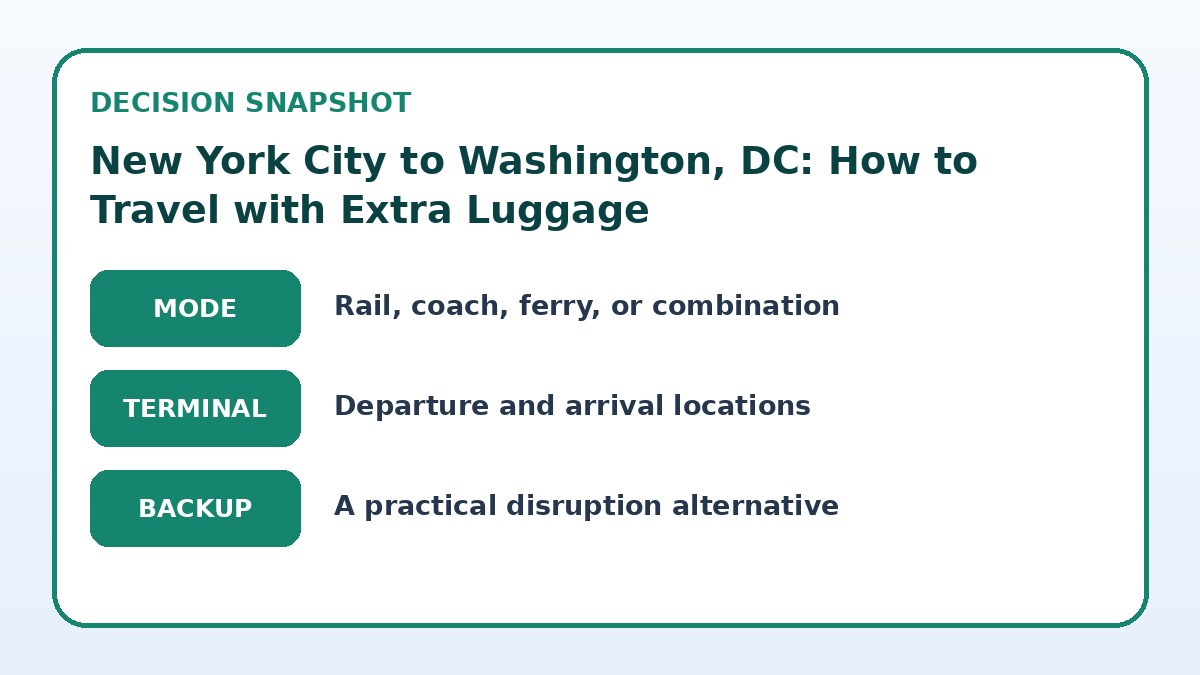
Choose the end-to-end journey plan
| Journey approach | Best for | Friction to check |
|---|---|---|
| Direct intercity train with curbside drop-off | Travelers wanting minimal handling and central-station arrivals. | May involve busy stations and requires elevator access; check station maps and luggage policies before booking. |
| Long-distance coach with terminal baggage hold | Budget-conscious travelers with moderate lifting ability and fewer transfers. | Lower cost but more manual loading/unloading and potential for limited onboard space for oversized items. |
| Private car or rideshare door-to-door | Groups or those with many, bulky, or fragile items seeking single-move convenience. | Higher cost and potential traffic/parking challenges on arrival; verify vehicle size and curb rules. |
| Mixed plan: train plus prearranged pickup or luggage shipping | Travelers balancing speed, comfort, and door-to-door ease without hauling everything themselves. | More planning required and possible extra fees; confirm pickup timing, storage capacity, and shipping guarantees. |
Check live intercity options
Look beyond the ride itself and compare terminals, transfers, luggage, and arrival fit.
Terminal fit and luggage transfer friction
Not all stations and terminals are equal. Some have elevators, ramps, and baggage carts; others rely on stairs and narrow platforms. Before booking, check photos and station maps on official carrier pages—look specifically for elevator locations, curbside drop-off zones, and baggage service counters. At Penn Station in New York and Union Station in Washington, DC, expect busy environments; plan for extra time to navigate crowds, find elevators, and move between concourses. If a terminal lacks accessible equipment, consider paying for a private car drop-off or using a porter service if that’s available.
Think in terms of single moves: how many times will you lift each bag from curb to vehicle, vehicle to platform, platform to train, and finally to your accommodation? Every extra transfer adds risk and effort. If your trip requires multiple short legs—subway to station, train to hotel shuttle—pack heavy items in wheeled cases, use strap-secured bundles, and reduce loose items. For fragile gear, bring protective covers and ask staff about secure storage options on trains or in stations.
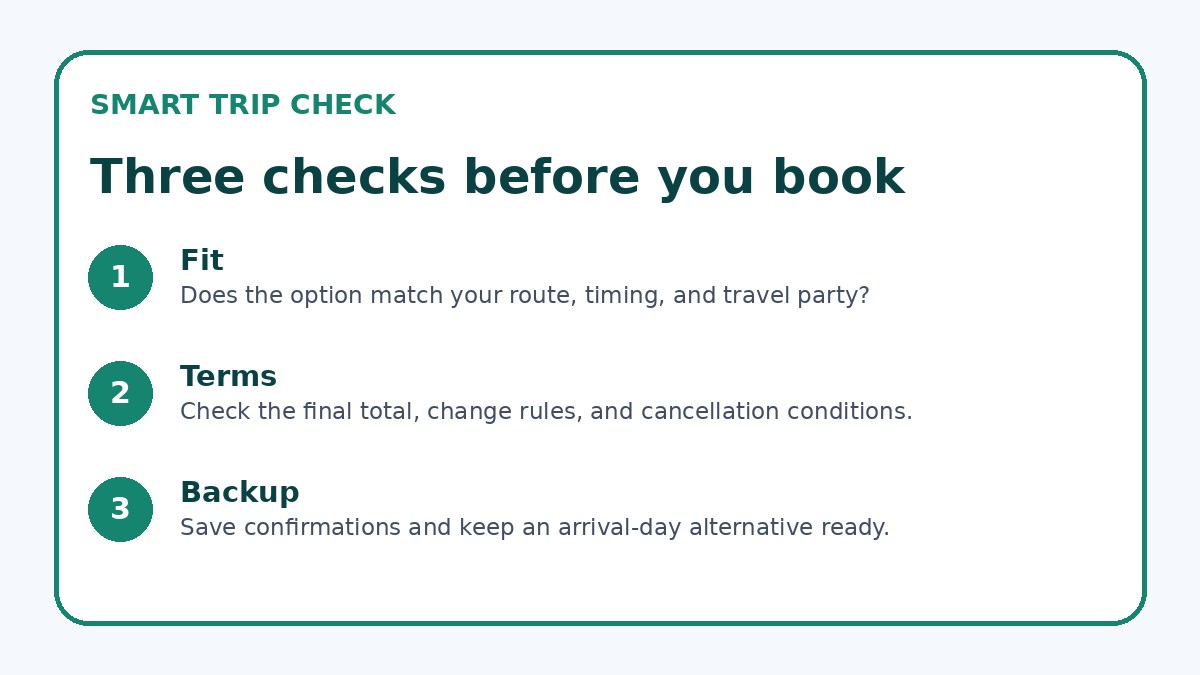
Timing flexibility and how to schedule the travel day
When you travel with extra luggage, build in generous time buffers. Arrive at least 45–90 minutes earlier than you would without heavy bags; that gives room for elevator waits, finding staff assistance, and dealing with ticketing lines. Choose departure times that avoid rush-hour foot traffic at terminals if possible; crowds make moving bulky items slower and more stressful. If you must connect to local transit at either end, staggered arrival times reduce the chance you’ll miss a final shuttle or hotel check-in window because of slow boarding.
If your schedule is flexible, favor off-peak departures that provide less crowded platforms and easier access to staff and luggage carts. When booking, verify carrier policies about early boarding for passengers with mobility needs or oversized items—some services allow staged boarding that makes loading easier. Also plan arrival time at your final address: hotels often hold bags if your room isn’t ready, and an arranged curbside pickup from a rideshare company can be faster than hauling bags onto a bus or train into the city center.
Compare the practical alternatives
Use the final page to confirm what is actually offered on your dates and save a workable fallback.
Intercity travel checklist
- Count and photograph every bag; label each with name, phone, and destination address.
- Check the station access map for elevators, ramps, and curbside drop-off locations before you leave.
- Confirm baggage rules and maximum sizes on the carrier’s booking page and print or save the policy screenshot.
- Reserve a vehicle large enough for all luggage if using a rideshare or private car, and confirm pickup curb permissions.
- Pack a small overnight bag with essentials so you can reach your accommodation if checked luggage is delayed.
- Save contact numbers for station information, your hotel, and an alternate carrier for quick rebooking if there’s a disruption.
Disruption backups: what to prepare if the plan breaks
Disruptions matter more when you have extra luggage, because delayed transfers multiply handling. Before travel day, identify immediate backups: a later train or coach, a list of reachable taxi/ride services, and luggage storage options near your arrival station. Save contact numbers for hotel front desks, station information booths, and a local carrier phone line. If you need to switch modes mid-journey—say, from a canceled train to a private car—factor in extra cost and confirm that the alternate service can accommodate large suitcases or special equipment.
Also prepare an emergency packing plan: a small overnight bag with essentials so you can travel light to your accommodation if baggage handling is delayed. Photograph and label every piece of luggage with your contact details and itinerary. On the travel day, keep carriers’ booking references and baggage receipts easily accessible; if items are checked or placed in separate compartments, these documents speed up recovery. Finally, consider a prepaid luggage-shipping option if delays are likely and you can accept slower door-to-door delivery.
Rail & Intercity Transport questions travelers ask
How do I compare direct and connecting options when I have extra bags?
When luggage is heavy or bulky, prioritize fewer transfers. Compare total door-to-door time rather than ride time alone: include time to reach the departure terminal, anticipated elevator or stair delays, transfer walk distances, and expected waiting time for reboarding. If a connecting option is cheaper but adds an extra terminal or platform change, calculate the physical effort and risk of missed connections. For connections, verify how easy it is to move between platforms—are there escalators or long corridors? Use carrier maps and station photos on official pages to judge whether a connection is practical with your baggage.
Can I bring oversized items like sports equipment on trains or coaches?
Policies differ by carrier and service, so check the specific provider’s baggage rules on their booking page before you plan. Many intercity trains will accommodate oversized items if they fit in designated areas or luggage racks; some require advance notice. Coaches often store large items in underfloor bays, but access at stops may be limited. If your item is fragile or unusually shaped, request special handling options and confirm whether advance reservations or extra fees are necessary. If uncertainty remains, consider shipping the item ahead or arranging a private car that can safely transport it door-to-door.
What practical steps reduce stress on the travel day with multiple large suitcases?
Start by consolidating items into fewer wheeled cases and keep a lightweight day bag for essentials. Arrive earlier than normal to allow time for elevators, staff assistance, or baggage checks. Use luggage straps or clear, distinctive tags to speed up identification and handling. Confirm where you can stage luggage at both origin and destination—hotel bag storage or station lockers—and have a backup transport option like a booked ride that can be summoned if your planned service is delayed. Finally, keep digital and printed copies of booking references and baggage receipts for quick resolution if items are misplaced.
Final decision note
Traveling from New York City to Washington, DC with extra luggage is all about minimizing lifts and uncertainty. Choose the option that reduces handoffs—direct train or private car for fewer transfers—and verify terminal access, baggage rules, and last-mile arrangements before you book. Build time cushions into your schedule, prepare an overnight essentials kit, and save alternate transport contacts in case of delays. Detail-oriented planning—checking station layouts, sizing up elevators and curbside zones, and confirming vehicle capacity—translates into a smoother travel day where your focus stays on the trip, not on moving your bags. For real-time availability and to compare options, you can check aggregator sites such as Trip.com, but always confirm final baggage and access details on the carrier’s official booking page.
Continue planning
Check current options and final conditions
Use the provider page to confirm live availability, the final total, cancellation terms, and every condition that matters to your trip.
This evergreen planning guide was created with AI-assisted drafting and a structured quality review. It does not display live prices, schedules, availability, visa guidance, or provider rankings. Verify current details before booking. Some links are affiliate links; we may earn a commission at no additional cost to you.