Practical answer first: before you search live fares for Manila to Cebu flights, lock in exact travel dates and arrival/departure time windows, the traveler’s baggage and seat needs, and your acceptable connection tolerance. With those specifics you can compare direct versus connection options, check fare conditions that affect exchanges and refunds, and pick the schedule that aligns with meetings or onward connections. Business travel means time is money: you’ll trade a lower fare for schedule reliability, faster connections, or better rebooking rules. The checklist and decision framework below focus on routing, baggage and connection risk, schedule fit, and fare conditions so you can quickly eliminate poor matches and make confident bookings. Prepare the exact traveler details before visiting airline pages or an OTA like Trip.com to verify live availability and policy language.
See live routes for your exact travel day
Compare direct and connecting choices with the same baggage and traveler details.
Routing: direct versus connecting options
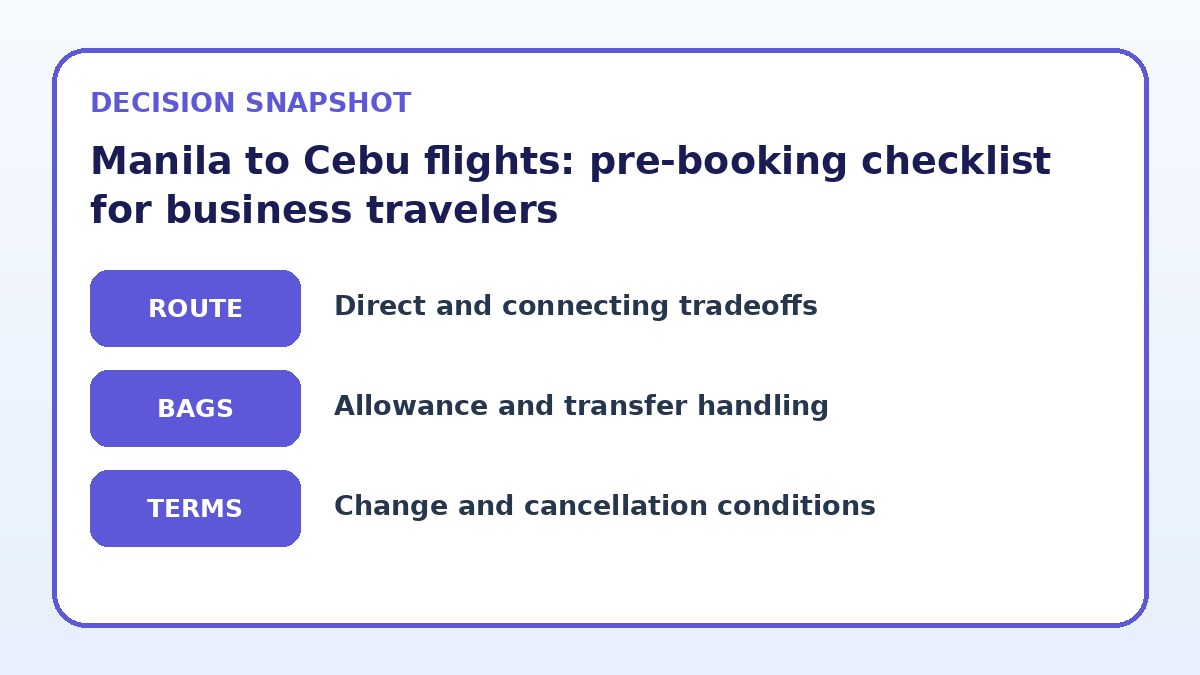
For business trips between Manila and Cebu you’ll typically weigh a direct flight against one or more connecting itineraries. Start by defining how much door-to-door time matters relative to cost: direct flights often minimize total travel time and reduce the number of things that can go wrong, while connecting itineraries may offer lower fares or better departure times. Before booking, decide whether you require non-stop travel for reliability or if a connection with a comfortable layover is acceptable. That decision will dramatically narrow search results and let you focus on schedules that actually meet meeting times.
When you compare specific itineraries, look beyond flight duration and examine the locations and minimum connection times at the transfer airport. If a connection involves a terminal change, security re-screening, or transit between terminals, add buffer time. For cross-checking later, note whether the two legs are on a single ticket; single-ticket connections typically protect you if an earlier delay causes a missed connection, while separate bookings generally do not. Always verify the provider’s final booking page for exact routing, connection times, and whether gates or terminals could require extra transfer time.
Baggage and connection risk: what to confirm
Business travelers often assume luggage allowances are standard; they are not. Before you commit to a fare, confirm how many checked bags and carry-ons are included, the permitted weight per piece, and whether prioritized boarding or cabin baggage rules differ by fare class. If you plan to carry work equipment—laptop, presentation cases, samples, or camera gear—check size and weight limits and whether special items require advance notice or fees. If a connecting itinerary includes a self-transfer or separate tickets, assume checked bags may not be transferred automatically and plan accordingly.
Connection risk ties directly to baggage rules: if checked bags are transferred on a single-ticket connection, you won’t need to reclaim and recheck them. But if you book separate legs with different carriers, plan time for baggage collection, recheck, and possibly security lines. Also verify the provider’s policy on missed connections: when delays occur, who covers re-accommodation, meal vouchers, or overnight stays? The final booking page will show exact baggage allowances and assistance commitments—read those lines carefully before clicking purchase.
Compare flight-selection strategies
| Flight strategy | Best for | Risk to check |
|---|---|---|
| Lowest-fare hunting | Travelers with fixed schedules who can’t accept expensive fares but can absorb delays or longer connections. | Saves upfront cost but often limits refunds, changes, baggage, and rebooking protections. |
| Direct-flight prioritizer | Travelers whose time is the primary asset and who need the smallest risk of delay or missed transfers. | Usually higher fares and fewer routing options; may restrict use of corporate discounts or lower fare classes. |
| Flexible-fare chooser | Travelers with uncertain meeting times who value free or low-cost changes and refundability. | Higher base fares but better change/refund terms and lower disruption costs if plans shift. |
| Hybrid approach (mix of schedule and savings) | Travelers seeking a middle ground: convenient times with some fare flexibility at moderate cost. | Requires time to compare options and read fare rules; savings may be modest versus non-flexible fares. |
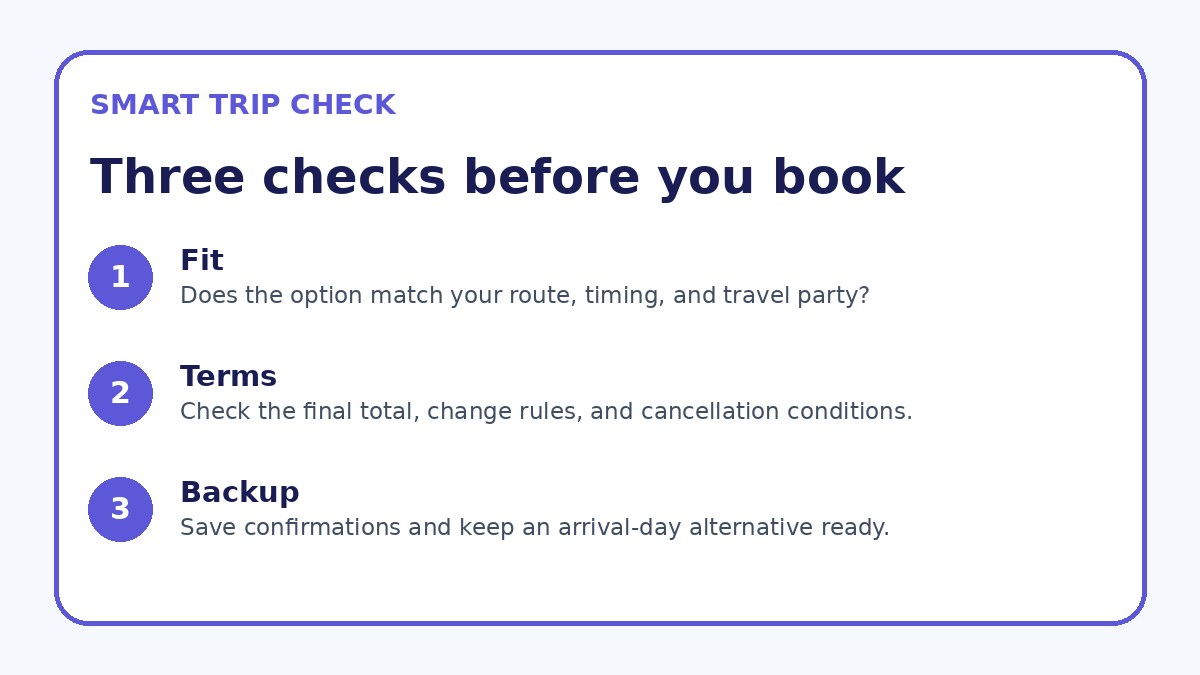
Recheck the complete itinerary
Confirm airports, connection handling, baggage, and change conditions before deciding.
Schedule fit: aligning flights with business hours
Align flight times with meeting schedules and office hours rather than the lowest fare. Identify the earliest acceptable departure from Manila and the latest acceptable arrival in Cebu that still gives you time to reach meetings or hotels. For same-day returns, check the minimum useful connection time at both ends and the typical traffic/transit time to and from airports. Note whether early-morning or late-evening flights are practical based on ground transport options, and whether your company reimburses for premium departures or arrivals that enable more productive time.
Also consider secondary schedule factors like onboard Wi-Fi availability, seat type (bulkhead, exit row, or business class), and frequent flyer benefits that let you work during the flight. If you must be reachable, prioritize schedules where you can board early or use seat-selection to secure a laptop-friendly spot. When comparing schedules on an airline or OTA page, verify the exact departure and arrival times and the airport terminals listed; these will affect transfer times, ground transportation choices, and your overall door-to-door schedule.
Flight details to verify
- Set exact travel dates, preferred departure time window, and latest acceptable arrival time before searching fares.
- List each traveler’s carry-on and checked baggage needs and confirm acceptable allowances when comparing fares.
- Decide acceptable connection length and terminal-transfer tolerance, and note single-ticket vs separate-booking implications.
- Prepare traveler frequent flyer numbers, corporate booking codes, payment card, and any required company approvals.
- Open the airline or OTA final booking page and verify change, refund, and reissue fees before entering payment.
- Save or screenshot the full fare rules and confirmation page after purchase for expense reporting and future reference.
Fare conditions: change, refund and corporate rules
Fare conditions often determine whether a seemingly cheaper ticket actually costs more when plans change. Before booking, read the fare rules for change fees, refundability, same-day changes, rebooking flexibility, and whether name corrections are permitted. If your company requires refundable or changeable fares, filter search results accordingly. When a fare includes free changes or generous rebooking credits, that flexibility can outweigh a lower non-changeable fare, especially for business travel where schedule shifts are common.
Also confirm whether corporate discount codes, travel agency bookings, or frequent flyer upgrades are supported on the selected fare class. Some discounted fares restrict participation in loyalty programs or block seat upgrades; others limit accrual of points. On the airline’s final booking page, verify which ticketing channels are eligible for corporate rates, how to apply booking codes, and the precise monetary penalty—if any—for changes or cancellations. Keep screenshots or PDF copies of the fare rules at purchase in case you need to reference them later.
Flight Guide questions travelers ask
Should I always choose a direct Manila to Cebu flight for business travel?
Not always. Direct flights reduce transfer risk and usually save time, which matters for tight schedules, but they can be pricier or depart at suboptimal times. If a connecting itinerary gives a significantly better schedule or necessary loyalty/ corporate benefit and the layover is comfortable and on a single-ticket booking, a connection can be acceptable. Evaluate door-to-door time, connection complexity, and whether checked bags transfer automatically before choosing. Always verify the routing and connection protections on the carrier’s booking page.
How do I compare baggage rules across fare classes efficiently?
Make a simple comparison table for the itineraries you’re considering: fare class, number of included checked bags, carry-on size and weight, fees for extra or overweight items, and whether priority boarding or dedicated overhead space is included. Check the airline’s final booking page for exact allowances and baggage fee amounts because promotional or corporate fares may have different rules. For complex equipment, contact the airline’s baggage desk to confirm requirements before booking.
What is the minimum connection time I should accept when planning a business trip?
There’s no universal minimum; accept a connection time that matches the transfer complexity and your risk tolerance. For simple same-terminal connections, a shorter buffer may be safe; for terminal changes, immigration, or separate-ticket transfers, add substantial time. Remember to factor in possible delays, baggage recheck, and security lines. If missing the connection would ruin your schedule, choose a longer layover or a direct flight, and verify protection and rebooking rules on the booking confirmation page.
Final decision note
For business travel between Manila and Cebu, a structured pre-booking checklist keeps choices pragmatic and repeatable: lock in dates and time windows, define baggage and connection tolerances, and read fare rules before paying. Balance the route-versus-fare tradeoff by prioritizing schedule reliability when meetings are at stake and choosing flexible fares when plans may change. Use the comparison approaches above to quickly eliminate poor matches, then verify all details on the airline or OTA final booking page—Trip.com can be one place to compare live options, but always confirm baggage, change fees, and routing directly with the carrier before purchase. That preparation saves time, reduces surprises, and keeps your business trip on schedule.
Continue planning
Check current options and final conditions
Use the provider page to confirm live availability, the final total, cancellation terms, and every condition that matters to your trip.
This evergreen planning guide was created with AI-assisted drafting and a structured quality review. It does not display live prices, schedules, availability, visa guidance, or provider rankings. Verify current details before booking. Some links are affiliate links; we may earn a commission at no additional cost to you.