If you’re moving more bags than usual between Tokyo and Osaka, the practical choice often comes down to prioritizing terminal access and door-to-door ease rather than raw travel time. For many travelers with extra luggage, a scheduled highway coach or a shinkansen with a luggage-forwarding service will reduce transfer friction more than a slightly faster but logistically awkward option. Start by mapping where your journey begins and ends (hotel, apartment, station, or airport) and list how much you can carry, what can be shipped, and whether you need same-day arrival. Consider a mixed approach: ship bulky items ahead, take a passenger service for you and a carry-on, or choose a coach that loads luggage into a cargo hold. This article walks through the tradeoffs, terminal fit, timing flexibility, and a realistic disruption backup so you can pick the option that works end-to-end.
How to choose rail, coach, ferry, or mixed travel
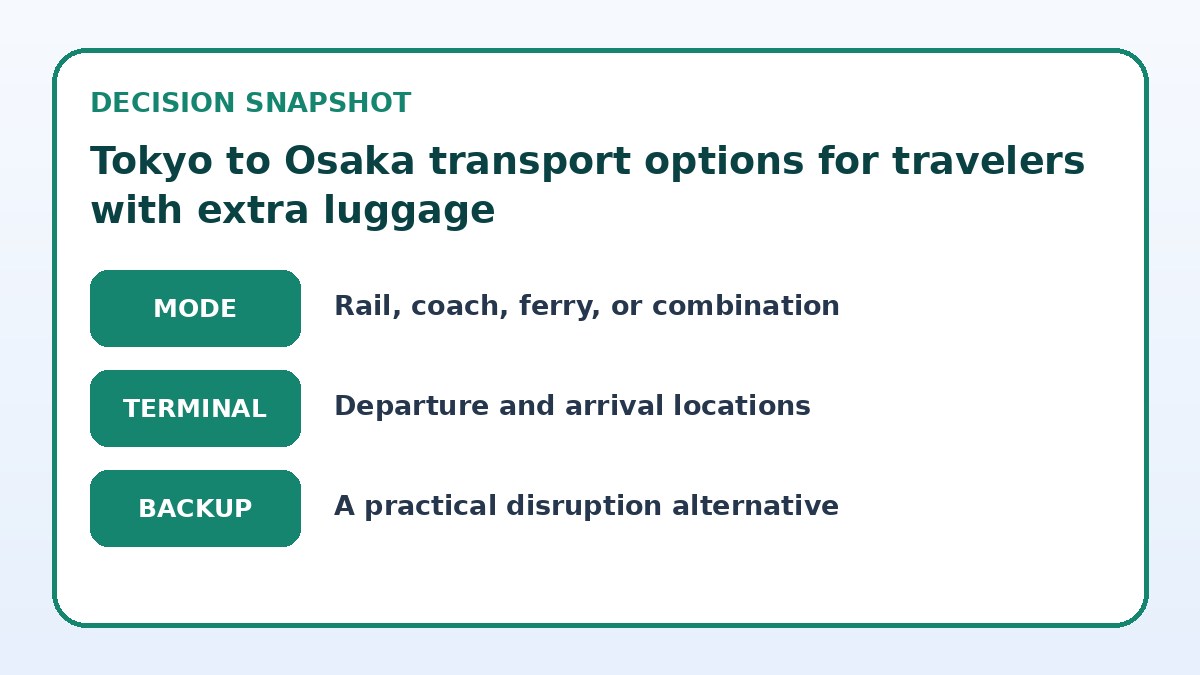
Begin by listing your door-to-door constraints: which station or airport you’re starting from, where you need to arrive in Osaka, and whether you can accept a day delay for shipped items. Rail (including high-speed routes) tends to be fastest and frequent between Tokyo and Osaka, but trains require navigating platforms, stairs, and sometimes long station corridors. Coaches have less frequent but simpler luggage handling—bags are loaded at a single door-to-bay point and retrieved at arrival, which reduces the number of times you need to manage heavy items.
A mixed approach—shipping oversized luggage ahead and traveling light, or taking a coach for direct downtown-to-downtown service while shipping fragile items—often balances speed with convenience. Ferries are an occasional option for specific routes and bulky cargo but typically involve more step-offs and terminal procedures, so they’re best when you have flexible timing and want to avoid handling large items through crowded stations. Evaluate each mode by how many times and how far you must move luggage between doorways, not just in-vehicle travel time.
Choose the end-to-end journey plan
| Journey approach | Best for | Friction to check |
|---|---|---|
| High-speed rail (shinkansen) plus luggage forwarding | Travelers who prioritize travel time but want minimal handling at transfers. | Requires arranging forwarded parcels and confirming delivery windows; station transfers still involve some walking with a carry-on. |
| Direct highway coach with hold luggage | Those needing simple loading/unloading and minimal platform navigation. | Often slower and less frequent than trains; check luggage size limits and whether the coach drops close to your final address. |
| Ship bulky items ahead and take regional train or plane light | Anyone moving very large or numerous items who can wait for delivery. | Shipping adds time and requires precise drop-off/pick-up planning; you must trust delivery windows and inspect items after arrival. |
| Mixed route: airport/terminal taxi to coach or train | Travelers balancing convenience with schedule constraints and door-to-door needs. | Involves an extra short taxi leg (cost and traffic risk) but can dramatically reduce lugging through crowded terminals. |
Check live intercity options
Look beyond the ride itself and compare terminals, transfers, luggage, and arrival fit.
Terminal fit: stations, airports, and local transfers
Large stations like Tokyo and Osaka have multiple terminals, concourses, and transfer corridors; this is a primary friction point when you have extra luggage. Look up the specific station exits closest to your accommodation and the platform layout for your chosen service so you can plan elevator or escalator routes. If your origin or destination is an airport, check whether ground transportation drops you at the terminal entrance closest to the train or coach departure point to avoid long indoor walks with heavy bags. Always plan for elevator wait times and potential crowding during peak hours.
Local transfers matter: a service that appears convenient on a map can become tedious if it requires multiple metro changes with luggage. Compare a direct coach that stops near your hotel versus a train that requires a taxi to reach your accommodation; door-to-door time and effort can favor a slower vehicle. When booking, verify luggage restrictions and whether the terminal offers luggage trolleys, paid porterage, or station storage—these details change service suitability quickly and should be checked on the provider’s booking page or official station information.
Timing flexibility and scheduling with extra baggage
Flexibility matters when you travel with extra bags: forward shipping can take one or more days, coach schedules may be less frequent, and reserved-seat trains can require time-specific arrival. If you must arrive on a strict schedule, prioritize services with multiple departures per day or choose flexible tickets that allow rebooking. Conversely, if you can wait a day, shipping bulky items to arrive the following morning lets you travel lighter and reduces the physical strain of transfers.
Plan the sequence: drop off items to ship early in the day to meet forwarding cut-offs, or schedule a coach that loads luggage shortly before departure so you don’t have long waits with bags at a terminal. Account for check-in windows at your Osaka accommodation—dropping bags earlier than your room ready time might require hotel storage fees or offsite lockers. Check exact booking pages for departure frequency, baggage size rules, and any required advance notice for oversized items.
Compare the practical alternatives
Use the final page to confirm what is actually offered on your dates and save a workable fallback.
Intercity travel checklist
- Map exact start and end doorways, identify the closest station exit or coach bay to your accommodation.
- Confirm each provider’s baggage size and count limits on their official booking page before you reserve.
- If shipping luggage, note drop-off cut-offs and expected delivery windows; pack an essentials carry-on for at least 24 hours.
- Reserve seats or coach tickets with flexible rebooking if your schedule is tight or weather may disrupt services.
- Locate nearby luggage storage or 24-hour reception options at both origin and destination in case of early arrival.
- Save contact numbers, tracking codes, and the provider’s helpdesk link; keep digital and printed copies accessible.
Disruption backup: what to prepare if plans change
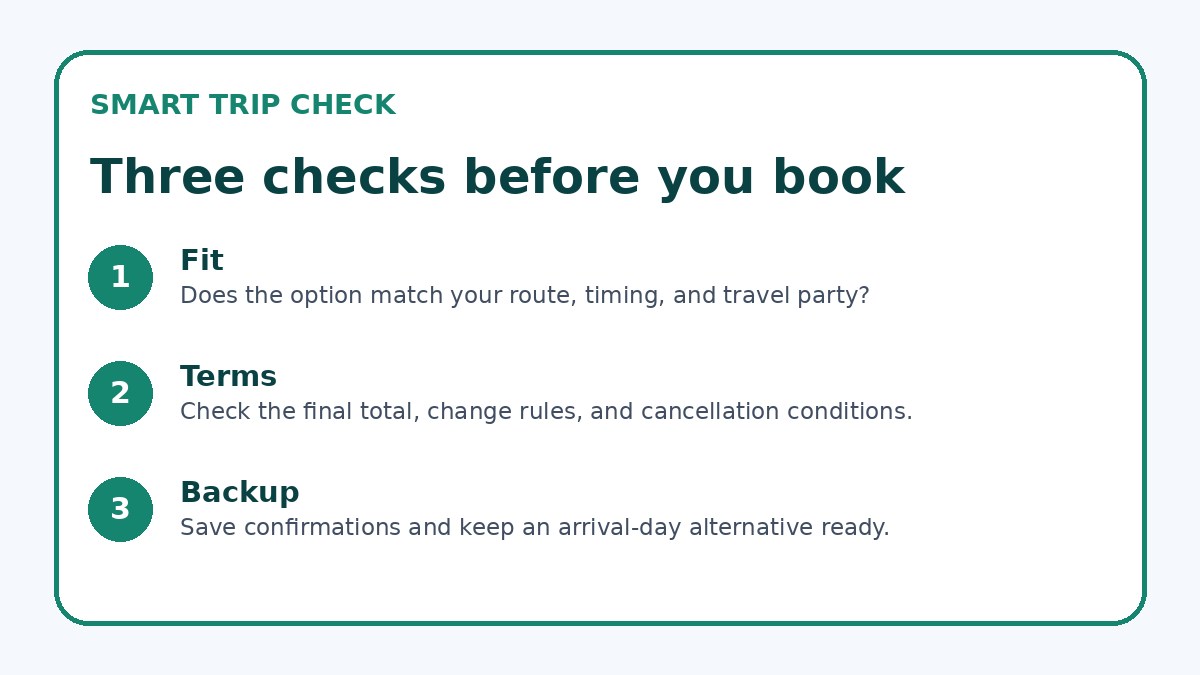
Prepare realistic backups to reduce stress if a service is delayed or canceled. First, keep critical items (documents, medication, one change of clothes) in a carry-on you’ll keep with you. Second, confirm flexible rebooking options or refundable terms when possible; if you book a nonrefundable coach or train, know the next available alternatives and whether you can buy a same-day seat elsewhere. Also identify nearby luggage storage, local courier drop-off points, and 24-hour hotel or hostel options where you could wait if baggage delivery is delayed.
If you rely on luggage forwarding, save the carrier’s tracking number and final delivery window, and confirm contactless delivery options if you won’t be there. For terminal disruptions, note local taxi ranks and major nearby stations—sometimes a short taxi to a different departure point gives access to more options. Finally, check real-time provider information before leaving for the terminal; services and cut-offs can change, so verify on the official booking page or on a comparison site like Trip.com only as an initial inventory tool, then confirm with the provider.
Rail & Intercity Transport questions travelers ask
Can I bring oversized bags on shinkansen between Tokyo and Osaka?
Policies for large or oversized baggage can vary by operator and can change over time; some services require advance notice or a reservation for large items. Don’t assume every train will accept unusually large bags without restrictions. Before booking, check the specific train operator’s baggage rules on their official page, noting maximum dimensions, whether a seat reservation for the bag is needed, and any fees. If the rules are unclear, contact the operator directly. Alternatively, consider luggage forwarding to avoid last-minute complications.
Is it easier to take a coach with lots of luggage than a train?
Coaches often simplify luggage handling because bags are loaded into a centralized hold by staff and retrieved on arrival, reducing the need to carry items on and off platforms. That convenience comes with tradeoffs: coaches can take longer, have fewer departures, and may have stricter size limits for holds. Compare how close the coach arrival point is to your final address versus the nearest train station; door-to-door convenience often outweighs a slightly longer on-road duration when you have bulky luggage.
How far in advance should I arrange luggage forwarding or shipping?
Scheduling depends on the carrier and the speed of service you choose. Forwarded luggage commonly needs one or more days’ lead time for standard delivery windows; same-day options exist in some areas but require early drop-off and higher cost. Plan at least a full day in advance for standard forwarding to reduce the risk of missed delivery windows, and verify cut-off times and pickup/drop-off locations on the carrier’s booking page. Also confirm requirements for fragile or unusually shaped items to ensure they’re accepted.
Final decision note
Choosing how to travel from Tokyo to Osaka with extra luggage is about managing transfers and minimizing the number of times you physically move heavy items. Start by mapping exact door-to-door paths, comparing how each mode handles luggage at terminals, and deciding whether shipping bulky items ahead improves your overall experience. Reserve with flexibility when possible, verify baggage rules on the provider’s official booking pages, and keep an essentials carry-on for immediate needs. With a modest amount of planning—checking delivery windows, terminal layouts, and backup options—you can turn a potentially stressful move into a smooth intercity transfer.
Continue planning
Check current options and final conditions
Use the provider page to confirm live availability, the final total, cancellation terms, and every condition that matters to your trip.
This evergreen planning guide was created with AI-assisted drafting and a structured quality review. It does not display live prices, schedules, availability, visa guidance, or provider rankings. Verify current details before booking. Some links are affiliate links; we may earn a commission at no additional cost to you.