If you and your partner are booking Busan to Jeju flights and plan a longer connection — either overnight or a multi-hour layover — the practical choice balances comfort, reliability and cost. Start by deciding whether you prefer a single-ticket itinerary (one carrier or alliance) that protects connections and checked baggage, or two separate tickets that can save cash but increase risk if delays occur. For couples, prioritize seat selection, baggage continuity, lounge or hotel access during long waits, and realistic transfer windows that include time for immigration, security, and transport between terminals. Before you search live fares, gather exact travel dates, passenger full names as on passports or IDs, frequent flyer numbers if you want seat or upgrade benefits, and a clear upper limit for transfer time. That prep saves time and prevents last-minute surprises during booking and at the airport.

See live routes for your exact travel day
Compare direct and connecting choices with the same baggage and traveler details.
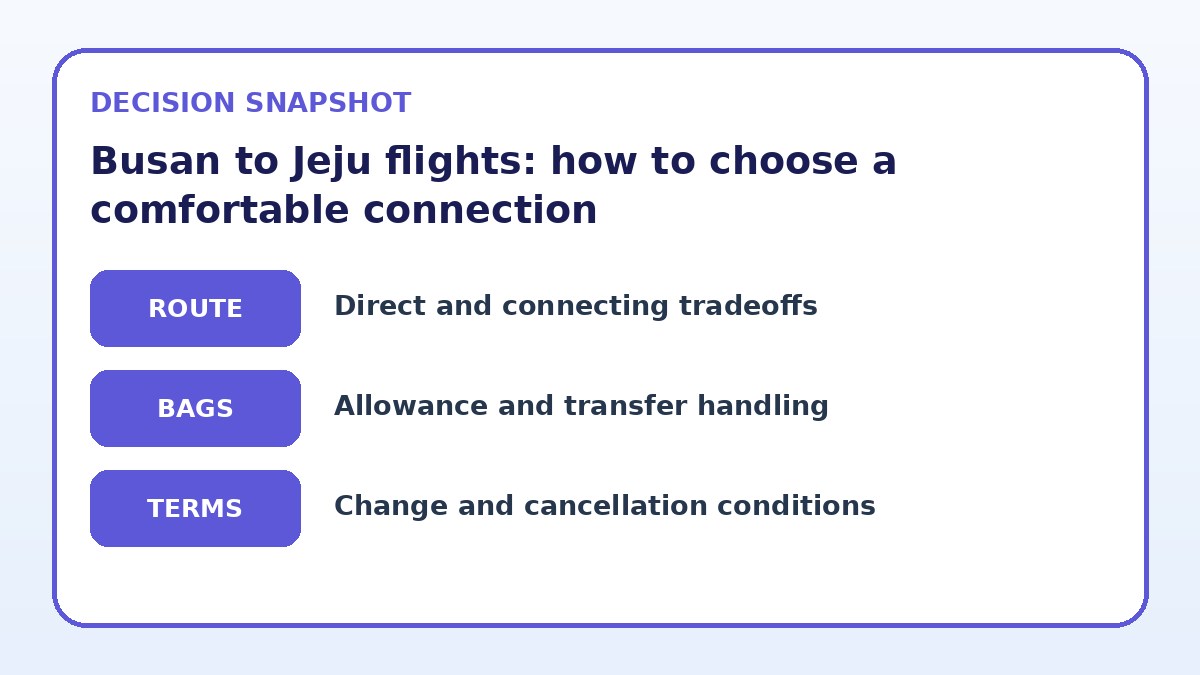
Routing: single-ticket versus separate bookings
When planning a comfortable long-haul connection between Busan and Jeju, the central routing decision is whether to book both legs on one itinerary or to buy separate tickets. A single-ticket connection usually means the airline or alliance takes responsibility if the first flight is delayed and you miss the second; it can also allow checked bags to be transferred automatically. For couples who prefer less stress and a single point of contact if problems arise, a consolidated itinerary often makes more sense, even if it costs a bit more.
Buying separate tickets can unlock lower fares or more convenient times on each leg, but it increases your responsibility for missed connections, rebooking, and luggage handling. If you pursue separate bookings, give yourself plenty of buffer time and consider purchasing flexible fares or travel insurance that covers missed connections. Also weigh ground-transit needs: if an airport change is required between legs, that adds time and complexity that couples should plan for together.
Baggage and connection risk for couples
Baggage rules and transfer handling are crucial when comfort is a priority. Confirm whether checked bags will be through-checked to your final destination when you book a single-ticket itinerary; that spares you the hassle of collecting and re-checking luggage during a layover. If you plan to carry less and travel with only hand luggage, separate tickets become less risky, but check cabin baggage size limits and whether overhead bin space is guaranteed for both seats when you choose your seats.
Couples should also plan for the worst-case: delays, lost luggage, or missed flights. Look at how the airline handles rebooking on protected itineraries, and what compensation or accommodation options exist during long overnight delays. For separate tickets, prepare a contingency plan: enough essential items in carry-on, a clear idea of rebooking costs, and contact details for local airport hotels or lounges if you need to rest during a long connection.
Compare flight-selection strategies
| Flight strategy | Best for | Risk to check |
|---|---|---|
| Single-ticket protected connection | Couples wanting minimal stress and baggage transfer protection | Usually higher fares but with rebooking support if a delay breaks the itinerary |
| Separate low-cost tickets | Couples prioritizing savings and willing to manage risks | Lower upfront cost but higher risk of missed connections and separate baggage handling |
| Long layover with hotel lounge access | Couples who prefer rest and privacy during extended waits | Adds cost for lounges or hotels, but improves comfort and reduces stress |
| Tight schedule, short total travel time | Couples who value speed and have backup plans for delays | Less margin for delays increases the chance of stress or missed connections |
Recheck the complete itinerary
Confirm airports, connection handling, baggage, and change conditions before deciding.
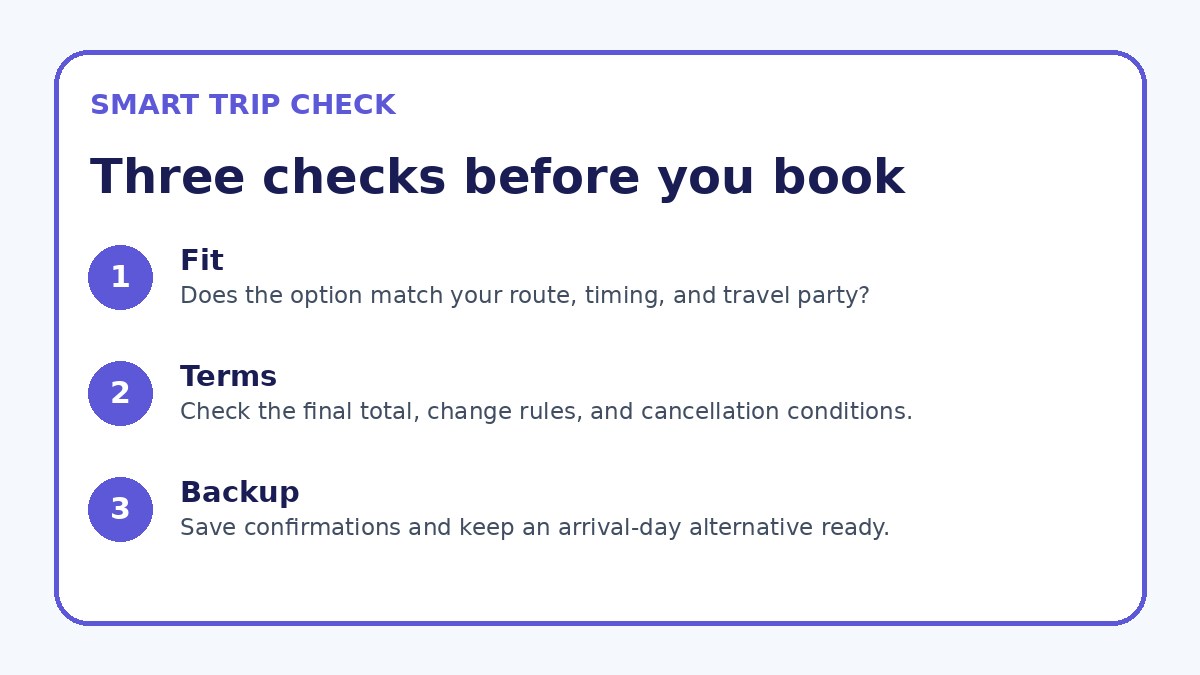
Schedule fit: timing for comfort and convenience
Comfortable connections depend on realistic timing. Avoid extremely tight transfers that leave no margin for delay; likewise, very long layovers drain energy and reduce the honeymoon feel. For couples, target a sweet spot that allows time for passport control (if applicable), security, possible terminal transfers, a relaxed meal, and a short rest without feeling rushed. Consider how early or late flights affect sleep, local transport options, and arrival at your final accommodation.
Also think about the logistics of airport-to-city travel at both ends. If arrival or departure times fall during limited transport hours, that can significantly impact comfort and cost. Build in extra time if you need to travel between terminals, or if you plan to collect and recheck luggage. When you compare schedules, emphasize arrival quality — how refreshed you will be on arrival — not only the fastest total elapsed time.
Flight details to verify
- Gather exact travel dates, full passenger names as on IDs, and contact information before you start searching fares.
- Decide whether you need checked-bag through-check and verify baggage rules on the final booking page.
- Compare single-ticket and separate-ticket itineraries and note the rebooking and missed-connection policies for each.
- Select seats together during booking and confirm seat assignments in your reservation immediately after payment.
- Plan transfer time that includes immigration, security, and any terminal transfers; add buffer time for unexpected delays.
- Save screenshots or PDFs of booking confirmations, fare rules, and contact numbers for airlines and credit card travel assistance.
Fare conditions and what to verify before booking
Before you commit to any fare, read the fine print on change fees, refundability, and baggage allowances on the airline’s final booking page. For protected itineraries, verify the rebooking policy for missed connections and whether overnight accommodation is provided in case of long delays. For separate tickets, check the penalties for changes and the cost to add or check baggage; those fees can quickly erase apparent savings.
Also confirm how seat selection and priority boarding work for the tickets you’re considering. Couples often value sitting together and may prefer extra legroom seats for comfort. Finally, if you’re comparing options on third-party sites, use Trip.com or the airline’s site as one of your checks but always verify final terms and exact passenger details on the carrier’s official booking page before you pay.
Flight Guide questions travelers ask
Is it safer for couples to book a single ticket for a Busan–Jeju connection?
Booking both legs on a single ticket generally reduces stress because the airline handles rebooking if you miss the second flight due to delays on the first. It usually allows checked baggage to be transferred automatically between flights, which is convenient for couples carrying more luggage. However, single-ticket itineraries can cost more than separate pieces and may offer fewer time combinations. Always review the airline’s missed-connection policy on the carrier’s final booking page so you know what assistance to expect.
How much connection time should we leave between flights to stay comfortable?
There’s no one-size-fits-all number, but plan transfer time that covers passport control, security screening, terminal changes, baggage recheck if needed, and a relaxed break. For couples wanting comfort, add extra buffer compared with the airline’s minimum recommended time. If you need to change terminals or collect and re-check luggage, allow significantly more time. Consider local transport schedules and whether you’ll want a meal or short rest — those preferences should determine your chosen connection buffer.
What should couples pack in carry-on to reduce connection worries?
Pack a small shared essentials kit in carry-on: chargers, important documents, a change of clothes, basic toiletries, medications, and any important electronics. Include a compact power bank and sleep aids like an eye mask or a small blanket if a long wait is expected. Keep reservation confirmations and contact numbers accessible. For separate-ticket itineraries, prioritize everything you’d need if checked luggage is delayed or you must overnight unexpectedly — that prevents a comfort breakdown during a connection.
Final decision note
For couples planning Busan to Jeju flights with a long connection, the practical choice comes down to balancing comfort, risk and budget. If minimizing stress is the priority, a single-ticket connection that allows through-checked baggage and offers rebooking support is worth the premium. If you and your partner prioritize lower fares and flexibility in times, separate tickets can work but require careful buffers, a solid contingency plan, and essential items in carry-on. Whatever you choose, prepare exact passenger details and travel dates before searching, verify baggage rules and fare conditions on the airline’s final booking page, and plan transfer time that preserves comfort so your trip starts relaxed rather than rushed.
Continue planning
Check current options and final conditions
Use the provider page to confirm live availability, the final total, cancellation terms, and every condition that matters to your trip.
This evergreen planning guide was created with AI-assisted drafting and a structured quality review. It does not display live prices, schedules, availability, visa guidance, or provider rankings. Verify current details before booking. Some links are affiliate links; we may earn a commission at no additional cost to you.