If you’re flying from Melbourne to Queenstown for the first time, the most practical departure airport is the one that balances the routing you need, a comfortable schedule, and the lowest connection and baggage risk for your trip. Melbourne has multiple airports and different flight patterns to Queenstown: some itineraries route via a major hub while others might be seasonal or require a connection. Rather than chase the cheapest fare on instinct, decide what matters most to you — fewer connections, consistent baggage transfers, or flight times that fit your itinerary. This guide gives a clear recommendation up front, then walks through the tradeoffs (routing, baggage/connection risk, schedule fit, fare conditions) so you can compare live options confidently. Before you search live fares, have exact travel dates, the number of passengers, cabin preference and any special baggage or connection needs ready to avoid surprises during booking.
See live routes for your exact travel day
Compare direct and connecting choices with the same baggage and traveler details.
Routing: directness versus number of hubs
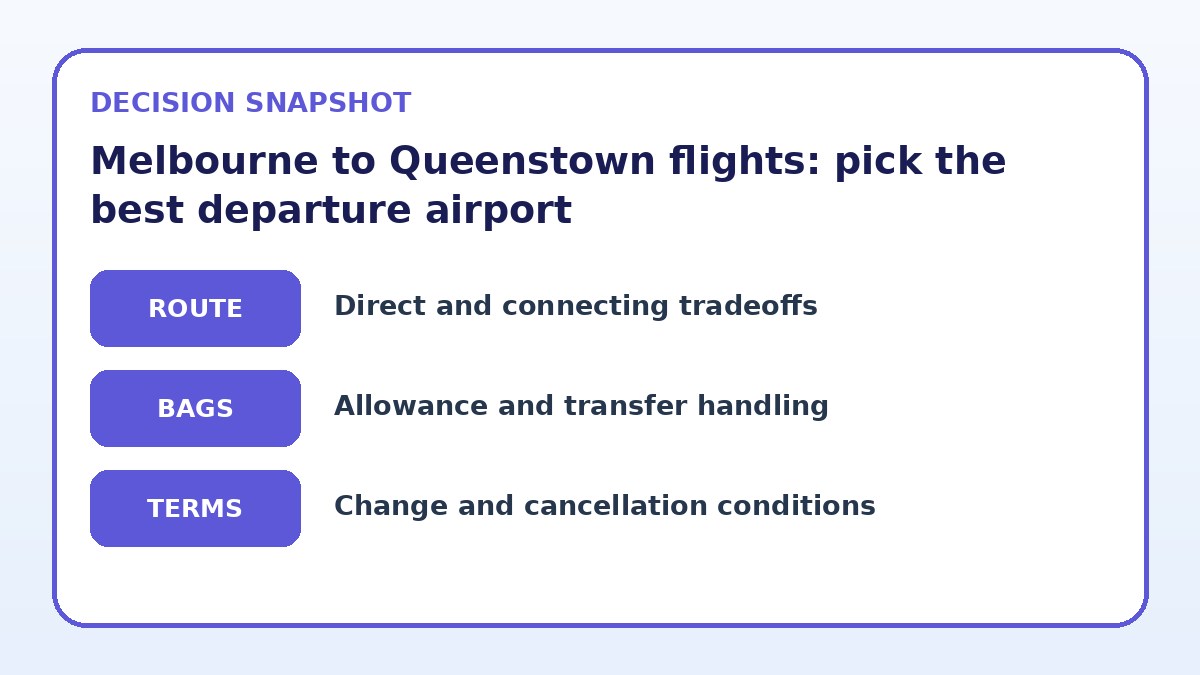
Routing is the first practical filter: do you prefer the simplest routing even if it costs more, or are you willing to add a connection to save on fare? Some Melbourne departures offer itineraries that route through a single hub, while others may connect through two cities depending on carrier partnerships and seasonal schedules. For first-time visitors, a single-connection itinerary usually reduces stress—fewer transfers mean fewer opportunities for delays to cascade into missed connections or lost bags. When comparing options, check whether the listed itinerary is presented as a single-ticket journey (one booking reference) or as separate tickets which increase risk and require separate check-in and baggage collection.
Don’t assume a direct flight exists; many routes to Queenstown involve at least one stop. Use routing to prioritize what matters: a late-night arrival in Queenstown after multiple connections is rarely worth a small fare saving if it leaves you exhausted before an early activity. On the booking page, verify the full routing map and total travel time, noting long ground transfer windows. If you find multiple single-connection options, compare connection times and the ease of making that connection—same-terminal transfers are preferable for first-time visitors unfamiliar with airport layouts.
Baggage and connection risk: practical considerations
Baggage rules and how airlines handle transfers are practical details often overlooked until they cause problems. If your itinerary is sold on a single ticket, most carriers will transfer checked bags through to the final destination, but policies vary. For first-time travelers, prioritize itineraries that explicitly state through-checked baggage; if that information is not clearly shown, contact the airline before booking. Think about whether you’ll have sports equipment, bulky luggage, or tight connection times—those situations change which departure airport is most practical because some airports and carriers facilitate faster transfers or have better baggage handling reputations.
When you must change aircraft at an intermediate airport, verify whether you’ll need to collect and recheck bags, especially when switching between domestic and international segments or between partners that don’t have luggage agreements. Also check minimum connection times shown on the booking page—real-world connection feasibility can depend on terminal layout, security lines, and immigration checks. If you carry fragile items or depend on tight onward connections in Queenstown, choose a departure airport and itinerary that minimizes recheck requirements and gives comfortable buffer time.
Compare flight-selection strategies
| Flight strategy | Best for | Risk to check |
|---|---|---|
| Prioritize the fewest connections | Travelers who want simplicity and minimal transfer risk | May pay higher fares and have fewer scheduling choices |
| Prioritize the cheapest available fare | Price-sensitive travelers comfortable with longer travel times | Often increases baggage and connection risk; check recheck requirements |
| Prioritize schedule fit (arrival time) | Those with tight ground plans or time-sensitive bookings in Queenstown | Might require small extra cost or accept more connections |
| Prioritize flexible fare conditions | Travelers who want change/refund options and peace of mind | Typically higher base fare but lowers risk of costly last-minute changes |
Recheck the complete itinerary
Confirm airports, connection handling, baggage, and change conditions before deciding.
Schedule fit: match flights to your ground plans
Flight times affect the rest of your trip: arrival hour in Queenstown determines whether you can collect rental gear, reach accommodation easily, or start activities the same day. Look for departures from Melbourne that align with your arrival preferences—early arrivals let you maximize the first day, while evening arrivals may be better if you prefer a relaxed first evening. Keep in mind the time needed between your Melbourne departure and any domestic travel to the airport, particularly if you must cross the city at peak traffic times or use public transport with limited service.
Also consider the reliability of schedule times across seasons. Peak travel periods or bad weather can shift flight times and increase delays. If your plans in Queenstown include time-sensitive bookings such as guided tours or rentals, choose flight schedules with reasonable buffers. On the airline’s booking page check the scheduled arrival time, but remember schedules can change; select options with flexible change policies if your ground bookings have strict timing requirements.
Flight details to verify
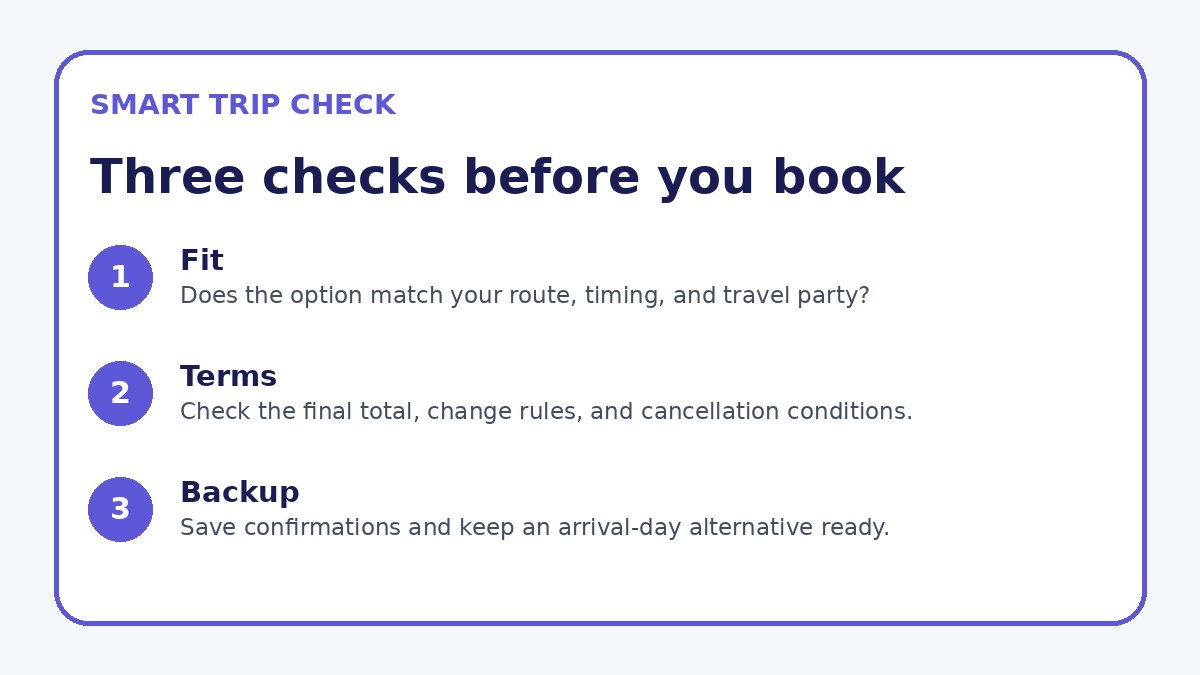
- Write down exact travel dates, departure and return times you’d accept, number of passengers, and any special baggage needs before you search fares.
- Search all nearby Melbourne airports and compare total travel time, number of connections, and whether baggage is through-checked on a single ticket.
- On the airline’s final booking page, verify fare rules: baggage allowance, change fees, cancellation policy and seat assignment conditions.
- Confirm connection details on the itinerary: terminal transfers, minimum connection times and whether you must collect and recheck baggage.
- Match arrival time in Queenstown to your onward plans and allow extra buffer for customs, baggage claim and ground transport.
- Save or screenshot the full booking confirmation and fare conditions after purchase, and keep airline contact details handy in case of changes.
Fare conditions: what to verify before you book
Fares differ not just by price but by what’s included and how changes are handled. Before you press buy, verify the fare class and what it includes: checked baggage allowances, seat selection, refundability, change fees, and whether the fare is per-person or bundled for groups. For first-time visitors, a slightly higher fare with generous change flexibility and included baggage can be more practical than a rock-bottom fare that imposes expensive ancillary fees. Always review the carrier’s final booking page and the fare rules pop-up to confirm what services are included and what costs extra.
If you compare fares across Melbourne airports, be sure to compare the total landed cost—base fare plus required fees for baggage, seat selection and carry-on conditions. When flights involve partners or interline connections, confirm who you contact for changes and disruptions. If Trip.com is part of your search toolkit, use it to compare live availability and fare conditions, but finalize and verify the fare terms on the airline’s own booking page before completing payment.
Flight Guide questions travelers ask
Should I always pick the Melbourne airport with the cheapest ticket when flying to Queenstown?
Not necessarily. Cheap tickets can come with tradeoffs—longer total travel times, more connections, and restrictive fare rules that charge for baggage or changes. For first-time visitors, those added complications can negate the savings if you face delays or need to change plans. Instead, compare the total landed cost and practical factors like whether luggage is through-checked, the number and length of connections, and how the arrival time in Queenstown fits your schedule. Verify all fare rules on the airline’s booking page before you buy.
How much connection time should I allow when planning a Melbourne to Queenstown itinerary?
Allow comfortable buffers beyond the published minimums, especially if you need to move between terminals, pass immigration/security, or recheck luggage. Published minimum connection times vary by airport and carrier and may not reflect real-world delays or busy periods. For first-time travelers, choosing an itinerary with a longer scheduled connection reduces stress and the chance of missing the onward flight. Check the booking page for terminal information and consider airport maps or airline guidance to judge transfer feasibility before booking.
What should I check about baggage when comparing departure airports in Melbourne?
Confirm whether your entire journey is ticketed on one booking and whether checked bags are transferred automatically to your final destination. If segments are on separate tickets or across partners without an interline agreement, you may need to collect and recheck bags, which adds time and risk. Also verify size and weight limits, fees for extra or overweight items, and whether special equipment (skis, bikes) is allowed and how it’s handled. Always review the carrier’s baggage policy displayed on the booking page to avoid surprises at check-in.
Final decision note
For first-time visitors flying Melbourne to Queenstown, the most practical departure airport decision hinges on what you value: simplicity, price, schedule alignment, or flexibility. Start by deciding that priority, then search all nearby Melbourne airports with exact travel dates and traveler details in hand. Compare routing and connection counts, confirm baggage transfer rules and minimum connection times, and verify fare conditions on the airline’s booking page before paying. If you use an aggregator like Trip.com to compare options, treat it as a search tool and always finalize terms with the carrier. Choosing the departure airport that fits your top priority will reduce stress and let you focus on enjoying Queenstown once you arrive.
Continue planning
Check current options and final conditions
Use the provider page to confirm live availability, the final total, cancellation terms, and every condition that matters to your trip.
This evergreen planning guide was created with AI-assisted drafting and a structured quality review. It does not display live prices, schedules, availability, visa guidance, or provider rankings. Verify current details before booking. Some links are affiliate links; we may earn a commission at no additional cost to you.