For business travelers deciding how to get from Seoul to Busan, the practical choice comes down to how flexible you need to be with time, meeting changes, and last-minute disruptions. Rail (KTX and other services), express coach, driving or ride-hire, and combinations (rail plus local taxi or airport transfer) all offer tradeoffs between booking flexibility, door-to-door time, and luggage/transfer friction. If your schedule can shift, prioritize fare rules that allow simple exchanges or refundable options; if you need a predictable office-to-office journey, prioritize minimizing transfers and luggage handling.
This guide gives the immediate recommendation up front: favor a flexible or exchangeable high-speed rail option when you value speed and city-center arrival, choose an express coach for lower-friction rebooking on short notice when door-to-door transfers are straightforward, and use car/ride-hire only when direct door-to-door control outweighs cost or traffic unpredictability. Below you’ll find operational decision checks for terminal fit, luggage handling, timing flexibility, and a disruption backup plan so you can pick the most practical end-to-end option.
Terminal fit and door-to-door practicality
Choosing the right terminal matters more than the advertised ride time. High-speed trains typically arrive at central city stations, which can be a big advantage if your meeting is downtown or your hotel is near the station. Coaches may use bus terminals that are convenient for transfers to suburban offices or business parks, while driving gives direct doorstep access but adds traffic risk. When planning, map your final meeting address against arrival terminals and factor in transfer time, taxi availability, and whether your company prefers metered taxis, ride-hailing apps, or car services for expense reporting.
For business trips, count the entire journey from office or hotel to office or hotel. A slightly slower option that drops you closer to the meeting venue often beats a faster ride that requires a lengthy transfer. Consider whether the terminal has quick luggage drop or retrieval options and whether it’s straightforward to get an invoice or receipt for expense claims. If your schedule includes airport connections, assess how each terminal aligns with domestic flight terminals and whether a direct airport link exists to avoid an extra leg.
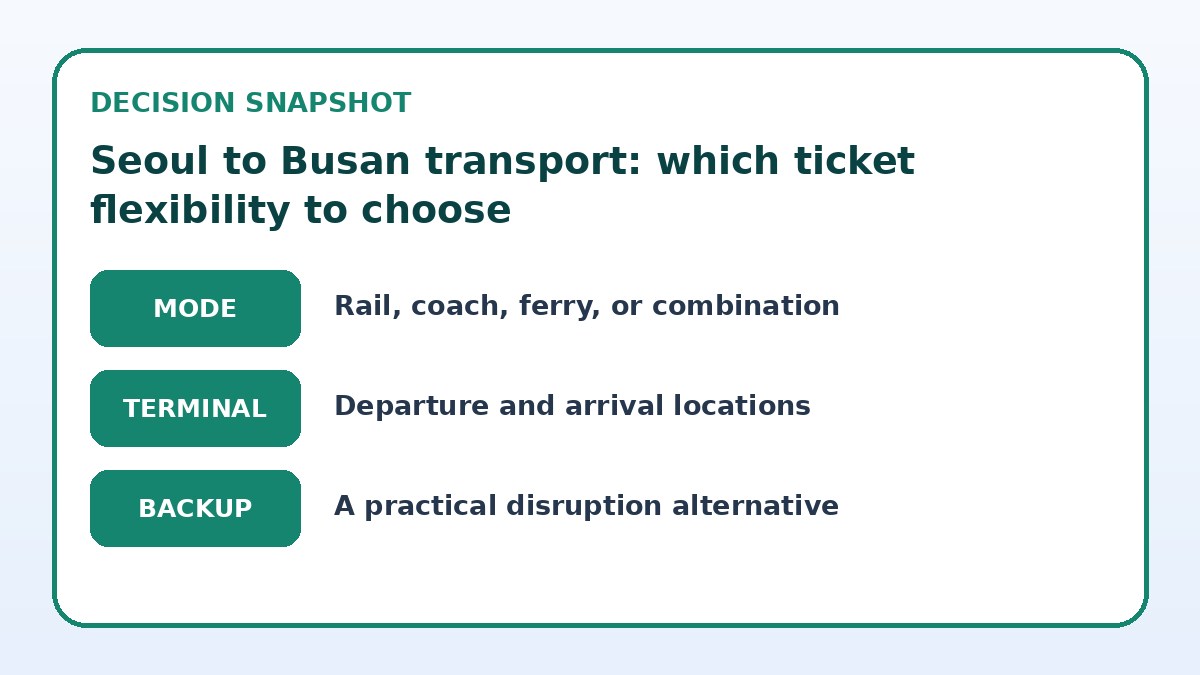
Choose the end-to-end journey plan
| Journey approach | Best for | Friction to check |
|---|---|---|
| Flexible high-speed rail ticket (exchangeable/refundable) | Travelers needing fast city-center arrival and easy schedule changes | Higher upfront cost and fewer last-mile options if your meeting is outside central stations |
| Standard/discount train or coach ticket (cheaper, stricter rules) | Fixed schedules with predictable meeting times and tight budgets | Limited rebooking flexibility; disruption can force expensive last-minute alternatives |
| Door-to-door car or ride-hire (private transfer) | Teams or executives prioritizing direct access and control over departure time | Traffic variability and higher cost; refund/exchange policies depend on the provider |
| Mixed-mode plan (train plus pre-booked taxi/coach for last mile) | Travelers balancing speed with door-to-door convenience and lower transfer risk | Requires coordinating separate bookings and checking multiple change/cancellation rules |
Check live intercity options
Look beyond the ride itself and compare terminals, transfers, luggage, and arrival fit.
Luggage handling and transfer friction
Luggage friction can change a short trip into a hassle-filled day. Trains generally offer room for carry-ons and dedicated luggage areas, but if you travel with large suitcases or presentation equipment, plan how you’ll stow and move them between modes. Coaches vary by operator: some load hold luggage for you while others limit size. Driving or ride-hire removes public-transfer handling but may involve trunk loading and variable trunk space. If you expect multiple handoffs—train to taxi to meeting—factor time and a small margin for unexpected delays when a porter or extra hands aren’t available.
Also think about the quality of the transfer environment: covered walkways, escalators, and short transfer corridors reduce stress when changing modes. If you must change in bad weather or during rush hour, choose terminals with easy lift access or nearby sheltered pick-up points. When booking, check the provider’s details on luggage allowances and whether you’ll need to tag items; confirm on the final booking page and save the policy screenshot or confirmation for expense reporting and to avoid surprises.
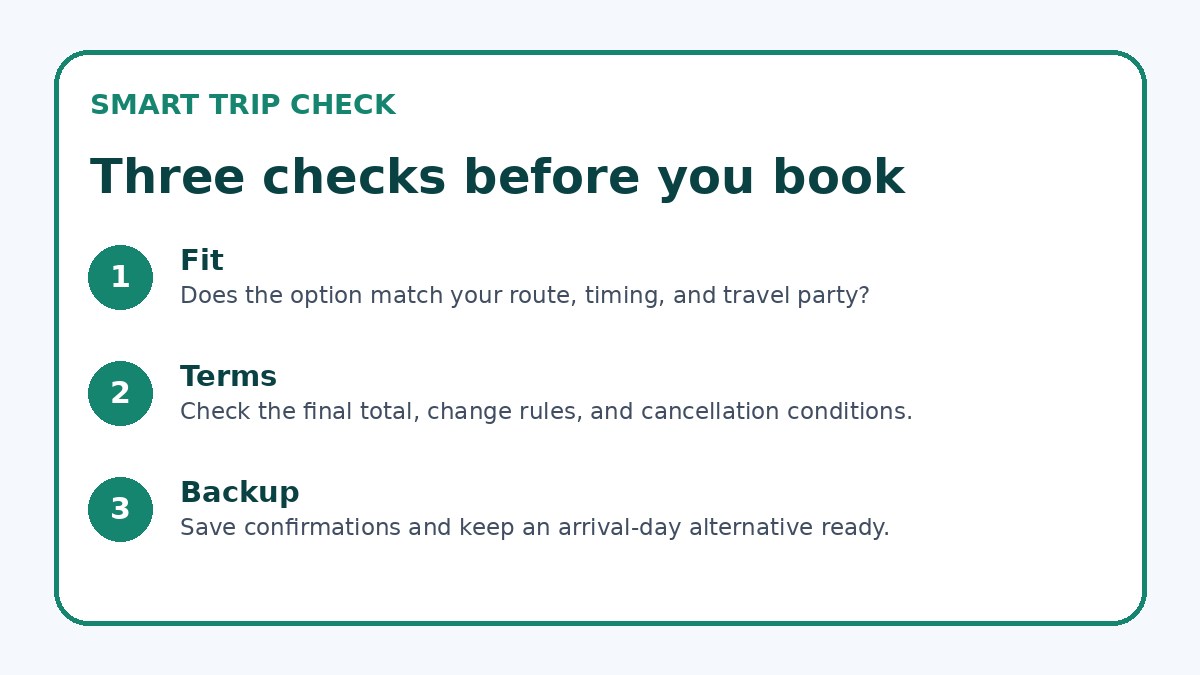
Timing flexibility and fare rules to prioritize
When booking for business, timing flexibility often trumps small cost savings. Review fare rules for exchanges, partial refunds, and change fees before you buy. Flexible fares that permit same-day or day-before changes with minimal penalty are valuable if meetings move. If you choose a non-refundable or strict fare, ensure there is a simple, inexpensive fallback you can use if your schedule shifts, such as a later regular train or a reliable coach. Also check how easy it is to upgrade or move to a different class if you need to work en route.
Beyond the fare rules, confirm how changes are handled: via app, phone, or ticket office; whether rebooking can be done at the station; and any paperwork needed for company expense rules. For cross-mode plans—like taking a train outbound and a coach home—verify separate policies for each leg. Always verify the provider’s current change and cancellation policies on their official booking page before completing a reservation; policies may differ between promotional and standard tickets.
Compare the practical alternatives
Use the final page to confirm what is actually offered on your dates and save a workable fallback.
Intercity travel checklist
- Map your final meeting address to the arrival terminals and estimate door-to-door travel time for each mode.
- Before booking, read and screenshot the fare’s change, exchange, and refund rules from the provider’s official booking page.
- Identify two immediate backup options (next train, express coach, or approved car service) and save their contact details.
- Confirm luggage allowances and how bulky equipment will be handled during transfers and at terminals.
- If expense reporting is required, verify what receipts or supplier confirmation are issued on rebooking or cancellations.
- Allow a buffer of 30–90 minutes beyond scheduled ride time for transfers, traffic, and unexpected delays depending on mode.
Disruption backup and practical contingency plans
Disruptions happen: weather, mechanical delays, or unexpected events can upend a carefully timed business trip. Prepare a simple, actionable backup plan: identify the next two departure windows on your preferred corridor, note an alternative mode you can switch to quickly, and keep a list of local transfer providers who accept corporate billing. When you book, save contact details and a screenshot of your ticket; that speeds exchanges or refunds if you need them. If your employer requires reporting, know what evidence the transporter supplies to support expense claims for rebooked travel.
For more resilience, consider booking refundable or exchangeable legs for the outbound if that morning is critical, and cheaper, stricter options for less-critical returns. If time is the highest priority, add a pre-approved emergency ride-hire vendor to your company travel options so you can switch modes quickly. Train operators and major coach providers usually post disruption notices on their official pages; check those pages and, if you use an aggregator like Trip.com for current availability, confirm the fare and policy on the provider’s final booking page before relying on the option.
Rail & Intercity Transport questions travelers ask
Can I change a high-speed rail booking the same day if my meeting moves?
Many operators offer same-day changes on certain fare types, but policies differ by ticket class and how you bought the ticket. Always check the provider’s change rules on the final booking page before purchasing: look for whether same-day rebooking is allowed, any applicable fees, and whether changes can be made via mobile app, station counter, or only by phone. If same-day changes aren’t permitted for your fare, identify a nearby alternative train, coach or pre-approved car service you can use at short notice.
Which option is least risky if I must arrive exactly on time for a presentation?
For predictable arrival times, choose an option that minimizes transfers and local traffic exposure: a train that arrives at a station close to your meeting venue, paired with a short pre-booked taxi, is usually more reliable than a long drive through peak traffic. If the final address is far from rail terminals, a private car booked with buffer time may be better. Whatever you choose, add a time cushion for transfer and allow a contingency plan — such as an alternative later train or a standby car service — in case of disruption.
How do I compare flexibility across different providers when policies vary?
Compare the concrete change and refund terms rather than marketing phrases. Create a quick table listing each option’s allowed change window, exchange fees, refund conditions, and channels for rebooking. Verify these details on the provider’s official booking page and save screenshots. Also consider operational factors—how easy it is to rebook at a station versus by phone, terminal proximity to meetings, and how luggage is handled. If you use an aggregator like Trip.com to view options, always confirm the selected fare’s final terms on the provider’s page before committing.
Final decision note
Business travelers on the Seoul to Busan corridor should prioritize the ticket flexibility that matches how often their schedule changes and how important a predictable door-to-door arrival is. Flexible high-speed rail fares are often the best all-rounder for speed plus downtown arrival, while coaches or mixed solutions may win on price or last-mile convenience when your office isn’t near main stations. For high-stakes meetings, buy flexible or refundable legs for the crucial outbound journey and set clear backup options. Finally, always confirm fare rules and rebooking channels on the provider’s official booking page before purchase, and keep contact details for your contingency plan accessible.
Continue planning
Check current options and final conditions
Use the provider page to confirm live availability, the final total, cancellation terms, and every condition that matters to your trip.
This evergreen planning guide was created with AI-assisted drafting and a structured quality review. It does not display live prices, schedules, availability, visa guidance, or provider rankings. Verify current details before booking. Some links are affiliate links; we may earn a commission at no additional cost to you.