If you're visiting Ho Chi Minh City for the first time, the practical question isn't which deal looks cheapest but which booking offers the right cancellation flexibility for your needs. Start by comparing the same dates, the same number of travelers, and identical inclusions when evaluating packages versus separate bookings. A flight-and-hotel bundle may simplify one checkout and sometimes offers moderate flexibility, but separate refundable hotel rates plus flexible flight fares can be easier to change without penalty. This guide shows which parts of a trip tend to be most restrictive, what to check on the provider’s final booking page, and how to avoid apparent savings that add costly change or cancellation fees. Use these checks to choose an approach that balances price, convenience, and the ability to change plans at short notice.

Test package value fairly
| Booking approach | Best for | Tradeoff to check |
|---|---|---|
| All-in-one package (flight + hotel + extras) | Travelers wanting one confirmation and simplified support | May lock multiple components into a single cancellation policy and limit individual refunds |
| Separate flight and refundable hotel bookings | Travelers needing maximum flexibility for dates and accommodations | Requires managing multiple reservations but reduces the risk of losing payments for one changed element |
| Nonrefundable prepaid bundle | Travelers with firm dates seeking the lowest upfront cost | Cheaper upfront but costly to change; small savings can evaporate if plans shift |
| Flexible-flight fare plus prepaid nonrefundable hotel | Travelers who prioritize flight flexibility but want a lower hotel rate | Protects flight changes but still risks losing hotel payments or incurring change fees |
Check current package and separate options
Use identical dates, travelers, room needs, baggage, and flexibility so the comparison stays meaningful.
What to compare before judging a bundle
Before deciding whether a package deal is useful, compare four fundamentals: exact travel dates, number of travelers, room type and bedding configuration, and the included transfer or activity options. Packages often bundle airport transfers, local tours, or breakfasts that can look like savings, but those inclusions are only comparable if they match what you would buy separately. Use the same outbound and return dates and the same occupancy rules when running separate versus bundled quotes so you’re comparing apples to apples.
Also check change and cancellation rules for each component in the package. Some bundles aggregate terms so that a single cancellation policy covers flights and hotels together; others defer to each supplier’s rules. On the booking page, look for explicit language about refunds versus travel credit, the deadline for penalty-free changes, and whether any third-party provider will manage refunds. If the final booking page is unclear, contact the provider before purchase and save written confirmation of the policy you relied on.
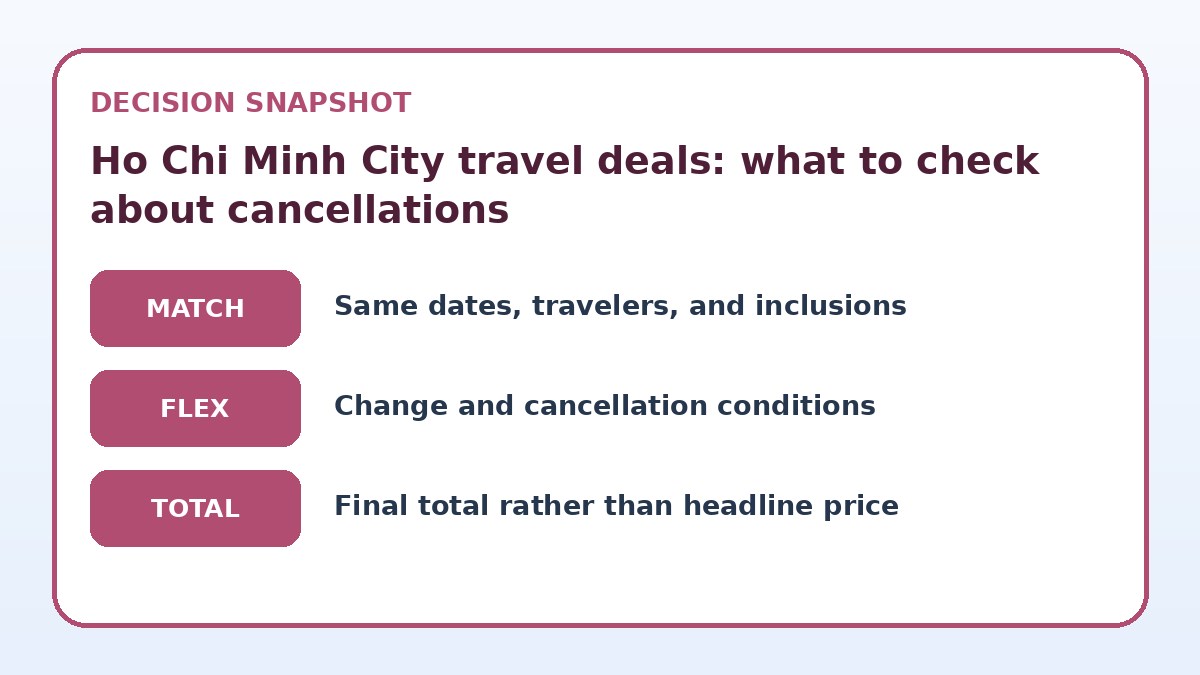
Inclusions: which items affect flexibility most
Flights and hotels typically drive most of the inflexibility in a Ho Chi Minh City trip. Airline tickets can be nonrefundable or charge hefty change fees unless you buy a flexible fare; hotels may offer nonrefundable prepaid rates that are cheaper but unforgiving. Transfers, guided tours, and tickets to attractions are usually more flexible when booked with providers that allow free cancellations within a specified window, but policies vary widely — some local tours are nonrefundable within 24–48 hours.
When a bundle includes extras like airport transfers or day tours, determine whether those extras can be removed at checkout or replaced with vouchers. If you’re likely to change arrival times or extend your stay, a prepaid transfer included in a package can become useless; a cash-back or fully refundable transfer option may be worth the extra cost. Always ask whether included items are refundable individually or only as part of the full package so you can estimate true flexibility.
Look past the headline total
Compare inclusions and change conditions before deciding whether a package is genuinely useful for this trip.
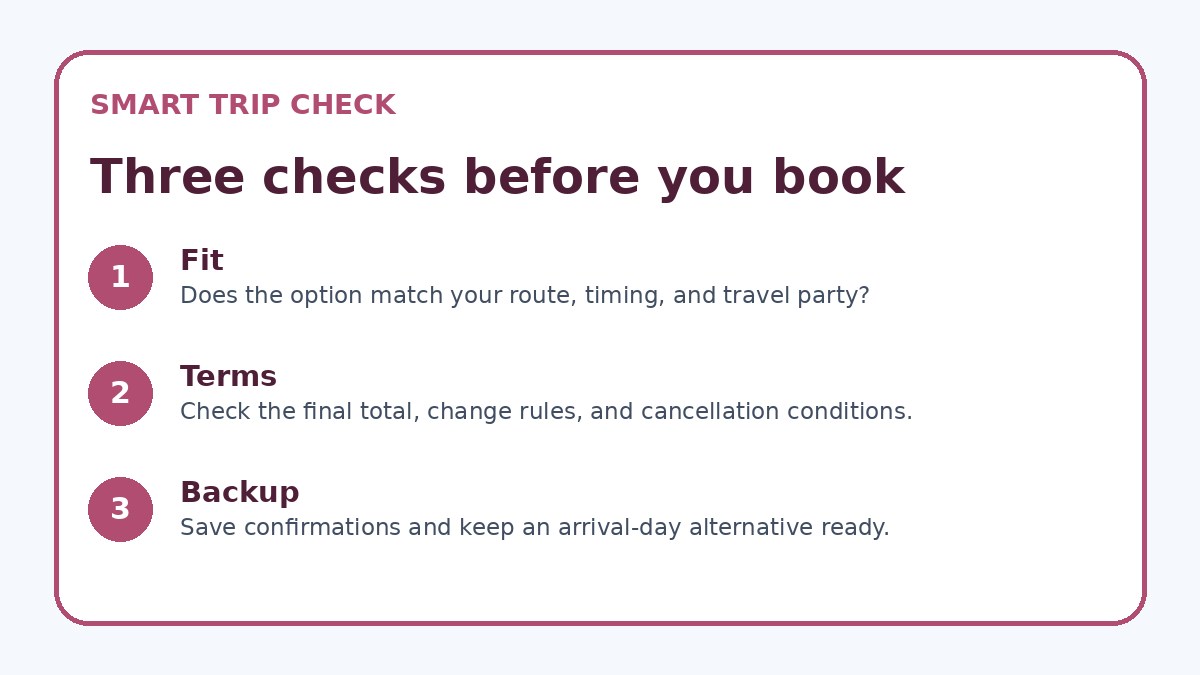
Deal comparison checklist
- Run side-by-side quotes for the same dates, traveler count, and room type when comparing package and separate booking options.
- On the final booking page, copy or screenshot the exact cancellation and change policy text for flights, hotels, and bundled extras.
- Verify whether refunds are issued to your card or provided as travel credit and note any supplier responsible for processing refunds.
- Confirm what is and isn’t included—baggage, transfers, breakfast, taxes, or resort fees—and price those separately if needed.
- If booking a package, ask whether individual elements can be cancelled separately and what fees apply for partial cancellations.
- Consider travel insurance or a protection add-on if your plans are uncertain, and read the policy’s covered reasons and claim process.
Traveler-specific value: who benefits from which approach
First-time visitors who prioritize simplicity—those who prefer one confirmation and one customer-service contact—may find a well-documented package appealing, especially if the package explicitly lists a clear cancellation and change policy. However, travelers with unpredictable schedules, families with small children, or anyone holding a flexible work window should favor refundable hotel rates and change-friendly airfares. For many, paying a little more for flexibility avoids high stress and unexpected fees if plans shift.
Couples or solo travelers comfortable handling multiple bookings can often achieve better overall flexibility by separating components: choose a refundable or free-change flight option and pair it with a hotel nightly rate that permits free cancellation up to 24–72 hours before arrival. If you prioritize low upfront cost and can commit to firm dates, a nonrefundable bundle may be acceptable, but remember that shifting one element may void the package’s combined pricing.
Final terms: what to verify on the provider’s booking page
On the provider’s final booking page, verify the exact cancellation and change deadlines and whether refunds are issued to the original payment method or as travel credit. Check whether any fees are percentage-based, a fixed amount, or differ by component. Confirm who processes refunds: the travel agent, an airline, a hotel, or a third-party supplier, and note contact channels for each. If travel insurance or a protection add-on is offered, read its terms—some policies exclude certain causes of cancellation.
Also confirm inclusions again on the final page: which taxes, resort fees, baggage allowances, and transfer details are included or excluded. For flights, verify whether the fare includes seat selection, checked bags, and how name changes or date changes are handled. For hotels, check the room description and whether breakfast or other services are guaranteed. If any term is ambiguous, ask the provider in writing and retain that response before you complete payment.
Travel Deals & Booking Strategy questions travelers ask
Is a package deal safer for a first-time trip to Ho Chi Minh City if I want fewer decisions?
A package can be simpler because it consolidates confirmations and may offer a single customer-service channel, which is helpful for first-timers who prefer less administrative work. However, that simplicity can come with tradeoffs: packages sometimes apply a single cancellation policy to all components. Before you book, verify on the provider’s final page whether flights, hotels, and extras are refundable separately or only together. If you expect schedule changes, separate refundable components often provide more practical protection.
How do I avoid false savings when a site shows lower package prices?
False savings arise when the package and the separate bookings differ in inclusions or cancellation rules. To avoid this, ensure you compare identical dates, room types, passenger counts, and included services. Then check each component’s change and cancellation terms; a lower quoted price that’s nonrefundable can cost far more if you need to change plans. If anything on the final booking page is unclear, ask the provider to confirm in writing what is refundable and what penalties apply.
What exact items should I re-check right before I hit purchase?
Right before paying, re-check the cancellation deadlines and whether refunds are to your original payment method or travel credit; baggage and seat policies for flights; the hotel’s check-in policy and any mandatory fees; and the refundability of included transfers or tours. Confirm who will process refunds and note their contact details. If you plan to use Trip.com or another aggregator, use it to compare current availability and terms, but verify final policies on the carrier or hotel’s own booking page too.
Final decision note
For first-time visitors to Ho Chi Minh City, the best booking approach depends on how likely your plans are to change. If you value simplicity and straightforward support, a clearly documented package can keep things easy—just verify the package’s full cancellation rules before you commit. If flexibility is your priority, separate refundable hotel rates combined with flexible flight fares usually offer the most practical protection, even if they require managing multiple reservations. Always compare identical itineraries when testing savings, read final booking pages carefully, and save written confirmation of any policy clarifications from the provider.
Continue planning
Check current options and final conditions
Use the provider page to confirm live availability, the final total, cancellation terms, and every condition that matters to your trip.
This evergreen planning guide was created with AI-assisted drafting and a structured quality review. It does not display live prices, schedules, availability, visa guidance, or provider rankings. Verify current details before booking. Some links are affiliate links; we may earn a commission at no additional cost to you.