If you’re traveling to Gyeongju alone, the single most useful decision is not the absolute earliest or latest date to buy, but which combination of services you compare before committing. Start by matching the same travel dates, the number of travelers (one), and identical cancellation and change conditions. Compare packages that include transportation, lodging, and activities against booking each piece separately. For solo travelers especially, flexibility and refund rules often matter more than a small advertised saving. This guide gives a practical short list of what to check on provider pages, how to weigh inclusions and flexibility, and four realistic booking approaches to compare so you can pick a window that balances convenience, risk, and budget.

Test package value fairly
| Booking approach | Best for | Tradeoff to check |
|---|---|---|
| All-in-one package (transport + hotel + tours) | Travelers who want a single booking and minimal logistics to manage. | Less flexible for last-minute changes; verify which components are nonrefundable before booking. |
| Book transport and hotel together, activities separately | Solo travelers who want core logistics handled but flexible day plans. | May save time while keeping activity flexibility, but check mixed refund rules for bundled parts. |
| Separate bookings for each component | Those who prioritize flexibility and want to mix suppliers or room types. | Requires more legwork and comparison to avoid higher aggregate costs or conflicting cancellation windows. |
| Hotel-first (secure lodging), then last-minute transport/tours | Travelers who need a guaranteed base in Gyeongju and will decide activities later. | May get better refundable rates on lodging, but transport or tours could be limited closer to travel dates. |
Check current package and separate options
Use identical dates, travelers, room needs, baggage, and flexibility so the comparison stays meaningful.
Inclusions: list exactly what matters
When evaluating a Gyeongju travel deal, write down every included item in plain language. For solo travelers that list should at minimum name whether roundtrip transportation (from Busan, Seoul, or Daegu), hotel nights, breakfast, a guided tour, and any entrance fees are included. Don’t rely on summary bullets: find the detailed itinerary or inclusions section and copy wording about pick-up locations, hotel room type, and whether meals are per person or per booking. Small differences—like private versus shared transfer—can greatly affect convenience for one person.
After listing inclusions, decide which items you can easily book on your own and which you value bundled. For example, a late-night transfer from a nearby city or a guided night tour of Bulguksa may be worth bundling for a solo traveler who prefers not to navigate public transport at odd hours. Conversely, you might prefer to book a flexible hotel rate and buy tickets for specific museums as you go. Always mark any ambiguous phrasing to verify on the provider’s checkout page before purchase.
Flexibility: cancellation and change rules
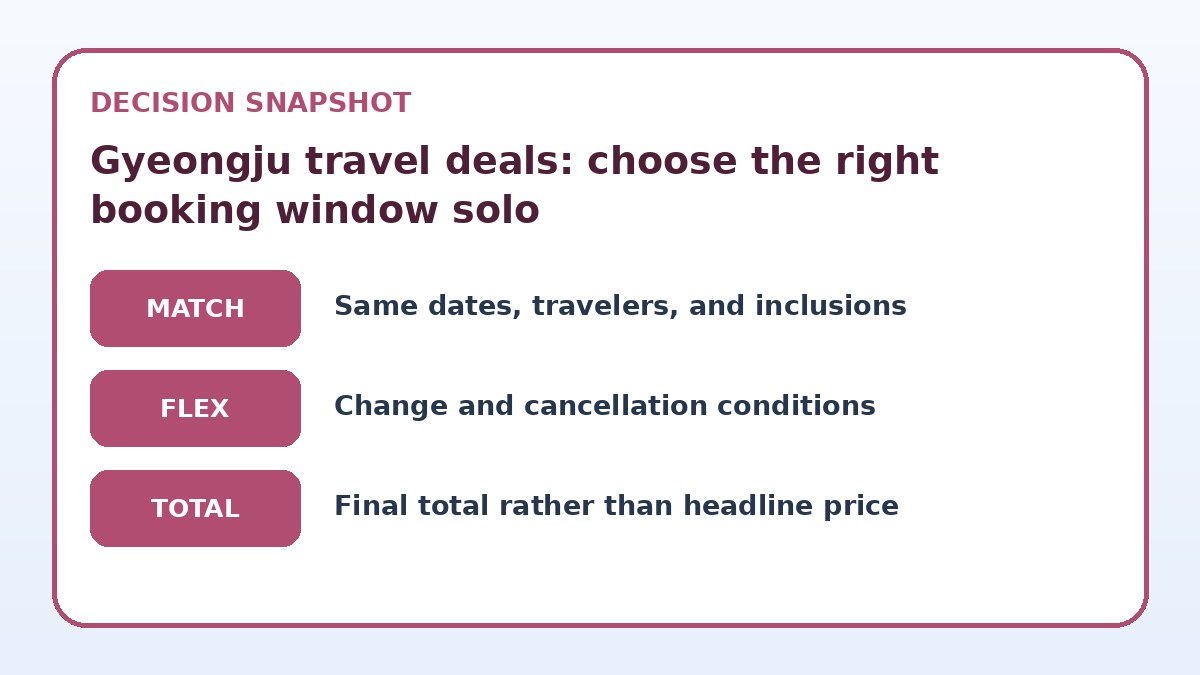
Read the cancellation and change policy line by line; for solo trips these rules often determine the sensible booking window. Look for how many days before arrival you can cancel without penalty, whether refunds are full or partial, and whether credits are issued instead of money back. Also check how changes are handled—some bookings allow date changes for a small fee, others treat changes as cancellations and rebookings. Note any distinction between flexible accommodation rates and nonrefundable transport or activity components; a package can mix both.
On the provider’s final booking page verify timing and costs for changes and what documentation is required for refunds. If the trip involves cross-provider components (an independent hotel plus a separate tour), check both suppliers’ policies. For additional peace of mind, consider a slightly earlier purchase window for nonrefundable transport segments, while keeping accommodation or tours on flexible rates. Document the exact policy language—refund percentage, any service fees, and how long refunds take—before you finalize payment.
Look past the headline total
Compare inclusions and change conditions before deciding whether a package is genuinely useful for this trip.
Deal comparison checklist
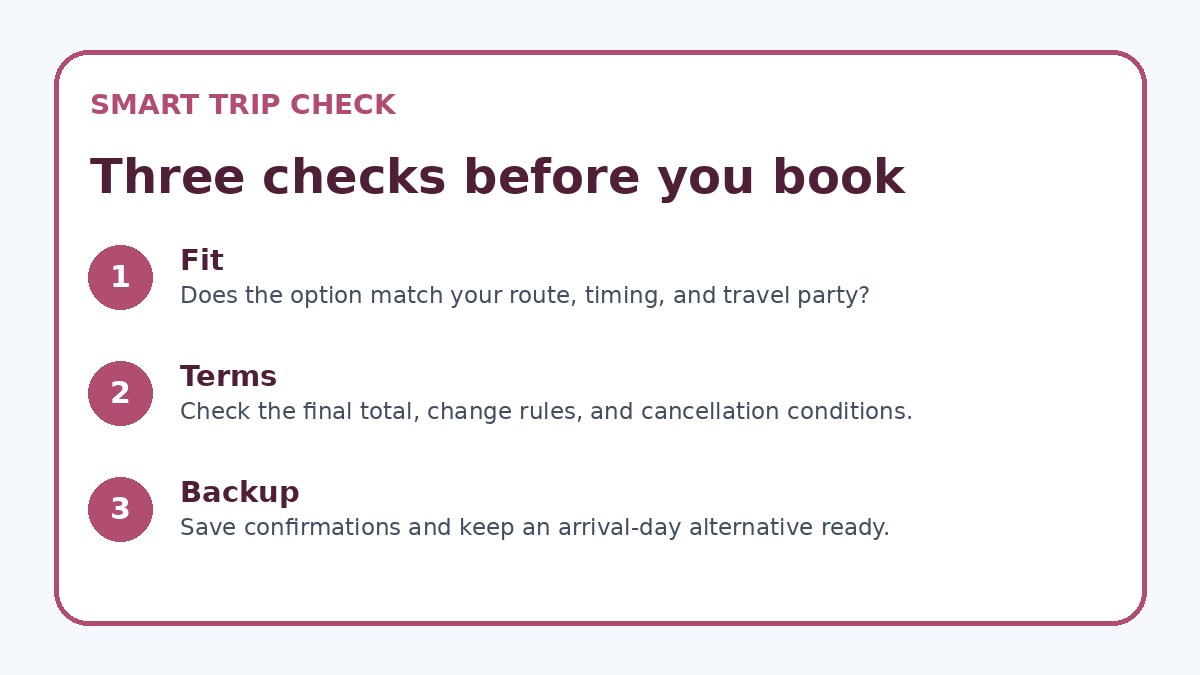
- Match and copy the exact travel dates, traveler count (one), and room type into every quote you compare.
- Open each provider’s cancellation and change policy on the final checkout page and save a screenshot or PDF.
- List every inclusion and exclusion from the booking page—transfers, meals, entrance fees, and pickup specifics.
- Confirm payment terms: full payment now, deposit, or pay-at-property—and the refund timeline if cancelled.
- Check whether single-occupancy pricing applies or if you’re charged a double room rate without a discount.
- If a package references third-party services, note the third party’s name and verify their separate terms.
Traveler-specific value: what solo travelers actually need
Solo travelers often value single-room rates, safety-conscious transfers, and social or guided options more than slight savings. Ask whether a bundle offers single-occupancy pricing or forces a double rate, and whether transport is door-to-door or requires meeting at a station. A package that guarantees single rooms and private transfers might be worth a narrower booking window even if it appears pricier. Conversely, if you’re comfortable with local buses or trains and want the freedom to change plans, booking components separately gives more control.
Another consideration is activity size and pace. Some guided options are designed for groups and may dilute the experience for a solo traveler who prefers quieter, self-guided exploration of Tumuli Park or Anapji Pond at dawn. If social interaction matters, look for small-group tours explicitly sized for fewer participants. If solitude matters, prioritize hotels with easy access to main sites and flexible cancellation so you can change plans without penalty.
Final terms: what to verify on the checkout page
Always check the supplier’s final booking page before paying. Verify the exact travel dates, traveler count, room type, and a clear listing of inclusions and exclusions. Look for final line items like local taxes, mandatory resort fees, or service charges that sometimes appear only at checkout. Also confirm whether the booking requires immediate full payment or only a deposit, and find the precise instructions for amendments and refunds.
If you find any vague language—terms like "subject to availability" or "conditions apply"—contact the provider and request written clarification that you can save with your booking confirmation. Keep screenshots or PDF copies of the confirmed terms. For comparison shopping, use the same search parameters across sites and, if needed, open the provider’s page in a different browser to ensure you see the live cancellation and change policy before you finalize the booking.
Travel Deals & Booking Strategy questions travelers ask
How far in advance should a solo traveler book Gyeongju travel deals?
There’s no one-size-fits-all window; instead, base timing on what’s least replaceable in your itinerary. If your trip depends on a specific train or private transfer time, book those components earlier because transport capacity can change. If you value flexibility, secure refundable hotel nights first and leave tours or nonessential activities until closer to travel. Always verify cancellation or change penalties on the provider’s final booking page before purchase so you can judge the real risk of booking now versus later.
Can bundling transport and hotel really save me time and stress as a solo traveler?
Bundling can reduce the number of separate confirmations and offer seamless logistics, which is especially helpful when arriving late or navigating unfamiliar stations. However, the convenience must be weighed against mixed refund rules—one nonrefundable component can make the whole package costly to change. For solo travelers, the ideal compromise is bundles that clearly list refundable and nonrefundable parts so you can assess true flexibility on the provider’s checkout page.
What common pitfalls create the illusion of savings in Gyeongju travel deals?
Typical traps include comparing advertised package totals without checking included taxes or service fees that appear only at checkout, assuming single occupancy is included, and overlooking restrictive change or cancellation terms. Another mistake is failing to compare the same dates and traveler count when evaluating a package versus separate bookings. To avoid false savings, place identical parameters into each quote and confirm the final price and terms on the supplier’s booking page before deciding.
Final decision note
For solo travelers planning a trip to Gyeongju, the practical booking window depends on which elements of the trip you value most—nonrefundable transport, flexible lodging, or prearranged tours. Start by listing identical dates and traveler details across every quote, then compare inclusions and the exact cancellation or change terms shown on the final checkout pages. If convenience matters most, a well-documented all-in-one package can simplify logistics; if flexibility matters, secure refundable core items first and buy other pieces later. Keep records of the precise wording on provider pages and use those terms to judge real value, not just advertised summaries.
Continue planning
Check current options and final conditions
Use the provider page to confirm live availability, the final total, cancellation terms, and every condition that matters to your trip.
This evergreen planning guide was created with AI-assisted drafting and a structured quality review. It does not display live prices, schedules, availability, visa guidance, or provider rankings. Verify current details before booking. Some links are affiliate links; we may earn a commission at no additional cost to you.