If your trip to Queenstown includes bulky ski bags, a child seat plus suitcases, or oversized photographic equipment, choosing where to pick up your rental car will shape the first hours of your visit. For many travelers with extra luggage, airport pickup removes a short transfer with bags but can cost more in time or fees. City pickup may mean easier access to luggage-friendly vehicles and fewer immediate charges, but hauling heavy bags into town by shuttle, taxi, or rideshare can be a real hassle. This guide helps you weigh the practical impacts — route value, insurance language, pickup and return friction — and gives a clear non-driving fallback so you can finish booking with confidence.
Does driving improve your Queenstown itinerary?
Start by asking what driving actually adds to your trip. If your main activities are centered in central Queenstown and you plan short excursions to nearby wineries, beaches of Lake Wakatipu, or local trails, the convenience of an early pick-up may not offset the hassle of moving heavy bags. By contrast, if you’re carrying ski equipment, plan to drive to remote trailheads, or your accommodation sits outside town, a car gives clear route value. Map your planned stops and their distance from central Queenstown; if most are within a short shuttle or rideshare ride, driving may be optional rather than essential.
Consider the value of flexibility versus the effort of handling luggage. A rental lets you set your own schedule for road trips into Glenorchy, Arrowtown, or the Queenstown Lakes District, and carry bulky gear without repeated transfer costs. But if you’ll only use a car for a single day or two, parking, one-way fees, and the time to arrange pickup and return might outweigh benefits. Balance the number of heavy-luggage movements against the convenience of door-to-door travel and how often you’ll truly need independent transport.
Decide whether driving earns its place
| Mobility strategy | Best for | Cost or friction to check |
|---|---|---|
| Pick up at Queenstown Airport | Travelers with bulky gear who want to avoid an extra transfer from the terminal. | May involve off-site shuttles to the rental lot, potential airport fees, and limited desk hours — verify location and collection process. |
| Pick up at a city branch in central Queenstown | Travelers who want more vehicle choices or lower base rates and can manage a short transfer from the airport. | Requires moving luggage into town first; plan a taxi/rideshare with sufficient trunk space or a pre-booked shuttle. |
| Door-to-door private transfer with luggage-friendly vehicle | Groups or travelers with oversized items who prioritize minimal handling and a direct ride to accommodation. | Higher per-trip cost than public options; still lacks the on-demand freedom of having your own car for day trips. |
| Non-driving mix (shuttle, public bus, and local hires) | Travelers who prefer not to drive and want to avoid rental complexity while still moving heavy bags efficiently. | Requires coordination across services and possibly more time; check luggage policies and schedules before committing. |
Check live rental choices only after the route test
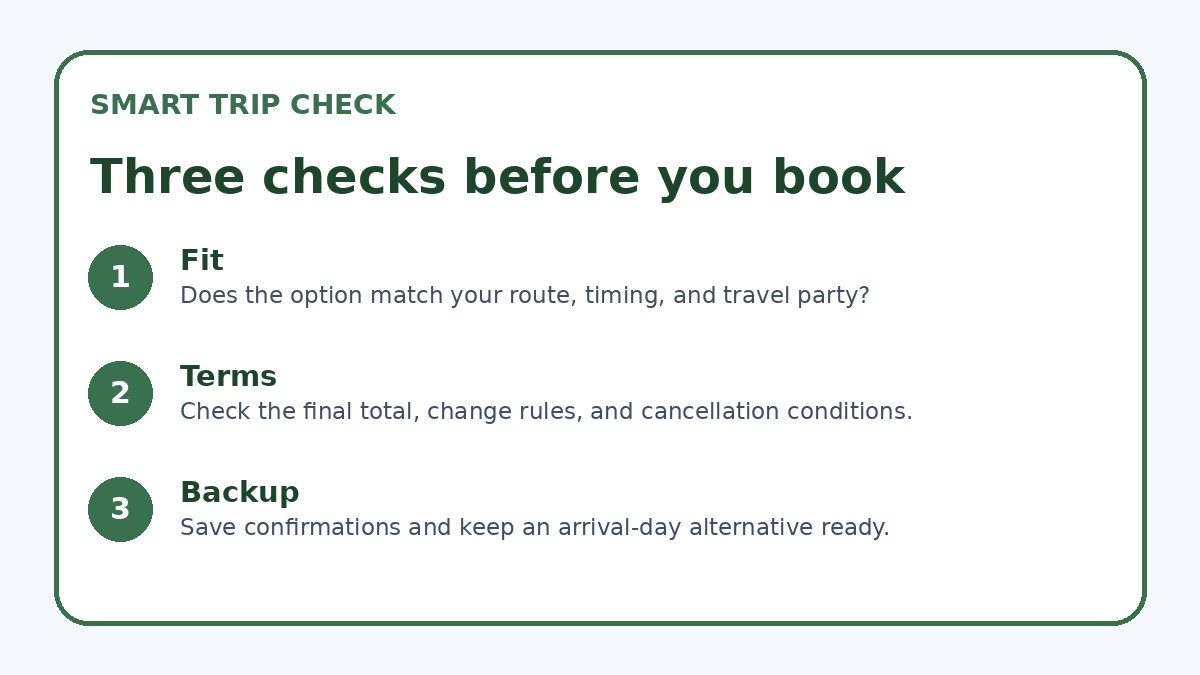
Use the exact driver, dates, pickup point, and return plan to compare current conditions.
Insurance, excess, and wording to verify before booking
Insurance terms can change the cost and risk of driving with extra luggage. Don’t assume standard coverage protects belongings left in the vehicle — many contracts limit liability for personal effects and exclude items stored on roof racks unless specifically insured. Look for explicit language on third-party liability, collision damage waivers (CDW), and any add-ons for luggage or sports equipment. Also check whether the named driver list must include everyone who may drive the car, and whether additional drivers add daily fees or change liability.
Before you confirm, verify deductible amounts, how claims are handled, and whether a credit-card or third-party insurer reduces your excess. If you plan to attach roof boxes, tow trailers, or carry bikes, confirm that those uses are permitted and whether additional insurance or equipment fees apply. The final booking page from the rental provider (or a comparison site such as Trip.com for availability checks) should show exact policy wording, excluded items, and the process to make a claim — save or screenshot those pages for reference at pickup.
Compare the full rental conditions
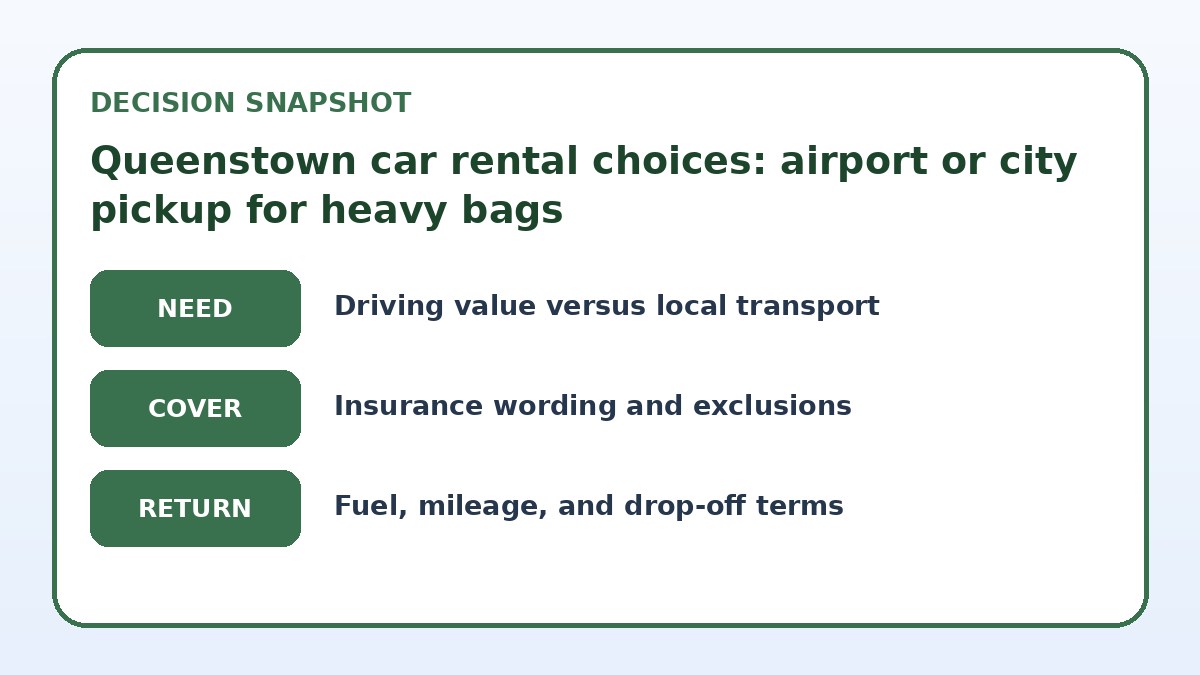
Confirm insurance wording, exclusions, deposit, fuel, mileage, and return terms on the final page.
Pickup and return friction: practical steps for heavy luggage
Airport pickup frequently minimizes indoor transfers: collect bags, follow well-signed rental desks or shuttle points, and load into the vehicle near the terminal. But large airport lots can be crowded and require patience at peak times; some counters are off-site with a transfer shuttle to the garage. Confirm where the desk and vehicle are located, whether shuttles run frequently, and whether staff will help with loading. Also check whether your booking requires a flight number or has limited desk hours that could affect late arrivals.
City pickup often involves a short trip from the airport to a city branch, which could be a tiny convenience store front, an industrial park office, or a downtown desk. Plan how you will transport luggage from the airport to that branch — pre-book a taxi, rideshare, or shuttle with ample trunk space. For returns, a central city drop-off may be quicker if your final day ends in town, but make sure the provider accepts after-hours returns and whether drop-off locations are in easy walking distance of your accommodation or require another transfer.
Car rental terms to verify
- Confirm the rental pickup location and exactly where vehicles are parked or shuttled from at the airport or city branch.
- Read the insurance and excess wording on the final booking page, including policies for personal effects, roof boxes, and extra drivers.
- Measure your largest bag or equipment and compare trunk and roof box dimensions with the vehicle options before finalizing.
- If choosing city pickup, pre-book a taxi or rideshare with guaranteed trunk space or a shuttle that accepts oversized luggage.
- Check the rental provider’s fuel, mileage, one-way, and late-drop rules on the booking page and note any potential charges.
- Plan a non-driving fallback (private transfer, shuttle, or hotel luggage hold) and reserve it in case pickup complications arise.
Non-driving fallback: alternatives that work well with extra luggage
If you decide not to drive, there are sensible alternatives that keep your luggage manageable. Door-to-door private transfers and larger airport shuttles can be pre-booked with advance notice about oversized bags, ensuring the vehicle has space. Rideshare and taxis are convenient for groups or when you have a single large piece of equipment, but always confirm trunk dimensions when booking, or request a larger vehicle. Many hotels and lodgings in Queenstown also offer luggage storage or pick-up services that let you travel light into town before collecting heavy bags.
Public transport can be viable for travelers who pack compactly: local shuttles and buses link the airport to town and some nearby suburbs, but schedules and luggage allowances vary. For ski seasons, look for specialist ski-bus services that cater to equipment. Whatever fallback you choose, factor in door-to-door time and the effort of moving bags between modes — these are the true costs that decide whether driving is worth booking.
Car Rental & Road Trip questions travelers ask
If I have oversized sports equipment, is airport pickup always the best choice?
Not always. Airport pickup reduces one transfer with bulky items, but some airport counters are off-site and require a shuttle to the garage — an extra step you should verify. City branches sometimes offer vans or larger vehicles better suited for tall or wide gear, so compare vehicle availability, loading assistance, and whether roof boxes or trailer hitches are permitted. Always confirm on the rental provider’s final booking page whether the vehicle you reserve can carry your exact equipment and whether additional fees or insurance are needed for roof or trailer use.
How do I handle returns if I pick up in town but my flight leaves late at night?
If your flight is late, plan the return logistics well in advance. Check whether the city branch lets you drop the car after hours and whether they provide instructions for off-hours returns or key drop boxes. Alternatively, you may return the vehicle to the airport branch to avoid last-minute rushes; verify one-way drop-off fees and allow extra time for airport traffic. The provider’s final booking page should state accepted return locations, after-hours procedures, and any penalties for late or unattended returns—save that information to your phone before departure.
What specific rental contract terms should I verify for luggage protection?
Look for explicit sections on ‘personal belongings’, ‘vehicle use’ and any exclusions in the insurance summary. Verify whether the policy covers items stolen from a locked vehicle, whether roof-mounted storage is covered, and how claims for damaged equipment are assessed. Check the excess amount for damage claims and whether your credit card or a third-party policy will reduce it. The most reliable source is the rental provider’s final booking page and the full rental agreement; copy or screenshot the policy details and emergency contact instructions at pickup.
Final decision note
For travelers with extra luggage in Queenstown, the practical choice between airport and city pickup hinges on how many bulky movements you want to avoid and how much flexibility you need. Airport pickup simplifies the initial load-in but can involve off-site shuttles or limited hours; city pickup can offer better vehicle fit and potentially lower base costs, but requires a planned transfer from the airport. Always read insurance and luggage wording on the provider’s final booking page, measure your gear against vehicle dimensions, and have a non-driving fallback reserved. With those checks done, you’ll know whether to collect wheels at the terminal or start in town with a lighter transfer plan.
Continue planning
Check current options and final conditions
Use the provider page to confirm live availability, the final total, cancellation terms, and every condition that matters to your trip.
This evergreen planning guide was created with AI-assisted drafting and a structured quality review. It does not display live prices, schedules, availability, visa guidance, or provider rankings. Verify current details before booking. Some links are affiliate links; we may earn a commission at no additional cost to you.