If you’re traveling to Brisbane with extra luggage, the quickest way to reduce stress and unexpected fees is to let flexible dates work for you—but only after you compare the same calendar window, the same passengers, and identical luggage allowances. Start by identifying whether a bundled package (flight + hotel + transfer) or separate bookings better protect you from baggage surcharges and date-change penalties. Flexible-date search can reveal days with lower baggage fees, available seat types with more free allowance, or hotel nights that reduce the need for an extra checked bag. The practical move up front is to line up three candidate travel dates, list exact luggage needs per traveler, and then run identical comparisons across package and a la carte options so you aren’t misled by apparent savings that exclude luggage or change fees.

Test package value fairly
| Booking approach | Best for | Tradeoff to check |
|---|---|---|
| All-inclusive package (flight+hotel+transfer) | Travelers prioritizing single-supplier support and simplified logistics | May hide tighter change rules and unclear baggage details that increase cost for oversized or extra bags |
| Flight and hotel bundled at booking site but separate transfers | Those wanting some centralization while retaining transfer flexibility | Can still bind airfare/hotel change penalties; transfer costs for large luggage may be extra and need direct confirmation |
| Separate flight and hotel bookings, bundled baggage add-ons | Travelers who need precise baggage allowances and flexibility to change dates | Requires more coordination and possibly higher per-item fees but exposes true costs and change options |
| Flight-only booking plus independent local arrangements (hotel, transfer) | Experienced travelers who want full control over luggage handling and schedule changes | Best for customization but requires more time comparing suppliers and verifying vehicle capacity and hotel storage policies |
Check current package and separate options
Use identical dates, travelers, room needs, baggage, and flexibility so the comparison stays meaningful.
What to compare before judging a package’s value
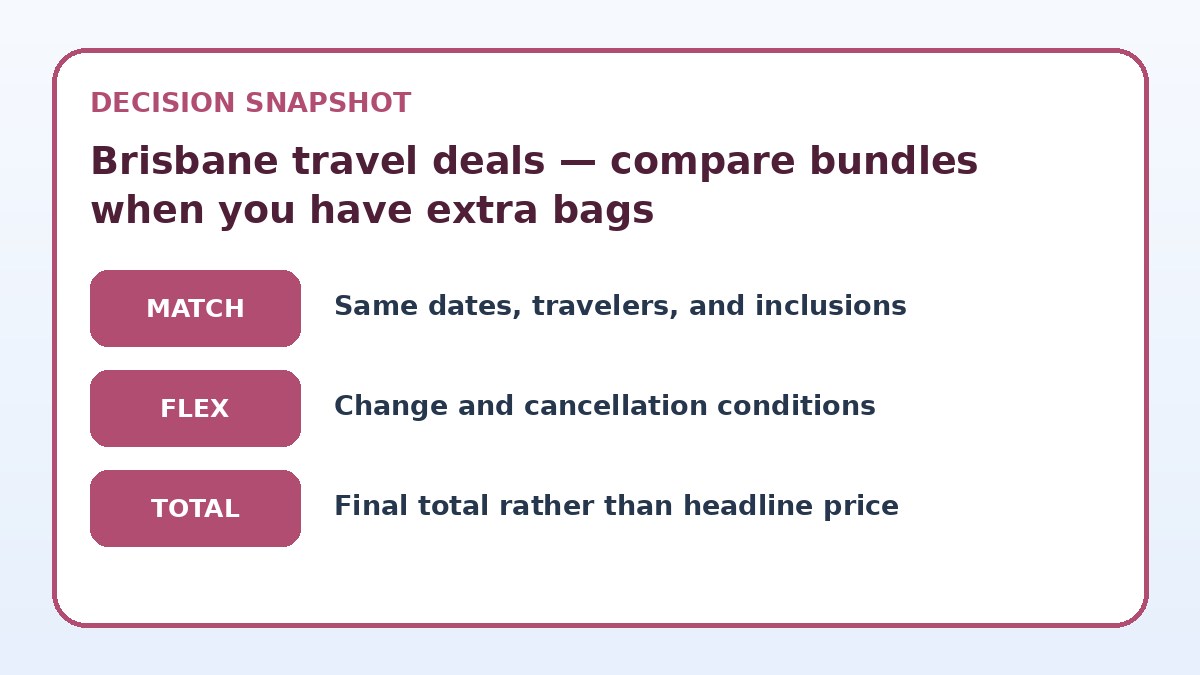
The single most important comparison is apples-to-apples: match the same dates (or the same set of flexible dates), the same number of travelers, and the same exact luggage needs. A package can look cheaper only because it assumes carry-on‑only travel while you plan to check oversized bags. Create a grid that lists airfare base fare, included checked bags, per-bag fees beyond the allowance, and whether the hotel or transfer has luggage restrictions or extra charges. If an airport transfer is included, confirm capacity for large suitcases or sports gear—transfers that advertise “luggage included” sometimes place size limits in the fine print.
When evaluating bundles, inspect the change and cancellation terms tied to each element. Bundles often bind a flight and hotel under one tariff where a single date change could trigger both flight reissue fees and hotel penalty nights. Compare the bundle’s overall flexibility to making separate bookings that let you change the flight without touching the hotel reservation. Note also whether bundled fares lock you into specific seat classes; switching to a fare with a higher baggage allowance may be cheaper when done outside the package.
How flexible dates help travelers with extra luggage
Flexible-date searches let you find departures that include a checked bag for the same or only marginally higher fare. Airlines sometimes change baggage inclusion by fare class and by day of week; if your schedule allows +/- 1–2 days, you may find a flight on one of those days with an included checked bag or a higher-allowance fare at better value. For connecting itineraries, a different departure day can alter connection airports and carriers, which affects baggage transfer policies and whether you must claim and recheck bags during the route.
Use flexible hotel dates too. If a cheaper hotel night or a property with free luggage storage shifts your stay by a night, it could remove the need for extra checked baggage en route (for example, by enabling laundry). When searching, set your tool to show +/- 2–3 days and compare the total landed cost for each candidate date—not just the headline fare—so you capture baggage charges, transfer fees, and any hotel surcharges for late check-in or oversized luggage handling.
Look past the headline total
Compare inclusions and change conditions before deciding whether a package is genuinely useful for this trip.
Deal comparison checklist
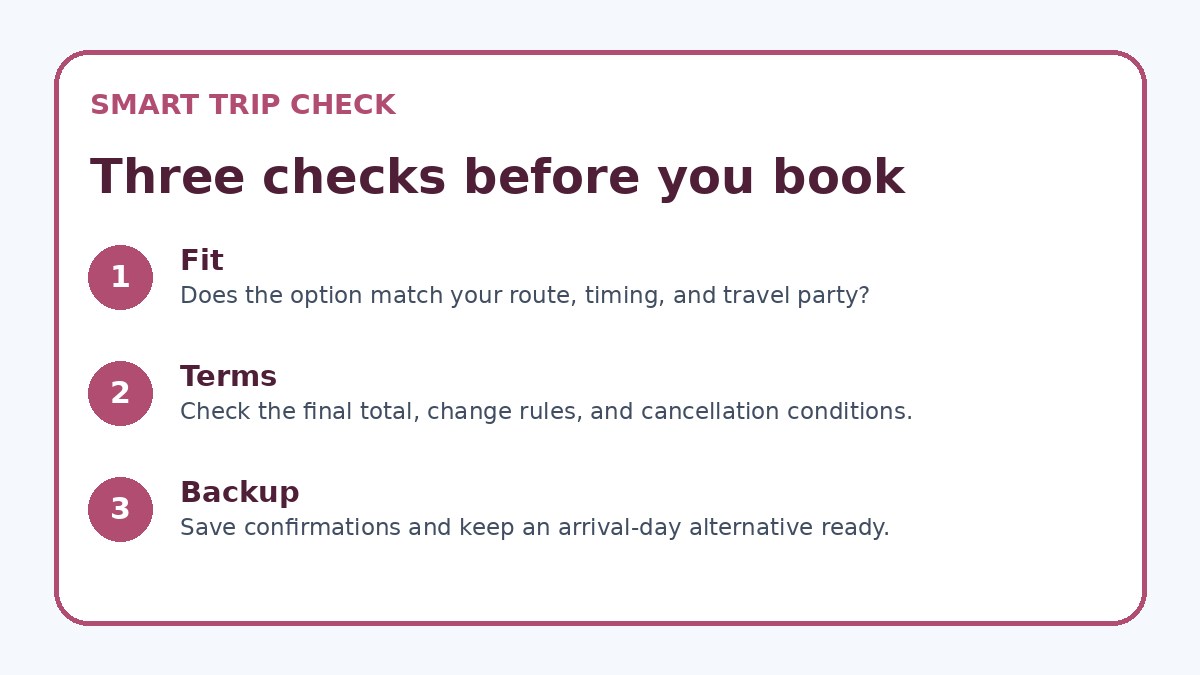
- List exact luggage items (dimensions, weight, number) for every traveler and keep the list handy while comparing fares.
- Run flexible-date searches at +/-1 to +/-3 days and record the total landed cost including explicit baggage charges for each date.
- When a package includes luggage, find the provider’s baggage policy on the final booking page and save a screenshot or booking reference.
- If carriers change on different dates, confirm interline or baggage-transfer rules by contacting the airline(s) directly.
- Check hotel baggage and storage policies on the provider’s booking page, especially for oversized items or early arrivals.
- Before purchase, compare the bundle’s change/cancellation terms against separate-booking terms for identical dates and luggage conditions.
Package vs separate booking: inclusions, flexibility, and true savings
Start by listing inclusions: does the package explicitly include checked bags for each traveler and specify weight/size limits? If the package bundles transfers, is the vehicle type noted and is it suitable for large surfboards, musical instruments, or bulky boxes? If a package’s inclusions don’t match your needs, a separate booking may let you buy a specific seat class or add a baggage bundle that exactly fits your gear and spare mobility-day costs. Separate bookings also make it easier to change a flight date without affecting the hotel, though you’ll need to coordinate late check-in or airport transfers yourself.
Look beyond the base fare: many bundles advertise convenience and a single-price experience but can carry stricter rebooking rules. Confirm whether changing the flight in a bundle automatically updates the hotel or incurs a penalty. If you value flexibility because oversized luggage sometimes requires last-minute schedule shifts, prioritize fare classes and hotels with generous change terms. Remember to check provider booking pages for final baggage fees and reissue charges; when in doubt, ask the supplier by phone or chat to clarify how an exchange would handle checked items.
Decision criteria and red flags when using flexible dates
Build a decision checklist before you compare options: fixed travel dates needed, the minimum baggage allowance required, willingness to pay to avoid checked-bag hassles, and how much schedule flexibility you have. Apply that checklist to each candidate date and booking type. A red flag is a cheaper-looking bundle that omits explicit baggage allowances, forces prepayment for transfers without luggage specifications, or uses nonrefundable hotel rates tied tightly to flight dates. These conditions often hide the real cost of traveling with extra bags.
Another red flag is inconsistent baggage rules across itinerary legs. If a route mixes carriers, verify whether interline agreements cover checked items; otherwise you might need to collect and recheck bags during connections. For multi-day flexible searches, watch for hotel rules on early check-in or late check-out fees that could indirectly require an extra paid night or storage. Always cross-check with the airline and hotel booking pages for final terms; Trip.com can be used as one place to compare availability and summarized conditions but verify specifics with the provider before booking.
Travel Deals & Booking Strategy questions travelers ask
How do I tell if a Brisbane package really includes the checked baggage I need?
Don’t rely on a short package summary—open the provider’s detailed terms on the final booking page and find the baggage allowance by fare class. Look for explicit weight and size limits per piece and whether the allowance applies to each traveler. If the package doesn’t specify, contact the supplier and request written confirmation; ask whether any domestic Australian connections or low-cost carriers on the route change how bags are handled. Save any emailed confirmations or screenshots as part of your booking record.
If flexible dates show a cheaper flight in Brisbane with included bags, how should I compare it to a package?
Compare the full itinerary costs for the identical traveler count and luggage list across the same date window. Include baggage fees for any pieces beyond the allowance, transfer costs, and hotel surcharges. Check the bundle’s change and cancellation penalties—sometimes a cheaper bundled fare becomes more expensive once change fees for flights and hotels are applied. Also confirm whether the included transfer can accommodate your bag dimensions; if not, add the cost of an alternative transfer to the comparison.
Can I rely on a hotel to store oversized luggage if my flight dates change?
Some hotels offer luggage storage but policies vary widely and may include size or time limits or extra fees; the safest approach is to confirm the hotel’s storage policy on the booking page or by direct message before booking. If your travel dates are flexible and you anticipate last-minute changes, choose accommodations with explicit long-term or oversized baggage storage and clear fees. For larger items like surfboards or equipment, ask about a secure storage option and whether the hotel’s liability covers damage while stored.
Final decision note
Travelers heading to Brisbane with extra luggage benefit most from using flexible dates as a comparison tool, not a shortcut. The practical approach is to define your exact baggage needs, run the same flexible-date scenarios across package and separate booking options, and compare the total landed cost including explicit baggage fees, transfer suitability, and change terms. Favor the option that preserves flexibility for the element you value most—typically the flight—while confirming baggage allowances on the provider’s final booking page. If you want a single place to begin comparison, Trip.com can show availability and summarized conditions, but always verify baggage and rebooking rules directly with the airline and accommodation before you commit.
Continue planning
Check current options and final conditions
Use the provider page to confirm live availability, the final total, cancellation terms, and every condition that matters to your trip.
This evergreen planning guide was created with AI-assisted drafting and a structured quality review. It does not display live prices, schedules, availability, visa guidance, or provider rankings. Verify current details before booking. Some links are affiliate links; we may earn a commission at no additional cost to you.