Short answer: often you don’t need a rental car for a family trip focused on central San Francisco, but a car can make sense if your itinerary includes day trips, larger groups, or mobility needs that transit and rideshares can’t meet. For most families staying in or near neighborhoods like Fisherman’s Wharf, Union Square, the Embarcadero, or SOMA, efficient transit, walkable attractions, and plentiful rideshare options remove the daily burden of parking and city driving. However, if your plan includes visits to Muir Woods, Point Reyes, Big Basin, wine country, or a self-directed drive along the coast with flexible stops, having a vehicle simplifies logistics—especially with kids and gear. This guide gives a practical decision path: evaluate route value, insurance and coverage wording, pickup and return friction (airport vs. city), and a strong non-driving fallback so you can choose with confidence.
Route value: when driving truly improves a family itinerary
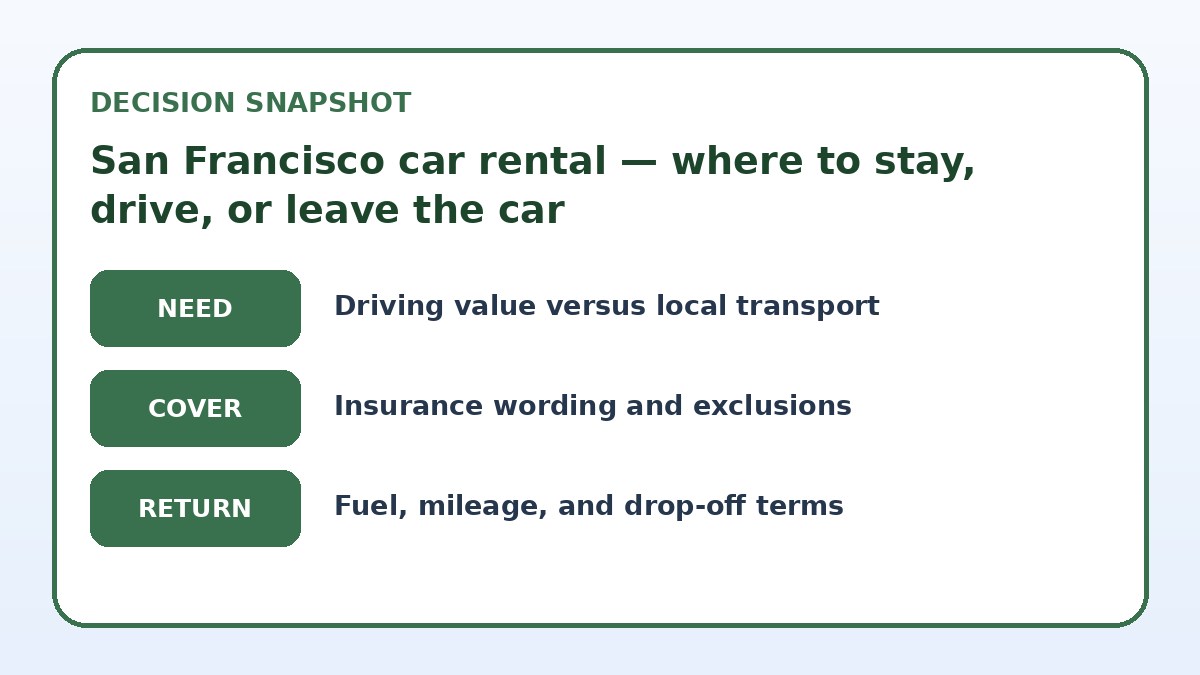
Start by mapping the major stops for your family trip and label each as 'inside city' or 'day trip/outside city.' Driving adds the most value when several planned destinations sit well outside San Francisco proper or when you intend to chain multiple stops in one day. Typical high-value drives for families include national or state parks, seaside viewpoints, and rural attractions where transit is infrequent and rideshare fares multiply quickly. If you’ll be traveling with strollers, coolers, or bulky kid gear, the door-to-door convenience of a car often outweighs parking and congestion.
Conversely, if your days bunch around the waterfront, museums, parks, and attractions linked by Muni, BART, and ferries, the car’s benefits shrink. San Francisco’s dense street grid and one-way systems can make short drives slow and stressful; parking can be scarce and expensive, especially near major tourist draws. For mixed itineraries, consider a hybrid approach: rent a car only for the days you need it and rely on transit, walking, and rideshares for in-city sightseeing.
Decide whether driving earns its place
| Mobility strategy | Best for | Cost or friction to check |
|---|---|---|
| Full-time rental car for entire stay | Families with several multi-stop day trips or remote destination visits planned | Higher parking costs, more driving stress in the city, and added rental fees |
| One- or two-day rental only for specific day trips | Families who mostly use transit in-city but need a car for a particular excursion | Extra pickup/return time and coordination but lower total rental cost and parking exposure |
| No rental: rely on transit, ferries, and occasional rideshares | Families staying centrally who prioritize walking and easy access to attractions | Less flexibility for remote day trips and potential higher rideshare costs for off-hour returns |
| Hybrid: public transit plus booked tours or shuttles | Families wanting guided day trips without driving, who prefer fixed schedules and included transport | Less spontaneous control over timing and possible limited child-seat options |
Check live rental choices only after the route test
Use the exact driver, dates, pickup point, and return plan to compare current conditions.
Insurance and coverage wording: what to check before you commit
Before you book, read the rental company’s insurance and coverage page carefully. Key items to verify include whether the quoted rate includes a collision damage waiver (CDW) or loss damage waiver (LDW), the size of any deductible, and what exclusions apply (for example theft, driving on unpaved roads, or authorized drivers). Many families assume their personal auto policy or credit card will cover rentals; confirm coverage limits, whether it applies to rentals in the U.S., and whether it covers both vehicle damage and third-party liability.
If you rely on third-party coverage, check the rental company’s policy about refusing additional insurance at the counter and whether refusing changes the contract terms. Note any wording about child seats, roof racks, or additional drivers—those often add fees and may affect coverage. When in doubt, photograph the car for pre-existing damage and save any emailed policy confirmations so you can show them if there’s a dispute on return.
Compare the full rental conditions
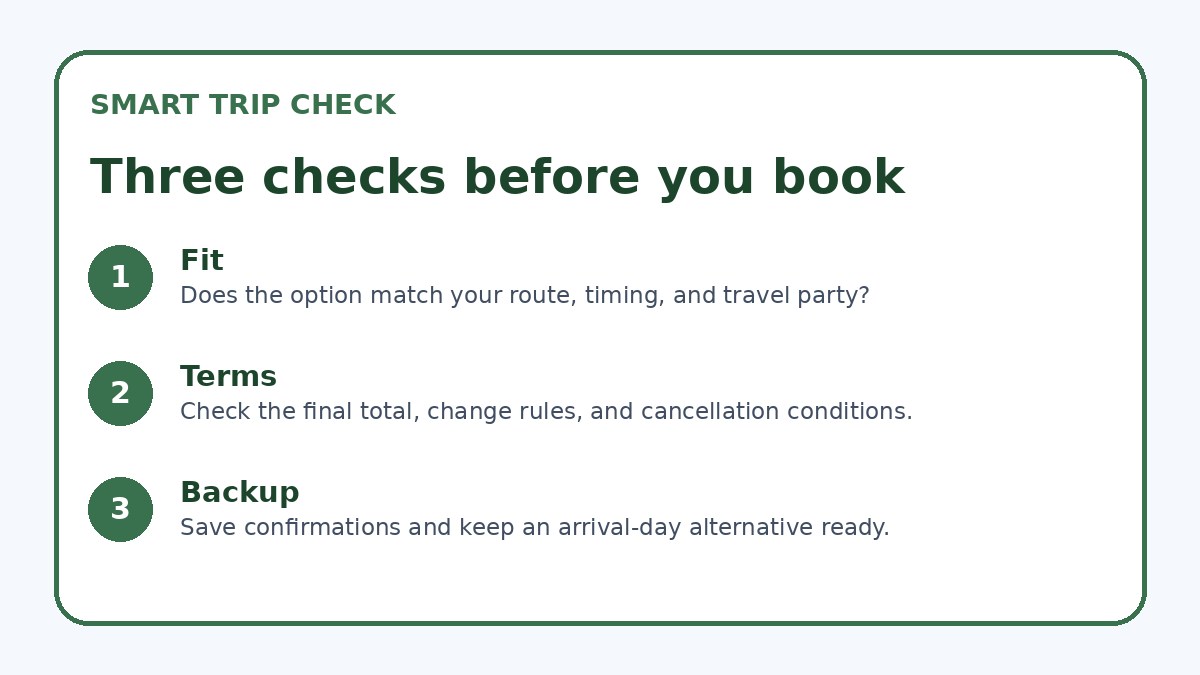
Confirm insurance wording, exclusions, deposit, fuel, mileage, and return terms on the final page.
Pickup and return friction: airport versus city desks and family logistics
Pickup and return logistics influence whether a car is worthwhile for families. Airport car facilities often offer spacious lots, easy luggage handling, and child-seat installation help, which can be a big timesaver when you arrive with tired kids. But airport pickups typically include shuttle transfers to the lot, extra airport surcharges, and sometimes longer wait times at counters. City-center pickups can be physically closer to hotels but may involve narrow streets, limited loading zones, or additional time navigating one-way systems—less ideal with restless children.
Also consider where you’ll park overnight. Many hotels in downtown San Francisco either don’t offer parking, require advance reservations, or charge significant nightly fees. If you plan to leave the car at a garage for several days, check height and size limits. On return day, factor in how much time you’ll need to drop off, shuttle back to the airport or hotel, and transfer luggage and children—those minutes add up and can erode the convenience you sought by renting.
Car rental terms to verify
- List your top five destinations and mark each as inside San Francisco or outside the city to assess driving necessity.
- Confirm on the rental page whether CDW/LDW is included, the deductible amount, and any exclusions that affect family travel.
- Compare hotel parking policies and nightly fees; call the hotel to verify space and size limits for family vehicles.
- Decide pickup location (airport vs city) and estimate shuttle time, counter wait, and child-seat installation needs.
- If relying on transit, check Muni/BART/ferry schedules for your planned days and confirm last-departure times for return legs.
- If using credit card coverage, get the issuer’s written rental-car insurance terms and save that document and any confirmation emails.
Non-driving fallback: solid alternatives for family travel in the city
If you choose to skip the car, build a reliable fallback plan. San Francisco has a dense transit network—Muni buses and light rail, historic cable cars, BART for regional connections, and ferries across the bay. For families, ferries can turn a transit leg into part of the fun, while Muni covers most central neighborhoods. Use neighborhood-based accommodations to minimize daily travel time and plan activities in clusters to reduce the need for long transfers. Rideshare services and taxis provide door-to-door options for nights or low-frequency routes.
For day trips outside the city without a car, look at organized family-friendly tours, regional buses, or a one-way car rental that you pick up just for the outing. Some parks and attractions offer shuttle services from central hubs; verify schedules and child-seat policies before relying on them. Always have a backup plan for the evening return—confirm last train or ferry times and keep a rideshare app ready. With planning, a car-free family trip to San Francisco can be smooth and often more relaxing than wrestling with city parking.
Car Rental & Road Trip questions travelers ask
Will a rental car save time traveling between San Francisco neighborhoods?
Not usually. San Francisco’s neighborhoods are compact and often faster to traverse on foot, by bike, or via Muni for short hops. Driving between nearby attractions can mean slow progress because of one-way streets, traffic signals, and limited parking. If your family itinerary includes short, frequent stops within the city, the time spent finding parking and walking from meters or garages can outweigh the in-car travel time. For convenience, reserve a centrally located hotel and plan attractions in geographic clusters to minimize in-city transit time.
How do I handle child seats and safety gear if I rent a car?
Bring or rent child seats based on your comfort level; bringing your own guarantees fit and cleanliness but adds luggage bulk. If you rent seats from the rental company, verify the rental provider’s policies and whether their seats meet current safety standards; check the rental page for fees and availability and call ahead to confirm. Also ask whether the pickup location will install the seat for you or if staff can demonstrate anchoring and belt routing. Always inspect any rented seat for visible damage and correct installation before driving.
What should I verify on the rental company’s final booking page?
On the final booking page, verify total charges including taxes, airport surcharges, and any listed ancillary fees (additional driver, underage driver, child seat, GPS). Confirm the quoted insurance options and whether they alter the quoted rate or the insurer’s list of exclusions. Check fuel policy, mileage limits, and the precise pickup and return locations and hours. If these items differ from what you expected, contact the rental company or your travel agent to clarify before completing the booking; keep screenshots or saved emails for reference.
Final decision note
Choosing whether to rent a car for a family trip to San Francisco comes down to honest routing and logistics. If most activities are inside the city, a rental often adds cost and stress; strong public transit links, ferries, and rideshares usually cover family needs. If you plan multiple day trips to parks, coastlines, or wine country where transit is sparse, a car can be a practical time and comfort saver. Read insurance wording carefully, compare airport versus city pickup friction, and prepare a non-driving fallback. With those checks, you can pick the approach that keeps your family’s days easier, safer, and more enjoyable.
Continue planning
Check current options and final conditions
Use the provider page to confirm live availability, the final total, cancellation terms, and every condition that matters to your trip.
This evergreen planning guide was created with AI-assisted drafting and a structured quality review. It does not display live prices, schedules, availability, visa guidance, or provider rankings. Verify current details before booking. Some links are affiliate links; we may earn a commission at no additional cost to you.