Decide your neighborhood first: pick one you can comfortably navigate with kids’ needs in mind, even if you’ll be traveling alone. For solo travelers planning a family-friendly stay in Seoul, the right area reduces daily friction—shorter walks, simpler transfers, easy access to convenience stores, and more room options that suit mixed-age groups. Start by deciding whether you value subway convenience, calmer streets, kid-focused amenities, or proximity to attractions. That single choice steers your search through Seoul hotels: it narrows which properties will have the room layouts, bed configurations, and services (luggage help, early breakfasts, laundry) you’ll actually use. Below you’ll find a practical neighborhood selector, how to think about daily routes and child-friendly needs, room and party considerations, and the booking terms to confirm before you commit. Use the checklist to finalize a short list and check live availability on the provider’s booking page—Trip.com can be a place to compare listings, but always verify room details directly with the hotel.
Check live stays in the areas that fit
Use your dates and party size to compare current rooms after you narrow the neighborhood fit.
Picking the right neighborhood fit
Start by choosing which neighborhood quality matters most: fast subway access (central stations like Seoul Station or Myeongdong), calm residential streets (areas around Samcheong-dong or Seongsu), or proximity to family attractions (Gangnam for COEX and Lotte World, Jongno for palaces and museums). As a solo traveler organizing a family-style stay, imagine a typical day: how long can you comfortably walk or wait for a transfer with small children? Your answer determines whether to favor a busy hub with short transfers or a quieter district where outings start from the doorstep.
Also consider language and services: neighborhoods with more international visitors tend to have English-friendly staff, international pharmacies, and child-focused facilities. If you expect to juggle childcare or need occasional babysitting or English-speaking medical help, pick an area where these services are commonly available. Finally, map nearby essentials—convenience stores, laundromats, and playgrounds—because these micro-choices often have more impact on your daily comfort than being next to a tourist landmark.
Choose an area-selection strategy
| Area approach | Best for | Tradeoff to check |
|---|---|---|
| Stay in a central hub near major subway stations | Maximizing transit options and short transfers to multiple attractions | More noise and crowds; rooms may be smaller for the same budget |
| Choose a quieter residential neighborhood | Lower noise, safer streets for evening walks, and nearby parks | Longer transit rides to major tourist sites and fewer late-night services |
| Book near family attractions and malls | Easy midday breaks, on-site entertainment, and child-friendly restaurants | Areas can be busier during weekends and may feel more tourist-oriented |
| Pick a hotel close to a hospital or international clinic | Peace of mind for health concerns and easier access to English-speaking care | Neighborhoods may be more functional than scenic and slightly farther from attractions |
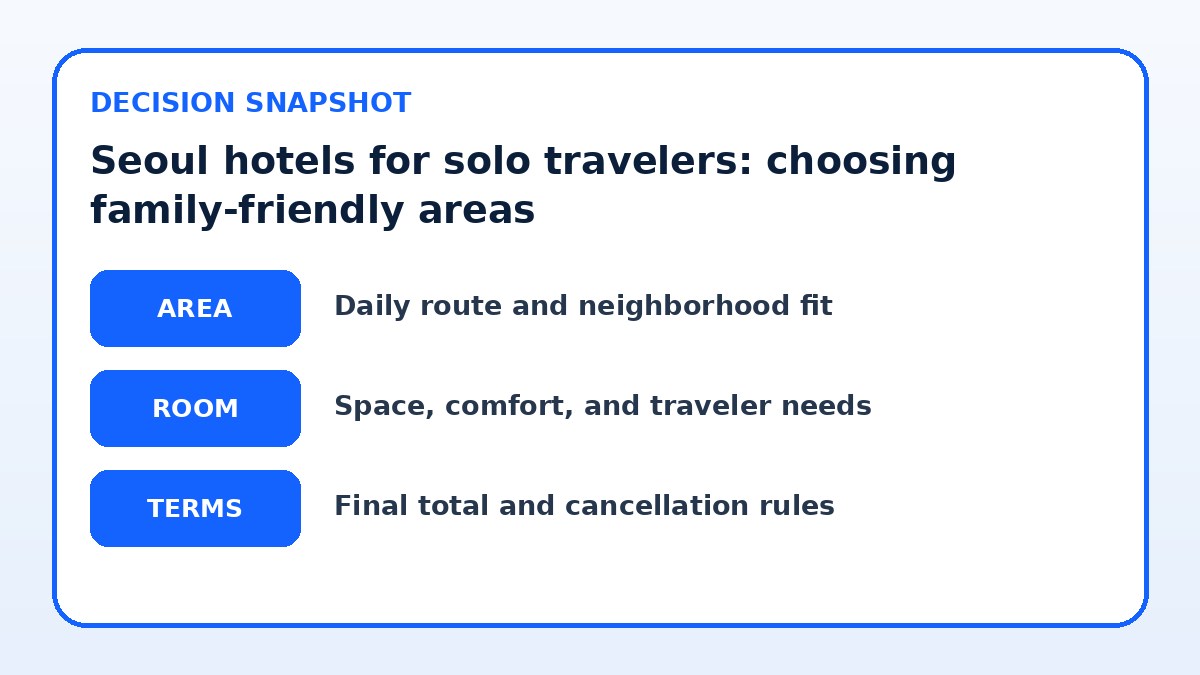
Reducing daily-route friction
Plan sample days before you book. From your shortlisted neighborhood, plot morning, midday, and evening activities on a map and check how many transfers or long walks each will require. Shorter, simpler routes matter more when traveling with children or elderly relatives, and they reduce the mental load on a solo adult. Favor hotels within a 5–12 minute walk of a major subway line or bus corridor to keep options flexible; if transfers are unavoidable, count those connections and imagine them with a stroller or tired kids.
Think about peak-hour crowds and elevator availability at subway stations—busy transfers with stairs add friction. If you expect to move luggage at odd hours, confirm whether your walk to public transit is flat or involves steps. Also check where local taxis congregate; in areas with fewer taxi stands, you might rely more on ride apps. These route details don’t need exact travel times during planning, but identifying likely pinch points helps you choose an area that aligns with your energy and daily rhythm.
Now compare like with like
Keep the same dates, guests, room needs, and cancellation preferences while you compare the final choices.
Room and party needs for a family-style stay
Deciding how many people will use a room and their sleeping arrangements guides which hotels to consider. Look for properties offering one-bedroom suites, family rooms, or connecting rooms; many business hotels list sofa beds or extra mattresses in their room descriptions. As a solo traveler, you may want a physical separation between your sleep space and where kids nap or play—this helps maintain routines and gives you a quiet corner to recharge. Request photos or floor plans from the hotel if the listing is unclear.
Also ask about practical in-room features: a kettle and small fridge for midnight snacks, blackout curtains for naps, and safe electrical outlets. If you’ll prepare simple meals, confirm whether a microwave or kitchenette is available. When traveling solo with children, room layout is as important as square footage: windows, balcony access, and bathroom layout affect supervision needs and safety. Always verify the exact bedding configuration and whether cribs or rollaway beds are free or fee-based on the hotel’s booking page.
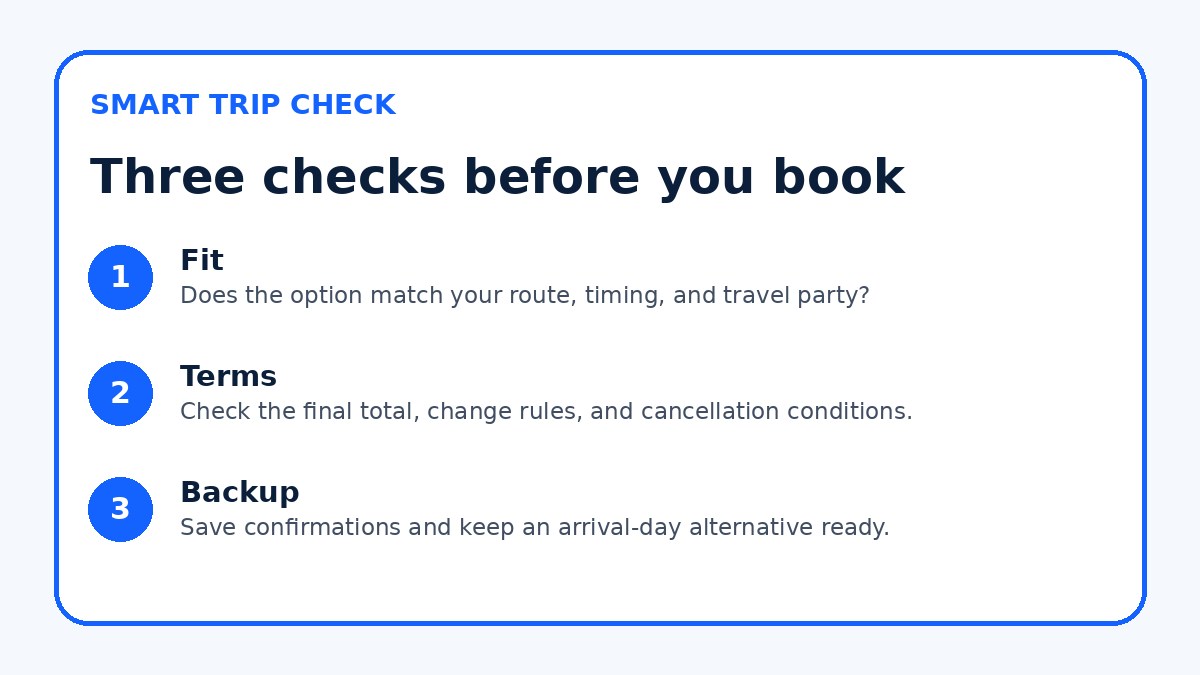
Hotel booking check before payment
- Map three sample days from the hotel location to likely attractions and count transfers or long walks to identify daily friction points.
- Confirm exact bedding configuration, availability of cribs or rollaway beds, and any extra-bed fees on the hotel’s official booking page.
- Ask the hotel in writing about early check-in, late check-out, and luggage storage policies if your arrival or departure falls outside usual times.
- Verify the hotel’s cancellation and refund policy for your specific rate and note any non-refundable or partially refundable conditions.
- Check for on-site or nearby conveniences: 24-hour convenience store, pharmacy, laundromat, and family-friendly dining within a short walk.
- Request photos or a floor plan of the room if the listing is unclear, and confirm elevator access and stroller-friendly routes to the street and transit.
Final booking terms to confirm before committing
Before you click reserve, verify three categories on the hotel’s official page: cancellation and change policies, child-age and extra-bed rules, and any incidental deposit or ID requirements at check-in. Cancellation flexibility matters more when you’re managing a group’s health or changing intercity plans. If a free-cancellation window is available, confirm how refunds are processed and any blackout dates where the policy differs. Don’t rely solely on a third-party summary—look at the property’s stated terms and, when necessary, contact them directly to confirm details.
Also confirm service specifics you’ll actually use: early breakfast options, luggage hold policies for late arrivals, availability of on-site laundry, and whether the hotel charges for rollaway beds or cribs. If you anticipate asking for special assistance—late check-in, babysitting referrals, or accessible rooms—get written confirmation via email. For comparative searches, you can check Trip.com to view current inventory and policies quickly, but always finalize the booking based on the hotel’s official terms to avoid mismatches at check-in.
Hotel Guide questions travelers ask
How do I decide between a hotel in Gangnam versus Jongno for a family-friendly stay?
Compare what you’ll spend most of your time doing. Gangnam concentrates modern shopping, COEX, and child-friendly malls—with easy transfers on major lines—so it’s convenient if you want indoor activities and family restaurants. Jongno is closer to palaces, child-friendly museums, and historic neighborhoods, offering shorter routes to daytime cultural outings. Evaluate where evening meals and quick conveniences will be located relative to your hotel, and prefer the area that minimizes the number of daily transfers or long walks you’ll need to make with children.
Is it better to book a family room or two separate rooms when I’m traveling solo with children?
Weigh privacy, supervision, and budget. A single family room or suite keeps everyone together and simplifies supervision, plus it often reduces the need to coordinate two check-ins and two keys. Two rooms give adults private space but can mean extra cost and more logistics—ensuring rooms are adjacent or connected is crucial. If privacy is important for your rest, ask the hotel for connecting-room options or suites that provide a separate living area so you can supervise easily while keeping personal space.
What specific booking terms should I double-check to avoid surprises at check-in?
Confirm the hotel’s child-age policy and whether children stay free or incur charges, and check rollaway/crib availability and fees. Verify the stated cancellation terms for your exact rate and whether deposits are taken at booking or at check-in. Look for incidental deposit requirements and accepted payment forms on arrival. If you rely on early breakfast, luggage hold, or babysitting services, request these in writing. Always verify these items on the property’s official booking page rather than relying only on third-party summaries.
Final decision note
Start your Seoul hotels search by picking the neighborhood that matches how you expect to move each day—favoring fewer transfers and easier walks when you’ll be managing others’ needs alone. Once you’ve shortlisted an area, filter properties by room layout, family amenities, and the practical services you’ll actually use: luggage handling, early meals, cribs, and laundry. Cross-check the hotel’s official booking page for cancellation, child-age rules, and extra-bed policies, and get written confirmation for any special requests. With a neighborhood chosen and those booking terms verified, you’ll be ready to compare live inventory and finalize a hotel that supports a calm, practical family-style stay while you travel solo.
Continue planning
Check current options and final conditions
Use the provider page to confirm live availability, the final total, cancellation terms, and every condition that matters to your trip.
This evergreen planning guide was created with AI-assisted drafting and a structured quality review. It does not display live prices, schedules, availability, visa guidance, or provider rankings. Verify current details before booking. Some links are affiliate links; we may earn a commission at no additional cost to you.