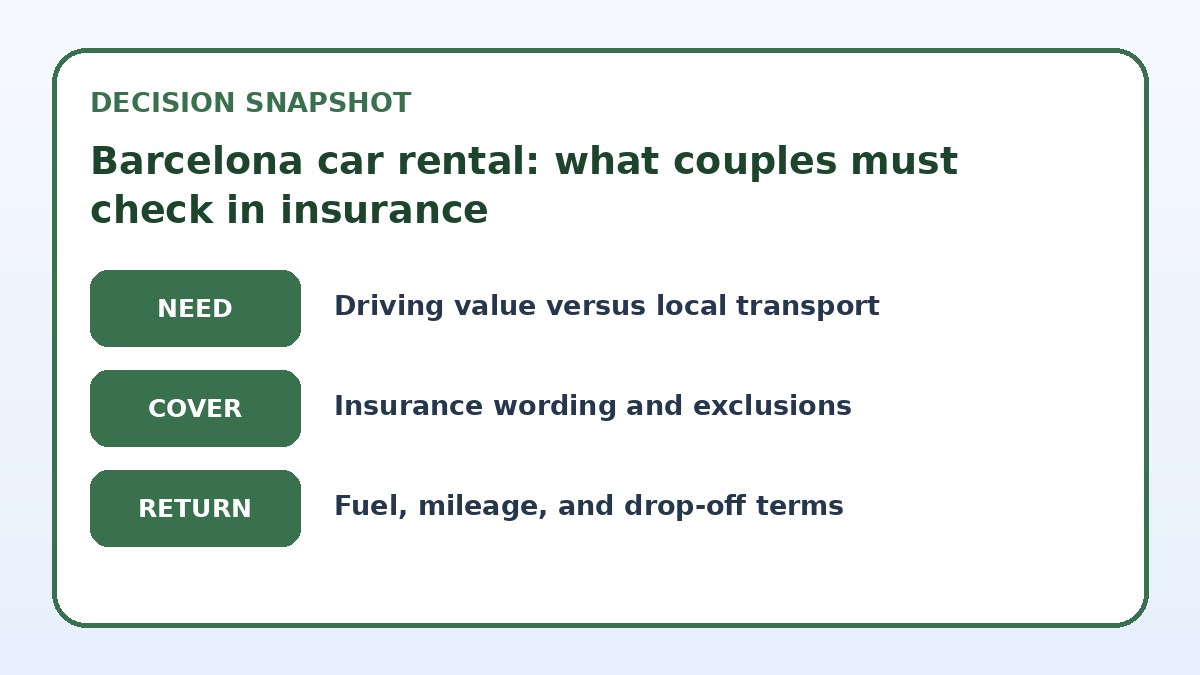
Short answer: for most couples staying in central Barcelona, driving is optional and often adds cost and stress; rent a car if your plans include day trips to Costa Brava, Montserrat, or remote vineyards where public transit is slow. Before you commit, focus on the insurance wording: know what “collision damage waiver (CDW),” “super CDW,” “theft protection,” and “excess” mean in the supplier’s contract, and check which drivers are listed. For couples, the common pitfalls are unnamed second drivers, unclear cross-border rules, and ambiguous language about damage to mirrors, tires, or undercarriage. Read the final booking page and rental contract to verify who is covered, exact excess amounts, and whether optional waivers reduce or eliminate your liability. This guide helps decide whether to drive, how to read policy language, and what to verify at pickup so couples can choose the best mobility approach for their Barcelona plans.
Route value: when driving adds real value
Driving adds clear value for couples when your schedule includes multiple dispersed day trips or remote stays that public transport cannot serve efficiently. Examples relevant to Barcelona include flexible day trips to the rugged coves of Costa Brava, wineries inland from the city, or a multi-day loop that visits Montserrat, Tarragona’s coast, and inland villages. If both partners enjoy scenic detours, the ability to stop spontaneously and manage luggage and timing without coordinating train or bus schedules can make a driving option worthwhile.
Conversely, if you plan to base yourselves in central Barcelona and take one easy day trip by train, the time and cost of parking, city congestion, and the added insurance complexity often outweigh the benefits. Consider the total door-to-door time for each excursion, parking availability where you stay, and whether your route relies on highways versus narrow rural roads—those factors influence insurance risk and the sense of control you’ll need as drivers sharing duties.
Decide whether driving earns its place
| Mobility strategy | Best for | Cost or friction to check |
|---|---|---|
| Rent a car with standard CDW and named second driver | Couples planning multiple flexible day trips and shared driving duties | Lower daily cost but higher potential excess and administrative friction at pickup |
| Rent with zero-excess waiver or super CDW | Couples who want predictable, minimal out-of-pocket risk for minor damage | Higher rental rate but reduced financial uncertainty in case of incidents |
| Public transport plus occasional private transfers | Couples staying central who prefer lower logistics and no rental insurance worries | Less flexibility for remote excursions and dependence on schedules or booked transfers |
| Hybrid: short-term city rental plus train for long legs | Couples who want urban ease with a rented car only for specific rural days | Extra coordination and potential repeated pickup/return friction but lower total rental days |
Check live rental choices only after the route test
Use the exact driver, dates, pickup point, and return plan to compare current conditions.
Insurance wording couples must decode
Start with four terms: 'CDW' (collision damage waiver) limits your financial responsibility for collision damage; 'excess' is the amount you pay before insurance covers the remainder; 'theft protection' handles vehicle theft but may still carry an excess; and 'third-party liability' covers damage to other people or property. Look for exact excess amounts, whether excess is per incident or per rental, and whether optional 'zero-excess' waivers are available. For couples, verify whether the booking names both partners as drivers or if the supplier requires an extra-fee second driver to have formal coverage.
Read exclusions carefully: many contracts exclude tires, windscreen, undercarriage, and mirrors, or reduce cover on unpaved roads. If you plan to drive rural or mountain routes, check wording about gravel or mountain roads and whether any damage there is covered. Also confirm whether cover applies across borders if you want to cross into France, and whether loss-of-use charges, admin fees, or towing are covered. The booking page and the physical rental agreement at pickup are the final authorities—note exact phrases and amounts and keep screenshots.
Compare the full rental conditions
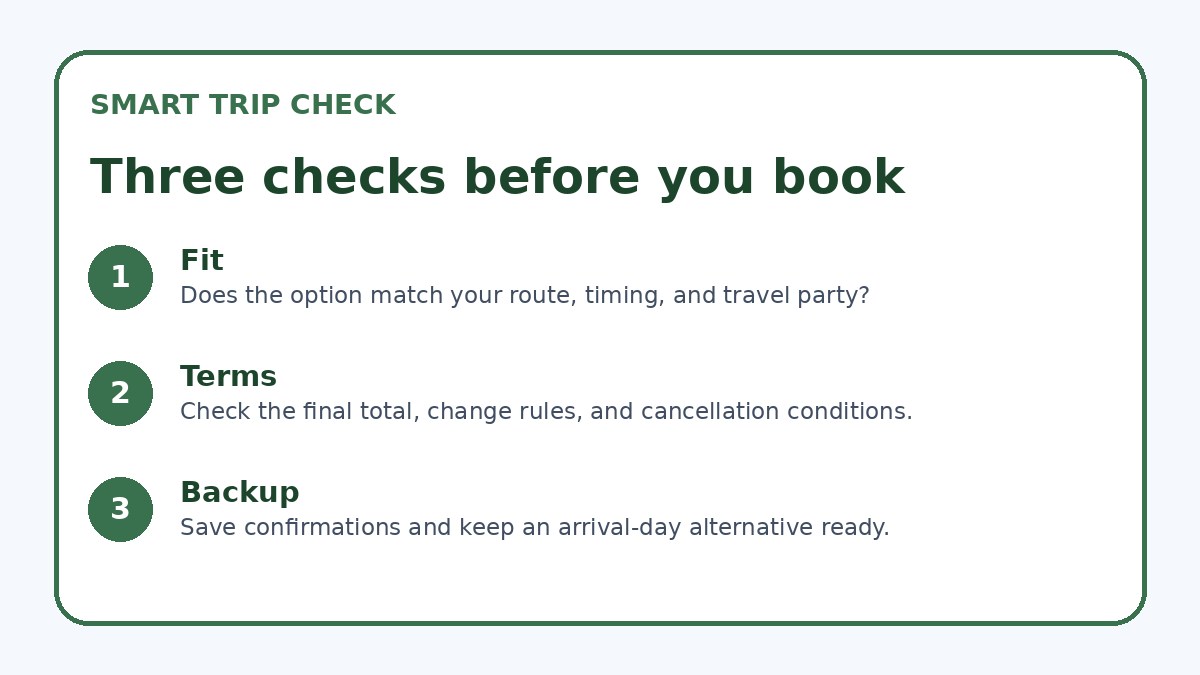
Confirm insurance wording, exclusions, deposit, fuel, mileage, and return terms on the final page.
Pickup and return friction: what to expect and verify
Pickup friction often stems from mismatches between the online booking and the contract you sign. At the desk, verify that the vehicle class, inclusive mileage, fuel policy, and named drivers match your reservation. Take time to inspect and photograph every panel, mirror, and the tires, and insist that any existing damage is recorded on the rental inventory; unsigned or missing notes can become disputes. Ask the agent to explain how accidental damage is handled and whether a credit card pre-authorization equals acceptance of excess liability.
Return friction commonly arises from refuelling disputes, minor scratches, or timing (after-hours returns). Confirm the exact fuel policy and the company process for inspections on return. If you purchased an extra collision or zero-excess waiver, get a written confirmation showing the reduction of your financial liability. Keep copies of all documents and photos until any hold on your payment method is released. If anything on the final booking page differs from what you’re shown at pickup, request clarification and written confirmation before driving away.
Car rental terms to verify
- Confirm both partners are listed as authorised drivers on the booking and note any extra-driver fees.
- Check the exact excess amount in the rental contract and whether optional waivers reduce it to zero.
- Verify which vehicle parts are excluded (tyres, windscreen, undercarriage) and whether gravel or mountain roads are covered.
- Confirm cross-border permission if you plan to drive outside Spain and note any geographic exclusions on the booking page.
- Photograph all existing damage and the odometer at pickup and keep dated copies until any payment holds are cleared.
- At return, request written confirmation that the inspection is complete and that no charges will be applied to your card.
Non-driving fallback: mobility alternatives that work for couples
If you choose not to drive, Barcelona offers a compact, walkable center and a comprehensive public transport network that suits most couple itineraries. Regional trains and buses serve nearby destinations like Sitges and Girona, while organized day tours provide a private-feel option without rental responsibilities. Rideshare and taxis make late-night returns and luggage transfers easy; combine public transport with occasional point-to-point private transfers on heavier travel days to keep flexibility without full-time car ownership.
Non-driving also simplifies insurance decisions: you won’t need to decode rental contracts or worry about vehicle damage and excesses. For couples who value relaxed afternoons and fewer logistics, plan smartly—reserve one or two guided day trips or private transfers for outlying destinations instead of a full rental. When comparing options, tally the cost of occasional transfers plus tour fees against rental, fuel, parking, and potential excess liabilities to reach a practical, stress-minimizing choice.
Car Rental & Road Trip questions travelers ask
If my partner isn’t named on the rental agreement, are they covered to drive?
Usually not. Most rental contracts require every driver who will operate the vehicle to be explicitly named and may charge for an additional driver; otherwise the insurance may be void for incidents involving an unnamed driver. For couples, ensure both names appear on the booking or pay the documented extra-driver fee. If a partner must drive for any reason, get written confirmation at pickup that they are authorised and covered, and keep that paperwork with you while driving.
Does purchasing insurance from my credit card or travel insurer replace the rental company’s waivers?
Sometimes but not always. Many credit card and third-party travel insurers provide secondary coverage, meaning they pay only after the rental company’s insurance or the driver’s excess has been applied. Coverage terms vary—check whether credit card insurance includes primary collision and theft cover, whether it removes the rental excess, and if it applies to both named drivers. Always read your card’s insurance wording and confirm with the rental company which charges you might initially be held responsible for at pickup.
What specific wording should couples photograph from the rental contract at pickup?
Photograph the pages that state named drivers, excess amounts, listed exclusions (tires, glass, undercarriage), fuel policy, cross-border allowances, and any purchased waivers. Also capture the vehicle inventory sheet with any pre-existing damage and the agent’s signature or stamp. These images provide evidence if a dispute arises, and they help you compare what was promised online with what’s in the physical contract. Keep the photos until any holds on your card are released and the final invoice matches the booking.
Final decision note
For many couples, Barcelona is best explored without a full-time rental: the city’s center is walkable and public transport or occasional private transfers cover most needs. Drive when your itinerary includes dispersed rural sites, flexible coastal stops, or specific remote accommodations that are hard to reach otherwise. Whatever you choose, the decision hinges on the insurance wording—named drivers, exact excess, exclusions, and cross-border rules. Read the final booking page and the pickup contract carefully, photograph the vehicle and documents, and weigh the convenience of driving against cost, added logistics, and potential liability. Clear communication between partners about driving duties and who will handle paperwork makes the trip smoother and reduces surprises.
Continue planning
Check current options and final conditions
Use the provider page to confirm live availability, the final total, cancellation terms, and every condition that matters to your trip.
This evergreen planning guide was created with AI-assisted drafting and a structured quality review. It does not display live prices, schedules, availability, visa guidance, or provider rankings. Verify current details before booking. Some links are affiliate links; we may earn a commission at no additional cost to you.