If you’re bringing extra luggage to Honolulu, the fastest practical step is to use flexible dates while you compare the same travel variables across options. Start by selecting a date range (three to seven days) and fix the number of travelers, total bags, and minimum accommodation needs before you look at flight+hotel bundles. That baseline prevents false savings from different date or baggage assumptions. Flexible dates can shift fees or permit flights with more generous free-baggage allowances, and they can unlock alternative hotels that include luggage-friendly amenities like on-site storage or larger rooms. The rest of this guide walks you through what to check in packages versus separate bookings, how inclusions affect value for heavy-packers, and the exact terms to verify on provider pages before you hit purchase. Trip.com can be used as one comparison point for live availability and final terms, but always confirm baggage and cancellation details on the supplier’s booking page.

Test package value fairly
| Booking approach | Best for | Tradeoff to check |
|---|---|---|
| Flight+Hotel bundled package | Travelers wanting one checkout and possible included baggage or transfers. | May bundle different fare classes or room types—verify identical dates, baggage counts, and change rules to avoid false savings. |
| Separate flight and hotel bookings | Travelers who need precise control over baggage allowances and seat choices. | More time-consuming to compare; you must manage separate change and cancellation policies for each booking. |
| Flight plus third-party transfer or luggage service | Travelers with oversized or excess gear who prefer specialized handling. | Adds a provider to manage and reconfirm; check vehicle luggage capacity and pick-up/drop-off terms carefully. |
| Fare-focused search with flexible dates before booking hotel | Travelers who can shift travel days to get flights with better baggage rules. | May force hotels to be booked later or separately; ensure hotel availability and room needs still match after you lock flights. |
Check current package and separate options
Use identical dates, travelers, room needs, baggage, and flexibility so the comparison stays meaningful.
What to compare before judging any package
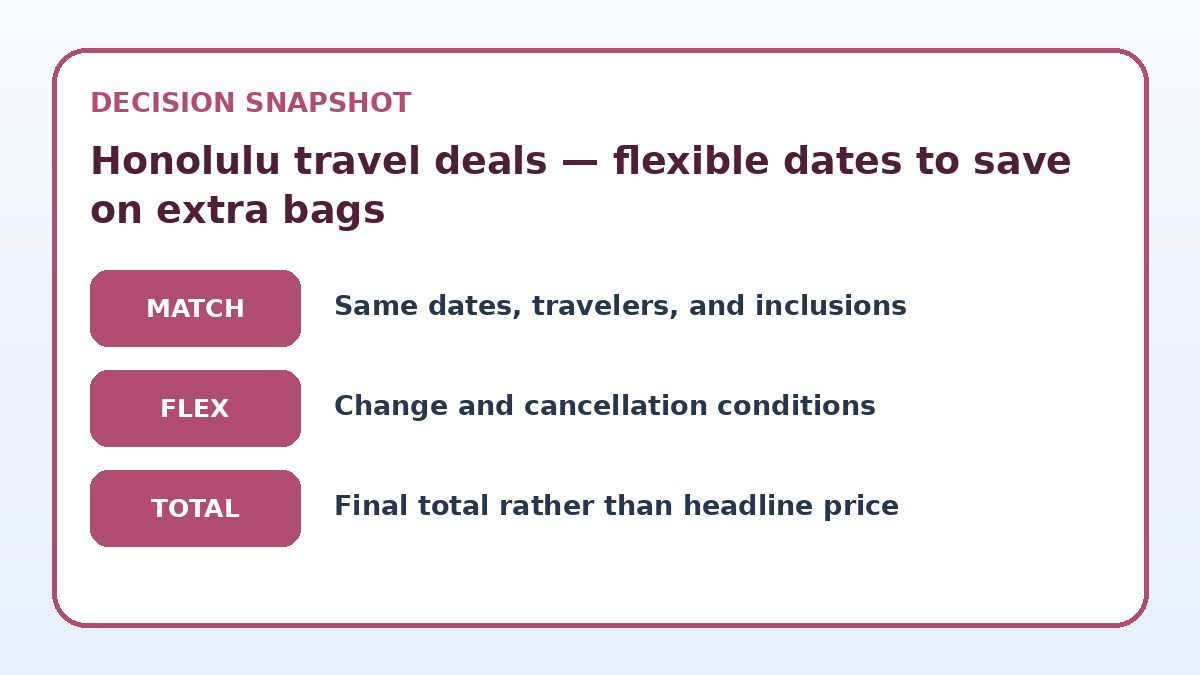
Before you consider whether a flight+hotel package is useful, lock your comparison baseline: exact travel dates (or a fixed date range), number of travelers, and precise baggage counts and dimensions. With those constants, pull separate quotes for flight-only and hotel-only on the same dates. Many apparent bundle savings evaporate when the bundle assumes different traveler counts, offers a cheaper seat with no checked bags, or includes a smaller room that won’t fit your luggage comfortably. Comparing identical variables keeps the decision practical—are you saving money on baggage fees or merely getting a different product?
Also identify non-price factors that affect heavy-luggage travelers: flight connection patterns that add carry time, airports with limited tarmac transfers, and hotels with elevators, luggage storage, or a bell service. These operational details don’t always show in a price comparison but can sway value. When a package lists a ‘room type’ or ‘baggage included,’ click through to the provider’s final booking page and verify the exact baggage allowance, seat class, and room size. That verification step stops surprises at check-in or arrival in Honolulu.
How inclusions change the value for extra luggage
Inclusions drive whether a package benefits heavy-packers. A bundle that explicitly includes one or more checked bags per passenger can be valuable, but you must confirm the baggage weight and size limits, the number of segments covered, and whether changes void that allowance. Some packages include ground transfers: useful if transfers reduce the number of times you lift bags, but verify the transfer vehicle size and limits. Hotel inclusions like free on-site luggage storage, upgraded room categories with more space, or waived resort fees can offset added baggage costs or inconvenience.
Beware of bundles that bundle low-cost airfares with minimal baggage, then advertise a ‘cheaper total’ while requiring paid bags at booking. Also check whether any included baggage is per booking or per passenger. For example, a single free checked bag shared across two travelers is not the same as one bag each. Read the fine print: locate the baggage allowance language on the airline’s page linked from the package, confirm whether transfers count as separate segments, and check hotel amenity descriptions to ensure the room will accommodate your luggage volume.
Look past the headline total
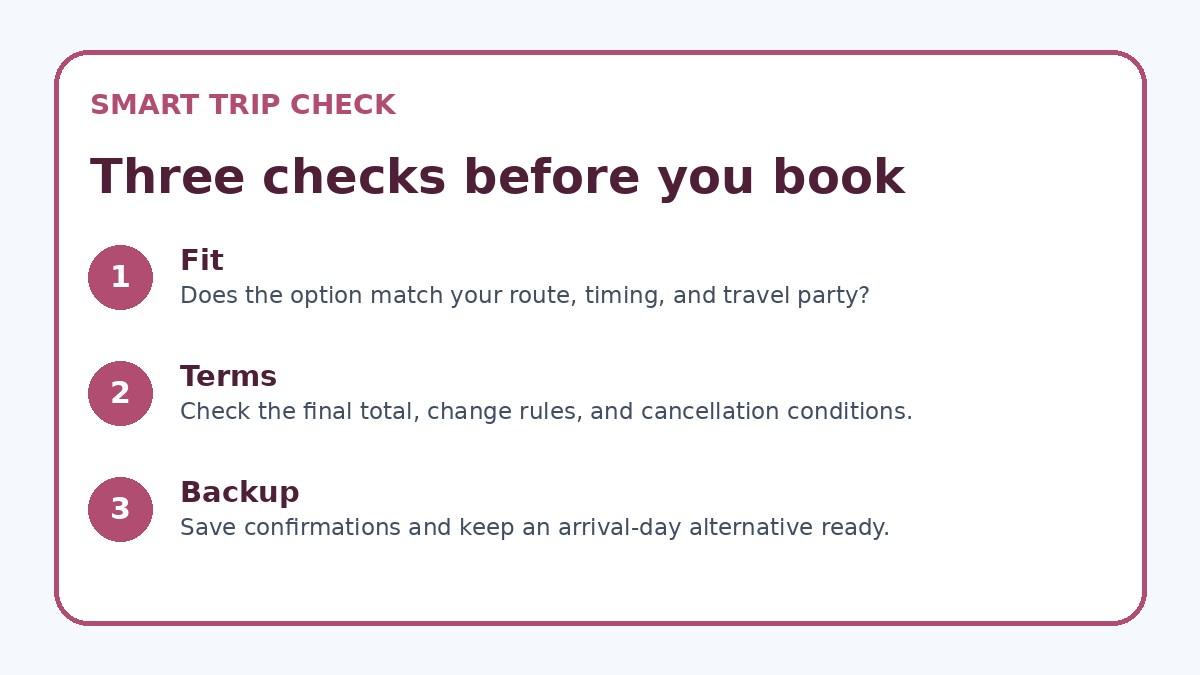
Compare inclusions and change conditions before deciding whether a package is genuinely useful for this trip.
Deal comparison checklist
- Fix the number of travelers and exact checked and carry-on bags before searching options.
- Search with a three-to-seven-day flexible date window to spot fares with better baggage allowances.
- When you find a package, click through to the airline and hotel pages and copy the exact baggage allowance language.
- Compare total trip cost using the same dates, same traveler count, and identical baggage assumptions for all quotes.
- Confirm change and cancellation rules for each component and how changes affect baggage benefits.
- If you need oversized-item handling, contact the airline or transfer provider directly to confirm space and fees before booking.
Flexibility and traveler-specific value
Flexible dates give you leverage: sometimes shifting your arrival or departure by a day or two changes the aircraft type, seat class availability, or baggage policy associated with a fare bucket. If you’re dealing with oversized or extra checked items, that can matter more than a few dollars in base fare. Use multi-day searches and the price-calendar view many booking engines offer to spot fares on flights that list more generous free-baggage allowances or that avoid budget-carrier segments. Also weigh traveler-specific value—senior or military fares, loyalty status, or family bookings may carry different baggage rules that alter which option is best.
However, flexibility can conflict with strict timing needs: if you must arrive or depart on a fixed date, the value of shifting dates disappears and separate baggage purchases or add-ons may be cleaner. For group travel where everyone brings extra luggage, a bundled transfer or larger room may be worth paying a little more for convenience. For solo travelers with nonstandard baggage (sports equipment, musical instruments), prioritize carriers and hotels that explicitly state policies for special items rather than assuming a bundle covers them.
Final terms to verify on the provider page
Never finalize a booking without checking the provider’s final terms. On an airline page, verify the fare class, refund/change fees, exact checked and carry-on allowances (including weight and size), and the policy for oversized or additional items. For hotels, check room dimensions or bed configuration, whether the booking includes accessible luggage storage, the presence and cost of resort or facility fees, and the cancellation terms. If a package includes transfers, verify vehicle type, luggage restrictions, and whether the provider allows pickup from nonstandard locations.
Also confirm how changes are handled across bundled components: can you change the flight without canceling the hotel portion? Is the baggage allowance tied to the original ticket and voided on reissue? Look for explicit language on rebooking fees and who bears them. If the package links to third-party terms or a tour operator’s policy, read that operator’s baggage rules too. Use Trip.com or another aggregator to surface options, but always click through to the airline, hotel, or operator pages and copy the exact baggage language or terms for your records.
Travel Deals & Booking Strategy questions travelers ask
How can I tell if a Honolulu package actually includes checked bags?
Packages sometimes list ‘baggage included’ but the term can be ambiguous. After selecting a package, follow the link to the airline’s fare details on the provider’s final booking page and read the baggage allowance section line-for-line. Confirm whether the allowance is per passenger or per booking, the allowed weight and dimensions, and whether it applies to each flight segment in your itinerary. If the package references a fare class code, note that code and check the airline’s baggage rules for that fare. Do not rely on summary text in the package search results—copy the airline’s explicit baggage policy into your records before you pay.
Should I always pick flexible dates to save on baggage costs?
Flexible dates can reveal flights with different fare classes and baggage rules, which may reduce baggage fees, but they are not universally superior. If your travel dates are fixed for punctual reasons, flexible searches won’t help. Also consider hotel availability and price stability—shifting dates to lower baggage fees might force you into a less suitable room or higher hotel costs. Use flexible-date searches early to identify favorable flight options, then check whether matching hotels are acceptable on those shifted dates. If flexibility is limited, prioritize selecting flights with clear baggage allowances or purchasing baggage at booking to lock in terms.
Are bundled transfers worth it when I have extra luggage in Honolulu?
Bundled transfers can reduce handling stress by guaranteeing a vehicle and driver familiar with luggage logistics, which matters if you have many or oversized pieces. But verify the transfer vehicle type and any stated luggage limits on the provider’s page: sedans, shared shuttles, and minivans have different capacities. If the package doesn’t specify vehicle size, ask the operator directly before booking. Consider whether a hotel with bell service or luggage storage could substitute for paid transfers. Ultimately, weigh the convenience and guaranteed space of a booked transfer against the cost and loss of control when flexibility matters.
Final decision note
For travelers with extra luggage heading to Honolulu, the practical approach is disciplined comparison: fix your traveler and baggage counts, search a flexible date window to surface fares with better baggage allowances, and compare only options that use the same dates and baggage assumptions. Evaluate inclusions—checked bags, transfers, and hotel amenities—by confirming exact language on airline and hotel booking pages. Bundles can simplify logistics but can also conceal different fare classes or room types; separate bookings grant control but require careful coordination. Use flexible dates to find favorable flight rules, then lock in hotels and transfers that match your luggage needs. Keep a copy of the supplier baggage terms and reconfirm vehicle or room luggage capacity if you have oversized items before you finalize the booking.
Continue planning
Check current options and final conditions
Use the provider page to confirm live availability, the final total, cancellation terms, and every condition that matters to your trip.
This evergreen planning guide was created with AI-assisted drafting and a structured quality review. It does not display live prices, schedules, availability, visa guidance, or provider rankings. Verify current details before booking. Some links are affiliate links; we may earn a commission at no additional cost to you.