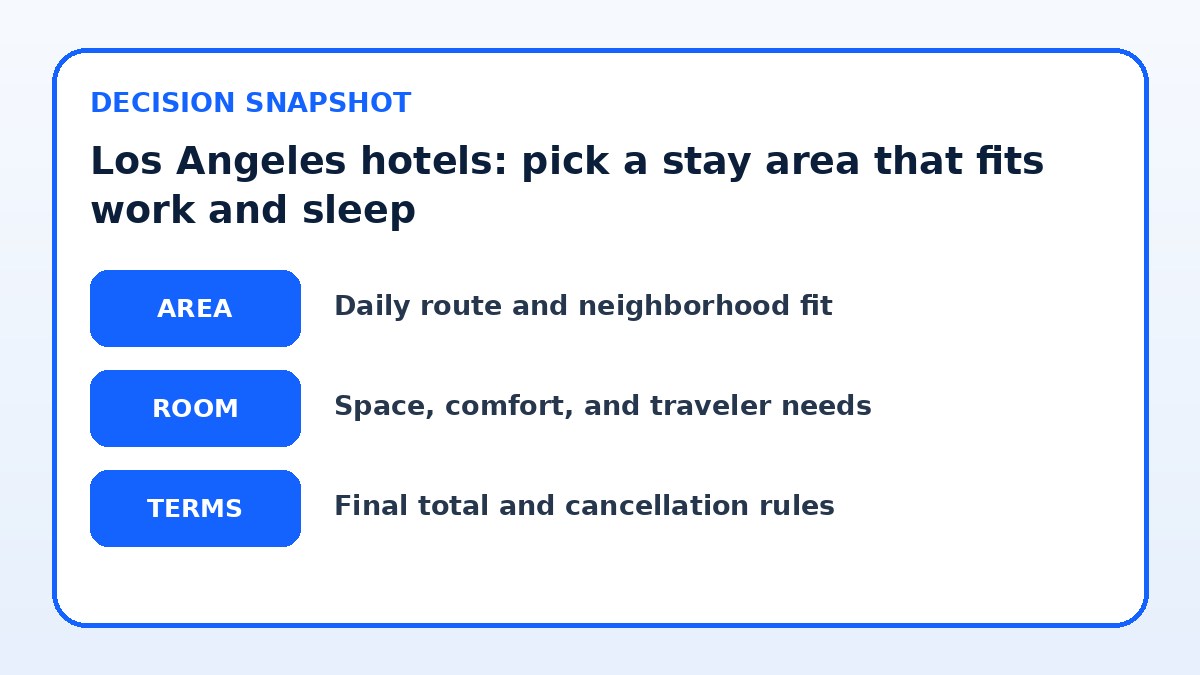
Practical answer up front: pick the neighborhood that minimizes your daily commute and gives you the transport options you rely on, then prioritize a room with a comfortable work area, reliable Wi‑Fi, and blackout options. For most business travelers to Los Angeles that means choosing between proximity to downtown or the Westside, or balancing airport access if you have tight arrival/departure windows. If your calendar is light on site visits and heavy on meetings, a quieter Westside hotel with a larger room makes sense. If you’re hopping between client offices across the city, being near transit hubs, major freeways, or a cluster of offices will reduce friction. Below I’ll walk through neighborhood fits, how daily-route friction affects schedules, what to look for in-room for work and rest, and the final booking terms to confirm before you reserve.

Check live stays in the areas that fit
Use your dates and party size to compare current rooms after you narrow the neighborhood fit.
Neighborhood fit: choose by meeting map, not city highlights
Start with a meeting map. Mark every address you must visit and cluster them into zones: Downtown LA, Century City/Westwood, West LA/Santa Monica, and the airport/Harbor area. If most meetings sit within a single cluster, prioritize a hotel inside or adjacent to that cluster to slash commute time. Los Angeles is large and traffic varies wildly by time of day; a 15‑minute trip across town off‑peak can be double or triple during rush hour. Choosing by map keeps you realistic about daily travel and gives you more time for prep and rest.
If your schedule spreads across multiple clusters, consider a base near a transit spine or an airport-hub if you have early or late flights. For example, a base near the 405 or 10 freeways helps if you must cross the city frequently, while staying near a Metro Expo or B/D Line stop makes sense if you prefer train options to avoid driving. Also account for evening plans—dining, networking, or catching up on work—and choose a neighborhood with safe, convenient options within walking distance or a short ride.
Choose an area-selection strategy
| Area approach | Best for | Tradeoff to check |
|---|---|---|
| Stay in Downtown LA (close to court, finance, and convention centers) | Travelers with concentrated meetings in the central business district | Higher noise and potential longer transfers to Westside meetings or the coast |
| Stay on the Westside (Century City, Westwood, Santa Monica) | Office-heavy itineraries with client locations across West LA and clear beach access | Longer drives to downtown and possibly limited late-night public transit |
| Stay near LAX or Hollywood/Burbank (airport-focused) | Trips with early flights or media/entertainment appointments near studios | May increase daily commute time into other business clusters and face airport noise |
| Stay by transit hubs or freeway intersections | Travelers who must visit multiple dispersed sites across the city | Noise, less neighborhood charm, and potential parking or rideshare delays |
Daily-route friction: how travel time erodes work hours
Estimate typical travel windows rather than punch-in times. Add a buffer for traffic, parking, or ride-share waits—these pockets of lost time accumulate every day. When meetings are back-to-back across neighborhoods, the risk of delay rises. Use your calendar to simulate a day: plug in meeting locations and ask whether you can realistically move between them with the transport options available. If not, rearrange meetings or select a hotel that reduces at least one heavy commute each day.
Also consider the less obvious frictions: secure parking versus valet, hotel-to-meeting check-in through reception, and availability of on-demand rides at your meeting hour. A hotel that promises proximity but lacks quick exits onto major roads, or sits in a busy nightlife zone where pickups are slow, can cost you time and patience. Think beyond distance: look at typical commute modes, lane bottlenecks during your meeting window, and whether your hotel provides shuttle services to key business districts or the airport.
Now compare like with like
Keep the same dates, guests, room needs, and cancellation preferences while you compare the final choices.
Room and party needs: what to demand from the room
For productive work nights, a bed alone isn’t enough. Look for a dedicated, ergonomically comfortable workspace with adjustable lighting and plenty of accessible outlets. Confirm the room has business-friendly Wi‑Fi (ask whether there’s a business or premium tier and whether it’s free or paid). If you expect video calls, request a quiet room away from elevators and street noise, and verify whether the hotel supplies a webcam, HDMI adapter, or meeting set-up on request. A convertible sofa or adjoining-room option helps if a colleague joins for part of the stay.
For rest and focus, prioritize darkening curtains, a good mattress, and climate control that’s easy to adjust for sleep quality. If you travel with a partner or family on rare blended trips, weight the number of beds, sofa function, and minibar or kitchenette needs. Consider in-room food options and late-night dining availability if your schedule keeps you working into the evening. Finally, confirm housekeeping timing if a midday clean will disrupt a nap or focused work session—ask whether you can request a specific window.
Hotel booking check before payment
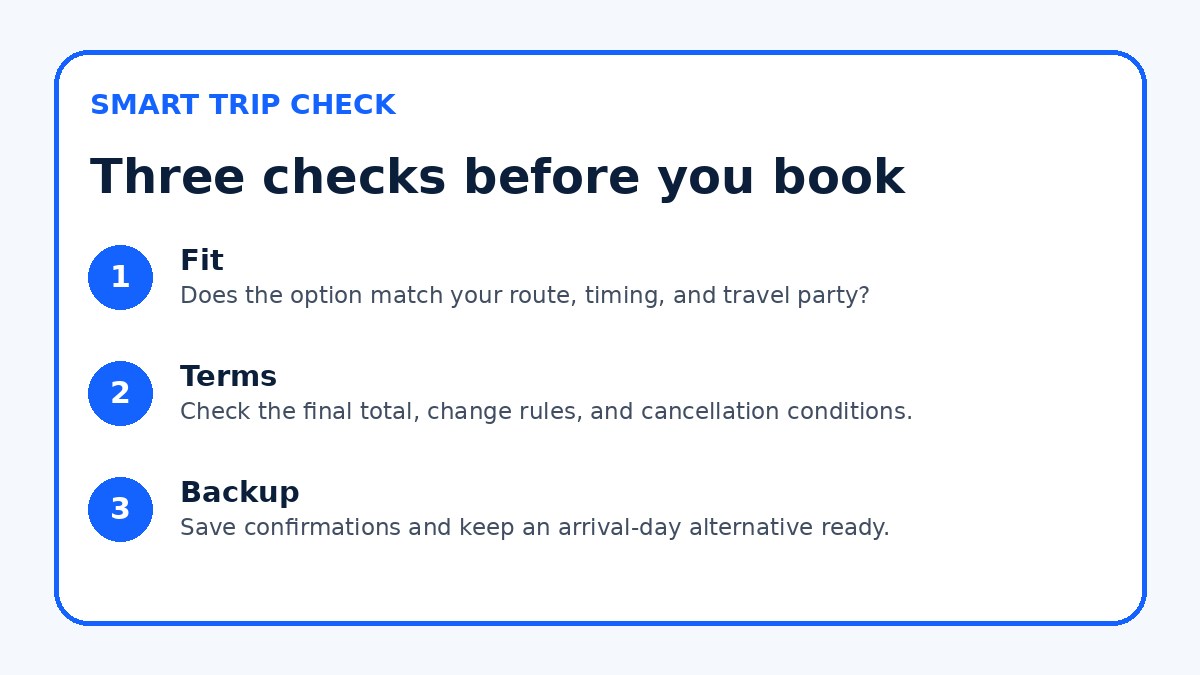
- Map all meeting addresses and choose the hotel neighborhood that minimizes total daily travel time.
- Ask the hotel (or read the provider page) about Wi‑Fi speed tiers and whether reliable wired connections are available.
- Request a quiet room with blackout curtains and a dedicated desk; confirm this request in writing when possible.
- Check parking and shuttle provisions and confirm pickup points for late-night ride shares on the hotel page.
- Confirm cancellation and modification terms for the room type you select before finalizing payment.
- Verify business-center services (printing, meeting rooms) and any fees, then arrange bookings ahead if needed.
Final booking terms: what to verify on the provider page
Before you hit reserve, verify the cancellation policy, Wi‑Fi terms, and any additional business services on the hotel’s booking page. Don’t assume complimentary internet speed or free printing; check what the provider lists for bandwidth, conference-room access, and fees for business-center services. If parking matters, confirm whether the hotel provides self-parking, valet, or both, and whether there’s a daily fee and an early-bird or overnight policy. These details are subject to change, so treat the hotel page as the decisive source.
Also check arrival logistics listed on the provider page: shuttle schedules to airports, preferred taxi or rideshare pickup areas, and whether the hotel has contactless check-in options useful for late arrivals. If you need a specific room type—quiet facing courtyard, a room with a desk, or adjoining rooms—book that room type specifically and confirm any special requests via the hotel’s contact information. For a quick cross-check of availability, you can compare options on Trip.com but always confirm the exact terms on the hotel’s official booking page.
Hotel Guide questions travelers ask
How do I decide between staying near LAX and staying in downtown or Westside for business?
Base your decision on your schedule: if you have multiple early or late flights, an LAX-area hotel reduces transit stress on travel days. If most meetings are clustered downtown or on the Westside, staying in that district will save daily commute time and keep you fresher. For mixed schedules, weigh which days have heavier meeting loads and choose a hotel that shortens the longest or most critical commutes. Always check shuttle schedules and traffic at your expected travel times on the provider page.
What in-room features should I prioritize for reliable remote work and video calls?
Prioritize a quiet room with a dedicated desk, strong and clearly described Wi‑Fi, adjustable lighting, and a stable chair for longer calls. If video calls are frequent, request a room away from elevators and service areas and ask the hotel whether they provide Ethernet access, an HDMI port, or a quiet business room you can reserve for higher-quality audio/video. Confirm the hotel’s Wi‑Fi policy and any extra fees on the booking page.
How should I handle late meetings or networking that run past transit hours?
Plan your evening logistics in advance: choose a hotel with late-night dining or room service, or confirm reliable ride-share or taxi access near the property. If public transit ends before your evening wraps, verify pickup points and how long drivers typically take at night for that neighborhood. Consider staying a bit closer to your final networking venue so you don’t lose time or comfort on the last leg; if that’s not possible, arrange a scheduled hotel pickup or book a rideshare slightly earlier to avoid delays.
Final decision note
Make your Los Angeles hotel decision by locking in the neighborhood that shrinks the most important daily commutes, then prioritize rooms that support focused work and restorative sleep. Map your meetings first, estimate realistic commute windows with buffers, and select a hotel that eases the busiest parts of your schedule—whether that’s proximity to a business cluster, quick access to an airport, or a Westside base for quieter nights. Before booking, verify Wi‑Fi, cancellation policy, parking, and any business services on the hotel’s official page; those specifics determine whether the hotel will actually support your work needs. With a clear shortlist of areas and a room checklist, you’ll be able to open live inventory and pick a room that truly fits your trip.
Continue planning
Check current options and final conditions
Use the provider page to confirm live availability, the final total, cancellation terms, and every condition that matters to your trip.
This evergreen planning guide was created with AI-assisted drafting and a structured quality review. It does not display live prices, schedules, availability, visa guidance, or provider rankings. Verify current details before booking. Some links are affiliate links; we may earn a commission at no additional cost to you.