If your trip to Honolulu is work-focused, the practical question is simple: will a rental car actually save you time or just create extra pickup and return headaches? For many business travelers, driving makes sense when meetings or sites are scattered across O‘ahu, or when you need flexible departure times from the airport. But the logistics around pickup location, after-hours returns, airport surcharges, and insurance language can easily add enough friction that taxis, ride-hailing, or a car service are faster and simpler. This article gives the direct answer up front, then walks through the route value, how to read insurance and contract wording, pickup and return friction points to expect, and a clear non-driving fallback so you can choose confidently.
Does driving add route value for Honolulu business trips?
Start by mapping the locations you must cover: airport, client sites, hotels, and any late meetings or site visits. Honolulu is concentrated along the south shore, but if your appointments include North Shore, windward coast, or dispersed island locations, a car usually saves time compared with waiting for ride-hailing between distant points. Consider travel time during peak traffic windows — beaches and tourist corridors draw large volumes — and whether those windows overlap with your calendar. If you have back-to-back meetings with little buffer, driving gives schedule control; if you have a single downtown or Waikīkī meeting, it may not.
Quantify the value: estimate door-to-door time and add realistic allowances for parking and walking from drop-off points. For airport pickups, compare the convenience of curbside collection versus an off-airport shuttle desk; an off-site lot can add 20–40 minutes. If you need to transport materials, samples, or equipment, a car's logistic advantage grows. Conversely, if your itinerary is tightly clustered and parking near client sites is scarce or expensive, that advantage can evaporate. Use this routing analysis as the first filter in your drive-or-not decision.
Decide whether driving earns its place
| Mobility strategy | Best for | Cost or friction to check |
|---|---|---|
| Rent a car from airport counter | Travelers with multiple island-wide appointments or equipment to move | Potential long pickup queues, airport surcharges, and return logistics if after hours |
| Off-airport rental lot with shuttle | Lower base rates and larger vehicle choice with predictable shuttle transfers | Shuttle wait time and extra transfer step can add 20–40 minutes each way |
| Pre-booked car service / chauffeur | Executives who prioritize punctuality, no parking or return tasks, and seamless transfers | Higher per-trip cost and less flexibility for ad-hoc side trips or schedule changes |
| Ride-hailing and taxis for entire trip | Short, clustered schedules in Honolulu/Waikīkī or single-day meetings | Can be expensive for long island drives and gives you less control over spontaneous side trips |
Check live rental choices only after the route test
Use the exact driver, dates, pickup point, and return plan to compare current conditions.
What to verify in pickup and return terms
Pickup logistics vary widely and can affect your schedule. Verify the exact pickup location (airport curbside, on-airport counter inside arrivals, or an off-airport lot with shuttle), hours of operation, and whether after-hours pickup requires a special code or third-party desk. On the booking page check for required documents at pickup, credit card hold amounts, and whether an additional driver needs to be pre-registered. Also confirm any express pickup lines or loyalty counter options that can dramatically reduce wait time for frequent travelers.
Return terms are equally important: confirm where to return the vehicle (same location, separate rental car center, or key drop box), fees for off-hour returns or missing fuel, and whether drop-off at a different island location is permitted. Pay attention to fuel policy wording and odometer checks. If you expect to return outside staffed hours, verify the precise key-drop procedure and whether a signed final inspection will be emailed. Always take timestamped photos of fuel level and vehicle condition at pickup and return to reduce disputes.
Compare the full rental conditions
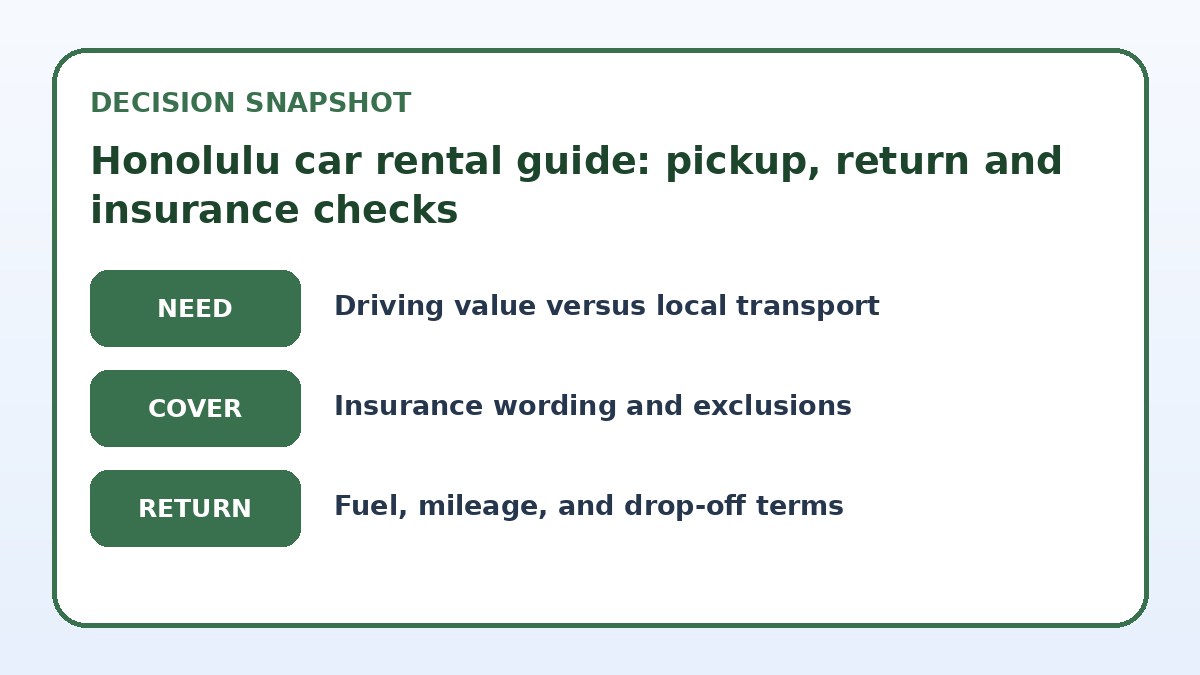
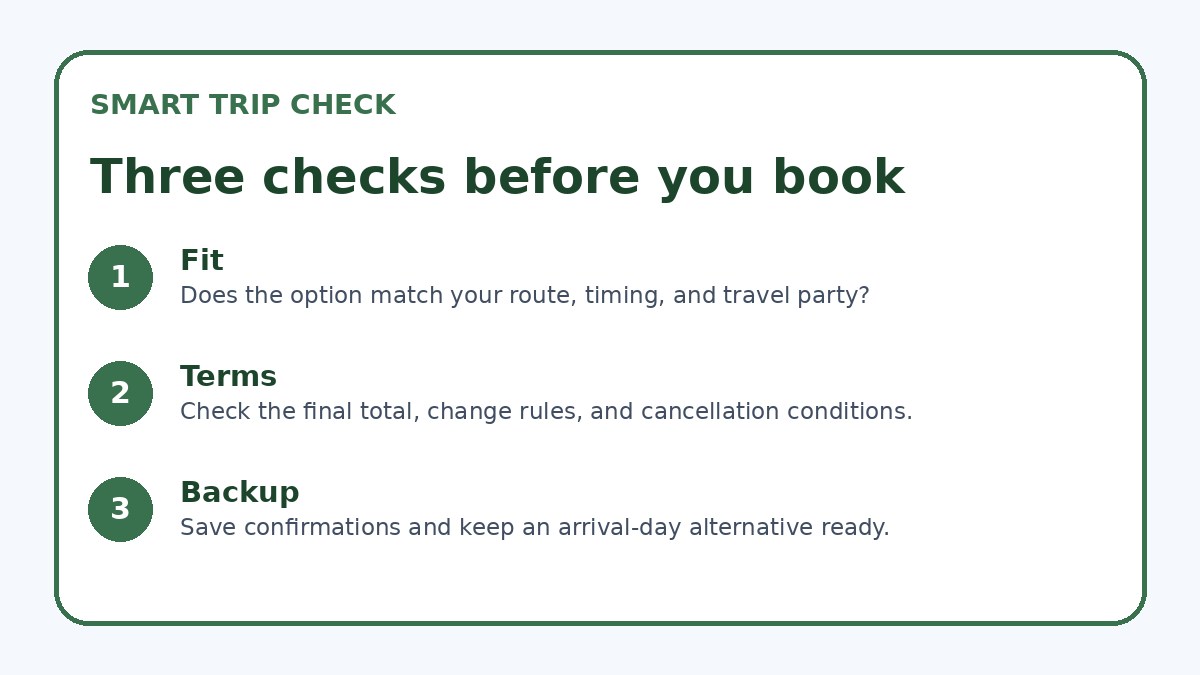
Confirm insurance wording, exclusions, deposit, fuel, mileage, and return terms on the final page.
How to read insurance and liability wording
Insurance descriptions on the booking page often use shorthand that hides practical differences. Look specifically for whether the offered damage waiver or collision coverage is primary (it pays first) or secondary (it only covers what your personal policy does not). Note exclusions for loss-of-use (fees charged for time the vehicle is unavailable during repair) and whether roadside assistance is included or sold separately. Confirm whether glass, tire, undercarriage, and windshield damage are covered or excluded—these items are frequently limited in Hawaiian rental contracts.
Check authorized-driver rules, international license acceptance, and whether corporate insurance policies must be pre-notified or have certificate-of-insurance requirements. Credit-card benefits may offer collision coverage but often exclude certain vehicle types or island-specific charges. On the provider’s final booking page, verify exact wording about deductible amounts, whether theft protection includes personal belongings, and any liability caps. If you rely on company-card benefits, bring signed corporate authorization or proof to avoid delays at pickup.
Car rental terms to verify
- Confirm exact pickup location and hours on the provider’s final booking page, including curbside codes or shuttle instructions.
- Document whether offered coverage is primary or secondary and note the deductible and loss-of-use policy language.
- Check after-hours return procedure, key-drop instructions, and whether an emailed inspection is provided.
- Verify additional driver rules and fees, and register any extra drivers before arrival if required.
- Photograph the vehicle’s condition and fuel level with timestamps at pickup and return for dispute protection.
- Compare total time cost: add shuttle/queue estimates to driving time and compare against door-to-door ride-hailing alternatives.
Pickup/return friction and a non-driving fallback
Common friction points include long airport queues, shuttle waits from offsite lots, limited evening desks, and time-consuming vehicle inspections. Parking in busy Waikīkī is often metered, expensive, or restricted — plan for permit rules at client sites. Expect staffing to fluctuate seasonally; even business travelers can face delays during peak visitor periods. Also watch for policy language about additional driver fees, underage driver charges, and cross-island drop-offs, any of which can significantly increase effort and cost if not checked beforehand.
If driving adds unacceptable friction, choose the non-driving fallback: combine airport transfer service with ride-hailing or a local car service for meetings. For tightly scheduled business days, book a pre-arranged car service for morning and evening runs and use taxis or ride-hailing between nearby meetings; this minimizes waiting, parking hassle, and return timing risks. Trip.com can be used to compare current availability, but always verify pickup addresses, cancellation terms, and whether the provider offers corporate billing before finalizing.
Car Rental & Road Trip questions travelers ask
Should I always pick up a car at Honolulu International Airport for business travel?
Not always. Picking up at the airport is convenient if your schedule requires leaving immediately and you have multiple out-of-downtown stops. However, airport pickups can involve arrival queues, counter wait times, and extra surcharges. If your meetings are concentrated in Waikīkī or downtown Honolulu and you value speed over autonomy, a pre-arranged transfer or ride-hailing to your hotel followed by local taxis may be faster. Always verify airport counter hours, expected wait times, and any curbside policies on the booking page before deciding.
What insurance or coverages should a corporate traveler insist on when renting in Honolulu?
Start by confirming whether your company card or corporate policy provides primary collision coverage and understand any exclusions. On the booking page look for explicit language about primary versus secondary coverage, deductible amounts, roadside assistance inclusion, and exclusions for tires, glass, or undercarriage. Also check loss-of-use and theft protection wording. If the provider’s terms are unclear, request a written policy summary before pickup and bring any corporate authorization forms. This reduces the risk of unexpected out-of-pocket costs after an incident.
How do after-hours returns work and what should I verify to avoid disputes?
After-hours returns are common but vary by location. Verify the exact key-drop procedure, the physical drop box or office address, and whether you receive a stamped receipt or emailed inspection. Confirm whether fuel-level checks will be done later and how final condition charges are communicated. Take time-stamped photos of the vehicle and fuel gauge when you return it, and keep both pickup and drop-off photos. If any ambiguity remains on the booking page, contact the provider’s customer service to get written confirmation of the after-hours process.
Final decision note
For business travelers in Honolulu, the decision to rent hinges on route value and the friction of pickup and return. If your meetings are spread across the island or you need to transport materials, a rental usually provides necessary flexibility—but only if you confirm pickup location, after-hours return rules, and precise insurance wording beforehand. If your schedule is clustered in Waikīkī or you value avoiding parking and key-drop hassles, pair an airport transfer with ride-hailing or a pre-booked car service for a smoother day. Use the checklist to verify the critical contract terms on the final booking page before you commit.
Continue planning
Check current options and final conditions
Use the provider page to confirm live availability, the final total, cancellation terms, and every condition that matters to your trip.
This evergreen planning guide was created with AI-assisted drafting and a structured quality review. It does not display live prices, schedules, availability, visa guidance, or provider rankings. Verify current details before booking. Some links are affiliate links; we may earn a commission at no additional cost to you.