Practical answer up front: if you have extra luggage, choose the rail option (conventional rail or high-speed where available) only after checking luggage policies, station access, and first/last-mile transfers; if door-to-door simplicity matters more than time savings, arrange a private transfer or blended plan (train plus paid pickup) to avoid haulage at either end. The rest of this article explains how to compare the options, what to pack and stage for the travel day, how terminals and transfers affect friction, and exactly what to verify with providers before you book. You’ll get a clear disruption plan — alternative routes, contact points, and simple contingency steps — so your Taipei to Kaohsiung travel day is about moving people and bags, not improvising at the station.
Choosing the right mode based on luggage and door-to-door needs
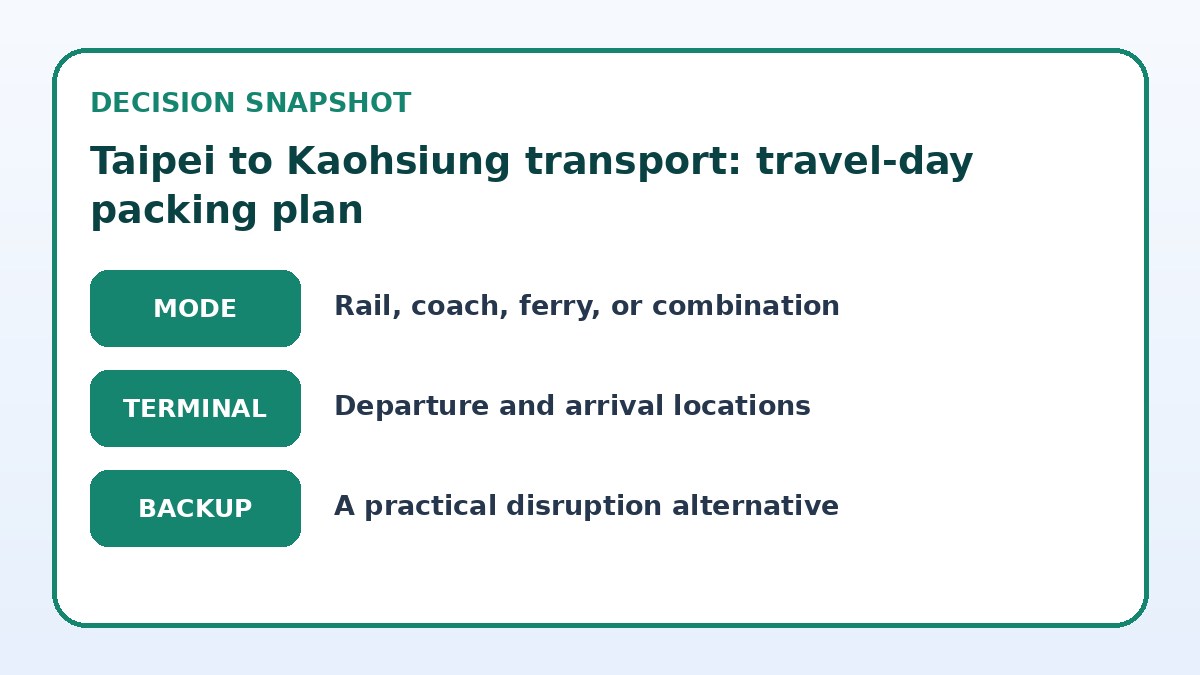
When comparing rail, coach, or a private transfer for Taipei to Kaohsiung transport, frame the decision around end-to-end effort, not just in-vehicle travel time. If you have oversized suitcases, instruments, or multiple checkable items, an option that reduces the number of handoffs usually saves time and stress. Rail offers a steady ride and space for standard luggage, but you’ll need to consider platform access, elevator locations, and the distance from train doors to taxis or station exits. Coaches and long-distance buses can be practical when they provide dedicated underfloor storage and a simple curbside pickup at both ends, but they may require longer total journey times and fixed stop locations.
Paragraph two: For travelers who prioritize door-to-door convenience over speed, a private transfer or prebooked van that loads at your accommodation and drops you directly at your Kaohsiung address avoids station crowds and stairs. A blended approach—taking a long-distance train for the ride and booking a private car for the station-to-door legs—often balances speed and low friction: you still benefit from the high-speed portion while eliminating the hardest manual handling. Before you commit, map the exact pickup/drop-off points, elevator availability, and whether the vehicle you pick can legally and physically access your departure and arrival addresses.
Choose the end-to-end journey plan
| Journey approach | Best for | Friction to check |
|---|---|---|
| Rail (direct when possible) | Travelers who want a smooth ride with predictable space for standard luggage. | May require longer walks within stations and careful checks on baggage policies and platform access. |
| Coach or long-distance bus | Those carrying oversized suitcases who prefer underfloor storage and simple curbside pickups. | Often slower overall and limited by fixed stops; coordinate exact pickup/drop-off locations ahead of time. |
| Private transfer door-to-door | Maximum convenience for heavy or fragile items and minimal handling across legs. | Higher cost and potential limitations on vehicle access in narrow urban streets or loading zones. |
| Blended plan (train + booked car for station legs) | Travelers seeking a balance of speed and low transfer friction with flexible first/last-mile handling. | Requires coordinating separate bookings and timing buffers to avoid missed connections. |
Check live intercity options
Look beyond the ride itself and compare terminals, transfers, luggage, and arrival fit.
Terminal fit: what to check at stations and depots
Station layout matters more when you have extra luggage. Confirm on-street access, elevator and escalator locations, and how far the ticket hall is from pick-up points. Some larger stations have multiple exits, separate platforms for different services, and distant taxi ranks; others provide curbside drop-off right at the entrance. If stairs or narrow passageways are unavoidable, ask whether porters, luggage trolleys, or staffed assistance are available. Take photos of station maps or save screenshots from official station pages to your phone so you can orient yourself on arrival.
Also check where luggage is stored on the vehicle: are larger suitcases loaded into an underfloor hold or carried into the passenger cabin? If you need to load bulky items aboard, verify door widths and aisle clearance. For combined trips—train followed by a short bus or ferry—identify where you’ll move your bags between vehicles and how much time you’ll allow. Finally, verify local pickup points: some services require you to wait at a specific bus bay or taxi stand, which may be a long walk from the main concourse.
Luggage and transfer friction: packing and staging for the travel day
Pack to reduce handling. Use high-visibility tags, straps, or color-coded elements so you can identify bags quickly in crowded areas. Shift essential items—documents, medication, a single change of clothes, chargers—into a daypack you can carry through transfer points. If you have irregularly sized items, bring protective padding and consider a lightweight collapsible trolley if elevators are available; some trolleys are compact enough to stow on a train. Photograph contents and dimensions before departure so you can provide exact descriptions to porters or drivers if a claim or special handling is needed.
Staging matters: load your vehicle or leave luggage at a secure spot in your accommodation early on travel day to avoid last-minute scrambling. If you expect to check large items into a train or coach depot, arrive earlier than usual to allow staff to tag and store bags. Communicate clearly with drivers or station staff about which bag goes where; label each bag with your contact and destination address. Finally, practice one-handed lifting technique for the heaviest item and know your limits—paying a short distance for a porter or paid assistance can prevent injury and save time.
Compare the practical alternatives
Use the final page to confirm what is actually offered on your dates and save a workable fallback.
Intercity travel checklist
- Measure and photograph every bag; note dimensions and weight to verify carrier luggage allowances before booking.
- Map station entrances, elevators, taxi ranks, and nearest curbside drop-off points for both Taipei departure and Kaohsiung arrival.
- Pack an easily accessible daypack with essentials and valuables to avoid opening checked bags during transfers.
- Prebook first- or last-mile pickup with clear instructions and a contact number for the driver or service.
- Allow at least 60–90 minutes buffer for check-out and station arrival to handle loading and unexpected delays.
- Save provider booking pages, luggage policy pages, and emergency contacts offline and share them with your travel companion.
Timing flexibility and a disruption backup plan
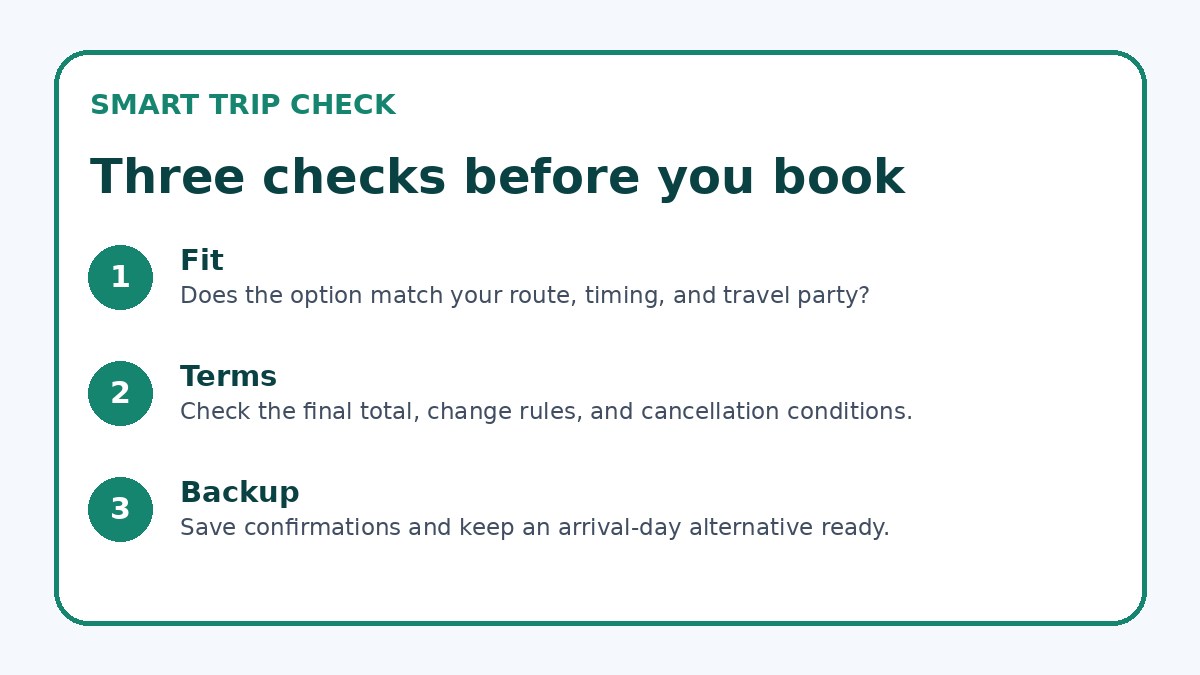
Plan a buffer big enough to absorb delays: aim to have at least 60–90 minutes between your planned check-out or departure from a property and the scheduled departure of a long-distance service. That cushion covers traffic, elevator waits, and the extra minutes needed to load bulky luggage. If you must be at a specific appointment in Kaohsiung, choose an earlier service window and accept a longer wait at the other end rather than risking a tight connection. Keep digital copies of confirmations, and ensure the phone numbers for your driver, carrier, and accommodation are saved where you can access them offline.
Create a simple disruption ladder: first, seek a different service on the same mode; second, switch to a coach or shared transfer if available; third, book an on-demand private vehicle for the affected leg; fourth, consider overnighting near a station if connections can’t be made. Know the refund or change processes for any tickets you buy and verify cut-off times on the provider’s final booking page before paying. Having the contingency sequence written down reduces stress and speeds decision making when plans shift.
Rail & Intercity Transport questions travelers ask
How do I check if a train or coach can carry my oversized luggage?
Check the carrier’s official baggage policy on their booking or help pages; if the site is unclear, contact customer service directly with exact dimensions and weight. When policies appear ambiguous, ask where and how bulky items are stored—underfloor hold, designated luggage racks, or in-cabin placement—and whether special handling needs to be requested in advance. Also confirm cut-off times for checked luggage on your chosen service and verify pick-up procedures at both the departure and arrival points.
Should I rely on station porters or plan to carry everything myself?
Don’t assume porters are available at every station; availability varies by station and time of day. Before relying on porter help, verify through station or operator information whether such services exist and whether they must be prebooked. If porter assistance isn’t guaranteed, plan for self-handling or arrange a prebooked vehicle that will load luggage at curbside. Factor in the cost and physical limitations: paying for professional help can be worth the expense if it prevents missed connections or injury.
What’s the simplest disruption backup if my booked service is canceled on travel day?
Have a single, prioritized backup: check the same-mode operator for the next available service, then be ready to switch to a coach or an on-demand private car. Before departure, note local contact numbers for alternate carriers and a trusted pickup provider. If switching modes, make sure the new option can handle your luggage volumes and has a clear pickup point; if not, consider an interim storage solution near the station and move only what you need. Confirm refund or change terms on the provider’s booking page so you can act quickly without unexpected penalties.
Final decision note
Traveling Taipei to Kaohsiung with extra luggage is manageable when you plan the travel day around minimizing handoffs and checking terminal logistics in advance. Choose a mode that aligns with your priorities—speed, cost, or door-to-door convenience—and then focus on the practical details: measure and label bags, map station access, prebook first- and last-mile pickup if needed, and carry an essentials bag for transfers. Verify luggage rules and pickup instructions on each provider’s booking page before purchase, and keep a clear disruption ladder ready. With those steps in place, you’ll convert a potentially stressful day into a predictable series of actions and comfortable transitions.
Continue planning
Check current options and final conditions
Use the provider page to confirm live availability, the final total, cancellation terms, and every condition that matters to your trip.
This evergreen planning guide was created with AI-assisted drafting and a structured quality review. It does not display live prices, schedules, availability, visa guidance, or provider rankings. Verify current details before booking. Some links are affiliate links; we may earn a commission at no additional cost to you.