Practical answer first: most couples should only rent a car in London if their itinerary includes reliable trips outside central London (rural day drives, multiple towns, or flexible sightseeing beyond public-transport reach). If you plan to stay within Greater London or rely on train/tube connections, driving usually adds cost, congestion charges, parking friction and insurance complexity without much benefit. If you do need a car, the single most important step at booking is to read the insurer wording line-by-line—especially sections on named drivers, excess amounts, third-party liability, theft/breakage exclusions, and cross-border rules. This article helps couples decide whether to drive, explains common insurance phrases and tradeoffs, highlights pickup/return friction to expect, and offers a clear non-driving fallback plan so you can choose confidently before you click reserve.
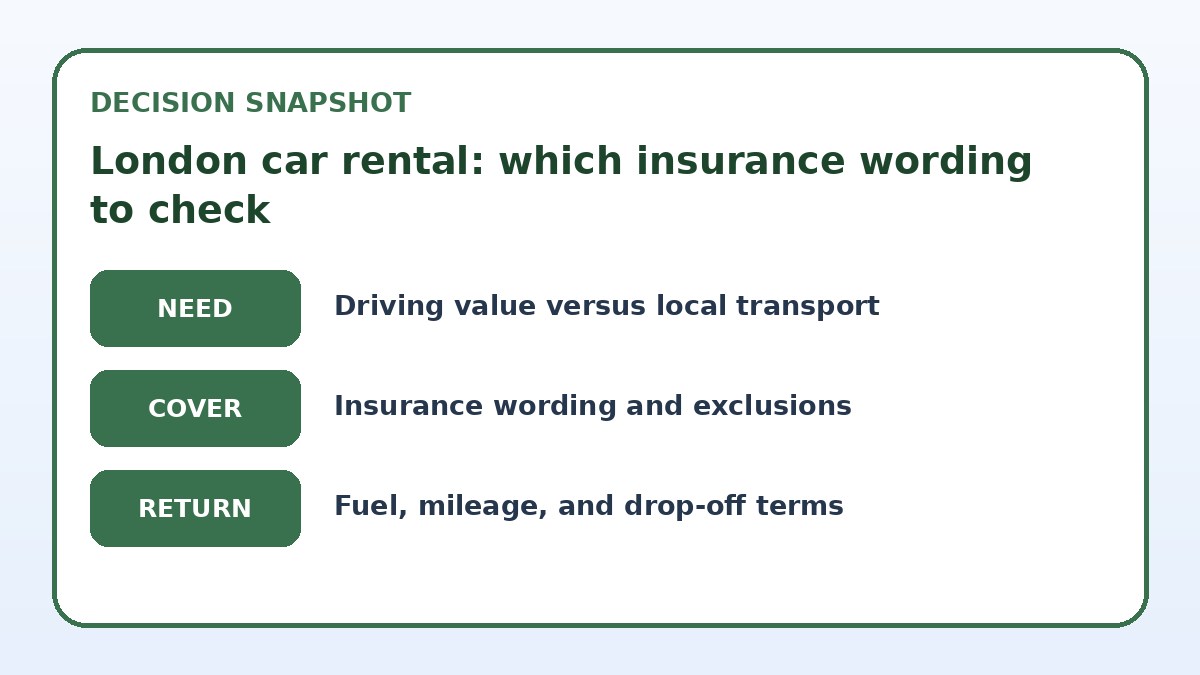
Does driving add value to your London trip?
Start by mapping where you will actually go. Central London attractions, West End shows, museums and neighbourhood explorations are typically easier without a car: the tube, buses and rideshares are dense and save parking headaches. A rental becomes useful when your couple’s plan includes day trips to the Cotswolds, coastal towns, or a flexible multi-day loop where public transport connections are infrequent or force long transit times. Consider whether a car shortens travel time meaningfully or simply replaces tidy train journeys with parking hunts and congestion-zone charges.
Weigh non-time factors too: comfort with driving on the left, narrow country lanes, and luggage handling. If one partner prefers to relax and the other wants to drive scenic routes, a hire car can improve enjoyment. But if both partners want to avoid navigation stress and urban parking costs, the car’s marginal benefit dwindles. Make a candid list of must-see places and estimate whether those places are reachable within acceptable travel time by train, coach, or organized tours before committing to a rental.
Decide whether driving earns its place
| Mobility strategy | Best for | Cost or friction to check |
|---|---|---|
| Full rental for whole trip | Couples doing many remote drives or flexible multi-stop countryside routes | Higher insurance complexity, parking and congestion charges; more paperwork at pickup and return |
| Short-term local hire (hour/day) plus public transport | Couples who only need a car for occasional day trips outside London | Requires planning and hopping between transport modes; may be costlier per hour but simpler insurance exposure |
| Rail + occasional taxi/ride-hail | Couples focused on central London with a few suburban excursions | Less driving stress and no rental insurance to manage; fares and last-mile availability vary by time and area |
| Guided tours or private driver for day trips | Couples preferring to sightsee without navigation or insurance worries | Lower logistical hassle and insurance risk; less personal flexibility and possibly higher per-trip cost |
Check live rental choices only after the route test
Use the exact driver, dates, pickup point, and return plan to compare current conditions.
Reading insurance wording: what couples must check
Insurance language has specific sections to verify. Read sections on who is a permitted or named driver and whether adding a second driver costs extra; some rentals automatically list only the main renter and charge per additional driver. Check Collision Damage Waiver (CDW) and Loss Damage Waiver (LDW) descriptions to understand the financial excess—the amount you’d pay after a claim—and whether the rental allows excess reduction options. Look for explicit exclusions: windscreen, tyres, undercarriage, driving under influence, or driving on unpaved roads, which often void coverage.
Also examine third-party liability minimums and whether the rental includes European Accident Insurance Cover if you plan to cross borders. If you plan to use a credit card or separate travel insurance to cover the excess, read the clause about third-party billing and whether the rental company requires you to pay the excess up front as a security hold. Finally, locate the claims process wording: time limits, required police reports, authorised repairers, and notification requirements—missing a procedural step can jeopardize a claim and leave couples exposed to unexpected charges.
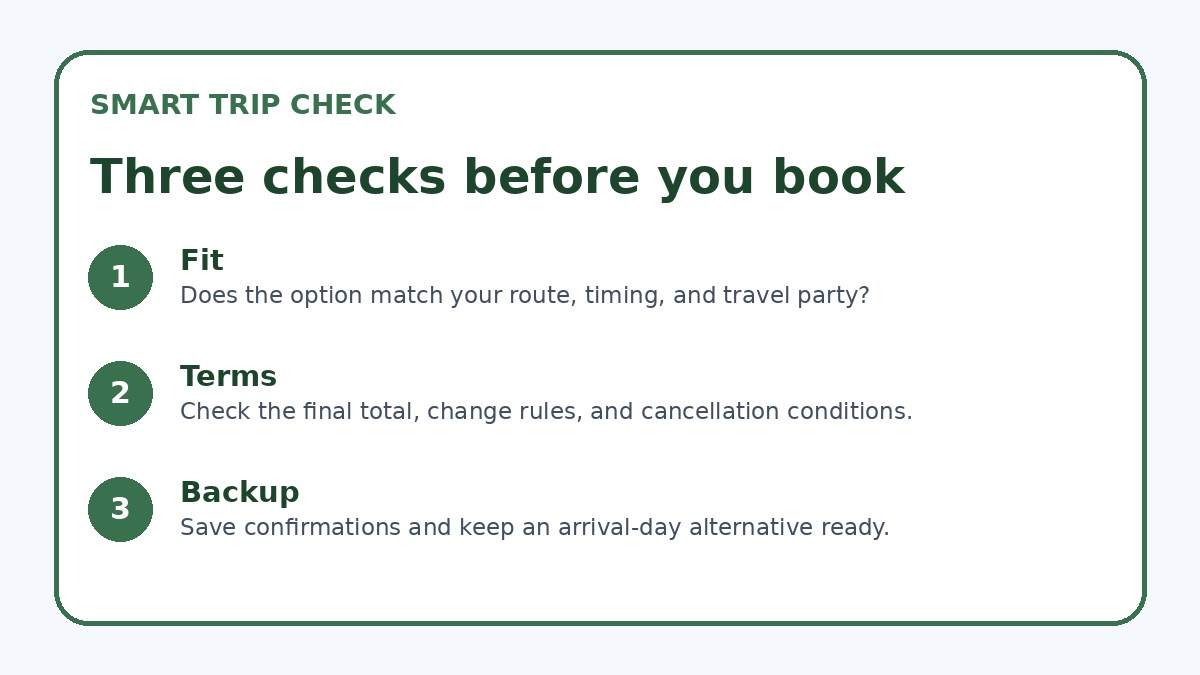
Compare the full rental conditions
Confirm insurance wording, exclusions, deposit, fuel, mileage, and return terms on the final page.
Pickup and return friction: what slows couples down
Expect standard checks that take time: presenting both drivers’ valid licences (plus an International Driving Permit if required by country rules), passports, a credit card in the main driver’s name for the security hold, and any proof of insurance or prior claims history. Counters often run photocopies, verify reservations, explain insurance options, and walk a couple through a vehicle inspection. Luggage, child seats and GPS or toll devices add complexity. Schedule buffer time at pickup and return—especially if you’re traveling between trains—and agree in advance who will handle documents and walk the vehicle with the agent.
Return friction often comes from fuel policies and inspection disputes. Read fuel clauses: full-to-full is common but some rentals enforce full-to-empty charges. Take timestamped photos and video of the vehicle exterior and interior during pickup and again at return, and keep copies of any inspection forms the agent signs. If you plan an out-of-hours drop-off, clarify how damage is reported and how final charges are calculated so you’re not surprised by a post-return invoice. These small steps reduce disputes and keep your deposit intact.
Car rental terms to verify
- Compare the rental agreement’s named driver clause and add your partner as a permitted driver if needed before pickup.
- Note the exact excess amount in the CDW/LDW section and decide whether to pay for excess reduction or use card/insurance coverage.
- Photograph the vehicle’s exterior and interior with timestamped images during pickup and again at return.
- Confirm fuel policy (full-to-full vs other) and ensure the fuel level is recorded on the pickup form.
- Verify what documents the desk requires: licences, ID, credit card, and any international permits, then bring originals and copies.
- Read the claims and damage-reporting procedure so you can follow the required steps if an incident occurs during your rental.
A practical non-driving fallback for couples
If you decide against renting, build a hybrid mobility plan: use London’s public transport for city time and pre-booked rail or coach tickets for intercity legs. For day trips where a car would be handy, plan one or two local car hires by the hour or book a driver-guided tour. Many couples find that combining rail for major transfers with short-term car hires or local taxis for last-mile flexibility gives the benefits of a car without the insurance and parking headaches of a longer rental.
Also research park-and-ride or train stations with car hire desks near your rural destinations; this minimizes time in central London with a car. When comparing this fallback to renting for the whole trip, consider convenience, total cost including local transfers, and how much driving one partner is willing to do. Keep a shortlist of train times, shuttle services and local hire operators so you can quickly pivot if weather or energy for driving changes during your stay.
Car Rental & Road Trip questions travelers ask
Can a credit card’s rental insurance replace the rental company’s CDW for a couple?
Many credit cards offer secondary or primary rental insurance that can reduce or replace the rental company’s Collision Damage Waiver, but coverage varies by card and country. Couples should check their card’s terms for geographic exclusions, whether the cardholder must be the primary renter, and if certain vehicle categories are excluded. Importantly, confirm whether the rental company still requires you to pay the excess as a security hold at pickup and whether the card issuer reimburses that hold after a claim. Always print the card insurer’s terms and present them at the desk if you plan to rely on card-based coverage.
What specific wording indicates tyres, windscreen, or undercarriage are excluded?
Look for explicit exclusion lines such as ‘damage to tyres, wheels, windscreen, mirrors or undercarriage is not covered’ or clauses listing component exclusions under the CDW/LDW section. Sometimes exclusions appear in a separate section titled ‘Exceptions’, ‘Not Covered’, or under ‘Accidental Damage’. If the contract uses terms like ‘wear and tear’ or ‘negligent use’, ask for clarification in writing. For couples, verify whether reduced-excess options or supplemental policies include these items and whether they apply to both named drivers before finalising the booking.
How should couples split responsibility for inspection and paperwork at pickup/return?
Assign clear roles before arrival: one partner manages documents, licences and payment, while the other handles the vehicle walkaround, photographing existing damage and confirming the fuel level. Agree that both review and initial or sign the inspection form—even if only the primary renter is required—to create shared awareness of liabilities. At return, replicate the process and obtain a stamped or signed receipt showing vehicle condition and return time. This division of tasks reduces errors, ensures both partners understand the contract, and protects your deposit against later disputes.
Final decision note
For most couples exploring London, the right choice hinges on your route map and appetite for insurance complexity. If your days are concentrated in the city and on well-served rail routes, skip the long rental and use public transport plus local hires for occasional countryside needs. If a car truly unlocks your itinerary, read insurance wording carefully: named drivers, excess, specific exclusions and claims procedures determine your real exposure. Factor in pickup and return friction and decide who handles paperwork. Finally, if you want to compare current availability or booking terms for both rentals and alternatives, checking a comparison site such as Trip.com can help, but always verify insurance clauses and final fees on the provider’s final booking page before confirming.
Continue planning
Check current options and final conditions
Use the provider page to confirm live availability, the final total, cancellation terms, and every condition that matters to your trip.
This evergreen planning guide was created with AI-assisted drafting and a structured quality review. It does not display live prices, schedules, availability, visa guidance, or provider rankings. Verify current details before booking. Some links are affiliate links; we may earn a commission at no additional cost to you.