If you’re a solo traveler debating whether to rent a car in Hanoi, the practical answer is: only if your itinerary needs flexible day trips outside the city and you accept extra pickup/return friction and insurance checks. Driving inside Hanoi’s central districts rarely saves time because traffic, tight streets, and plentiful motorbike taxis make navigation stressful, parking scarce, and one-way rules confusing. But a car can transform trips to places where public transport is slow or indirect—Trang An, Ba Vi, or remote homestays—provided you understand pickup and return terms before you book. Read rental agreements for exact pickup locations, after-hours return options, fuel rules, and detailed insurance wording. This guide helps you decide quickly, explains the tradeoffs, lists what to verify on the provider’s final booking page, and offers reliable non-driving fallbacks if car rental isn’t the smart choice for your Hanoi visit.

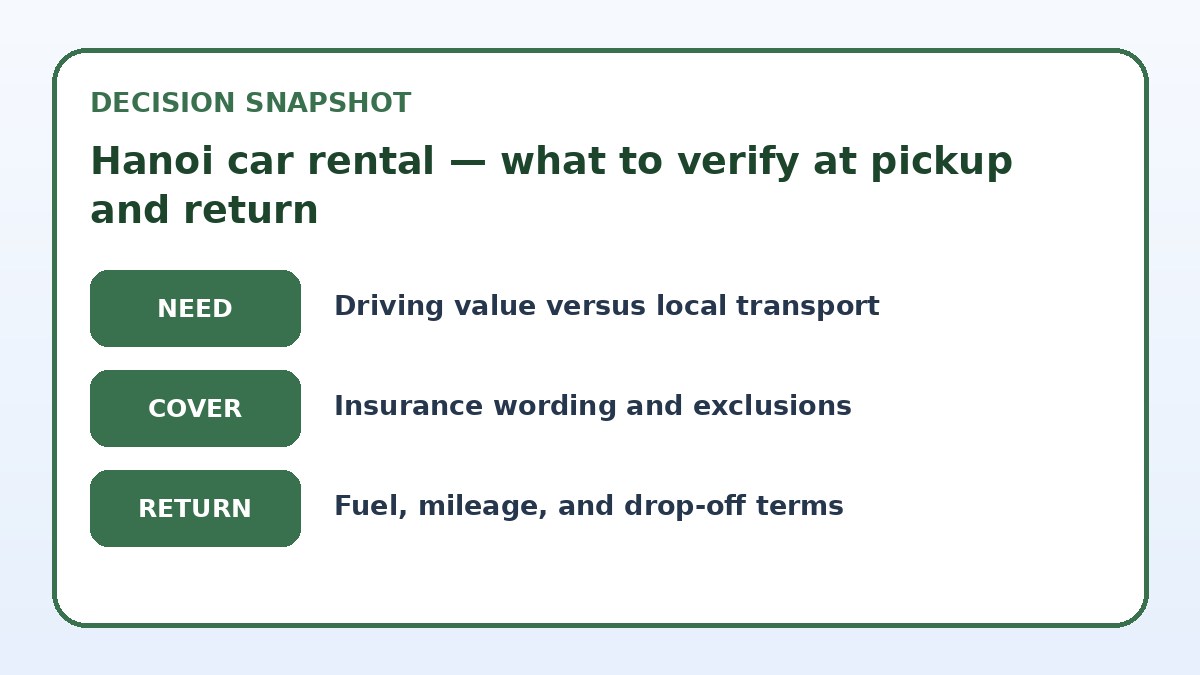
Route value: when a car genuinely improves your Hanoi trip
Walkable Old Quarter neighborhoods, morning markets, and short museum hops rarely benefit from a rental car. Evaluate your plan by total door-to-door time rather than distance: if you will make multiple day trips to rural sites with poor public connections or need early starts and late finishes in different directions, a car adds clear value for a solo traveler. Also consider luggage and comfort: a private car makes sense if you’re carrying photographic gear, awkward camping equipment, or mobility needs that public transport won’t easily solve.
When deciding, list each planned stop and check public transport frequency, directness, and transfer complexity. If any destination requires multiple transfers, long waits, or irregular schedules—especially outside weekdays—a car can save hours and stress. Conversely, if most of your days keep you within Hanoi or on well-served tourism corridors, the overhead of pickups, insurance, and parking may outweigh the mobility gains.
Decide whether driving earns its place
| Mobility strategy | Best for | Cost or friction to check |
|---|---|---|
| Rent a car for entire trip | Solo travelers prioritizing maximum flexibility for multiple rural day trips | Higher pickup/return friction, parking hassle in Hanoi, and more time spent on inspections and insurance checks |
| Hybrid: rent only for specific day(s) | Those needing a car for one or two long transfers but not urban driving | Requires extra logistics to pick up and return outside city; may incur short-rental rate premiums and inspection windows |
| Private driver or chauffeured hire | Travelers wanting flexibility without driving responsibility or insurance liability | Higher operating cost per day and less freedom to stop spontaneously if driver schedules are strict |
| Public transit + taxis + guided day trips | Solo travelers who prefer low friction, lower liability, and easy short-distance movement | Less flexibility for remote destinations and longer total travel times compared with private driving |
Check live rental choices only after the route test
Use the exact driver, dates, pickup point, and return plan to compare current conditions.
Insurance wording: read the excess, inclusions, and exclusions
Insurance terms are the single most important legal detail for solo renters. Focus first on the excess (how much you’d pay for a claim), whether theft protection is included, and what situations are explicitly excluded—flooding, off-road use, driving outside specified provinces, or driving by unlisted drivers are common exclusions. Check whether roadside assistance is 24/7, whether towing or third-party liability is capped, and whether the policy covers damage to windscreens, tires, or mirrors—items often excluded or offered as add-ons.
Don’t rely on generic phrases like “collision damage waiver included” without reading the definitions and limits. On the provider’s final booking page, verify exact excess amounts, any refundable security deposit, the process for filing claims, and whether you can purchase a lower-excess or zero-excess option. If the wording is ambiguous, ask the provider to email a signed clarification before you hand over payment.
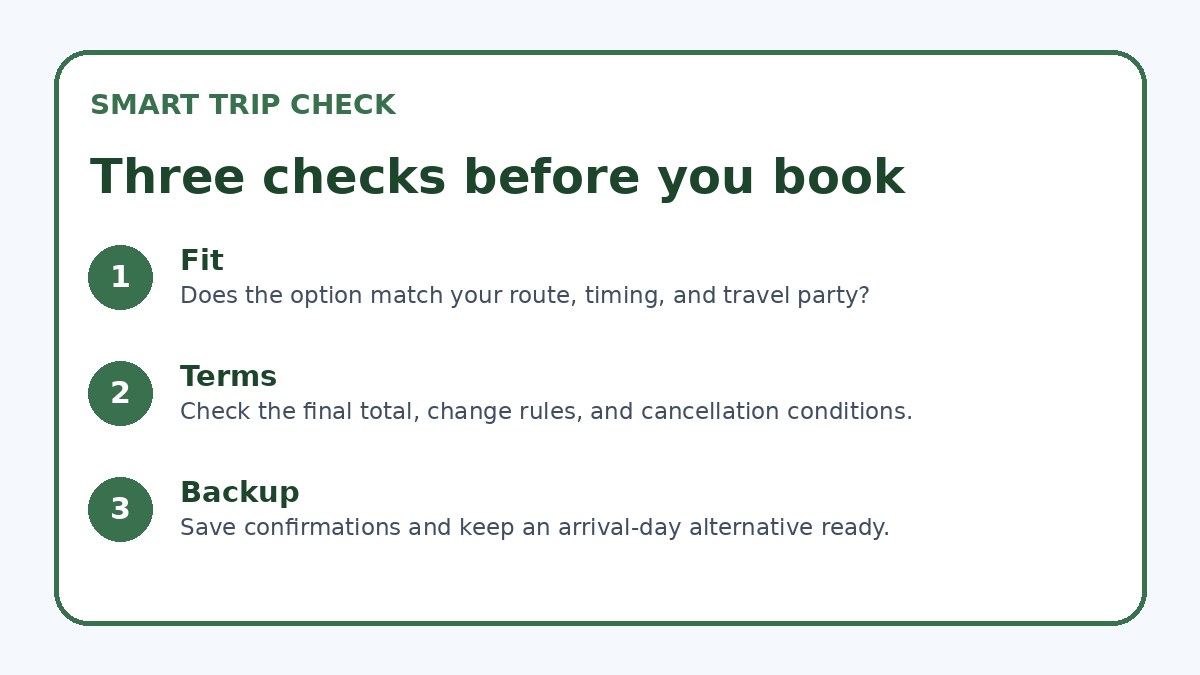
Compare the full rental conditions
Confirm insurance wording, exclusions, deposit, fuel, mileage, and return terms on the final page.
Pickup and return friction: practical traps solo travelers face
Pickup friction can start with location and documentation: many rentals list airport pickup but actually require a shuttle to an off-site office, or impose ID and local driving-license rules. Confirm the exact meet point, any service fees for airport meet-and-greet, and the time needed for the handover inspection. Ask whether a full vehicle inspection is carried out with you present, whether the handover includes a photographed condition report, and how long you have to report pre-existing damage.
Return friction often causes unexpected charges. Verify fuel policy (full-to-full is easiest), accepted fuel receipt evidence, precise late-return grace periods and how late fees are calculated, and the inspection process for final damage adjudication. If after-hours returns are allowed, ask how keys are submitted and who confirms the car’s condition. For solo travelers, photo or video documentation at pickup and return reduces disputes—confirm the provider’s evidence requirements on the booking page.
Car rental terms to verify
- Confirm the exact pickup location (terminal number, meeting point, or off-site office) and estimated transfer time before booking.
- Photograph or video the vehicle from all sides and interior during pickup; timestamped files reduce dispute risk on return.
- Ask the provider to email the full insurance wording, excess amount, and claim process; do not accept vague verbal guarantees at the counter.
- Verify fuel policy (full-to-full recommended), acceptable proof for refuelling, and detailed late-return fee calculations.
- Confirm whether after-hours returns are allowed, how keys are handled, and who signs off on the vehicle condition.
- Check whether the rental contract restricts driving outside specified provinces, off-road use, or certain driver ages, and get written confirmation if any exception is needed.
Non-driving fallback: efficient alternatives for solo travelers
If you decide against driving, combine Hanoi’s efficient app-based taxis or motorbike apps for in-city mobility with coordinated day trips for longer journeys. Many reputable day-trip operators run small-group or private transfers to nearby heritage and nature sites; these save you the hassle of parking, navigation, and insurance. For added flexibility, arrange a private driver for a single long day while using public transport or taxis for shorter moves—this reduces cost and removes liability while preserving door-to-door convenience.
Another hybrid is renting a car only for specific legs: pick it up the night before a long rural transfer and return it immediately after the day trip. Doing so avoids prolonged parking and urban driving. Whatever you choose, compare total door-to-door times, out-of-pocket fees for pickups and returns, and the stress of negotiating local traffic. If you need current availability or to compare options, consider checking Trip.com as one place to view real-time listings, but verify every contractual detail on the supplier’s final booking page.
Car Rental & Road Trip questions travelers ask
Do I need an international driving permit (IDP) to rent and drive in Hanoi?
Requirements vary by provider and vehicle type. Many international renters can present their national driving licence plus a passport, but some suppliers require an International Driving Permit (IDP) or a certified Vietnamese translation. Before you book, check the rental company’s driver-eligibility section on the final booking page and confirm what documents they will accept at pickup. If the contract lists an IDP as mandatory, obtain one in your home country—arrange this well before travel so you aren’t turned away at the counter.
How should I document damage at pickup and return to avoid disputes?
Use a systematic approach: photograph or record short video clips of the exterior from multiple angles and the interior, focusing on existing dents, scratches, tires, and glass. Date- and time-stamped images are best; many smartphones embed timestamps automatically. Walk the agent through each noted mark and request that they initial or sign the condition report; if they refuse, email the photos to the rental company’s support address and keep copies. On return, repeat the same process and obtain written or photographed confirmation of the handover to reduce the chance of post-rental charges.
What insurance wording points should I verify on the booking page before paying?
Look for explicit statements about the excess amount (the renter’s liability per incident), whether theft is covered, and third-party liability limits. Confirm exclusions such as off-road driving, unlisted drivers, or driving in restricted regions. Check whether roadside assistance and towing are included and whether windscreen, tire, and undercarriage damage are covered or sold as add-ons. Finally, read the claims process: acceptable evidence, timeframes for reporting incidents, and whether deposits are refundable after closure. If any term is unclear, get a written clarification from the provider before you complete payment.
Final decision note
For most solo travelers to Hanoi, the right choice is pragmatic: rent a car only if your itinerary includes multiple rural or poorly connected destinations where a private vehicle saves significant door-to-door time and hassle. If you do rent, the entire trip’s convenience hinges on pickup and return terms—exact meet points, inspection procedures, fuel rules, after-hours handover, and clear insurance wording. If those terms look murky or carry high excesses, a hybrid approach (renting only for specific days) or using private drivers and guided day trips will usually deliver most of the benefits without the same liability and friction. Always verify every contractual detail on the supplier’s final booking page before you hand over payment, and document the vehicle thoroughly at pickup and return to protect yourself from disputes.
Continue planning
Check current options and final conditions
Use the provider page to confirm live availability, the final total, cancellation terms, and every condition that matters to your trip.
This evergreen planning guide was created with AI-assisted drafting and a structured quality review. It does not display live prices, schedules, availability, visa guidance, or provider rankings. Verify current details before booking. Some links are affiliate links; we may earn a commission at no additional cost to you.