Practical answer first: if your Los Angeles itinerary includes multiple meetings spread across Westside, Downtown, LAX-area sites, or suburban campuses, renting a car usually saves time and gives control. If you plan a single cluster of meetings in Downtown or near a hotel with good rail or shuttle access, driving can add parking hassle and unexpected fees that outweigh the convenience. For business trips where time equals money, compare pickup/return logistics, insurance language, and one-way drop fees before committing. This article walks through the route value of driving, how to read insurance and fuel wording, where pickup and return friction commonly appears at airports and city locations, and practical non-driving fallbacks so you can choose the mobility strategy that minimizes wasted time and cost.
Route value: when driving meaningfully improves a business itinerary
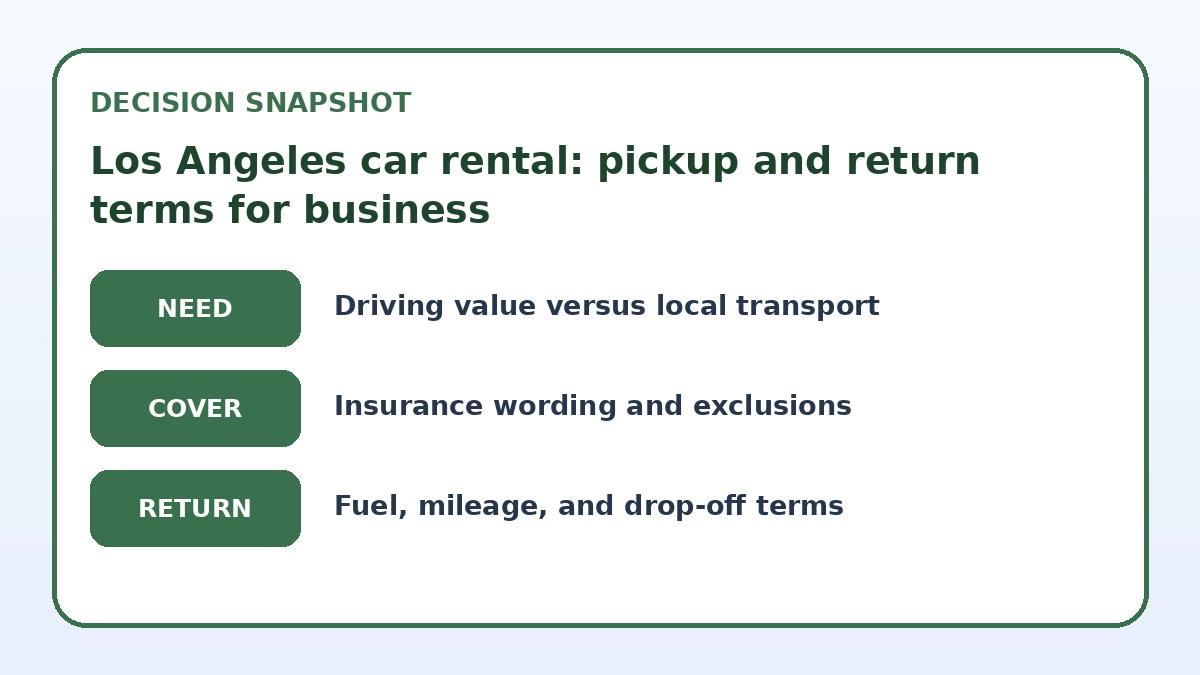
Assess driving value by mapping meeting locations to their transit accessibility. Los Angeles is sprawling: trips between West LA, the San Fernando Valley, Orange County border, and LAX commonly cross congested freeways where rideshare times and frequencies vary. If your schedule requires multiple stops with tight turnarounds or hotels not served by rail, driving reduces wait times and gives you direct control over departure times. Also consider cargo needs—presentation materials or equipment often make a car more practical than juggling bags on transit or rideshares.
Counterbalance that with the concentration of business districts that are well served by transit or short rides: Downtown LA, Miracle Mile, and parts of Culver City connect to rail lines and frequent shuttles. If your appointments cluster in one neighborhood and you can stay within walking distance of offices or a transit hub, the value of a rental drops. To decide, draw straight-line and travel-time estimates between stops during scheduled meeting hours to see if driving saves door-to-door minutes versus rideshare or rail services.
Decide whether driving earns its place
| Mobility strategy | Best for | Cost or friction to check |
|---|---|---|
| Short-term rental car (daily or multi-day) | Travelers needing multiple stops across far-flung parts of the metro or carrying bulky materials. | You must manage parking, fuel, tolls, and contractual pickup/return rules that may add time and fees. |
| Rideshare and taxis | Single-direction trips or ad-hoc transfers when you want to avoid parking and vehicle responsibility. | Costs can spike in rush hours and surge pricing makes budgets less predictable for multiple trips. |
| Public transit and rail | Clustered meetings near transit corridors where schedules are reliable and walking distances are short. | Limited routes and first/last-mile gaps may require additional rides or extend travel time between appointments. |
| Prebooked private car or shuttle service | Airport transfers and scheduled point-to-point runs where timing and professional service reduce uncertainty. | Higher fixed cost than shared alternatives and less flexibility for unscheduled detours or extra stops. |
Check live rental choices only after the route test
Use the exact driver, dates, pickup point, and return plan to compare current conditions.
Insurance wording: what to look for on the rental page
Insurance descriptions are written to look simple but contain crucial exclusions and financial limits. Look for three clear items on the booking page: whether a collision damage waiver (CDW) or loss damage waiver (LDW) is optional or included, the amount of the deductible you would be liable for after a claim, and whether third-party liability limits meet your standards. If you rely on a corporate card or personal auto policy, confirm whether the supplier requires you to decline the offered CDW to rely on your coverage, and whether refusal triggers additional administrative holds or higher deposit requirements.
Also verify coverage for roadside assistance, towing, and glass or tire damage—some waivers exclude these items or apply separate fees. Read the fine print about authorized drivers: business travelers often assume coworkers or assistants can drive, but many policies restrict drivers to those listed on the contract. Before booking, copy the exact insurance wording and confirm with your company travel policy or insurer that it satisfies liability and deductible expectations; the rental provider’s final booking page is where live terms and total deposit amounts are displayed.
Compare the full rental conditions
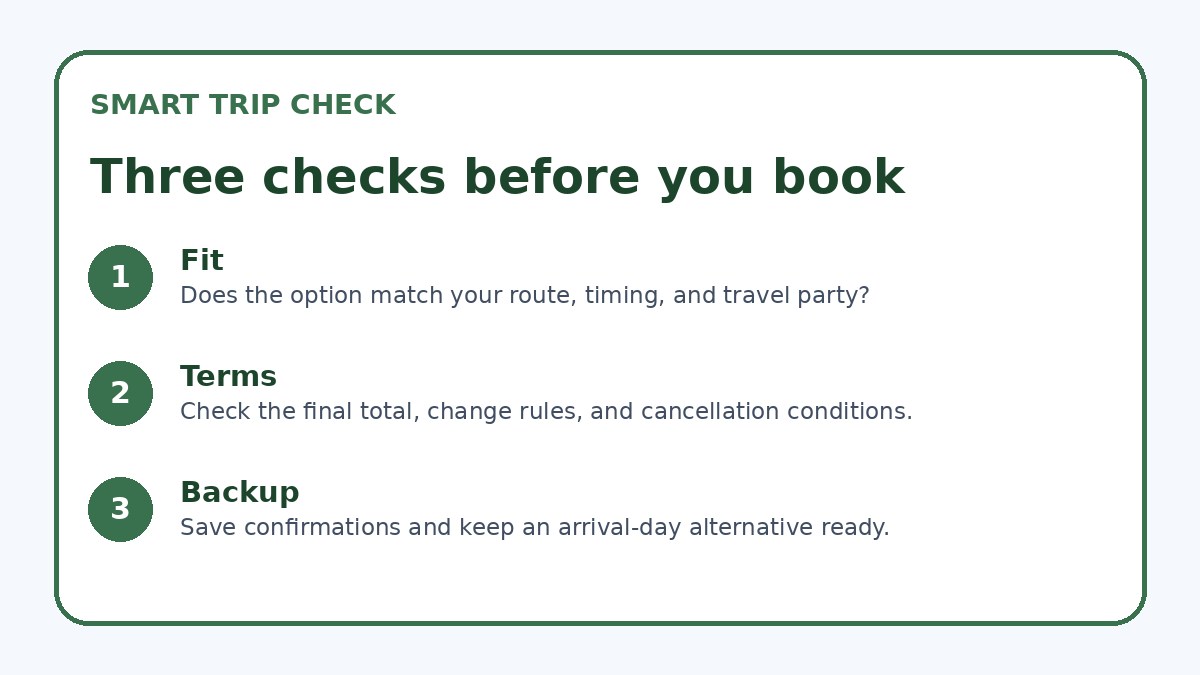
Confirm insurance wording, exclusions, deposit, fuel, mileage, and return terms on the final page.
Pickup and return friction: airport desks, city locations, and after-hours rules
Pickup and return pain points are predictable: long airport shuttle waits at major terminals, off-airport lot queues, and limited office hours for returns. At LAX, for example, off-site rental centers may require a shuttle or curbside pickup arrangement—confirm shuttle frequency and estimated transfer time on the provider page. For downtown or hotel pickup, check whether the desk is onsite, requires a phone call-on-arrival, or needs prearranged delivery. Also verify identification requirements, corporate paperwork, and whether the counter enforces a credit card hold amount or accepts debit cards.
Return rules often introduce charges or scheduling conflicts: after-hours drops may require key drop envelopes but still trigger cleaning or late-return fees if processing staff cannot inspect the vehicle until the next business day. One-way drops can carry substantial fees if you return outside a geographic zone. Fuel policies vary and affect your final bill—inspect whether you must return full, pay for a prepaid fuel option, or accept an estimated refueling charge. Always check the exact return instructions and any photo-reporting or odometer requirements on the booking confirmation page.
Car rental terms to verify
- Map all meeting addresses, hotel, and airport transfer points and estimate door-to-door transit times for your scheduled hours.
- Confirm on the rental booking page whether CDW/LDW is included, optional, or prohibited if using corporate coverage and note the deductible.
- Check pickup logistics: office location, shuttle requirement, expected transfer time, and documented ID/payment requirements.
- Verify return rules: after-hours drop instructions, fuel policy, odometer/photo reporting, and potential one-way drop fees.
- Ask your credit-card benefits or corporate travel manager to confirm secondary or primary collision coverage and any required documentation.
- If you prefer not to drive, prebook rideshare credits, private car transfers, or rail passes and confirm cancellation/modification windows.
Non-driving fallback: efficient alternatives for business travelers
If you decide not to drive, construct a fallback that mixes modes to balance predictability and cost. Use rail or Metro services for corridor reliability in Downtown to parts of the Westside where lines exist, and pair them with rideshare or taxi for first/last-mile needs or late-night transfers. For airport transfers, prearranged private car services give consistent pickup and fixed transfer times, which can be easier to schedule around meetings and terminal services than relying on taxis during peak congestion.
Negotiate with your office or travel manager to prebook a local mobility plan: recurring rideshare credits, a standing private car for certain runs, or an airport shuttle schedule. Also consider reserving a car only for the day(s) you need it and using walkable or transit-friendly hotels to avoid daily parking fees. Wherever you book, check the provider’s cancellation terms and modification windows on the final booking screen so you can switch strategies if meeting times change or traffic makes driving less efficient than planned.
Car Rental & Road Trip questions travelers ask
Can I rely on my corporate credit card’s rental insurance in Los Angeles?
Many corporate cards provide rental insurance, but terms vary widely: some offer primary coverage, others secondary. Before booking, request the card’s insurance documentation and compare it with the rental company’s CDW/LDW wording on the final booking page. Key points to confirm include coverage limits, whether authorized drivers are covered, exclusions for certain vehicle classes, and whether commercial use or out-of-state travel is restricted. If your card requires you to decline the rental company’s waiver to activate coverage, verify the impact on deposit amounts and liability in the booking terms.
How should I plan returns for evening meetings when desks might be closed?
Plan an after-hours return method in advance: check the provider’s exact instructions for key-drop, photo evidence, and where to leave the vehicle. Photograph the fuel gauge, odometer, and vehicle condition as proof of return time if staff aren’t present to inspect the car. Confirm whether your reservation page lists specific closing hours, whether late returns incur hourly or daily fees, and how long it takes for the company to clear the deposit. Keeping these screenshots attached to your expense report can simplify any later disputes.
Are one-way rentals practical for business trips between LAX and other Southern California areas?
One-way rentals are practical when your itinerary moves you across regions, but they often include a drop or relocation fee. Check the booking page for permitted drop zones and whether your planned return location is listed as eligible. Also confirm mileage allowances, any cross-state restrictions, and whether the fee is waived for corporate accounts. If one-way fees are high, compare the overall time and cost of returning the vehicle versus taking a point-to-point transfer like a prebooked private car or rideshare for that leg.
Final decision note
For business travel in Los Angeles, decide first whether driving materially cuts travel time between meetings. If it does, a rental car offers control but requires careful scrutiny of pickup and return terms, insurance wording, fuel rules, and after-hours procedures—details that typically appear only on the final booking page. If driving adds marginal benefit, a planned mix of rail, rideshare, or a private transfer can be more predictable and reduce parking friction. Before you finalize any booking, copy the rental’s insurance, deposit, fuel, return, and authorized-driver language and confirm those items with your corporate travel policy or card benefits. If you want to compare current availability and conditions, an aggregator such as Trip.com can show options, but always verify the live terms on the supplier’s final confirmation screen.
Continue planning
Check current options and final conditions
Use the provider page to confirm live availability, the final total, cancellation terms, and every condition that matters to your trip.
This evergreen planning guide was created with AI-assisted drafting and a structured quality review. It does not display live prices, schedules, availability, visa guidance, or provider rankings. Verify current details before booking. Some links are affiliate links; we may earn a commission at no additional cost to you.