Practical answer first: decide whether you want the simplicity of a direct rail or coach transfer, the speed of flying (with transfers at airports), or a mixed approach to balance cost, comfort and sightseeing. For a single-day travel plan, prioritise door-to-door connections: how you get to the departure terminal in Sydney, how to reach your final address in Melbourne, and how much time you need between connections. Packing, luggage handoff, and transfer friction usually dictate whether a faster trip truly saves time. Also prepare a clear disruption backup (alternate departure, later service, or overnight plan) before you leave. Below you’ll find tradeoffs, decision criteria and a checklist tailored to first-time visitors so you can pick the option that fits your tolerance for transfers, walking with bags, and schedule rigidity.
How to choose between rail, coach, air or mixed routes
Start by mapping the whole journey from your Sydney address to your Melbourne destination rather than only comparing ride durations. Rail and coach services often leave from central Sydney terminals with relatively short door-to-platform transfers for inner-city travellers; flying usually requires a longer transfer to the airport plus security and boarding buffers. For first-time visitors, think about how many times you’re willing to handle your luggage, whether you prefer seated space to move around, and whether scenic value matters. Mixed routes — for example, a short train into the city and then an intercity coach or flight — can balance convenience and cost but add a transfer leg you must manage.
Next, weight the practical tradeoffs: trains and coaches typically allow easier luggage access on board and fewer security constraints, while flights may save time over long distances but often add waits and transfers. If you need schedule flexibility or a lower chance of significant delays, check each mode’s change and refund policies (confirm details on the provider’s booking page). Finally, consider where your journey originates and ends inside each city: a rail or coach that stops near your hotels may beat a seemingly faster flight once door-to-door travel is counted.
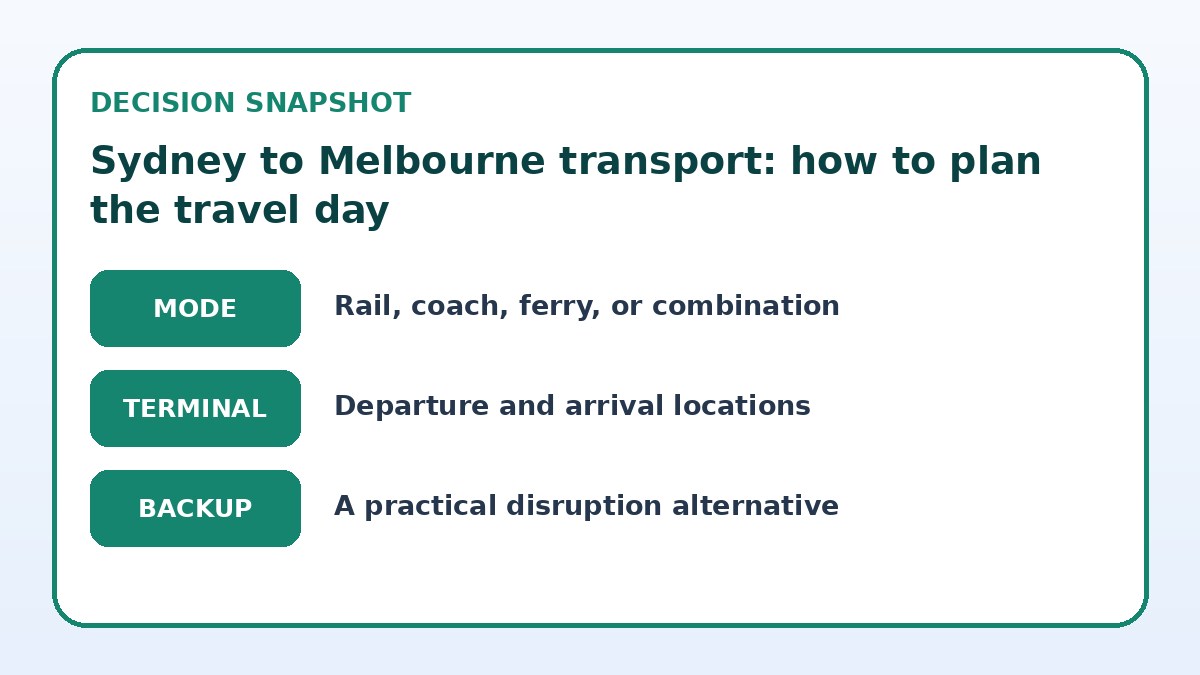
Choose the end-to-end journey plan
| Journey approach | Best for | Friction to check |
|---|---|---|
| Direct train or coach from central Sydney to central Melbourne | Travellers who prioritise simple door-to-door routing and minimal airport transfers | May be slower than flying and subject to road or rail delays; check luggage handling and station access. |
| Fly plus airport transfers | Those valuing shorter in-air travel time and willing to manage airport transfers | Adds airport check-in and security time, more transfer friction and potential traffic to/from airports. |
| Mixed-mode (train/coach into airport, flight, then local transit) | Travellers balancing cost and time who accept an extra transfer for total itinerary benefit | More handoffs increase the chance of missed connections and require stricter timing and luggage planning. |
| Flexible, change-friendly booking with buffer day | First-time visitors who want stress-free contingency and schedule breathing room | Typically requires more planning and possibly higher upfront time costs; may mean overnight stays. |
Check live intercity options
Look beyond the ride itself and compare terminals, transfers, luggage, and arrival fit.
Terminal fit and luggage/transfer friction
Terminal fit means whether the departure and arrival points match your city-stage. A central station or coach terminal may be a short taxi or rideshare away from central Melbourne hotels; airports sit farther out and add transfer time and complexity. For first-time visitors, measure walking distances between platforms, ticket counters, and transport links at both ends — these short walks can become stressful with heavy bags or unfamiliar signage. If you have oversized luggage, mobility needs, or a lot of carry-ons, favour services that make transfers simpler: reserved luggage storage, easy step-free access, and minimal security formalities.
Transfer friction also includes how you move between modes: some services require a separate ticket between arrival and final-mile transport, while others integrate with local transit. Plan how you’ll get from a station or airport to your accommodation: rideshare pickup points, tram or train connections, and whether you’ll need exact change or a transit card. When provider-specific details matter (baggage allowances, checked-luggage booking steps, or infrastructure like elevators), verify them on the provider’s final booking page before committing. Make sure someone in your party can manage the bag shuffle if transfers are tight.
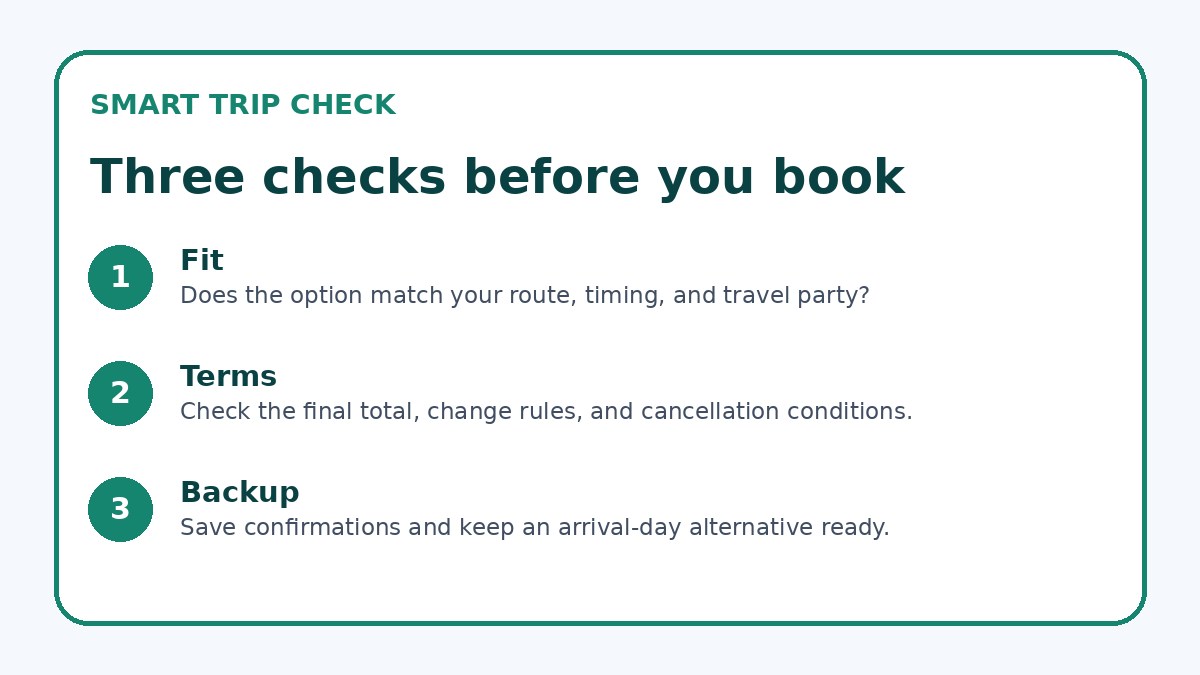
Timing flexibility and managing the travel-day schedule
Decide how much buffer you want. If you hate rushing, aim for longer gaps between connections and avoid early-morning departures that compress the time available to reach the terminal. Trains and coaches often run on more predictable schedules for day trips, while flights require check-in and security windows that vary by airline and time of day. Consider local traffic patterns to and from airports: peak congestion can turn a seemingly quick flight into a longer door-to-door experience. Build contingency time for boarding queues, rest breaks, and a quick meal.
If you must book a tight same-day connection, prioritise providers that allow easy changes or offer standby options and read their change policies carefully. Keep digital copies of your tickets and provider contact details handy, and use real-time apps for traffic and public transport updates. For sightseeing or overnight stays, plan arrival times so you can check into accommodation without long waits; late arrivals may limit public-transit options and increase taxi or rideshare dependency in Melbourne.
Compare the practical alternatives
Use the final page to confirm what is actually offered on your dates and save a workable fallback.
Intercity travel checklist
- Map door-to-door travel time from your Sydney address to your Melbourne address including transfers and local transport.
- Confirm luggage allowances and booking steps for any checked bags on the provider’s final booking page.
- Book travel with at least one planned buffer window between connections to absorb common delays.
- Save provider contact numbers and your booking reference in an offline note or screenshot.
- Pack a carry-on with essentials (chargers, medications, basic toiletries, spare clothes) for missed-connection scenarios.
- Identify and bookmark one alternative same-day service and one nearby overnight accommodation option before departure.
Disruption backup: realistic plans if things go wrong
A useful backup plan names alternatives before you get to the terminal. Identify at least one later service by the same mode and one alternate mode you could reasonably use that day. For example, if you planned to fly but missed the flight, could a coach or train be boarded the same evening? If delays are possible in peak seasons or bad weather, pre-check overnight accommodation options on a flexible, refundable basis and note their cancellation windows. Keep a small emergency fund or a payment method that’s accepted by local taxis or rideshares.
Also prepare communication steps: share your itinerary and backup plan with someone at your destination, save provider contact numbers, and know where to find official updates (provider booking page, station screens, or airport information desks). If you’re comparing current availability or conditions while planning, you can check aggregator sites such as Trip.com as one place to view options, but always verify capacity, baggage rules and change terms directly with the provider before booking. Finally, pack essentials (charger, basic toiletries, a change of clothes) in a carry-on so a missed connection is less disruptive.
Rail & Intercity Transport questions travelers ask
Should I prioritise travel time or fewer transfers when travelling Sydney to Melbourne?
If you dislike juggling luggage, signage, and tight connections, prioritise fewer transfers: a single-train or coach that stops near your start and end points usually makes the travel day more relaxed. If saving time is essential, flying can reduce in-air time but often adds transfer and security periods that increase overall door-to-door duration. Compare full door-to-door scenarios — including the trip to the Sydney departure point and final transport in Melbourne — rather than only the advertised ride time. That comparison will reveal which approach really suits your comfort and schedule.
How much buffer time should I allow between connections and why?
For most first-time visitors, aim for at least 60–90 minutes between a scheduled arrival and the next departure when transfers involve different terminals or security procedures. Shorter buffers might be acceptable for low-friction station-to-station changes with minimal luggage, while airport connections typically need longer because of check-in and security. The right buffer also depends on local traffic conditions for airport transfers and whether you must change transport modes. Choose a buffer that matches your tolerance for stress and the complexity of the transfer.
What documents and confirmations should I have available on my travel day?
Carry digital and printed copies of your bookings, including ticket references and the provider’s change/refund terms link. Have a photo ID or passport ready if required by the provider, and a payment method accepted locally for taxis or last-minute purchases. Screenshot any arrival instructions, terminal maps, and the pickup points for rideshares or taxis at both departure and arrival locations. If you rely on a transit card in Melbourne, check how to top it up and where to buy one; confirm these operational details on the provider or transit authority pages before you travel.
Final decision note
For a first-time traveller, the smartest way to plan Sydney to Melbourne transport is to compare full door-to-door scenarios and choose the option that matches your tolerance for transfers, luggage handling and tight schedules. Train and coach options often reduce transfer friction, while flying can save in-air time at the cost of extra terminal processes. Prepare in advance: verify luggage rules and change policies on the provider’s booking page, plan buffer time, and name one realistic disruption backup. With those steps, you’ll convert an unfamiliar long-distance day into a manageable, lower-stress travel day.
Continue planning
Check current options and final conditions
Use the provider page to confirm live availability, the final total, cancellation terms, and every condition that matters to your trip.
This evergreen planning guide was created with AI-assisted drafting and a structured quality review. It does not display live prices, schedules, availability, visa guidance, or provider rankings. Verify current details before booking. Some links are affiliate links; we may earn a commission at no additional cost to you.