If you’re traveling to Taipei with extra luggage, the most practical move is to set price alerts but delay booking until you compare how packages and separate bookings treat baggage, changes, and refunds. Alerts help you see price windows, but impulse-booking a package can lock you into unfavorable baggage allowances or inflexible change rules. Before hitting “buy,” gather the same travel dates, the exact number and weight of checked bags, and the exact traveler count. Use alerts as signal, not command: when an alert triggers, open live provider pages and verify the baggage allowance, change fees, refundability, and seat or room type. Keep a short checklist and a decision deadline so a good-looking alert becomes a deliberate choice, not a reflex purchase.
Test package value fairly
| Booking approach | Best for | Tradeoff to check |
|---|---|---|
| Full package (flight + hotel + baggage included) | Travelers wanting one-stop booking and predictable included baggage for each traveler | Often less flexible; check if baggage, cancellations, and changes are truly covered for all travelers and dates |
| Separate flight + hotel bookings | Travelers who want to apply loyalty perks or mix carriers for better luggage rules | Requires more comparisons and can look more expensive until you add exact baggage fees |
| Flight bundled with add-on baggage bought upfront | People confident in luggage weight who want to lock in baggage price ahead of travel | May be cheaper than airport fees but refunds and transfers of baggage purchase can be limited |
| Alert-waiting with refundable hold or flexible fare | Travelers who need time to verify baggage rules and avoid impulse decisions | Flexible fares cost more up front; decide whether the premium offsets the risk of last-minute baggage changes |
Check current package and separate options
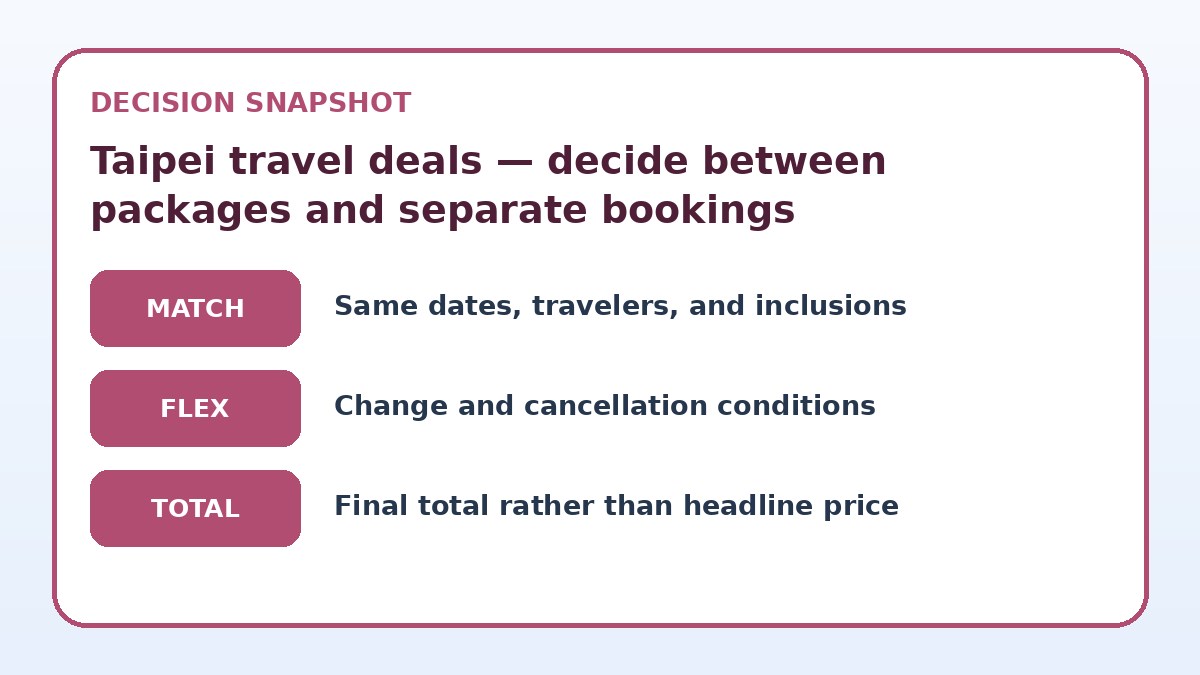
Use identical dates, travelers, room needs, baggage, and flexibility so the comparison stays meaningful.
What to compare first: the must-have checklist before judging a bundle
Before you treat a bundled offer as a winner, compare four essentials: exact travel dates, the number and weight of checked bags, the number of travelers covered, and whether the fare or rate is refundable or changeable. Bundles sometimes advertise luggage inclusion, but that can be per person, per booking, or subject to size and weight limits. Ask whether the package’s luggage allowance covers both outbound and return sectors and whether carry-on limits apply separately. Also confirm who gets the allowance—some packages include luggage only for primary travelers, not infants or add-ons.
Next, verify timing and cancellation terms. Even modest change fees become costly when you must rebook larger seats or upgrade luggage at the airport. Look for the cancellation window, what happens to taxes and fees on a canceled element, and whether the seller pools luggage across bookings. If a package ties together airline and hotel rules, read how refunds are handled: will a flight change void the hotel portion, or vice versa? Getting these specifics prevents surprises that make apparent bundle savings evaporate.
Inclusions and flexibility: how luggage affects value
Inclusions determine whether a package actually saves money for someone carrying extra bags. A package that includes one 23kg checked bag per person might beat separate bookings where airlines charge per bag, but confirm whether the included bag applies to both directions and all travelers. Also check seat selection, hold baggage size limits, and whether oversized or additional bags incur per-item fees. For rail or bus segments inside Taiwan that might be part of a package, confirm luggage policies—some carriers limit large items or require reservations for bulky equipment.
Flexibility is equally important. Packages often impose stricter change rules because they bundle nonrefundable components. For travelers with variable luggage needs—for example, bringing sports gear or extra clothing—look for refundable fares or the option to add pre-paid baggage at a known rate. If adding luggage later is expensive or uncertain, a slightly higher flexible fare with a predictable baggage allowance may be more valuable than a cheap bundle with ambiguous inclusions. Always calculate the total cost of potential baggage changes when comparing options.
Look past the headline total
Compare inclusions and change conditions before deciding whether a package is genuinely useful for this trip.
Deal comparison checklist
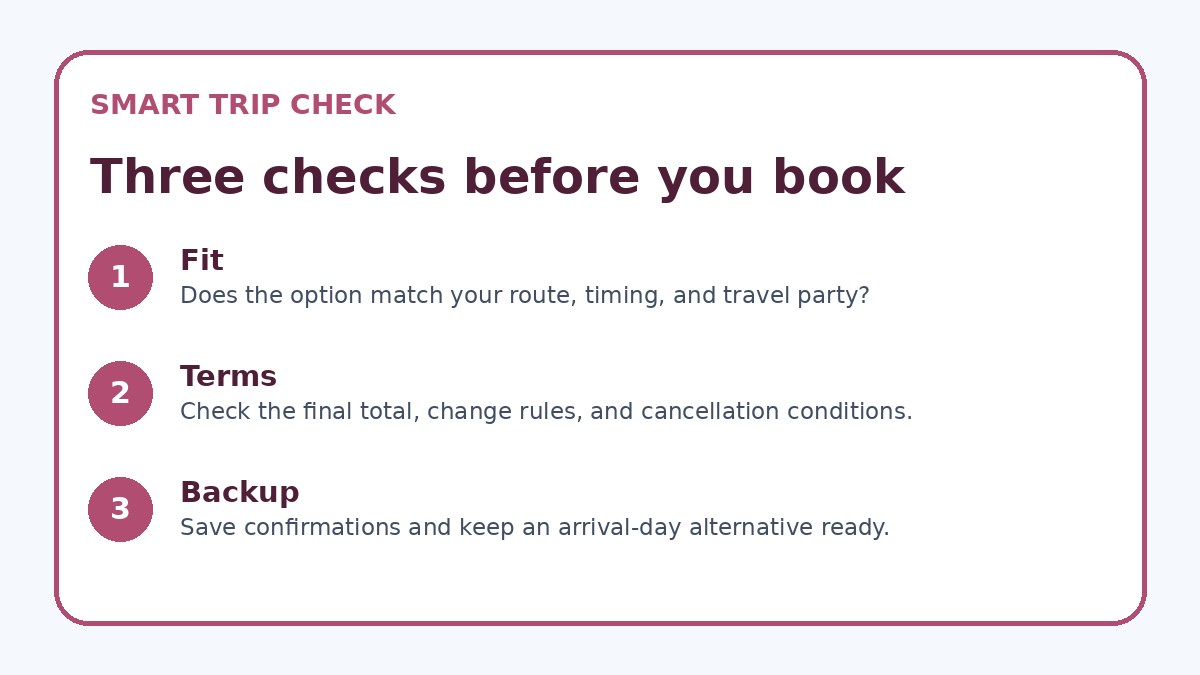
- Set separate price alerts for flights, hotels, and full packages and note which alert referenced baggage inclusion.
- When an alert triggers, open the provider’s final booking page and screenshot the baggage allowance, fare class, and change or refund terms.
- Compare total costs for the exact same dates, number of travelers, and baggage pieces between the package and separate bookings.
- Call or chat the airline and booking provider to confirm how many bags and what sizes are included, and get written confirmation if possible.
- Estimate worst-case add-on costs for extra or oversized luggage and add that to the bundle’s headline price before deciding.
- Set a personal decision deadline (for example 24–48 hours after an alert) to avoid impulsive purchases prompted by temporary price movement.
Using price alerts without impulse booking: a practical workflow
Set alerts across multiple channels for flights, hotels, and packaged offers, but attach an action plan to each alert. For example: when a flight fare drops, trigger a verification step to open the airline’s booking page and confirm the fare class and baggage allowance. If a bundle alert triggers, extract the package’s exact inclusions (baggage, transfers, room type) and then reproduce the same search on separate providers to compare. Use a short decision window—say 24–48 hours—so you don’t rush, but also don’t let a reasonable deal vanish without review. The goal is to treat alerts as prompts to check facts, not as automatic purchase triggers.
When you receive an alert that looks appealing, document the key terms before booking: fare class or rate code, baggage inclusion details, change and cancellation fees, and any blackout dates. Call or chat with the provider if the online summary is ambiguous—ask them to confirm baggage policy in writing or save the booking screen as a PDF. If the provider’s final booking page shows different terms from the alert summary, treat the booking as not-ready and seek clarification. This reduces impulse bookings based on incomplete alert summaries and gives you leverage to compare with separate booking totals.
Traveler-specific value: who benefits most from bundles vs separate bookings
Travelers who bring consistent, predictable luggage—one checked bag per person within standard limits—can sometimes save with bundled deals that explicitly include baggage and transfers. These travelers should still verify that the inclusion applies to both sectors and all travelers. Frequent flyers who can use loyalty benefits, seat upgrades, or free checked bags through status may find separate flight bookings more valuable because they can apply those perks directly and mix carriers for better schedules or aircraft types.
If your luggage needs are irregular or heavy—sports equipment, musical instruments, or multiple oversized suitcases—separate bookings often provide clearer, incremental billing for add-ons and make it easier to buy specific excess-baggage insurance or freight services. Families traveling together should examine whether bundles price luggage per family or per person, since per-person baggage can multiply costs. Ultimately, the right choice depends on how predictable your luggage policy is, whether you value change flexibility, and how much time you’ll spend verifying terms when an alert fires.
Travel Deals & Booking Strategy questions travelers ask
If a price alert shows a package that includes baggage, how do I verify it covers both outbound and return trips?
Always open the provider’s live booking page and read the baggage section for the specific itinerary you’re considering. Look for language that explicitly states whether the allowance is per sector, per entire round-trip, or only for selected segments. If the page is unclear, contact the seller or the airline and request confirmation in writing or a screenshot of the booking summary showing both directions. Keep that confirmation with your travel records so you can reference it if the booking page later changes.
Can I rely on a third-party package’s baggage description shown in an alert summary?
No—alert summaries are useful signals but can omit critical qualifiers. Always verify baggage on the seller’s final checkout page or the airline’s own site for the exact fare class. Confirm whether the baggage is transferable between passengers, refundable, or subject to size limits. If the package combines carriers or includes ground transfers, clarify luggage rules for each segment. If anything is ambiguous, ask for written confirmation before you book to avoid surprises at check-in.
How should I budget for unexpected extra-baggage fees when comparing packages and separate bookings?
Calculate a conservative worst-case scenario by researching the airline and carrier policies for overweight, oversized, and additional piece fees relevant to your route. Add those maximum potential fees to each option’s total price when you compare. For packages, also factor in change or cancellation fees that could arise if you need to alter dates because of baggage or schedule changes. This method gives you a clearer picture of total risk-adjusted cost rather than relying on headline savings alone.
Final decision note
Price alerts are valuable for Taipei travel deals, but for travelers with extra luggage they should be a trigger for careful comparison, not an impulse to buy. Always confirm baggage allowances on the final booking page, compare the same dates and traveler counts across package and separate options, and factor in potential add-on fees and change penalties. Use flexible fares or refundable holds if you need extra time to verify terms, and document confirmations before you pay. A small delay and a checklist will usually save more money and stress than snapping up the first alert-driven deal that appears.
Continue planning
Check current options and final conditions
Use the provider page to confirm live availability, the final total, cancellation terms, and every condition that matters to your trip.
This evergreen planning guide was created with AI-assisted drafting and a structured quality review. It does not display live prices, schedules, availability, visa guidance, or provider rankings. Verify current details before booking. Some links are affiliate links; we may earn a commission at no additional cost to you.