
If you’re traveling from Seoul to Gyeongju and care most about saving time and minimizing hassle, prioritize direct options; if you need flexibility, lower fares, or want a stopover, consider connecting itineraries. For first-time visitors the decision often comes down to three clear tradeoffs: total door-to-door time, how many times you must move baggage or switch terminals, and how flexible your dates are. This article lays out what to compare on booking pages, how to interpret itinerary details, and which choice fits different traveler types. I’ll give practical steps to evaluate schedules, transfer complexity, and risks — then a checklist you can use before you hit confirm. If you want to cross-check live availability and conditions, you can use Trip.com as one of many comparison tools, but always verify final details with the carrier or operator before paying.
How to read Seoul–Gyeongju flight options on booking pages
When searching for Seoul to Gyeongju flights, focus on three itinerary details that matter most: total elapsed travel time (door-to-door), number and type of transfers, and baggage handling rules. The listing may show a single flight number (direct) or two or more flight segments (connecting). For connecting options, check whether the segments are on one ticket; single-ticket itineraries usually mean the airline is responsible for missed connections and can transfer hold luggage. If segments appear as separate tickets, you’ll likely need to collect and recheck bags and allow extra time between flights. On all bookings, confirm terminal names and transfer paths because inter-terminal transfers can add substantial time.
Also check the booking page for minimum connection time (MCT) and confirmed connection protection language. Some carriers explicitly state that connections under a certain window aren’t permitted or are at the passenger’s risk. If the itinerary crosses different carriers or low-cost airlines, verify baggage transfer terms and whether the carriers have interline agreements. Finally, note arrival airport options for Gyeongju-area service — different airports or nearby cities may be listed; confirm ground transport options to your accommodation so you can compare realistic door-to-door durations rather than just airborne time.
Tradeoffs: speed, cost, and reliability
Speed is the most obvious advantage of direct travel: fewer handling points, lower chance of missed onward connections, and typically shorter total travel time. For first-time visitors trying to maximize sightseeing time in Gyeongju, shorter transfers can mean arriving earlier and being ready to explore. But direct options may be less frequent, and when they exist they might operate at specific times that don’t match your itinerary. If a direct flight produces a long wait at the origin or a late arrival, a well-timed connecting itinerary could still be faster overall when measured from hotel to hotel.
Cost and reliability pull in different directions: connecting itineraries can widen your choices and sometimes lower fares by combining carrier schedules, but they increase exposure to delays on any leg. If you pick a connecting ticket on one airline with protective connections, your risk profile is lower than if you assemble separate single-leg tickets. Also consider seasonal factors — peak travel periods can magnify delay risk and make protective single-ticket connections more valuable. Weigh your tolerance for tight transfer windows and the importance of arriving at a predictable time against potential savings and itinerary flexibility.
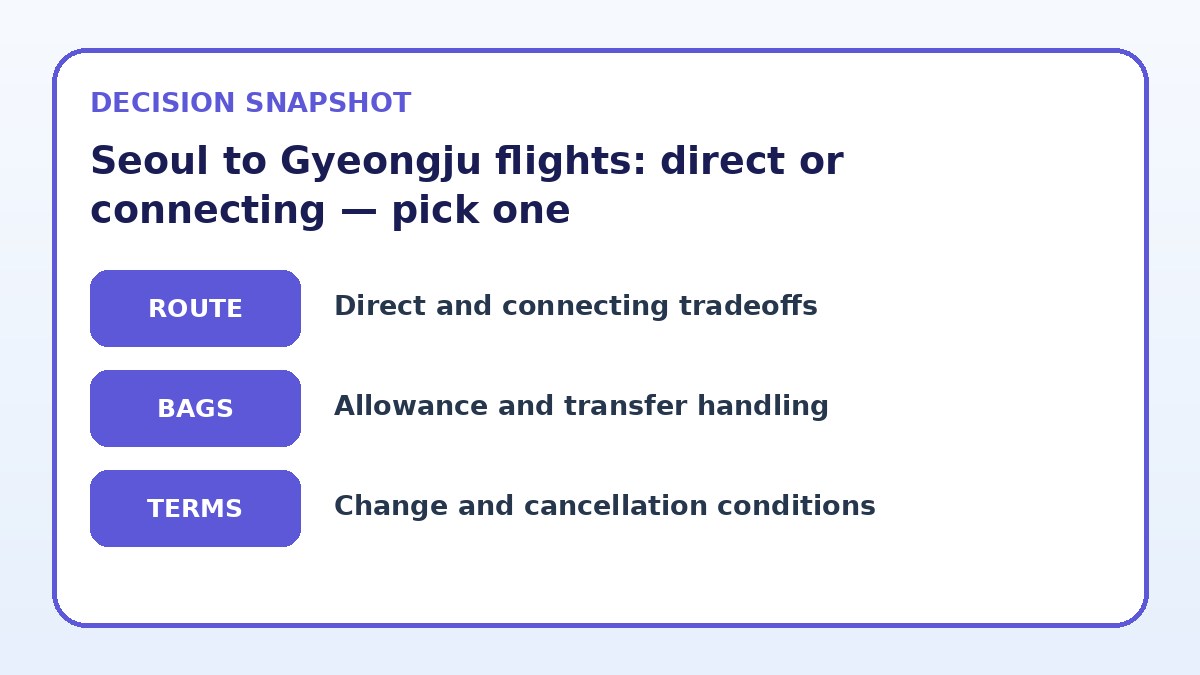
| Approach | Best for | Tradeoff to check |
|---|---|---|
| Direct flight or single-segment ticket | Travelers prioritizing simplicity, fewer transfers, and a predictable schedule | May have limited times and less flexibility with dates or fares |
| Single-ticket connecting itinerary (same airline or alliance) | Those who want more schedule choices with protected connections | Introduces extra transfer time and potential delay exposure, though airline assumes some responsibility |
| Separate tickets or self-transfer connections | Budget-focused travelers seeking cheaper combinations or deliberate stopovers | Higher risk if delays occur; you may need to reclaim and recheck baggage and rebook on your own |
| Mixed airport or multimodal options (fly + rail/bus) | Travelers balancing cost and time who are comfortable with ground transfers | Adds complexity—must coordinate arrival times and local transport logistics carefully |

Practical checks before you book a direct or connecting itinerary
Before confirming any Seoul to Gyeongju flight, run a short checklist on the booking page: verify total door-to-door travel time including expected airport transfer, confirm whether baggage is checked through to your final destination, and identify terminals and transfer procedures. If the itinerary includes an overnight transit or self-transfer, plan lodging and factor in visa or local entry requirements for leaving the airport. Look at airline transfer guarantees and what they cover—some carriers will rebook you on the next available flight if a protected connection fails, while others won’t. Also note the smallest detail: whether your connecting flight is in the same terminal or requires an inter-terminal shuttle.
Next, compare ground transport options at both ends: how long will it take to reach Seoul departure airports from where you’re staying, and how will you get from your Gyeongju arrival airport to town? For many travelers, a slightly longer airborne itinerary can be faster overall if it arrives at a more convenient airport terminal or has simpler ground connections. Finally, read cancellation and change terms on the exact fare class offered — flexibility can be more valuable than a small fare difference if your dates or plans may shift.
Before you book
- Confirm total door-to-door time by adding scheduled flight time, recommended airport arrival buffer, and ground transfer to your Gyeongju accommodation.
- Verify on the carrier booking page whether checked baggage is transferred through to Gyeongju or must be collected and rechecked during a connection.
- Check terminals and any required inter-terminal transfers; plan extra time if a shuttle or long walkway is needed between gates.
- Look for connection protection language or interline agreements on the booking page; if absent, allow a larger buffer between flights.
- Compare arrival airports and onward ground transport options to ensure the itinerary’s arrival point is convenient for your final destination in Gyeongju.
- Review change and cancellation terms for the specific fare class before payment; factor flexibility into your decision if plans might shift.
Which option suits different first-time visitor profiles
If you prefer low stress and a predictable itinerary—you’re traveling with family, have a tight schedule, or dislike rushed transfers—lean toward direct or single-ticket connecting itineraries that protect connections. Those options minimize the number of times you need to handle bags and reduce the need to navigate unfamiliar transfer procedures. Busy sightseers who want to maximize daytime hours in Gyeongju usually choose the itinerary that gives the earliest usable arrival, not necessarily the shortest airborne time. Confirm that the arrival time aligns with hotel check-in or planned activities.
If you’re a flexible solo traveler on a budget, connecting itineraries that require a longer layover or even a self-transfer can open cheaper dates and let you add a stopover. Travelers who enjoy seeing another city briefly might intentionally pick a connection that gives several hours to leave the airport. However, weigh this choice against the hassle of rechecking bags or buying separate tickets. If you opt for separate carriers, leave generous time between flights and prepare for the possibility of rebooking on your own if delays occur.
Frequently asked questions
Are direct Seoul to Gyeongju flights always faster than connecting itineraries?
Not always. A direct airborne leg removes one flight change, but total travel time depends on airport transfers, departure and arrival times, and waiting windows. A well-timed connecting itinerary that departs from a closer airport or arrives at a more convenient terminal can be faster door-to-door than a single longer direct segment. Always calculate the full journey from your Seoul lodging to your Gyeongju accommodation rather than comparing airborne times alone. Check ground transfer times and the exact arrival terminal before deciding.
How much connection time should I leave between flights when traveling to Gyeongju?
Target connection windows that comfortably exceed the airline-stated minimum connection time, particularly if you must clear immigration, collect luggage, or change terminals. If your itinerary is on one ticket and the carrier offers protected connections, a shorter connection may be acceptable; if your legs are separate tickets or involve different carriers, build in extra time for baggage recheck and potential delays. There’s no single rule; consider airport layout, time of day, and your comfort navigating transfers when choosing a buffer.
Should I mix flying and ground travel for the Seoul–Gyeongju leg?
Mixing air and ground travel can make sense when flights are infrequent, expensive, or land at a less convenient airport. For example, flying to a nearer regional hub and then taking a train or bus might save time or money overall. But multimodal itineraries increase planning complexity: you must coordinate schedules, ensure reliable ground connections, and factor in luggage handling. If you choose this approach, verify local ground transport timetables, purchase flexible tickets where possible, and allow buffer time between modes.
Final planning note
Choosing between direct and connecting Seoul to Gyeongju flights comes down to what you value most: simplicity and predictability, or flexibility and potential savings. First-time visitors who want minimal hassle should favor direct or single-ticket connecting itineraries that protect transfers and reduce baggage handling. Travelers comfortable with DIY transfers, stopovers, or multimodal segments can expand options and possibly lower cost, but must accept greater risk and planning responsibility. Use the checklist above on the carrier’s final booking page: confirm baggage transfer rules, terminals, and connection protections before you pay. That focused verification will help you pick an itinerary that fits your schedule and reduces surprises on arrival in Gyeongju.
Continue planning
Check current options and final conditions
Use the provider page to confirm live availability, the final total, cancellation terms, and every condition that matters to your trip.
This evergreen planning guide was created with AI-assisted drafting and a structured quality review. It does not display live prices, schedules, availability, visa guidance, or provider rankings. Verify current details before booking. Some links are affiliate links; we may earn a commission at no additional cost to you.