If you need to travel from New York City to Boston for business and are carrying luggage, the practical choice usually depends on how many bags you have, how flexible your schedule is, and how important seamless transfers are. Trains, intercity coaches, and a mix of rail-plus-ride services are the typical options; ferries and flights exist but add terminal transfers and luggage friction. Start by deciding whether you want minimal handling (one-carriage train with room for carry-ons) or a fully door-to-door approach (ride service meets you at a station or hotel). That decision narrows your options quickly and helps you plan timing windows, pickup/dropoff points, and contingency moves if plans change. Below you’ll find direct guidance to pick the right mode, how luggage shapes each choice, what to verify on a provider’s booking page, and a short disruption plan so you can keep meetings on schedule.

How to choose between rail, coach, ferry, or combinations
Start by matching your luggage profile to each mode’s typical handling. Trains usually offer the most generous space for suitcases and the easiest movement on and off platforms in city-center stations. Coaches can be efficient for medium-sized bags but often require lifting into luggage bays and waiting for retrieval at stops. Ferries, where available as part of a combined route, add an extra transfer with boarding ramps and limited baggage areas. Flights can be fast over distance but introduce airport transfers and checked-bag processing that add time and friction unless you travel carry-on only.
Next, align that luggage handling with your time constraints. If you need guaranteed arrival windows in a downtown location, choose the option that minimizes intermediate transfers and door-to-door travel time — often a direct train combined with a short rideshare. If price and flexibility matter more than minimal handling, scheduled coaches are sensible. For mixed needs—say, heavy luggage plus an important midday meeting—consider a rail leg for stability then a hired car for the final, luggage-free delivery to the office or hotel.
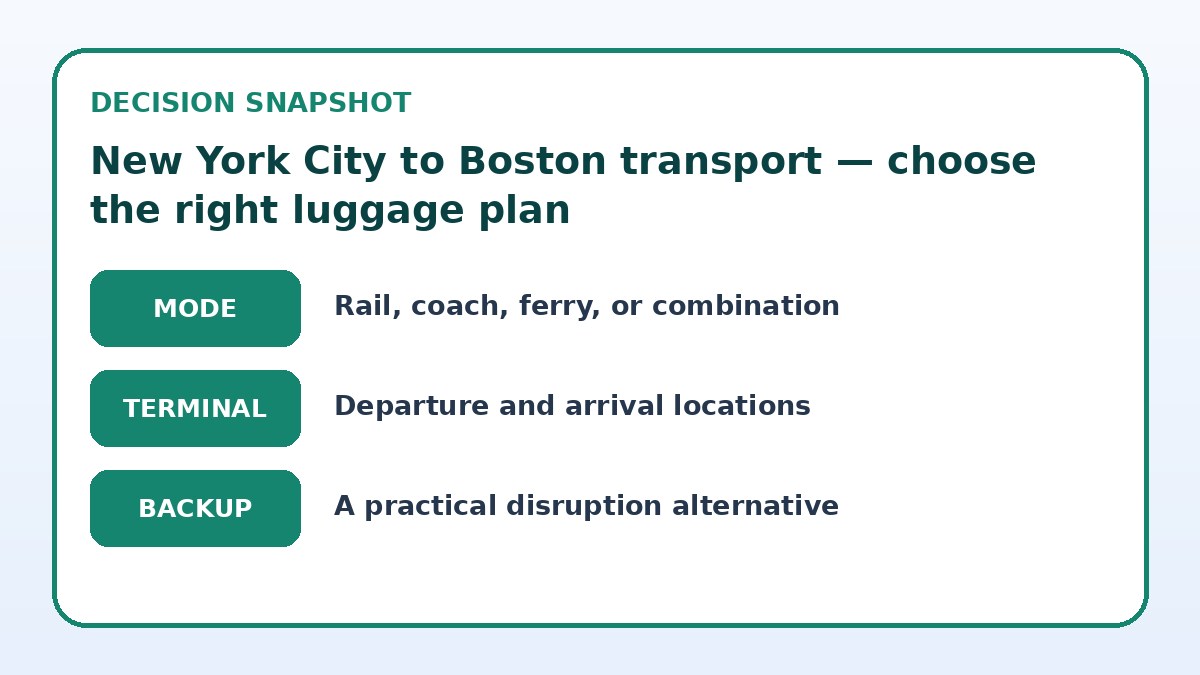
Choose the end-to-end journey plan
| Journey approach | Best for | Friction to check |
|---|---|---|
| Direct rail (city-center to city-center) | Travelers with multiple bags who need predictable station-to-downtown transfers | May be pricier than coach and sometimes crowded at peak times |
| Intercity coach | Cost-conscious travelers with moderate luggage willing to handle baggage bays | Potentially longer last-mile transfers if terminals are outside business districts |
| Mixed rail plus rideshare (door-to-door) | Business travelers prioritizing time and minimal carrying between modes | Higher total cost and dependency on local traffic for the final leg |
| Flight or ferry plus ground transfer | Those needing the fastest airborne leg or scenic water segment with compact carry-on only | Adds airport or ferry terminal transfers and baggage processing steps |
Check live intercity options
Look beyond the ride itself and compare terminals, transfers, luggage, and arrival fit.
Terminal fit, transfers, and door-to-door practicality
Evaluate where each mode’s terminals sit relative to your start and end points. City-center train stations typically place you within a short taxi or rideshare of downtown offices and hotels, cutting last-mile time. Coach terminals may be farther from business districts, which can negate savings if you need a long ground transfer. Ferries and airport options require additional ground travel and should be weighed only if they reduce overall door-to-door time for your specific pickup and dropoff addresses.
Think beyond the ride: plan how you’ll move luggage between modes. If you must transfer from a station platform to a street-level rideshare, are there elevators or long ramps? Will porters or station luggage carts be available? If you’re booking a mixed itinerary, align arrival and departure terminals that minimize walking with bags. Confirm on the provider’s booking page whether luggage assistance, storage, or extra-handling services are offered and what dimensions or weight limits apply before finalizing plans.
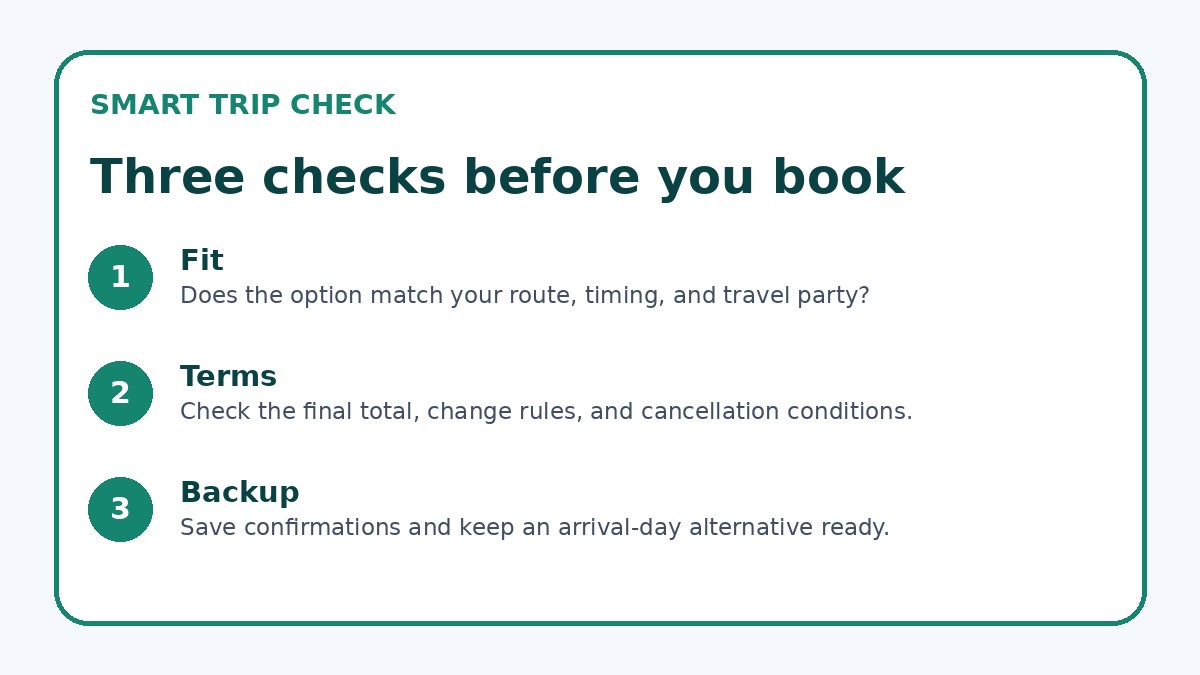
Timing flexibility and scheduling for luggage-heavy trips
Business travel often looks easy on paper until a delayed departure means you’re juggling oversized suitcases and a straining schedule. If your meeting times are tight, prioritize itineraries with buffer time and fewer transfers; an earlier train or coach that arrives with 60–90 minutes spare is usually more reliable than a last-minute tight connection. When luggage must be checked or stowed, add 15–30 minutes at both ends for handling and retrieval, and plan rideshare pickups with extra padding to account for luggage loading.
If you can be flexible, aim for off-peak departures to reduce crowding and improve luggage accessibility on trains or coaches. Flexibility also allows you to change plans if a service sells out or is delayed. Verify on the booking platform what change or refund options exist for the fare you’re considering. If using a mixed itinerary, coordinate arrival and onward pickup windows so drivers aren’t waiting too long — and so you don’t have to rush with heavy bags between terminals.
Compare the practical alternatives
Use the final page to confirm what is actually offered on your dates and save a workable fallback.
Intercity travel checklist
- Confirm permitted bag sizes, weight limits, and extra-fee rules on the operator’s final booking page before you buy a ticket.
- Choose an itinerary with at least 45–90 minutes buffer for luggage handling and last-mile transfer to your meeting or hotel.
- Pack a compact carry-on with meeting essentials and chargers in case checked luggage is delayed or inaccessible.
- Pre-book a rideshare or car to meet you at the station with clear pickup instructions and waiting-time expectations.
- If you have oversized or fragile items, ask the operator about special handling or door-to-door courier options before travel.
- Save digital tickets and luggage allowance screenshots on your phone and email a copy to yourself for quick station-level reference.
Disruption backup plans and what to verify before booking
Create a simple disruption checklist: a secondary later ticket or coach option, a rideshare app with payment set up, a compact carry-on with meeting essentials, and contact numbers for any travel arranger or hotel. If a booked service is delayed or canceled, you’ll want an alternative that won’t require hauling checked baggage across town. Consider booking a refundable or changeable leg where possible and keep digital copies of tickets and luggage allowances ready to show station staff or drivers.
Before you book, confirm specific provider policies on the final booking page: permitted bag dimensions and weights, extra fees for oversized items, whether there are strict check-in or loading cutoffs, and what assistance (e.g., station porters, elevators) is available. If you compare schedules and availability online, sites like Trip.com can show options, but always verify luggage rules, transfer times, and pickup/dropoff locations directly on the operator’s site or ticketing confirmation before you commit.
Rail & Intercity Transport questions travelers ask
How much luggage can I reasonably carry when choosing train travel between New York City and Boston?
Reasonably, many business travelers use one checked-size suitcase plus a carry-on and briefcase for train trips. Exact allowances and storage space vary by operator and train type; some services provide generous overhead and dedicated luggage areas, while others may be more constrained at peak times. Check the operator’s luggage policy on their booking page for weight, dimension limits, and any fees. If you expect to travel with large or fragile items, contact the operator’s customer service to confirm whether they can be accommodated and what advance notice is required.
Is it better to bring only carry-on luggage to avoid transfer delays?
Bringing only carry-on luggage can significantly reduce transfer time, eliminate checked-bag retrieval waits, and make mixed-mode transfers easier—especially if you plan rideshare pickups or need to walk between terminals. However, if your trip requires suits, multiple outfits, or presentation materials that won’t fit in a carry-on, balance the convenience of a single bag against the need to arrive business-ready. If you must check a bag, choose an itinerary with extra buffer time and verify the provider’s check-in cutoff and baggage handling procedures before booking.
What’s a practical disruption backup if my scheduled train or coach is canceled and I have important meetings?
A practical backup includes a later flexible ticket on the same day, an available coach alternative, and a pre-authorized rideshare or taxi option that can bridge the gap if public transport fails. Keep essentials in your carry-on to be meeting-ready and make sure you can access electronic copies of presentation files. Before traveling, note nearby alternative terminal addresses and phone numbers for station customer service. If timelines are critical, consider booking a refundable or changeable main leg so you can rebook without penalty if delays force a switch.
Final decision note
For business travelers moving between New York City and Boston, luggage decisions shape everything from choice of mode to the small details of transfers and timing. Start by matching your baggage needs to options that reduce handling—direct rail or a rail-plus-rideshare combo is often the most practical for multi-bag trips that require downtown arrival. Carefully check luggage rules and transfer specifics on the operator’s booking page, factor in buffer time for handling, and carry a compact essentials bag for meetings. With a clear backup plan and a door-to-door mindset, you can keep travel disruptions from becoming meeting disruptions and choose the approach that fits your schedule and luggage profile.
Continue planning
Check current options and final conditions
Use the provider page to confirm live availability, the final total, cancellation terms, and every condition that matters to your trip.
This evergreen planning guide was created with AI-assisted drafting and a structured quality review. It does not display live prices, schedules, availability, visa guidance, or provider rankings. Verify current details before booking. Some links are affiliate links; we may earn a commission at no additional cost to you.