If you arrive in Taipei late and are hauling extra luggage, pick your hotel neighborhood first — it’s the biggest factor that changes door-to-bed time. Focus on areas with straightforward late-night transport options (MRT stations, 24-hour taxis nearby, and direct airport connections), short onward routes to where you’ll spend most time the next day, and hotels that can store bags or offer late check-in. Decide whether you prefer a short transfer with a simpler arrival, or a quieter neighborhood that accepts late check-ins but might mean a longer daytime commute. This article gives a practical shortlist method: match neighborhood fit to daily routes, choose room layouts that reduce hassle with bulky bags, and verify booking terms that protect you on a late arrival. Use these steps to narrow to two or three Taipei hotels before you open live inventory.

Check live stays in the areas that fit
Use your dates and party size to compare current rooms after you narrow the neighborhood fit.
Neighborhood fit: where a late arrival matters most
Decide where to stay by thinking about what you need immediately after arrival. If a short, simple transfer matters most, choose neighborhoods with direct airport or major station links and visible taxi ranks so you don’t waste time navigating unfamiliar streets with heavy bags. If you prefer fewer steps even at night, neighborhoods with multiple 24-hour convenience stores, clear signage, and a compact grid of streets are easier to manage when you’re tired. Also consider where you’ll spend the majority of your first full day — staying nearby reduces the number of times you need to drag suitcases across the city.
Weigh nightlife and noise against arrival convenience. Busy commercial neighborhoods often mean more late-night transport options and open businesses where you can grab food or ask for directions, but they can also be noisier. Quieter residential districts might offer calmer nights and more space in rooms for luggage, but could lack late-night services and require more planning for a late arrival. Pick the neighborhood that balances immediate arrival ease with the location you’ll want for daytime plans.
Choose an area-selection strategy
| Area approach | Best for | Tradeoff to check |
|---|---|---|
| Stay next to Taipei Main Station | Maximum transit options and short transfers from trains or buses | Can be busier and more confusing at night; some hotel entrances require navigating crowds with luggage |
| Choose an MRT interchange like Ximen or Zhongxiao | Minimal walking between lines and faster daytime connections | Interchanges mean more stairs and platform navigation if elevators are crowded or under maintenance |
| Book in a quieter neighborhood near your daytime destination | Better overnight rest and potentially larger rooms for luggage | Fewer late-night services and longer night transfers if you arrive very late |
| Pick a hotel with explicit 24-hour reception and storage | Peace of mind for late arrivals and secure short-term luggage hold | May limit neighborhood choices or cost more than similar rooms without those guarantees |
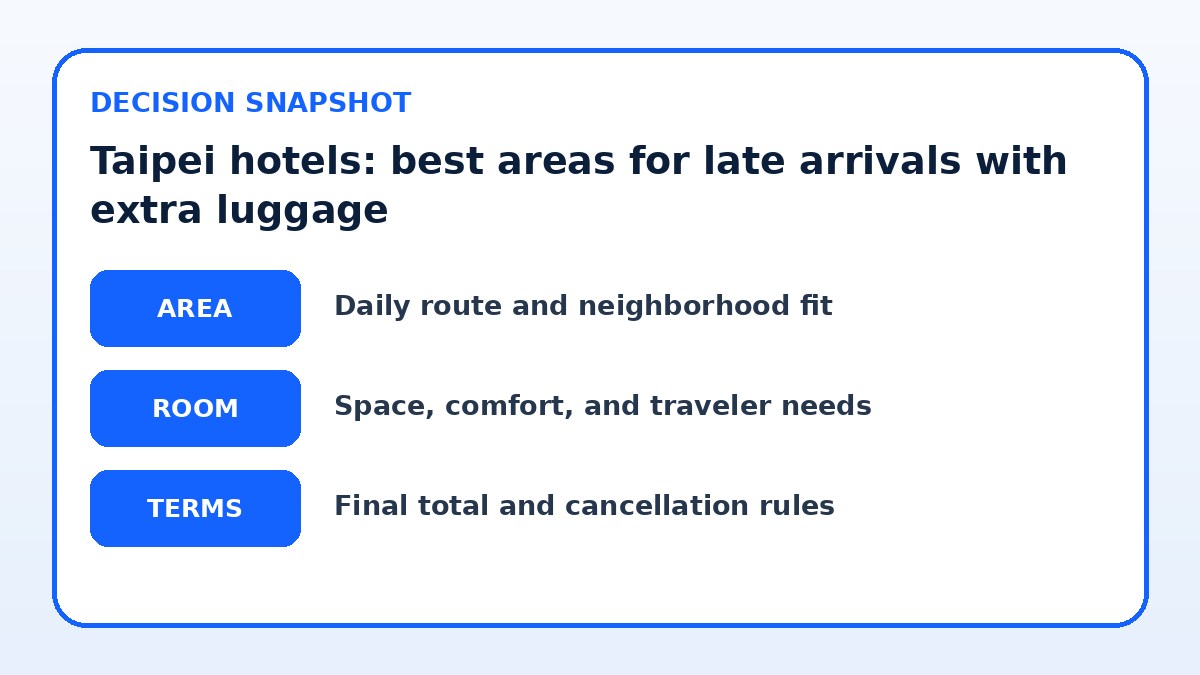
Daily-route friction: plan how luggage affects movement
Think through a typical day with your luggage situation: will you check into a hotel and stay put, drop bags and commute, or store luggage and explore? If you plan to explore immediately after arrival, staying near an MRT interchange or a bus node can save time and energy. If you’ll transfer between multiple neighborhoods the next day, a central lodging near the Red or Blue MRT lines reduces platform changes and walking with heavy bags. Consider the walking distance between the station and hotel entrance, including stairs, narrow sidewalks, or crossings that complicate moving large suitcases.
Factor in end-of-day returns and transfers. A hotel farther from transit can feel manageable in the daytime but taxing at night when transit frequency drops. If you have oversized bags, check whether the walk from the station includes elevators, ramps, or only stairs — these details shape how much help you’ll need from porters or a taxi. For multi-stop itineraries, evaluate whether carrying luggage between attractions is avoidable; sometimes a short extra taxi on the first night pays off by saving many heavy lifts later.
Now compare like with like
Keep the same dates, guests, room needs, and cancellation preferences while you compare the final choices.
Room and party needs: pick a layout that reduces baggage hassle
Room choice matters more than star rating for travelers with lots of luggage. Request rooms with a clear foyer, a luggage rack or bench, and open floor space near the entrance so bags don’t block access. If you travel with a partner or family, consider a room with separate sleeping areas or interconnecting rooms so luggage can be staged in one space while people use the other. When booking, read the hotel’s room descriptions and photos carefully and, if the provider’s page is unclear, message the property to confirm entry-space dimensions and furniture configuration.
For special equipment — surfboards, skis, musical instruments — confirm storage policies before booking. Many city hotels can accommodate odd-sized items if informed in advance, but procedures and liability vary. Ask the hotel whether they store bulky items at no charge, require early drop-off, or need a written waiver. If you expect to arrive late, request that any special storage arrangements be logged on your reservation and verified on the property’s final booking page so you have a record to show on arrival.

Hotel booking check before payment
- Map your arrival point to potential hotel neighborhoods and choose two with the shortest, simplest transfers.
- Verify the hotel’s late check-in procedure on the final booking page and save written confirmation from the property.
- Confirm luggage storage availability, service hours, and any size or liability restrictions before you book.
- Select a room type that clearly shows entry space and luggage placement in photos or by direct inquiry.
- Plan a backup taxi route and note local taxi ranks or 24-hour ride apps for after-hours arrival.
- Record the hotel’s contact number, a clear arrival instruction, and a screenshot of your reservation for arrival proof.
Final booking terms: verify what matters for late arrivals
Before you finalize any booking, check the hotel’s stated late check-in policy, luggage storage options, and whether reception is staffed 24 hours. Don’t rely on general phrases — look for specific booking-page notes about after-hours check-in procedures (self-check-in codes, late-arrival desks, or instructions to call a number on arrival). If the listing doesn’t state the procedure, contact the hotel directly and request written confirmation of late check-in means. Keep a screenshot or saved message to present on arrival if there’s confusion.
Also verify cancellation and modification terms in case travel plans shift; late arrivals often come with flight delays and rebookings. Confirm whether the hotel charges for late arrivals, how they handle no-shows, and precise hours when luggage storage is available. When comparing options, create a short checklist of must-have booking details (24-hour front desk, free luggage hold, explicit late-check-in instructions) and eliminate hotels that can’t confirm those points on their final booking pages.
Hotel Guide questions travelers ask
Can I rely on luggage storage if I arrive in Taipei late at night?
Many Taipei hotels offer luggage storage, but terms vary widely. Always check the hotel’s booking page for storage details and, if the listing is vague, email or call the property to confirm hours and any fees. Ask whether storage is available immediately on arrival or only during staffed hours. Save any confirmation from the hotel so you can present it at reception. If you can’t get confirmation, plan for a short-term alternative: ask your arrival station for left-luggage options or choose a hotel with explicit 24-hour reception.
Is it better to take a taxi with heavy bags instead of public transit at night?
A taxi can be the easiest option when you have bulky luggage and arrive late, since it reduces walking and platform transfers. Compare taxi convenience to the cost and possible traffic delays; your choice depends on how tired you are and how familiar you are with the area. Before you step outside, verify pickup points and whether the hotel has a dedicated drop-off to avoid being directed to a distant entrance. If you prefer public transit, choose a hotel close to an MRT station with elevators and a short, easy walk to minimize handling heavy bags.
What room features should I request for oversized luggage or sports equipment?
Ask specifically for a room with an unobstructed entry, a luggage rack or bench, and extra floor space near the doorway to stage large items. If you travel with gear like surfboards or instruments, notify the hotel in advance to learn storage policies and liability conditions. Request that any special arrangements be noted on your reservation and confirm the pickup or drop-off time window. If the hotel cannot provide secure storage, consider booking a room with a closet or secondary space, or arrange a short-term storage service through a verified luggage-storage provider in Taipei.
Final decision note
Handling a late arrival to Taipei with extra luggage is mostly about choices you make before you book: pick a neighborhood that minimizes transfer complexity at night, select rooms that give you clear entry space, and confirm late-check-in and storage procedures on the hotel’s final booking page. Shortlist two or three areas that match your priorities — quick transfer, central daytime mobility, or quieter nights — and eliminate hotels that can’t verify late arrival support. Keep a backup plan (taxi route, saved confirmations) and the hotel’s contact details handy. With those checks done, you’ll be able to open live inventory and book a Taipei hotel with confidence that your arrival and first night will be manageable.
Continue planning
Check current options and final conditions
Use the provider page to confirm live availability, the final total, cancellation terms, and every condition that matters to your trip.
This evergreen planning guide was created with AI-assisted drafting and a structured quality review. It does not display live prices, schedules, availability, visa guidance, or provider rankings. Verify current details before booking. Some links are affiliate links; we may earn a commission at no additional cost to you.