If you’re traveling to Bali for work, driving can speed up meetings in multiple districts and give you control over timing — but only if you understand fuel and mileage rules before signing. The practical answer: driving is worth it when your itinerary includes multiple towns or early starts and the rental’s fuel and mileage terms are transparent and economical; skip driving if rates, fuel penalties, or pickup/return logistics add time or liability you can’t absorb. This guide focuses on what to check on the rental agreement — fuel policy type, per-kilometre or unlimited mileage, how fuel levels are measured at handover and return, and how mileage interacts with insurance and tolls. Read it to decide whether to drive, what to confirm at booking and pickup, and what to do if you opt for a non-driving fallback.
Decide whether driving improves your business itinerary
Start by mapping your appointments and where they sit across Bali’s districts. Driving is most valuable when you need flexibility — early morning site visits, last-minute schedule changes, or meetings spread across South, Central, and North Bali where public options are slow or infrequent. If your plan centers on one hotel and several nearby meetings or relies on powerful ride-hailing coverage and drivers familiar with local routes, car rental often adds unnecessary complexity and cost.
Weigh time versus responsibility. Driving saves on waiting for pickup and can shave hours from complex transfers, but it hands you all liability for fuel mistakes, mileage overages and local traffic incidents. Business travelers often choose rental when time is at a premium and an experienced local driver is not available through their company; otherwise, delegating transport to a driver or ride-hail service can keep the trip focused on work rather than logistics.
Decide whether driving earns its place
| Mobility strategy | Best for | Cost or friction to check |
|---|---|---|
| Self-drive rental with unlimited mileage | Multi-stop business itineraries with flexible schedules that need cost predictability for distance. | Higher base rate and full responsibility for fuel handling, inspections, and local driving risks. |
| Self-drive rental with per-kilometre cap | Shorter, single-area trips with predictable distances where lower daily rates outweigh overage risks. | Risk of expensive overage charges if plans change or detours occur; requires strict tracking of kilometres. |
| Rental with local chauffeur | Travelers who need local knowledge, no driving responsibility, and smoother meeting-time management. | Higher hourly cost and less flexibility for unscheduled stops; fuel handling usually included but check billing. |
| On-demand ride-hailing and point transfers | Short meetings within well-served urban areas or when you prefer no vehicle responsibility. | Variable wait times, surge pricing, and less control over privacy or luggage handling compared with a private car. |
Check live rental choices only after the route test
Use the exact driver, dates, pickup point, and return plan to compare current conditions.
Route value: how mileage rules affect trip cost
Compare your estimated itinerary distance against the rental’s mileage terms. Rentals that cap kilometres can look cheap on paper but produce steep overage charges once you cross the limit. For multi-site meetings or customer visits that require long transfers, unlimited mileage or a high kilometre allowance is usually more cost-effective despite a higher base rate. Don’t forget to include after-hours transfers, airport runs, and any optional sightseeing that might be added in downtime.
Ask for a realistic odometer estimate at booking and confirm it again at pickup. If your company reimburses fuel but not mileage overages, secure written confirmation of the mileage cap and per-kilometre fee to avoid disputes later. Also consider whether roads you plan to use — coastal detours, mountain climbs or loops to remote areas — will significantly increase kilometres compared with straight-line distances on a map.

Compare the full rental conditions
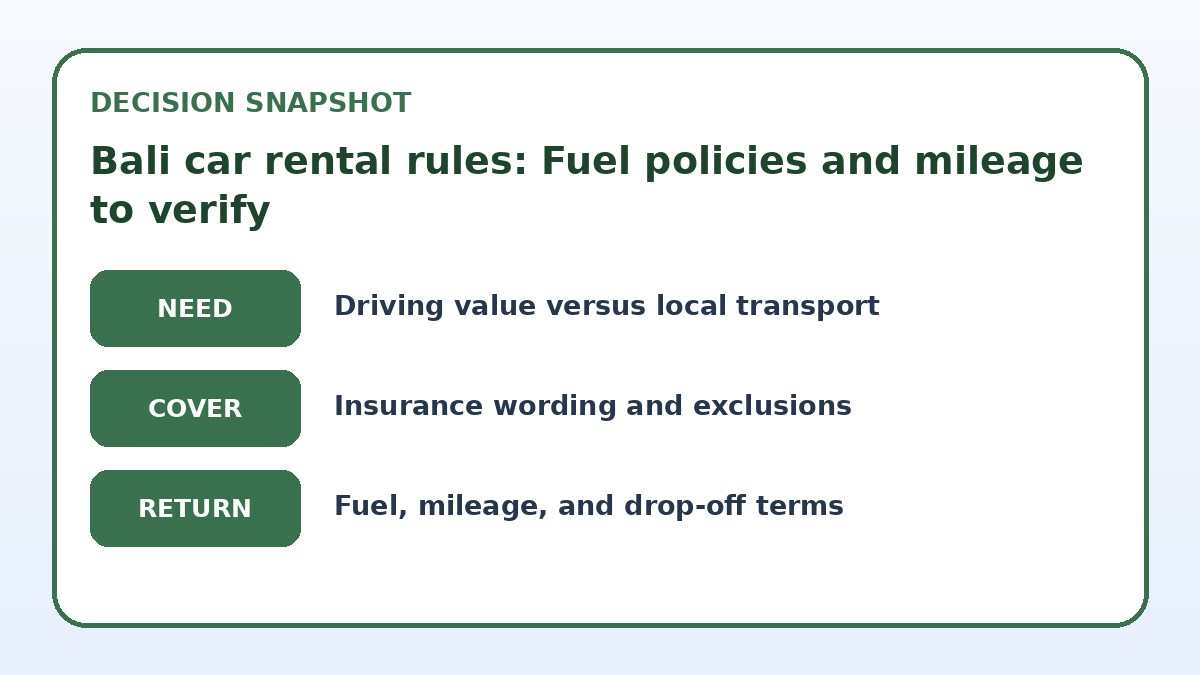
Confirm insurance wording, exclusions, deposit, fuel, mileage, and return terms on the final page.
Insurance wording and fuel-related liabilities to verify
Insurance policies can exclude coverage for incidents that occur while the vehicle is outside approved zones or if the rental’s fuel policy has been violated. Read the insurance wording to find exclusions related to running out of fuel, odometer tampering, or damage that occurs during unauthorized use. If the policy references local traffic laws or administrative penalties, confirm whether the insurer will cover fines or only physical damage; for business travelers, clarity here prevents unexpected chargebacks to your corporate card.
Request written confirmation on whether extra coverage is needed to protect against disputes over fuel levels at return. Some companies will accept photographic evidence timestamped at pickup and return; others require a formal fuel receipt. If your corporate travel policy limits supplemental insurance purchases, compare what the base rental covers and whether a company-approved vendor offers a clearer fuel and mileage clause.
Car rental terms to verify
- Ask the rental company to confirm in writing the exact fuel policy wording (full-to-full, pre-purchase, or full-to-empty) before you finalize the booking.
- Verify the stated mileage allowance and per-kilometre overage fee and calculate likely charges using your itinerary distances.
- Take timestamped photos of the fuel gauge and odometer at pickup and again at return; retain digital copies for expense or insurance claims.
- Read the insurance exclusions related to fuel incidents, off-road use, and odometer disputes and note any required supplemental coverage.
- Confirm pickup and return procedures and time windows with the provider, and schedule extra buffer time before meetings for vehicle inspection.
- Prepare a documented non-driving fallback plan (driver service, ride-hail app, or point-to-point transfers) and saved contacts for quick changes.
Pickup, return friction and a non-driving fallback
Pickup and return logistics can create significant friction. Airport pickups often have strict check-in windows and staff-performed fuel checks, while hotel delivery or off-airport counters might offer more flexible handovers but with slower inspection processes. Confirm how the rental documents fuel level and odometer reading — manual logs, digital photos or both — and verify who signs when you report discrepancies. Factor in time for inspections when scheduling meetings around pickup or drop-off times.
Prepare a non-driving fallback: reliable alternatives include booking a professional driver through a corporate partner, using ride-hailing services for ad-hoc travel, or arranging point-to-point transfers for critical legs. A fallback reduces risk if the rental’s fuel policy or mileage cap looks unfavorable at pickup. Keep contact details for local corporate travel support or a backup driver, and use a local mobility app or Trip.com to compare real-time availability if you need to change plans.
Car Rental & Road Trip questions travelers ask
How do different fuel policies actually affect my final bill?
Fuel policies change when and how you pay for fuel. A full-to-full policy means you pick up the car full and return it full — you only pay for what you use, which is usually fair if you refill locally. Pre-purchase or full-to-empty options let you pay for a tank upfront and often won’t refund unused fuel, which can be convenient but wasteful on short trips. Some providers charge a refill penalty calculated at a premium rate if you return the car below the agreed level. Always confirm the refill rate, whether receipts are accepted, and the method used to record fuel level at handover.
What proof should I collect at pickup to prevent disputes about mileage or fuel?
Collect clear, timestamped photos of the odometer and fuel gauge from multiple angles at pickup and drop-off, and save any digital rental agreement pages that show the recorded readings. Get the rental agent to initial or sign the pickup inspection sheet and request a copy. If you refuel before return, keep all fuel receipts and note the station location and pump number. These records help contest erroneous overage or refill charges with the rental company and your corporate travel desk or card issuer.
If my company covers fuel but not mileage overages, how should I book?
If corporate policy reimburses fuel but not per-kilometre penalties, prioritize rentals with unlimited mileage or a high mileage cap to avoid costs that won’t be repaid. When booking, request a breakdown of expected charges and get written confirmation of the mileage allowance and overage fee. If unlimited options push the base rate beyond policy limits, consider a chauffeur service billed per hour or pre-arranged point transfers for long legs; save estimates to justify choices to your travel approver.
Final decision note
For business travelers in Bali, the decision to rent a car hinges on two predictable points: how much distance you’ll cover and how clearly the rental contract treats fuel and mileage. Driving pays off when it saves time on a multi-location schedule and when the rental offers unlimited mileage or straightforward full-to-full fuel terms. If the mileage cap, refill penalties, or pickup/return procedures introduce uncertainty or potential disputes, choose a chauffeur, ride-hailing, or point-to-point transfer instead. Before booking, secure written fuel and mileage terms, photograph odometer and fuel readings at handover, and keep a non-driving fallback ready so your trip stays focused on work, not logistics.
Continue planning
Check current options and final conditions
Use the provider page to confirm live availability, the final total, cancellation terms, and every condition that matters to your trip.
This evergreen planning guide was created with AI-assisted drafting and a structured quality review. It does not display live prices, schedules, availability, visa guidance, or provider rankings. Verify current details before booking. Some links are affiliate links; we may earn a commission at no additional cost to you.