If you’re traveling from Sydney to Melbourne with extra luggage, the practical choice depends on how much you need to move, how much door-to-door effort you’ll accept, and whether you value timeliness or cost. For big, heavy, or awkward bags, prioritize modes and routes that minimize manual handling: direct services with generous luggage rules, stations or terminals with easy drop-off and pick-up, reliable transfers, and the option to pre-book baggage services or vehicle-size upgrades. This article lays out the four main approaches—rail-first, coach-first, air-first, and a mixed door-to-door plan—so you can balance terminal fit, transfer friction, timing flexibility, and disruption backups. Each section explains what to check on supplier pages, how to plan transfers, and what to ask at the station or airport so your oversized baggage doesn’t become an unexpected chore mid-trip.

Choosing rail, coach, air, or a hybrid route
Start by matching your luggage profile to the mode’s practicalities. Trains often provide roomy storage areas, level boarding in major stations, and fewer formal baggage restrictions, which helps if you have heavy suitcases or bulky gear. Coaches may accept larger items in external bays but require lifting to and from a low hold and sometimes multiple handling steps when switching vehicles. Flights minimize journey time but impose weight and dimension rules, and security screening can require you to repack at the airport if something is oversized or restricted.
A hybrid approach—such as a short taxi to a convenient regional airport, or combining a long-distance coach with a final-leg rideshare—can cut handling while keeping costs in check. When comparing options, calculate total door-to-door time and number of times your luggage is handled. That number often matters more than the headline travel time: two extra handlings add stress and risk for bulky items, so prefer options with direct connections or single-transfer itineraries where possible.
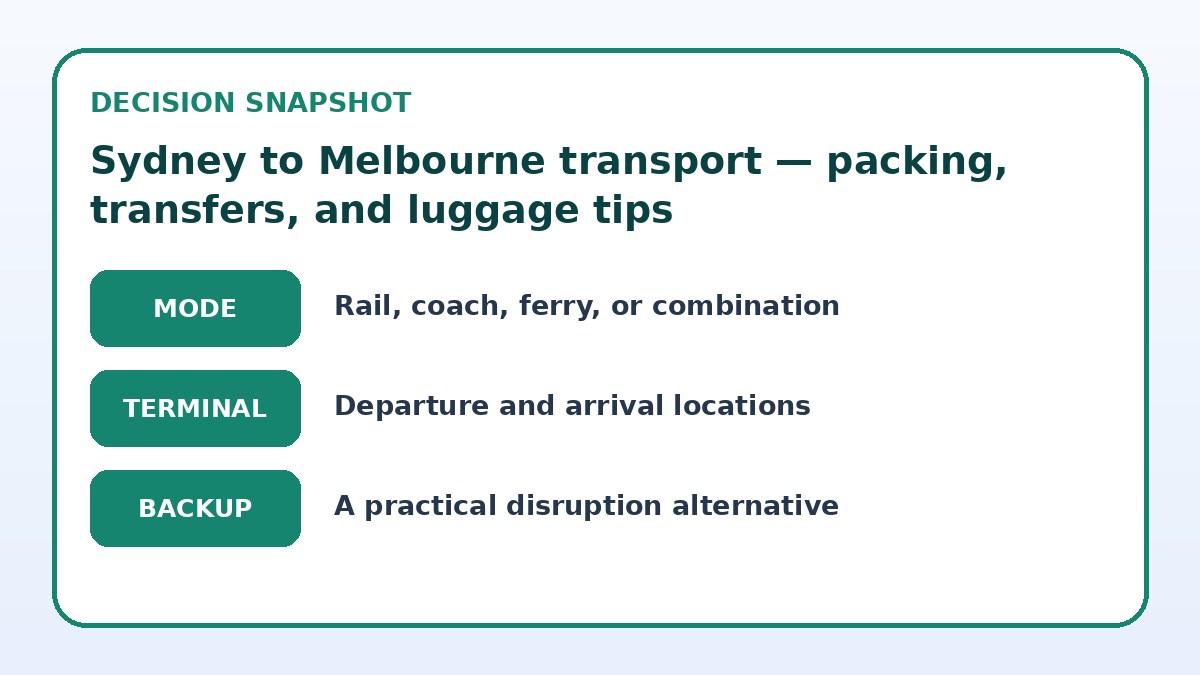
Choose the end-to-end journey plan
| Journey approach | Best for | Friction to check |
|---|---|---|
| Rail-first (direct or with one transfer) | Travelers wanting stable onboard storage and minimal security handling | Potentially longer journey times and need to verify station lift and locker access |
| Coach-first (long-distance coach with hotel drop-offs) | Those prioritizing simplicity and often lower fares with large external holds | More manual loading/unloading and dependence on curbside transfer logistics |
| Air-first (flight plus short ground transfers) | Travelers with tight schedules prepared to manage checked-bag rules | Security screening and strict weight/dimension limits that may require repacking |
| Hybrid door-to-door (mix of taxi, rail/coach, and pre-booked handlers) | Anyone needing the least manual handling from origin to final address | Higher cost and more bookings to coordinate, but fewer moments of heavy lifting |
Check live intercity options
Look beyond the ride itself and compare terminals, transfers, luggage, and arrival fit.
Terminal fit and transfer friction
Assess terminal and station layouts before you book. Major Sydney terminals and Melbourne stations vary in lift availability, curbside access, and transfer vehicle space; these details determine whether you can avoid stairs or long walks with heavy luggage. If you need to transfer between modes, note whether the transfer point has sheltered walkways, escalators that are wide enough for rolling cases, and clear signage to minimize time spent lugging bags. For coach and smaller regional airport terminals, plan for limited staff assistance and potentially uneven loading ramps.
Also consider the last-mile pickup and drop-off. Door-to-door practicality often hinges on whether you can be dropped close to your accommodation or need an extra short taxi. If you anticipate tight connections, choose terminals with close, timed transfer options or pre-book meet-and-greet baggage services. On supplier pages, verify where vehicles stop curbside, whether there is trolley or porter service, and the location of accessible elevators so you can plan exactly how you'll move your luggage between transport and lodging.
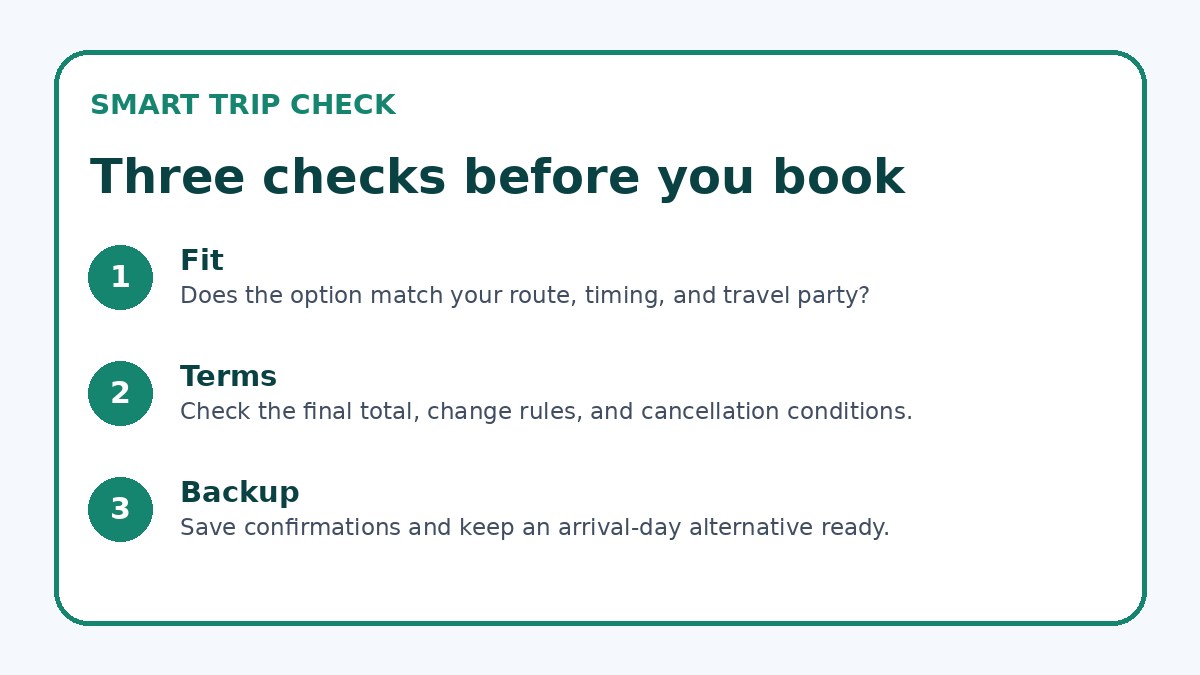
Timing flexibility and planning for delays
If your schedule is flexible, choose slower options with simpler baggage handling to reduce stress. Trains and coaches usually tolerate small schedule shifts with less baggage hassle; a later departure may be fine if it means fewer transfers. If you’re on a tight clock—connecting to another service, attending an event, or catching a scheduled check-in—prioritize faster modes or direct trips and build buffer time for security and loading. Always plan extra time for peak periods, when check-in or boarding may be slower, and for potential road congestion on coach or taxi legs.
When booking, check each provider’s advised arrival times and recommended connection windows on their booking pages. For flights, follow airport check-in guidance specifically about checked luggage and potential queues. For rail and coach, look for notices about busy departure times and baggage processing. Keep digital and printed copies of your booking reference and know the physical locations of ticket counters and baggage assistance so you can adapt quickly if your planned departure is delayed.
Compare the practical alternatives
Use the final page to confirm what is actually offered on your dates and save a workable fallback.
Intercity travel checklist
- Measure and weigh every bag and compare those dimensions to the baggage policies shown on the provider’s booking page before selecting a service.
- Photograph your luggage (labels and contents) and keep a short inventory in your phone in case of loss or inspection.
- Book services that allow pre-booked assistance (porter, meet-and-greet, or vehicle with extra cargo space) and confirm on the supplier’s final booking page.
- Plan your door-to-door route including curbside pickup/drop-off locations, nearby elevators or ramps, and the last-mile taxi stand.
- Pack a small carry-on with essentials—documents, medication, phone chargers, and one change of clothes—to keep with you in case checked luggage is delayed.
- Save contact numbers for all providers, your accommodation, and a local taxi service; set calendar reminders for check-in and transfer buffer times.
Disruption backups and door-to-door contingency plans
Prepare at least two backups: an alternative service on the same mode and a different mode you can switch to with minimal additional baggage handling. For example, if a direct train is cancelled, a coach or flight might get you there faster but check that the replacement option can accept your luggage without extra transfers. Map out nearby taxi stands, rideshare pickup points, and luggage storage facilities at both origin and destination so you can shift to a simpler door-to-door leg if your initial plan falls through.
Also identify local services that handle oversized luggage—porters, baggage transfer companies, and hotel pickup options—and verify their availability before departure. On the day, keep essential items (medication, valuables, a change of clothes) in a carry-on you will keep with you through any disruption. Finally, save the contact numbers and live-update pages for each provider; public communications about cancellations or platform changes will tell you fast whether your backup plan (and its luggage accommodations) is realistic.
Rail & Intercity Transport questions travelers ask
Can I bring oversized sports gear or instruments from Sydney to Melbourne without paying extra?
Policies for oversized items vary by mode and provider. Trains and coaches sometimes accept awkward items if they fit designated storage areas, but ground staff discretion applies. Airlines typically require pre-declared oversized baggage and often charge extra or demand specific packing. Before booking, check the provider’s baggage and special-item policy on their official booking page, and if in doubt contact their customer service to confirm whether your equipment will be accepted and whether reservations or extra handling fees are needed.
What’s the best way to avoid damage to fragile items during the trip?
Use hard-shell cases or heavy-duty padding, and separate fragile items into a carry-on if possible. For items that must go in the hold, add internal padding and secure loose parts with tape or wrappers. Label cases as fragile and add contact details on both inside and outside. Consider purchasing a dedicated door-to-door luggage transfer or porter service if you want to reduce transfers and handling stages, and verify on the provider’s final booking page whether they offer any liability coverage or recommended packing standards for fragile items.
If my train or coach is cancelled, how should I manage oversized luggage at short notice?
First, keep essential items with you and know the baggage claim or handling point at the terminal. Check alternative services (other trains, coaches, or flights) that accept large baggage and compare total door-to-door time including extra transfers. If time allows, arrange a short taxi to your next pickup point to avoid repeated loading. If you anticipate difficulty, call your accommodation to request a delayed check-in or temporary storage, and if available, contact a luggage transfer company locally to move your bags directly to your destination.
Final decision note
When traveling from Sydney to Melbourne with extra luggage, focus on minimizing the number of handlings and planning door-to-door logistics rather than only comparing in-transit times. Choose the mode that best fits your luggage size and willingness to pay for convenience—rail and hybrid door-to-door options often reduce handling, while flights save time at the cost of stricter baggage rules. Always verify baggage dimensions, assistance options, and curbside pickup details on the provider’s final booking page before you commit, and keep a simple backup plan that includes alternative services and a local taxi. For a quick availability check across modes, you can optionally compare current options on a multi-provider site such as Trip.com, but rely on each provider’s official pages for baggage specifics.
Continue planning
Check current options and final conditions
Use the provider page to confirm live availability, the final total, cancellation terms, and every condition that matters to your trip.
This evergreen planning guide was created with AI-assisted drafting and a structured quality review. It does not display live prices, schedules, availability, visa guidance, or provider rankings. Verify current details before booking. Some links are affiliate links; we may earn a commission at no additional cost to you.