Practical decision-making comes first: prioritize whether you value fewer connections and higher checked-bag allowance over the lowest headline fare. For travelers departing Paris with extra luggage bound for Istanbul, the core tradeoff is simple — routing versus fare flexibility. Direct or single-connection itineraries usually reduce the chance of lost or delayed bags and lessen transfer stress, but they can carry stricter fare rules or smaller included allowances. Conversely, multi-carrier or low-cost itineraries may show low ticket prices but often add per-piece baggage fees and impose short connection minimums that increase risk. This guide gives you an immediate pre-booking checklist to use while searching live options, explains the routing and baggage tradeoffs, and lists exact traveler details and dates you should have ready before you compare flights on airline sites or platforms like Trip.com.

See live routes for your exact travel day
Compare direct and connecting choices with the same baggage and traveler details.
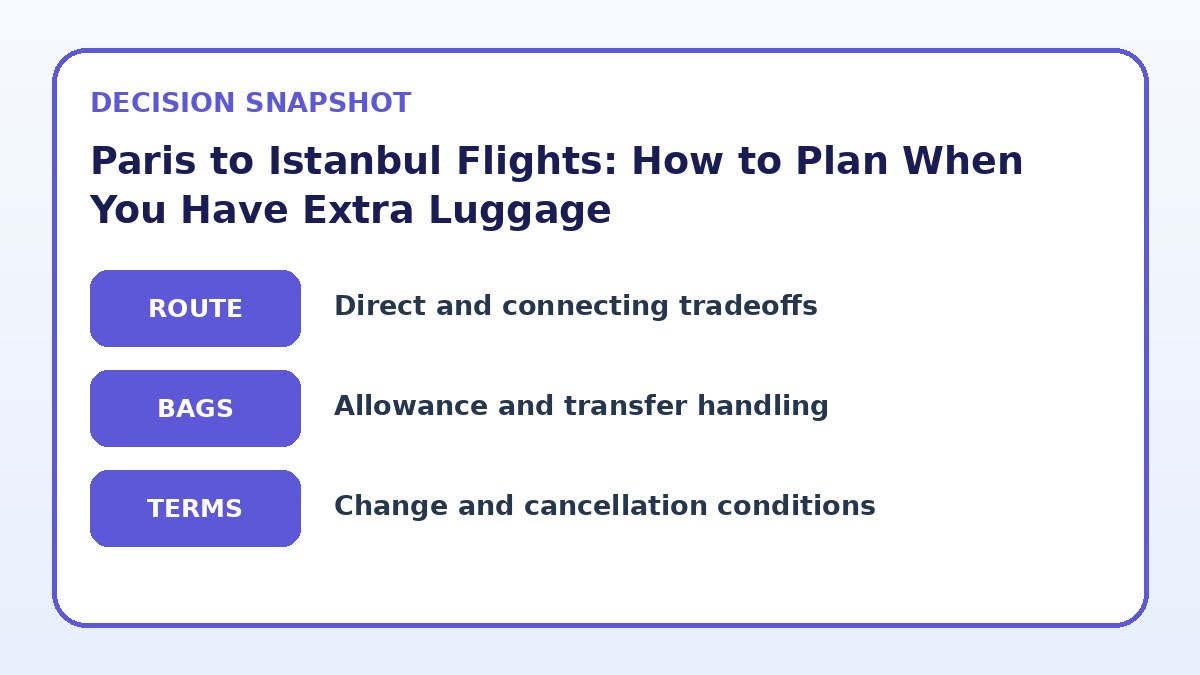
Routing: direct vs. single-connection vs. multi-stop
Start by listing the routing options that appear in searches: direct (if offered), one-stop, and multi-stop itineraries. For travelers with extra luggage, each additional transfer raises the number of touchpoints where checked bags are handled; more touchpoints mean more chance of delay, mishandling, or different airline handling rules. When comparing itineraries, note whether transfers happen in the same terminal, require re-claiming and re-checking luggage, or involve changing airports. Those details matter more than the number of stops alone because a single well-handled connection can be safer than two short hops with separate carriers.
If a direct service is available, it often simplifies the experience but can be less flexible on fare conditions or bag inclusion. A single-connection itinerary operated by the same carrier or within one alliance usually allows interline baggage transfer under one contract; this reduces manual handling. Multi-carrier itineraries especially those combining a legacy airline with a low-cost carrier typically require you to collect and re-check baggage at the connection, so always check the booking page or contact the carriers to confirm whether bags are through-checked to Istanbul.
Baggage allowances and connection risk
Before you finalize any booking, verify the exact checked baggage allowance for each flight segment and the fare class that applies. Many booking tools display a generic baggage icon but do not show whether an allowance is per passenger or per ticket, nor do they show piece vs. weight limits. For multi-segment itineraries, check whether the allowance applies through to the final destination or resets at the connection. Where allowances differ by segment, prepare for higher fees or the need to buy additional allowance that covers the smallest-allowance segment.
Evaluate the connection risk: short minimum connection times, tight terminal transfers, or flights arriving on different carriers increase the chance of delayed or late baggage. If your itinerary requires re-checking luggage during a connection, factor in extra time and the potential for additional baggage handling fees. Consider buying a fare that includes baggage through-checking, or purchasing the necessary checked allowance before travel, and verify the carriers’ baggage transfer policy on their booking pages to avoid surprises.
Compare flight-selection strategies
| Flight strategy | Best for | Risk to check |
|---|---|---|
| Direct or single-carrier itineraries | Passengers prioritizing minimal handling and simpler baggage transfer | Typically fewer touchpoints but may have higher base fares or stricter fare rules |
| Multi-carrier connections with low-cost segments | Travelers seeking lower base ticket costs who can manage separate baggage handling | Higher risk of having to reclaim and re-check bags and paying multiple fees |
| Flexible or refundable fares with included baggage | Those who value insurance against schedule changes and want predictable baggage costs | Higher ticket price upfront compared with non-refundable, baggage-excluded fares |
| Shortest-layover budget itineraries | Passengers who prioritize total travel time and accept some connection risk | Increases chance of missed connections and delayed or untransferred luggage |
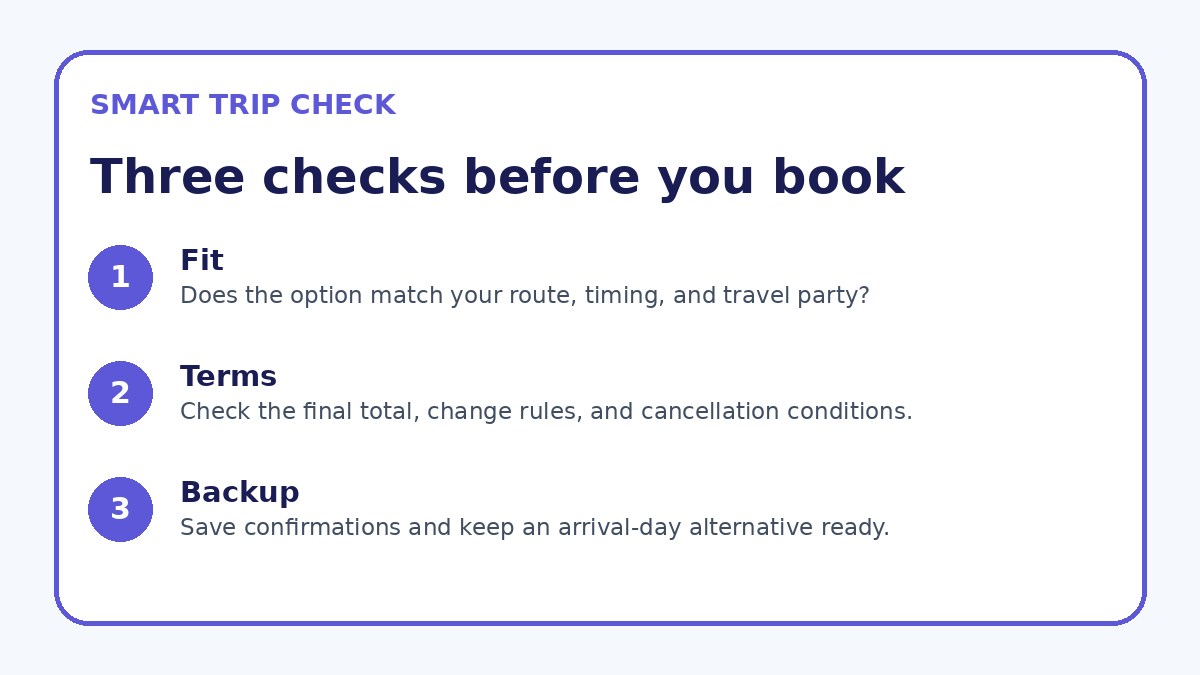
Recheck the complete itinerary
Confirm airports, connection handling, baggage, and change conditions before deciding.
Schedule fit and practical timing with extra luggage
Match departure and arrival times to your ground logistics: traveling with extra luggage often means earlier airport arrival for check-in and check-in drop times that may differ by carrier. Allow an extra 30–60 minutes beyond typical advice for check-in and security queues when you have multiple or oversized bags. If you plan to use public transit to reach the Paris airport or arrive from an early train, confirm the first services of the day and account for time to handle luggage between modes of transport. Avoid tight arrival windows in Istanbul if you rely on a timed transfer or late-hour public transport.
When choosing flight times, also consider how baggage handling staff schedules and night-time operations might affect service; late-night arrivals can sometimes complicate rechecking or immediate bag delivery. If you have a firm onward plan after arrival—such as a connecting domestic flight, cruise, or early hotel check-in—pick an itinerary that allows generous buffer time. Finally, ensure you know each carrier’s check-in and baggage drop deadlines and verify them on the airline’s final booking page before purchase.
Flight details to verify
- Record exact travel dates, passenger full names, passport details, and planned arrival times in Istanbul before searching fares so you can filter options quickly.
- On each flight’s booking page, confirm the checked baggage allowance (pieces, weight, and dimensions) for the fare class you’re selecting and screenshot the confirmation.
- Verify whether baggage is through-checked to your final destination or must be reclaimed during connections; if unclear, contact the operating carrier to confirm in writing.
- Compare total door-to-door travel time including recommended pre-departure check-in for extra luggage and add at least 45–90 minutes buffer for airport handling.
- Check minimum connection times and terminal transfer requirements for every connection; if any transfer requires exiting secure zones or changing airports, avoid tight layovers.
- Read the fare rules for change, cancellation, and baggage refund terms; buy a flexible fare or add baggage insurance if the itinerary’s connection risk is high.
Fare conditions: change, refund, and baggage fee implications
Fare conditions matter as much as the headline price when you travel with extra luggage. Low-cost fares often show attractive base prices but commonly exclude checked luggage and charge per-piece fees that can exceed a mid-tier fare’s included allowance. Carefully inspect whether the fare you select includes the baggage you need, how many pieces, and whether weight or size limits apply. When an itinerary mixes carriers with differing baggage rules, you may end up paying the highest-per-segment fee or managing separate bookings that don’t coordinate baggage handling.
Also check change and refund policies in the fare rules. Unexpected changes—delays, missed connections, or a need to reschedule—can become expensive if you must rebook and buy new baggage allowances. A more flexible fare that includes checked baggage and permits changes with a modest fee often reduces financial and logistical risk. On the airline’s final booking confirmation page, verify exact baggage inclusions, any promotional baggage offers, and how refunds or changes to the ticket would affect baggage purchases.
Flight Guide questions travelers ask
Should I always choose a direct flight from Paris to Istanbul when I have extra luggage?
Direct flights reduce the number of times checked bags are handled and lower the risk of delayed or misrouted luggage, which is a major advantage for travelers with many or heavy bags. However, direct options may carry fare classes that include less flexibility or come at a higher base price. Before deciding, compare the total cost of a direct ticket that includes the baggage you need with a connecting itinerary that has a lower base fare but charges for each checked bag. Also verify on the airline’s booking page whether any supposed direct option is truly non-stop and whether baggage is included in the displayed fare.
How much connection time should I leave when transferring with checked baggage?
Aim for more than the airline-stated minimum if you must collect and re-check luggage, and factor in terminal layout and potential security lines. A safe buffer for baggage-heavy travelers is often 90–120 minutes for international-to-international or international-to-domestic transfers that require reclaiming bags, especially if you need to change terminals or re-clear security. If the connection is within the same terminal and bags are through-checked, a shorter connection can be acceptable, but always confirm the transfer handling method on the carriers’ booking pages and leave extra time for delays or slower baggage conveyors.
What specific fare rules and booking details should I verify on the airline page before booking?
On the final booking page, confirm the fare class and its included checked baggage allowance (pieces and weight), rules for purchasing additional baggage in advance, and whether bags are through-checked for connections. Also read the change and cancellation policy, any fees for reissue, and whether a third-party or interline ticket affects baggage handling. If you’re using multiple carriers or a third-party site, confirm which airline is the operating carrier for each segment and verify baggage transfer procedures directly with that carrier. Trip.com can be used to compare current availability and conditions, but always verify final baggage and fare rules on the airline’s official booking confirmation page.
Final decision note
Traveling from Paris to Istanbul with extra luggage requires a deliberate pre-booking approach: decide first whether you prefer fewer transfers or a lower headline fare, then confirm baggage inclusions and connection handling before you purchase. Use the checklist to gather precise dates and traveler details, verify baggage allowances on the carrier’s final booking page, and compare total travel time and fare flexibility — not just the ticket price. For many luggage-heavy travelers, paying slightly more for a through-checked bag and a single-carrier itinerary reduces stress and unexpected fees. With these checks completed, you can book with confidence and focus on packing efficiently for the trip.
Continue planning
Check current options and final conditions
Use the provider page to confirm live availability, the final total, cancellation terms, and every condition that matters to your trip.
This evergreen planning guide was created with AI-assisted drafting and a structured quality review. It does not display live prices, schedules, availability, visa guidance, or provider rankings. Verify current details before booking. Some links are affiliate links; we may earn a commission at no additional cost to you.