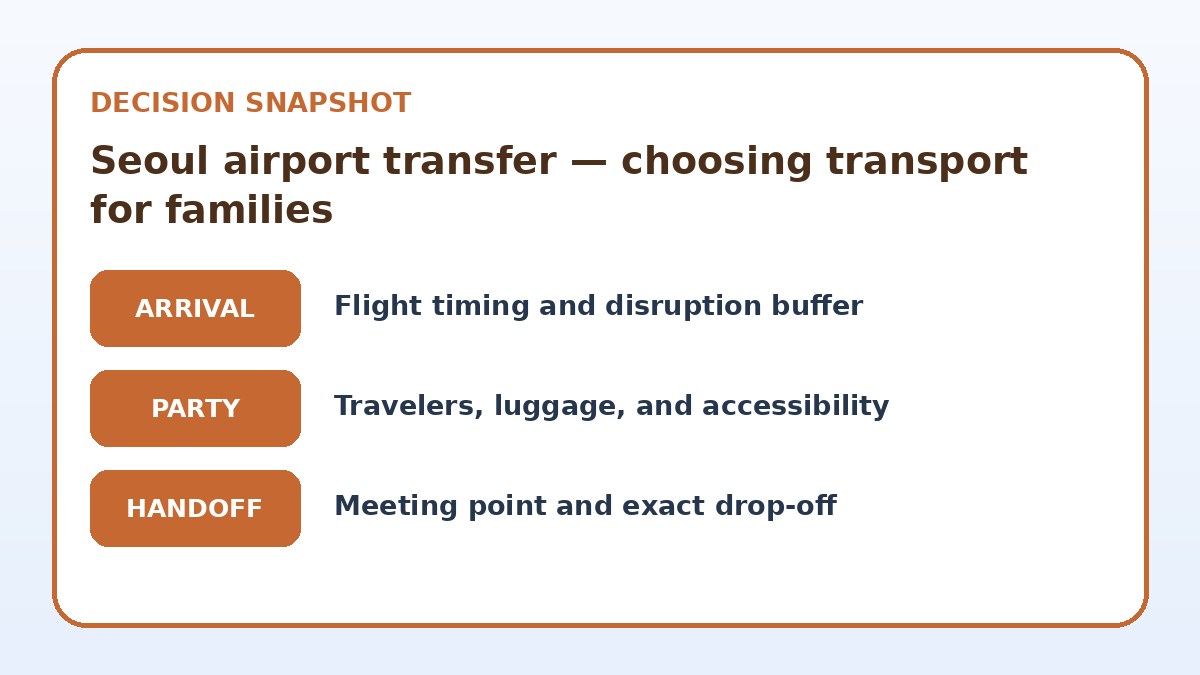
First-hour decision: get everyone, bags, and energy levels from the plane to your Seoul accommodation with the least hassle. For a small family group the core choice is simple: private direct transfer, shared shuttle, public transport, or taxis/ride-hail. Pick based on luggage size, child seats, late arrivals, and how close your stop is to main roads. Aim to have a confirmed pick-up or a clear contingency plan before you land. That single choice determines how smooth the first hour is — whether you queue for vehicles, walk between terminals, wait for baggage, or navigate Seoul’s transport links with tired children. This guide quickly lays out the practical tradeoffs, meeting-point clarity, and how to match the drop-off to your accommodation so you can book confidently or adapt if flights change.
Check options for your arrival details
Use your flight, luggage, party size, and accommodation address to compare current choices.
Luggage and party-size: fit the vehicle to your load
Before choosing an airport transfer in Seoul, tally everybody and every piece of luggage. Small groups with two adults and one child plus two large suitcases may fit a spacious sedan, but add a stroller, car seat, or additional luggage and you should look at estate cars, small vans, or a private minivan. Remember that bulky items like prams, souvenirs, or sports gear are often underestimated until you meet the driver. When you request a booking, state exact pieces and dimensions so the provider can allocate the correct vehicle.
If you need child restraints, confirm availability and whether they match your child’s size and safety expectations. Some providers include child seats for a fee; others expect you to bring one or rent locally. Also consider door-to-door service if your accommodation sits down narrow alleys or within a complex that shuttles guests from a nearby curbside. A clear vehicle match prevents last-minute juggling, extra taxi fares, or the stress of splitting your group across vehicles at arrival.
Arrival details to have ready
- Count everyone and each piece of luggage; note dimensions and bulky items before choosing vehicle size.
- Confirm child seat needs and request a seat type that fits your child’s weight and height from the provider.
- Save the driver’s written meeting-point instructions and phone number in your phone and screenshot them.
- Check the provider’s delay and cancellation policy and how they handle late or diverted flights.
- Send your exact accommodation address and any special drop-off instructions to the transfer company.
- Have a backup plan: install a reliable ride-hail app, locate the taxi rank, and keep local cash or payment options ready.
Late or disrupted arrivals: build flexible contingencies
Flights to Seoul can be delayed, diverted, or arrive late at night; plan a transfer that accepts changes without confusion. Opt for providers that state their rebooking window, how they handle delays, and the contact method for real-time adjustments. If reliability is uncertain, choose a service with a driver waiting window, or one allowing on-the-spot phone contact so a driver can be redirected if your plane is late. For very late arrivals, confirm whether drivers will wait past terminal closing or curb restrictions and what additional waiting charges may apply.
If your family prefers guaranteed pickup regardless of timing, a private transfer is the clearest option: the driver meets you and adjusts if necessary. Shared shuttles and some prebooked services may run on a fixed schedule and could leave later arrivals behind. As a fallback, know the taxi rank location and have a ride-hail app installed and funded; this gives you an immediate option if the planned transfer becomes unavailable. Keep your accommodation informed about arrival time changes so they can expect you if they offer their own pick-up.
Match the transfer to your arrival
| Arrival approach | Best for | Detail to verify |
|---|---|---|
| Private prebooked car or van | Families needing door-to-door service, child seats, and predictable pickup times. | Higher cost than shared options but offers the most convenience and direct routing to your accommodation. |
| Shared airport shuttle | Cost-conscious families with moderate luggage and flexible timing. | Cheaper per person but may involve waits, multiple stops, and limited space for bulky items. |
| Taxis or ride-hail apps | Flexible last-minute plans, small parties with limited luggage, or late arrivals. | Variable fares and vehicle size; you may need to request larger cars or multiple taxis for big groups. |
| Public transport (airport train and buses) | Families comfortable with transfers, light luggage, and saving money. | Lowest cost but requires navigating stations, stairs or elevators, and potentially crowded trains with kids. |
Make the meeting plan clear
Check the final pickup instructions, waiting conditions, and exact drop-off coverage.
Meeting-point clarity: reduce stress at the terminal
Meeting-point confusion adds minutes of stress when kids are tired. Confirm the exact exit, terminal number, and a physical landmark for the driver to use — for example, ‘Terminal 1, Exit 4 near the information desk’ — and save the provider’s written instructions and a photo of the meeting spot. If the provider gives a phone number, save it under a local contact name and test it before you leave the airport area. For families, agree a short rendezvous routine so everyone knows what to do if the group gets separated in the arrivals hall.
If the driver waits inside an arrivals lounge or at a specific curbside, check whether your airline’s arrivals gate affects where you emerge. International arrivals can funnel through passport control and a customs area, so estimate time for those steps and communicate an arrival time that factors in baggage claim. For shared transfers, confirm whether the driver will call or text you on arrival; for private transfers, ask whether the driver monitors flight status to adjust arrival time if your plane is early or late.
Drop-off fit: match the transfer to your Seoul accommodation
Not all vehicles can drive into inner courtyards, pedestrian streets, or hotel loading zones. When booking, provide the exact accommodation address, room access instructions, and any information about narrow lanes or security gates. If your hotel or guesthouse only accepts drop-offs at a nearby main road, ask how much walking or additional shuttle time that requires. For family groups with small children or heavy luggage, a short extra walk can feel long — prioritize door-to-door options if that walking would be difficult.
Consider where you will be dropped relative to public transport links if you plan to switch to buses or the subway later. A transfer that drops you next to a convenient subway line or bus hub can be valuable if you plan day trips by public transport. Finally, verify any building-specific drop-off rules directly with your accommodation and ask the transfer provider whether their driver can wait briefly while you get settled to avoid leaving anyone behind with bags.
Airport Transfer & Local Mobility questions travelers ask
Should I prebook a transfer to central Seoul or wait to decide after landing?
Prebooking gives clarity for the first hour and is useful if you travel with young children, lots of luggage, or arrive late. It reduces stress and ensures an appropriate vehicle and child seats when needed. Waiting can save money if your flight changes and you want to shop around on arrival, but it adds time spent queuing and coordinating at the terminal. If you prefer flexibility, prebook a refundable option or choose a service that updates its pickup time based on flight status and offers clear rebooking instructions.
How do I know if my accommodation can accept a curbside drop-off?
Contact your hotel, guesthouse, or apartment host before booking the transfer and ask for precise arrival instructions: the best curbside point, any access codes, and whether the driver can enter a courtyard. If the property is on a narrow street or within a complex, request the closest possible official drop-off spot and note how much walking or luggage-carrying that requires. Share those details with your transfer provider so the driver can plan the route and vehicle choice, and confirm whether short waiting is permitted during unloading.
What should I verify on the provider’s booking page before payment?
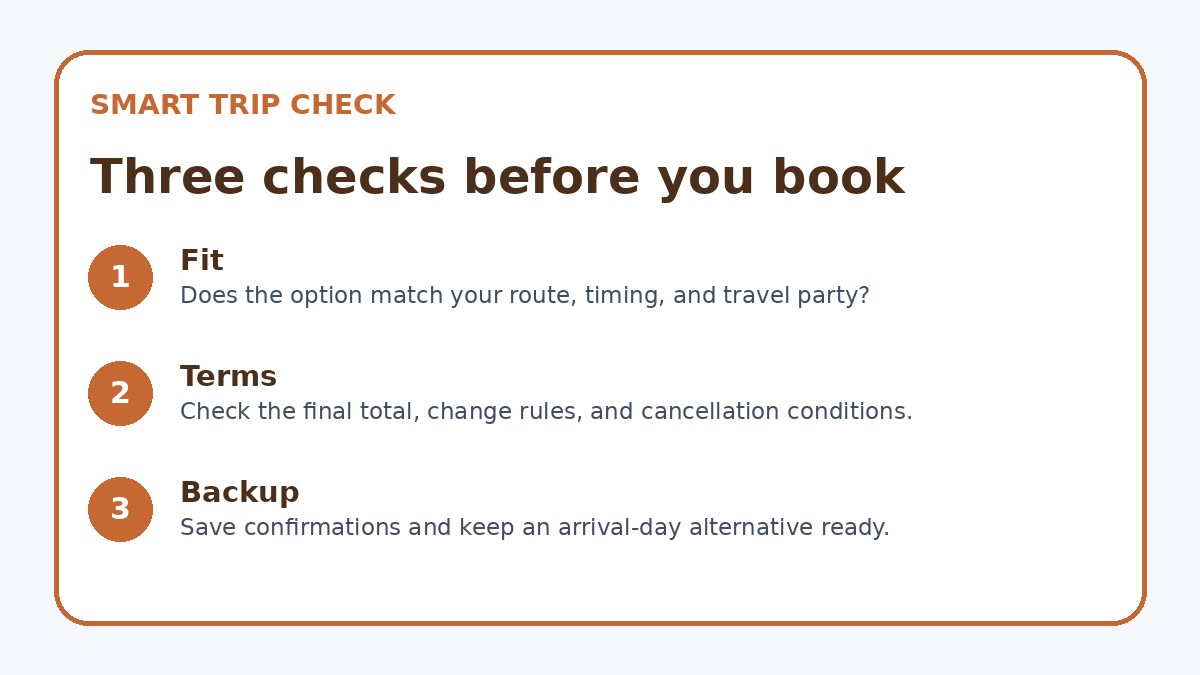
Check where exactly the driver will meet you (terminal/exit), the maximum waiting time, rebooking or delay policies, included services (child seats, tolls, parking), and the vehicle type allocated for your group. Verify payment methods, cancellation rules, and contact details for day-of-arrival communication. If anything is unclear, message the provider directly to get written confirmation of pickup procedures and what happens if your flight changes so you have a clear plan on landing.
Final decision note
For families arriving in Seoul, the most practical choice depends on luggage, child-seat needs, and how much you value door-to-door simplicity. Private transfers give the clearest, least stressful first hour by handling multiple bags, child restraints, and direct drop-off at your accommodation. If you’re comfortable with some walking and shared schedules, shuttles and public transport save money but require more coordination. Whatever you pick, confirm meeting-point details, vehicle size, and delay policies before you travel, and keep a ride-hail app and local contact options ready as a backup. A little preparation makes the first hour in Seoul calm and manageable for everyone.
Continue planning
Check current options and final conditions
Use the provider page to confirm live availability, the final total, cancellation terms, and every condition that matters to your trip.
This evergreen planning guide was created with AI-assisted drafting and a structured quality review. It does not display live prices, schedules, availability, visa guidance, or provider rankings. Verify current details before booking. Some links are affiliate links; we may earn a commission at no additional cost to you.