Practical answer up front: choose the option that fits your door-to-door needs—rail if you prioritize comfort and city-center stations, coach for lower-cost direct city-to-city legs, driving for the most flexible multi-stop itinerary, or a planned combination to balance time and convenience. For first-time visitors, a multi-city ground-transport plan means mapping not just the ride but how you get to terminals, handle luggage, move between neighborhoods, and recover from delays. This article helps you pick between rail, coach, ferry segments where available, or self-drive; evaluates terminal fit, luggage friction, scheduling flexibility, and simple disruption backups; and gives a checklist and FAQs so you can book confidently and realistically.
Choosing between rail, coach, ferry, and driving
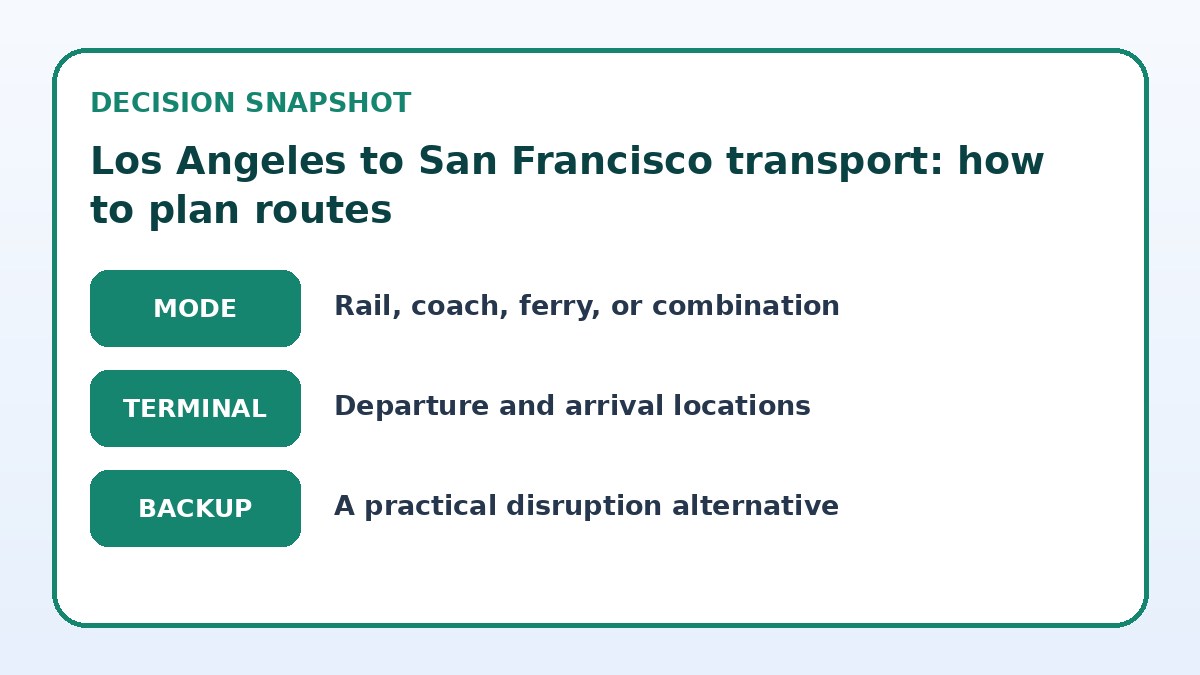
Start by matching mode strengths to your trip goals. Rail tends to be comfortable and places you in central stations with straightforward public-transit connections; coaches often run direct city-to-city routes and can be more budget-friendly; ferries are only relevant for parts of the Bay Area and should be considered when they reduce transfers; driving gives the most control for multi-stop sightseeing and door-to-door flexibility but shifts navigation, parking, and fatigue onto you. Think beyond the advertised travel leg: how you get to the station or terminal matters as much as the ride itself.
For a multi-city plan, a hybrid approach can work well: drive or take regional transport to a scenic stop, then use coach or rail between major cities to avoid parking hassles. Compare door-to-door time and effort rather than only in-vehicle duration—include transfer walks, waiting time, and time to retrieve or stow luggage. If a ferry fits into your route, treat it like a connector that may simplify transfers but also adds fixed departure times that reduce flexibility.
Choose the end-to-end journey plan
| Journey approach | Best for | Friction to check |
|---|---|---|
| Drive yourself (rental or private car) | Travelers wanting the most control, flexible sightseeing, and door-to-door routing between multiple stops. | Adds navigation, parking, fuel, and potential traffic delays; requires planning parking and city entry for each stop. |
| Intercity rail-focused plan | Those prioritizing comfort, city-center stations, and simpler luggage handling with fewer road-mile uncertainties. | Station schedules may be less frequent for some connections and final drop-off might require additional local transit or short rides. |
| Coach-focused plan | Budget-minded travelers who want direct point-to-point lines and fewer changes between smaller cities. | Coaches can have stricter luggage rules and terminals that require extra walking or transfers to reach lodging. |
| Hybrid plan (mix driving, rail, coach, ferry) | Travelers who want flexibility to sightsee, minimize city driving, and use fast intercity legs where practical. | Requires more coordination across providers and careful buffer management to avoid missed connections. |
Check live intercity options
Look beyond the ride itself and compare terminals, transfers, luggage, and arrival fit.
Terminal fit and luggage/transfer friction
Terminal fit means not only which station a service uses, but how easy it is to reach your lodging from there. Major rail terminals typically sit near transit hubs, while intercity coach stations can be at bus depots or curbside stops that vary by operator. Before booking, map the final drop-off to your hotel, rental, or pick-up point to estimate last-mile options: transit, ride-hail, shuttle, or walking. If your itinerary includes multiple cities or suburban stops, ensure you have a clear plan for each last-mile leg.
Luggage rules and handling differ widely between modes. Trains often allow more carry-on and easier luggage storage; coaches may have strict size or weight limits and require external baggage check-in; driving removes carrier limits but requires thought about trunk space and how you move bulky bags between stops. When planning transfers, factor in the time to collect and re-check luggage, and avoid tight connections that force running between platforms, bus bays, or long terminal corridors.
Timing flexibility and building buffer time
Decide how tight you want your schedule. If you need strict arrival times (meetings, reservations), prefer options with more frequent departures or flexible tickets. Trains and coaches have differing frequencies and patterns; some services run multiple times a day while others are less frequent. For multi-city travel, build buffer time for each connection—longer if you rely on coach terminals where boarding and luggage retrieval can take more time, or if you plan to travel during peak traffic or holiday periods.
Use buffer time strategically: allow longer windows for the first and last legs of the day, and consider scheduling an overnight stop instead of a same-day sprint across long distances. If you’re driving, account for traffic congestion windows and plan rest breaks; if you rely on public operators, check the spacing of available departures so you can swap to a later service without severe disruption.
Compare the practical alternatives
Use the final page to confirm what is actually offered on your dates and save a workable fallback.
Intercity travel checklist
- Map door-to-door times for each planned leg, including time to reach the departure terminal and time from arrival terminal to your accommodation.
- Confirm luggage allowances and handling procedures on the final booking page of each operator before you commit to a service.
- Choose at least one realistic alternate for every leg (later departure, alternative station, or rental extension) and note how to rebook.
- Pick accommodations that reduce last-mile complexity—prefer locations with easy public transit or straightforward ride-hail access from your terminal.
- Allocate buffer time for urban traffic, boarding procedures, and luggage transfer—avoid back-to-back tight connections.
- Save confirmations and directions offline, and screenshot key pickup points, platform numbers, or terminal entrances in case of poor cell service.
Disruption backups and practical booking tips
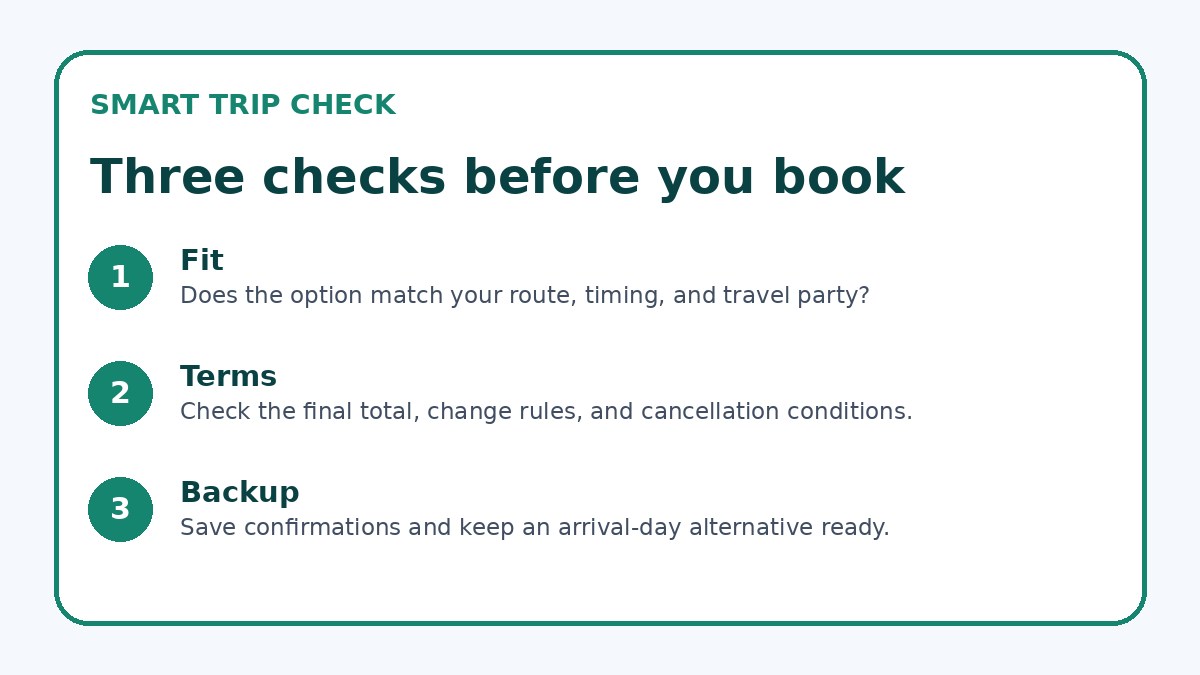
Every multi-leg ground plan needs a simple disruption backup. Identify one realistic alternative for each leg: a later train or coach, a different nearby station, or a rental-day extension. When you book, verify cancellation and change policies on the provider’s final booking page—know whether you can move to another departure, request a voucher, or get a refund. Consider buying flexible tickets or reserving refundable hotel nights if your itinerary includes tight or weather-sensitive connections.
Practical booking tips: group your reservations so contact details and arrival times are consistent across services; store key confirmations offline or in a single app; and verify station entrance locations and platform procedures before travel. Trip.com can be used as one place to compare current availability and conditions, but always confirm baggage rules, boarding requirements, and transfer times on the operator’s official booking pages before you finalize plans.
Rail & Intercity Transport questions travelers ask
Should I choose driving or public transport if I want to stop at multiple coastal towns between Los Angeles and San Francisco?
If your plan centers on flexible sightseeing with multiple short stops, driving or a series of local day tours gives the most freedom to linger where you like. However, driving increases time spent on navigation, parking, and searching for services; if you prefer to relax while moving between larger towns, a hybrid model works: drive to a scenic stretch, park for the day or overnight, then use rail or coach for longer intercity legs to avoid city parking and traffic. Think through parking availability in towns you’ll visit and whether you want the responsibility of driving for the whole trip.
How much buffer time should I add between connections when planning a multi-leg ground journey?
Buffer needs vary by mode and location. For urban-to-urban connections where you must change terminals or modes, allow at least an hour plus extra time for baggage retrieval and transit or ride-hail wait times. If you’re switching from driving to a scheduled coach or train, add parking and check-in time. For less frequent services or during busy travel periods, increase your buffer. The goal is to avoid stress and missed connections; when in doubt, pick a later departure or plan an overnight stop to keep your schedule flexible.
What should I verify on operator booking pages before finalizing a ground-transport plan?
On each operator’s official booking page, check departure and arrival locations (exact station or curbside stop), baggage rules, boarding and check-in procedures, change and cancellation policies, and whether reservations or seat assignments are required. Also confirm whether there are additional steps—such as printed tickets, mobile boarding passes, or mandatory check-in windows—that affect transfer timings. If your itinerary includes a ferry or local transit leg, verify the schedules for that specific day since these are often less frequent and can determine connection feasibility.
Final decision note
For first-time visitors planning Los Angeles to San Francisco transport, the practical choice comes down to your priorities: control and sightseeing (drive), central stations and comfort (rail), or budget-friendly direct legs (coach). Build a multi-city plan that maps door-to-door time, luggage handling, and transfer complexity as much as the travel leg itself. Always prepare a disruption backup for each leg and confirm ticketing, baggage, and boarding rules on operators’ final booking pages before you commit. With a clear checklist and realistic buffers, you’ll turn a long corridor into a manageable, enjoyable sequence of trips.
Continue planning
Check current options and final conditions
Use the provider page to confirm live availability, the final total, cancellation terms, and every condition that matters to your trip.
This evergreen planning guide was created with AI-assisted drafting and a structured quality review. It does not display live prices, schedules, availability, visa guidance, or provider rankings. Verify current details before booking. Some links are affiliate links; we may earn a commission at no additional cost to you.