Short answer: for many family itineraries inside Fukuoka city a rental is unnecessary; for day trips to rural Kyushu coastlines, onsen towns, or national parks with limited public transit, a car can genuinely improve convenience. This guide helps families decide, focusing on what drives value (destinations and schedules), where rental friction shows up (airport pickup, parking, returning the vehicle), the insurance and coverage language to check, and a solid non-driving fallback you can rely on. I’ll flag the practical tradeoffs: flexibility versus stress, extra seats versus navigating unfamiliar roads with children, and fixed costs versus the simplicity of trains and buses. Use this to decide before booking and to know exactly what to verify on the rental company’s final page, including coverage limits, additional driver rules, child-seat policy, fuel and mileage terms, airport surcharges, and return requirements.
Route value: where driving actually improves a family itinerary
Driving creates the most value when your planned destinations are outside frequent rail and bus corridors. Examples include seaside towns, remote onsen areas, or national parks where public transport is infrequent and last-mile connections are costly in time or taxi fares. A car lets you set your own schedule around naps and meals, carry a stroller without juggling trains, and combine multiple small stops in a day—comfort factors that matter disproportionately for families.
Contrast that with city-focused plans. If your stay centers on Hakata, Tenjin, and nearby attractions reachable by subway or short taxi rides, the advantages of a rental shrink. Factor in parking availability and costs near hotels and attractions, and the hassle of finding appropriate child seats. Map the distances and typical transfer times for each day: if most legs line up with frequent rail service, you probably won’t recoup the rental friction with saved time or convenience.
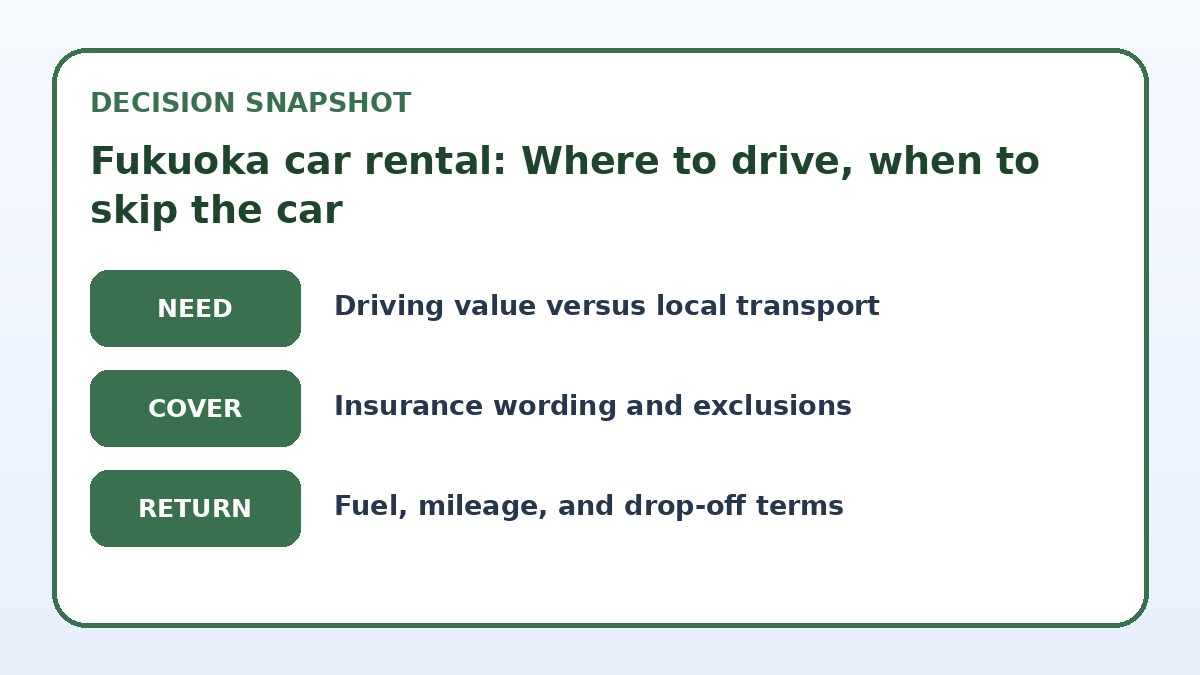
Decide whether driving earns its place
| Mobility strategy | Best for | Cost or friction to check |
|---|---|---|
| Rent a car for the whole stay | Families planning multiple rural excursions and flexible day schedules | Greater convenience and privacy but added parking, navigation, and full-rental insurance complexity |
| Use public transit and taxis in the city; rent only for certain days | Families splitting city sightseeing with a couple of out-of-town day trips | Lower overall hassle and cost but requires arranging short-term pickups and one-way rental rules |
| Rely solely on trains, buses, and station-area hotels | Families staying mainly in Fukuoka city and preferring minimal logistics | Simpler travel and no driving stress, but limits access to remote destinations and flexible detours |
| Book private transfers or guided day tours for specific outings | Families who prefer door-to-door service without driving or parking concerns | Convenient and predictable schedules but less spontaneous freedom and potentially fixed pickup times |
Check live rental choices only after the route test
Use the exact driver, dates, pickup point, and return plan to compare current conditions.
Insurance wording and coverage: what families must verify
Rental insurance language can be dense, but three points matter most for families: liability limits (how much they cover other parties), collision damage waivers (what you pay for damage), and the policy for child-seat incidents. Ask whether the standard rate includes CDW and whether there are per-incident deductibles. Also confirm whether roadside assistance is included and how it is dispatched—phone-only instructions aren’t ideal with children and limited roaming data.
If the rental offers additional products (zero-excess, extra liability, personal accident cover), read the final booking page to confirm exactly what is added. Verify whether third-party travel insurance you already have duplicates coverage, and check exclusions such as off-road driving or unpaved roads, which can affect claims. Keep records: photos of the vehicle at pickup and return and the signed condition report reduce disputes—critical when you’re juggling kids and don’t want surprise charges later.
Compare the full rental conditions
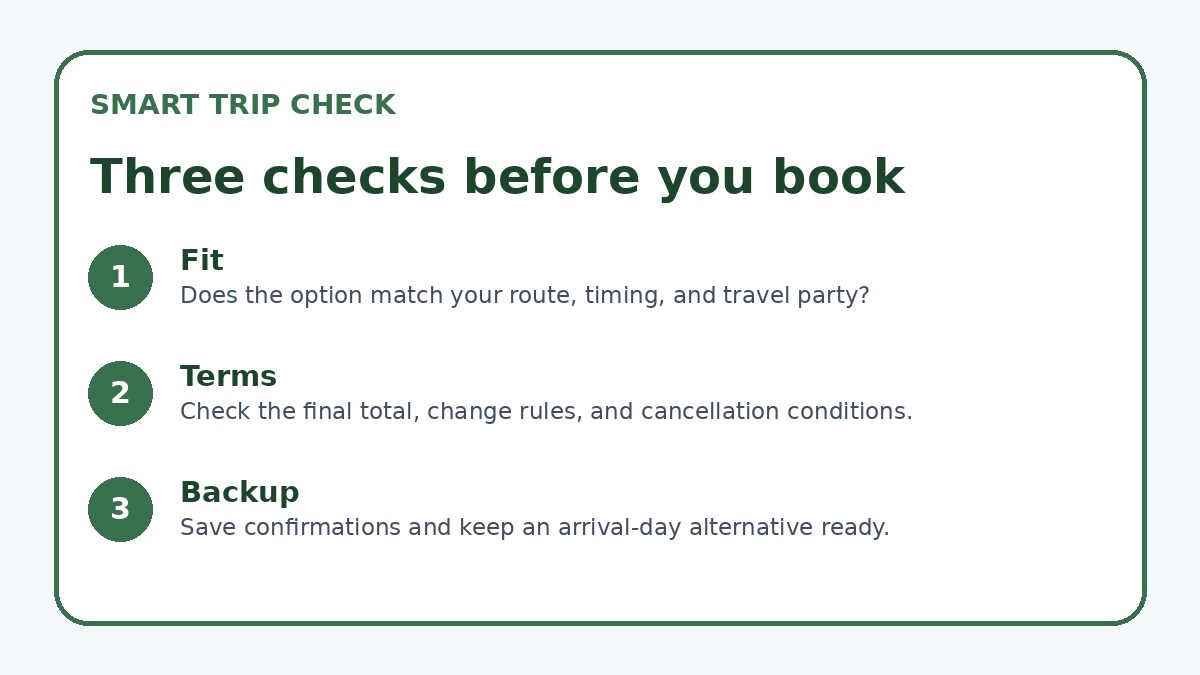
Confirm insurance wording, exclusions, deposit, fuel, mileage, and return terms on the final page.
Pickup and return friction: practical pains that affect families
Airport pickups can be convenient but sometimes involve shuttle transfers, long queues, or paperwork lines that tire little ones. Check whether the rental counter is inside the terminal, whether there is a child-seat rental option (and its age/weight suitability), and the operator’s policy for out-of-hours returns. Returning a car late or to a different location often triggers fees; families should plan realistic return windows, allowing buffer time for last-minute delays at the airport or train station.
Parking and narrow urban roads are another hidden cost. Many downtown hotels have limited on-site parking or strict height limits. Ask your accommodation about reserved spaces and daily rates and whether you can pre-book. Also check whether payment systems are user-friendly—cashless tolls or ETC devices in Japan may require pre-registration. Small inconveniences like repeated parking garage transfers or tight multi-story parking ramps can turn a family advantage into a logistical headache.
Car rental terms to verify
- List every destination and mark whether regular rail or bus services run there; note transfer counts and approximate travel times.
- Confirm child-seat availability and rules with the rental company and your hotel before booking, or plan to bring an approved seat.
- Read the final rental booking page for deductible amounts, collision damage waiver inclusions, roadside assistance contact method, and excluded uses.
- Ask your accommodation about parking capacity, vehicle height limits, daily parking fees, and whether they will assist with unloading.
- Check pickup and return windows at your chosen rental location and whether after-hours returns or airport shuttles add fees or extra forms.
- Prepare photo documentation of the vehicle condition at pickup and again at return; save the signed inspection report and all rental receipts.
Non-driving fallback: how to plan a smooth car-free family trip
A reliable fallback makes the decision easier: plan each dayable objective around public transit timetables and have taxi or private-transfer options for late-night or rural legs. Public transport in Fukuoka city is generally frequent and stroller-friendly at main stations; use a pocket schedule and apps for quick train comparisons. For a family, book accommodations near a major station to reduce transfers and minimize walking with luggage and children.
For day trips where transit is awkward, identify a local tour, scheduled shuttle, or single-point taxi transfer as your backup. Keep a list of taxi firms and their estimated response times, and confirm whether taxis accept child seats or can carry a collapsed stroller. If you still want the flexibility of a car for one or two days, consider hourly van rentals or one-way hires from a reputable company, verifying return policies and whether you're allowed to cross prefectural borders.
Car Rental & Road Trip questions travelers ask
Is driving in Fukuoka difficult for visitors with children?
Driving in and around Fukuoka is manageable for many visitors, but difficulties arise from unfamiliar signage, narrow urban streets, and parking constraints. With children, frequent stops and managing child seats add complexity. If you’re comfortable with GPS navigation and confident about parking near hotels and attractions, a rental can work well. If not, plan city days by public transit and reserve a rental only for rural legs; that reduces time spent driving in tight city conditions and keeps family logistics simpler.
How do I verify insurance and extra-driver rules before I book?
Always read the rental company’s final booking page carefully: look for deductible amounts, what the collision damage waiver covers, included liability limits, and whether roadside assistance is automatic and what phone number to call. Verify extra-driver charges and whether additional drivers must present their license at pickup. If you have a credit card that offers rental coverage, check exclusions and how to claim. Keep screenshots or PDFs of the full terms and have the rental agent confirm any verbal exceptions in writing at pickup.
What’s the easiest non-driving strategy for families who still want flexibility?
The easiest approach is station-centric planning: book accommodation next to Hakata or Tenjin station, use trains and buses for city sights, and reserve taxis or private transfers for late runs or low-frequency routes. For one-off rural trips, book a guided day tour or a one-way car hire that allows easy return to a station. Keep a list of local taxi numbers and small-van services that accept strollers, and pack a compact stroller to reduce transfer friction. This strategy minimizes driving while preserving options for needs that arise mid-trip.
Final decision note
Deciding whether a Fukuoka car rental fits your family trip comes down to destinations and stress tolerance. If your itinerary reaches beyond well-served rail corridors—coastal villages, mountainous parks, or dispersed onsen towns—a car often delivers real convenience for kids and flexible schedules. If you’ll remain city-centered, public transport, taxis, and station-area hotels usually make family life easier and avoid parking and insurance headaches. Before you click confirm, map your daily legs, verify child-seat and insurance wording on the rental’s final booking page, and plan a clear non-driving fallback. With those checks, you’ll choose the approach that balances family comfort, cost, and how much driving you want on holiday.
Continue planning
Check current options and final conditions
Use the provider page to confirm live availability, the final total, cancellation terms, and every condition that matters to your trip.
This evergreen planning guide was created with AI-assisted drafting and a structured quality review. It does not display live prices, schedules, availability, visa guidance, or provider rankings. Verify current details before booking. Some links are affiliate links; we may earn a commission at no additional cost to you.