If you and your partner want to pick the best area to stay in Sydney, start by matching how you plan to spend most of your time: sightseeing and iconic harbour views, evening dining and nightlife, relaxed beach days, or a quieter boutique neighbourhood with easy transit. Each option shapes where you’ll sleep, the morning and evening routes you’ll take, and what kind of room or property will feel most comfortable. This guide gives the practical short answer up front and then unpacks daily-route friction, room and party needs, and the booking details you should verify before committing. By the end you’ll be able to shortlist one neighbourhood and know what to check on the hotel’s final booking page (transport access, cancellation terms, and whether the room layout suits two people).

Check live stays in the areas that fit
Use your dates and party size to compare current rooms after you narrow the neighborhood fit.
Neighbourhood fit: match your trip mood to an area
Decide whether your priority is landmark proximity, evening dining, beach time, or quieter streets where you can linger. If seeing the Opera House and walking the Harbour Bridge loom largest, staying in the CBD, Circular Quay, or The Rocks puts iconic views and short walks on your daily menu. Those areas are compact and highly walkable for daytime sightseeing but draw strong daytime foot traffic and tourist-centric services that shape the vibe.
Couples who prefer long dinners, cafés, and a lively bar scene should lean to inner-city neighbourhoods like Surry Hills, Darlinghurst, and Newtown — these spots offer diverse food choices and a social atmosphere. Beach lovers will prioritise Bondi, Tamarama, or Coogee for morning swims and coastal trails; these areas deliver oceanfront leisure but require more planning for museum visits or harbour cruises. For a quieter, local feel choose Paddington or Balmain, with boutique shopping and calmer evenings; you’ll trade immediate icon views for atmosphere and slower pace.
Choose an area-selection strategy
| Area approach | Best for | Tradeoff to check |
|---|---|---|
| Harbour-centred (CBD/Circular Quay) | Couples prioritising iconic views and short walks to major sights | Higher foot traffic, busier daytime crowds, and less peaceful evenings in tourist zones |
| Food and nightlife (Surry Hills/Darlinghurst) | Couples who want dining variety and a lively bar scene within walking distance | More late-night noise and potentially longer trips to harbour attractions |
| Beach-focused (Bondi/Coogee) | Couples who prioritise morning swims, coastal walks, and relaxed beach days | Longer commutes to central cultural sites and ferry terminals |
| Boutique and quiet (Paddington/Balmain) | Couples seeking local character, independent shops, and calmer evenings | Fewer late-night transport options and less immediate access to major landmarks |
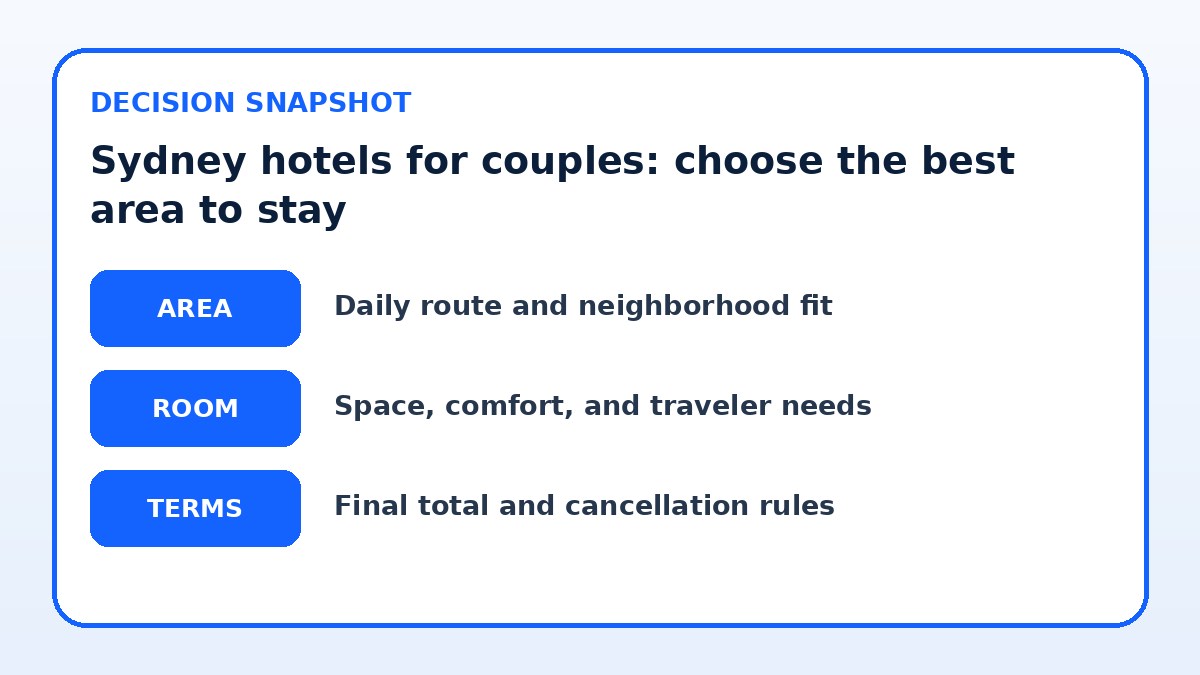
Daily-route friction: how movement shapes your days
Measure daily friction by counting trips: how often will you cross the harbour, use the airport link, or head to the beach? Staying by Circular Quay or Wynyard cuts time to ferries and many harbour attractions, reducing transfer hassles between major sights. However, heavy pedestrian flows, tour groups, and event crowds can make short walks slower during peak hours; expect easy access at the cost of crowded sidewalks and limited quiet pockets during the day.
If your plans include many evening activities, prioritise neighbourhoods with good night transport options. Surry Hills and Darlinghurst have many restaurants and bars within walking distance, but late-night public transport may be less frequent than in the CBD; consider rideshare availability or proximity to a taxi rank when booking. Beach stays mean more frequent transfers into town for galleries or shows — map how often you’ll need that commute and decide if early-morning beach time is worth the extra transit.
Now compare like with like
Keep the same dates, guests, room needs, and cancellation preferences while you compare the final choices.
Room and party needs: choosing the right accommodation type
Couples should pick room types that suit their rhythm: if you plan long breakfasts, a suite with a seating area or an apartment with a kitchenette can make mornings more private and flexible. Many central hotels advertise harbour or city views that are romantic for a short break; when viewing listings, confirm the exact room layout and whether windows face the harbour or a busy street, since noise and light will influence sleep quality. Ask the booking page or property for bed configuration, space, and whether the room opens onto quiet courtyards or busy roads.
If you prefer boutique charm over hotel chains, small guesthouses and serviced apartments in Paddington or Balmain often offer larger living spaces and independent character. Beachside properties may be compact and focused on location rather than spacious interiors, so check photos and dimensions if space matters. Wherever you look, verify special requests such as early check-in, late checkout, and whether the property offers luggage storage so you can plan arrival and departure days without stress.

Hotel booking check before payment
- Pick one neighbourhood that matches your primary activity (harbour sights, dining, beach, or quiet streets) before you search hotels.
- Confirm bed configuration and room size photos match your needs for comfort and any special requests.
- Read cancellation, change, and prepayment terms on the hotel’s final booking page before entering payment details.
- Check the hotel’s stated nearest public transport stops and note typical evening service levels for your travel dates.
- Ask the property if the listed view or amenity applies to your booked room category rather than the property in general.
- Plan arrival logistics: verify luggage storage, early check-in or late-checkout options, and airport transfer choices.
Booking terms and what to verify before reserving
Before you press book, verify cancellation and change policies directly on the supplier’s final booking page and confirm any non-refundable terms. Don’t assume flexibility — details like how far in advance you can cancel, whether prepayment is required, or if there are penalties for changing dates vary by property. Also check what’s included in the rate: breakfast, Wi‑Fi, and any resort or service charges. If the listing mentions views or specific amenities, confirm those are for the room category you’re selecting and not just the property in general.
Check transport details: which nearest public transport stops serve the hotel, whether taxis or ride-share pick-up points are nearby, and how you’ll reach the airport from the area you choose. If trip logistics are important — for example, leaving early for a harbour cruise or needing late-night transit after a show — look for explicit notes about 24-hour reception, luggage holding, or late arrival policies. For availability comparisons, you can optionally check Trip.com to see current options, but always verify final terms on the hotel’s own booking page.
Hotel Guide questions travelers ask
Which Sydney area is best for couples who want romantic harbour views?
For romantic harbour views, prioritise stays in the CBD, Circular Quay, The Rocks, or parts of Barangaroo that offer direct sightlines to the water. These neighbourhoods put iconic landmarks within walking distance, making sunrise or sunset strolls convenient. When comparing rooms, confirm the listing actually specifies a harbour-view room rather than a standard room at the property, and review recent guest photos or room descriptions on the hotel’s final booking page to verify the view and any potential noise from nearby streets or events.
Is it better to stay near the beach or in the city if we only have three nights?
If you have three nights, choose based on what you want to prioritize: stay near the beach for relaxed mornings and coastal walks, knowing you’ll spend at least one day commuting into town for museums and harbour experiences. If seeing the Opera House, Harbour Bridge walks, and central dining matters more, pick a central neighbourhood to minimise transit time. Either choice works; shortlist one area first, then pick a hotel that reduces daily travel for your chosen activities and confirms transport links for any day trips you plan.
How do we decide between a boutique guesthouse and a chain hotel for a couples’ stay?
Decide by balancing character against consistency. Boutique guesthouses often provide charming, intimate settings and larger living spaces, which many couples prefer for a quieter, personalised stay. Chain hotels typically offer consistent service, clear policies, and sometimes better late-night reception services. When choosing, verify on the booking page whether the boutique property offers 24-hour reception, breakfast service, and flexible cancellation options, and check room photos and descriptions carefully to ensure the space and amenities meet your expectations.
Final decision note
Shortlist an area first: pick harbour, nightlife, beach, or boutique character according to how you want to spend your days and evenings. That decision instantly narrows the kinds of hotels that will fit your rhythm and the daily friction you’ll accept — fewer transfers but more crowds for harbour stays, or calmer neighborhoods with extra commuting for beach or boutique choices. Once you have the area, compare room layouts, bed configurations, and quiet-or-view tradeoffs, and then verify cancellation, prepayment, and transport details on the hotel’s final booking page. With an area selected and a small checklist in hand, you’ll be positioned to compare live inventory confidently and choose a room that suits both partners’ needs.
Continue planning
Check current options and final conditions
Use the provider page to confirm live availability, the final total, cancellation terms, and every condition that matters to your trip.
This evergreen planning guide was created with AI-assisted drafting and a structured quality review. It does not display live prices, schedules, availability, visa guidance, or provider rankings. Verify current details before booking. Some links are affiliate links; we may earn a commission at no additional cost to you.