The practical answer: prioritize a rail-focused journey if you value productivity and predictable city-center terminals; consider coach or mixed options when cost control and flexible timing matter more. For business travelers the travel day is about more than getting between stations — it’s about seamless transfers, reliable mobile connectivity, appropriate luggage strategy, and a simple disruption plan so meetings stay on track. Before you book, compare actual door-to-door times (hotel or office to final meeting point), not just on-the-rail durations. Check transfer friction at both ends — for example, which station has the easiest taxi or tram links, and whether your itinerary requires an awkward cross-town change. Finally, confirm baggage rules, seat-reservation policies, and the provider’s rebooking/ refund process on the operator’s final booking page or an aggregator like Trip.com if you want a quick snapshot.

Choosing between train, coach, ferry or mixed routes
Start by ranking what matters for this trip: uninterrupted work time, arrival location convenience, cost, or schedule flexibility. Trains typically win for in-seat workspace, power sockets and city-center terminals — valuable for a business traveler who needs to join calls or prepare documents. Coaches can be cheaper and operate more frequently from peripheral hubs, but they usually add variability in travel time and may use terminals further from central business districts. Ferries are rarely relevant on the Amsterdam–Berlin route for direct travel day planning; consider them only if combining scenic or multi-leg journeys where a ferry segment is necessary.
A mixed approach — coach to a major rail hub, then train onward — can balance savings and comfort. When comparing options, calculate door-to-door time: include transit from your hotel to the departure terminal, minimum recommended check-in or boarding buffer, and onward transfer time at the destination. Avoid treating the intercity leg in isolation. If you have fixed meeting times in Berlin, simulate the entire chain of steps on the travel day so you can see whether a perceived faster train still leaves you short on transfer time at either end.
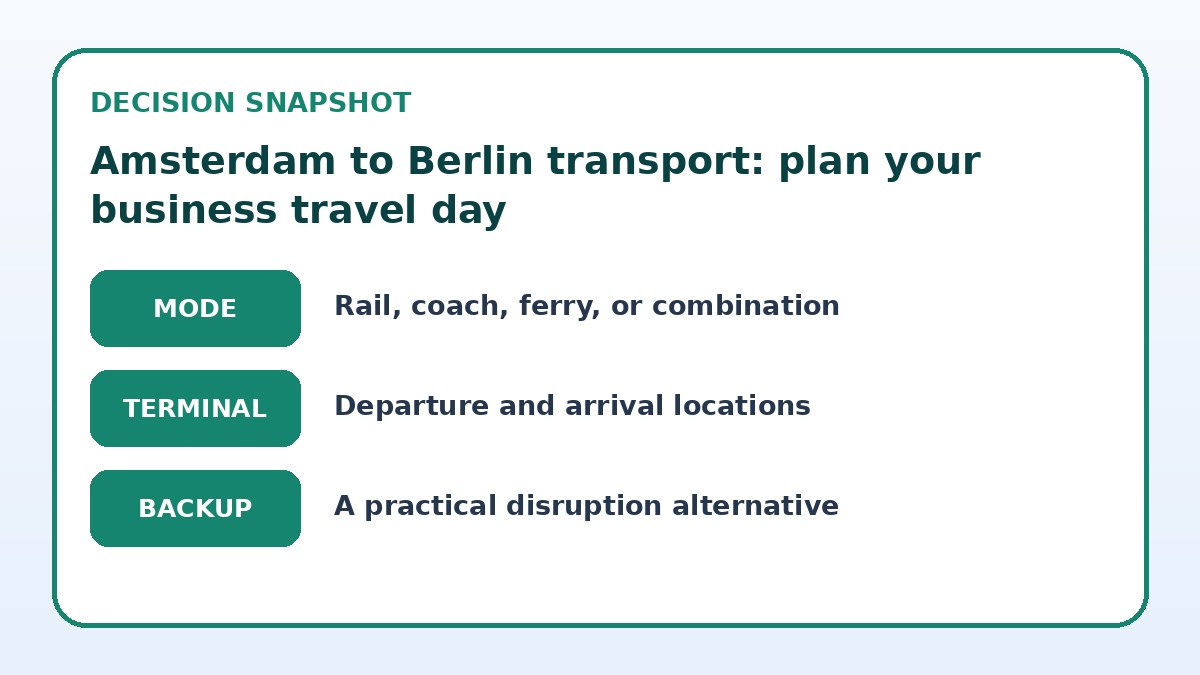
Choose the end-to-end journey plan
| Journey approach | Best for | Friction to check |
|---|---|---|
| Rail-focused single-operator booking | Travelers who need in-seat workspace and central arrivals. | Often offers the most comfortable work environment but may require earlier booking and seat reservations for peak reliability. |
| Coach-first budget planning | Cost-sensitive travelers willing to trade some time predictability for lower fares. | Longer or more variable door-to-door times and potentially less convenient terminal locations near business districts. |
| Mixed coach-plus-train combinations | Those balancing cost and convenience, using a coach to reach a faster rail corridor. | Adds a transfer point and potential luggage handling, increasing disruption risk if one leg is delayed. |
| Flexible multi-option booking with disruption buffer | Critical meetings where reliability matters above all else. | May cost more due to refundable or flexible fares and possibly extra overnight accommodations as insurance. |
Check live intercity options
Look beyond the ride itself and compare terminals, transfers, luggage, and arrival fit.
Terminal fit and luggage/transfer friction
Terminal fit is critical for business trips. Identify which Amsterdam departure terminal (station or coach terminal) and which Berlin arrival point match your end address. Some stations are much easier to reach by tram, taxi, or rideshare, while others require a longer local transfer. Luggage matters: a single wheeled carry-on plus a laptop bag optimizes quick exit and reduces the risk of delayed baggage. If an itinerary forces checked luggage, account for collection time and possible waits, and consider whether courier or hotel transfers are worthwhile for tight schedules.
Assess transfer friction for both ends: is there an escalator-free route for carrying bags, elevator access, and clear signage? If you expect to commute to a meeting within 45 minutes of arrival, choose an itinerary that uses the most convenient Berlin terminal even if it seems marginally longer in travel time. Also verify station amenities you rely on — secure luggage rooms, lounges, or fast-track services — by checking the operator or station pages before finalizing. Those small conveniences can turn a stressful transfer into a smooth handoff to your next appointment.
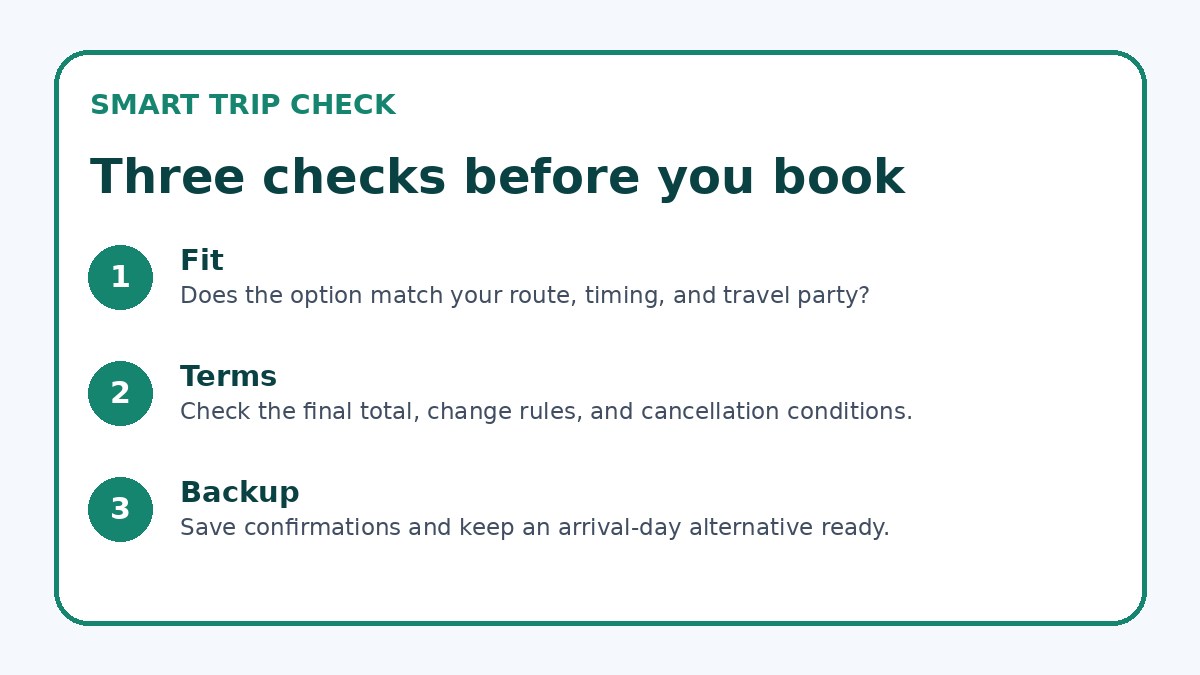
Timing flexibility and making your travel day productive
Align departure choices with meeting schedules but factor in realistic buffers for delays and transit. For morning meetings, an earlier departure with a hotel check-out buffer is often preferable to a tight last-minute option. During the travel day prioritize seats with reliable Wi‑Fi or mobile signal, and pick a seat near power outlets if taking a long train. Establish a work plan for the journey: which tasks require uninterrupted focus, what calls you must be on camera for, and which items can wait until arrival. This planning turns travel hours into productive time rather than lost time.
If you must be reachable, set expectations with colleagues about potential connectivity gaps and provide an alternative contact method. Consider using offline copies of key documents and a personal hotspot if rail Wi‑Fi is unreliable. Allow extra time for simple things like buying a coffee, refilling bottles, or moving between platforms; these add up. Finally, check mobility options at your arrival point to ensure you can transition quickly to a rideshare, tram, or prebooked car to reach your meeting venue without last-minute scrambling.
Compare the practical alternatives
Use the final page to confirm what is actually offered on your dates and save a workable fallback.
Intercity travel checklist
- Map exact door-to-door time: hotel/office to departure terminal, suggested buffer, intercity leg, arrival transfer to meeting address.
- Select luggage plan: confirm carry-on fits storage, or add paid hold baggage only if transfer time allows for collection.
- Reserve a seat with power outlet if you need to work, and download offline copies of essential documents and presentations.
- Save operator rebooking and customer service contacts in your phone and calendar, plus a second contact method for urgent messages.
- Book a backup later service or alternative route, and pre-authorize a rideshare app linked to your payment method for quick onward travel.
- Verify on the provider’s final booking page: exact departure/arrival terminals, baggage rules, and change/cancellation terms.
Disruption backups and what to verify before booking
A realistic disruption plan saves a day. Identify one clear backup per leg: a later train with reasonable seats available, a coach that serves similar arrival points, or a short flight if the schedule permits. Know the rebooking and refund policies for each option and the windows for free or low-cost changes. Keep contacts handy — operator customer service numbers, your travel manager, and a local rideshare app. Store digital and paper copies of confirmations, and flag any required documents where relevant. If a crucial meeting is time-sensitive, consider a refundable buffer night in Berlin or a co-working space near your arrival station.
Before you press confirm on any ticket, verify three specifics on the provider’s final booking page: the exact terminals or stations used, the baggage allowance and any extra fees for larger items, and the change/cancellation policy including how to rebook. If you used an aggregator to compare options, cross-check the selected operator’s official page to ensure the connection details and restrictions match. Trip.com can be a quick comparison tool, but always rely on the operator’s final terms for changes, refunds, and precise boarding instructions.
Rail & Intercity Transport questions travelers ask
Should I book the earliest train to avoid disruption or a later one to reduce stress?
Choose based on the meeting time and your personal buffer tolerance. An earlier train gives you more margin for delays or unforeseen disruptions, allowing time to rebook or take a taxi if needed. A later train can reduce morning stress and might align with a more relaxed departure from your hotel, but leaves less room to recover from delays. If the meeting is critical, favor an earlier option and build in an extra 60–90 minutes from arrival to meeting start to handle transfers or a quick refresh.
What luggage setup works best for a same-day Amsterdam to Berlin business trip?
For a single-day or overnight business trip, pack a single wheeled carry-on plus a compact laptop bag or tote. This setup minimizes waiting at baggage claim and eases movement through stations and between platforms. Use a bag with easy-access pockets for chargers, power bank, and travel documents. If you must bring larger items, check the provider’s baggage policy on the booking page and factor in extra time for collection; consider shipping bulky gear ahead to your hotel if timing is tight.
How do I ensure I can work during the journey and stay connected for meetings?
Plan technical needs ahead: choose an operator or seat class known to have in-seat power and reliable Wi‑Fi when possible, and test your mobile hotspot settings before you leave. Download meeting materials and any required software updates so you can work offline if connectivity drops. Inform colleagues of expected connectivity windows and provide an alternative dialing number or delegate. Carry a compact headset and a charger or power bank sized to refill your devices during the trip.
Final decision note
Preparing your Amsterdam to Berlin travel day as a business traveler is an exercise in systems thinking: match the mode to your priorities, plan door-to-door logistics, and build simple backups. Rail-focused itineraries typically offer the best environment for working en route and arrive in central Berlin, but coach or mixed routes can make sense when budget or scheduling windows differ. Prioritize terminal fit, limit luggage friction, and reserve seats with power if you need to be productive. Always verify terminals, baggage rules and rebooking policies on the operator’s final booking page and keep a clear disruption plan so your meetings remain on schedule.
Continue planning
Check current options and final conditions
Use the provider page to confirm live availability, the final total, cancellation terms, and every condition that matters to your trip.
This evergreen planning guide was created with AI-assisted drafting and a structured quality review. It does not display live prices, schedules, availability, visa guidance, or provider rankings. Verify current details before booking. Some links are affiliate links; we may earn a commission at no additional cost to you.