If you’re traveling from Seoul to Singapore with extra luggage, the main tradeoff you’ll face is routing versus fare flexibility: direct or one-stop routings can simplify baggage handling but often come with different fare terms and baggage allowances than cheaper multi-leg itineraries. Before you search live fares, have exact travel dates, passenger ages, frequent-flyer numbers, and full expectations for bag counts and dimensions ready. That lets you compare real rules, not just advertised prices. In this guide I give the practical checklist to run through before you book, plus the decision criteria for choosing between a simpler, typically pricier option and a lower-fare option that may require careful handling of connections, transfer times, and paid baggage add-ons. Use the checklist items to avoid surprises at check-in and to minimize the chance of baggage fees, denied transfers, or missed connections.
See live routes for your exact travel day
Compare direct and connecting choices with the same baggage and traveler details.
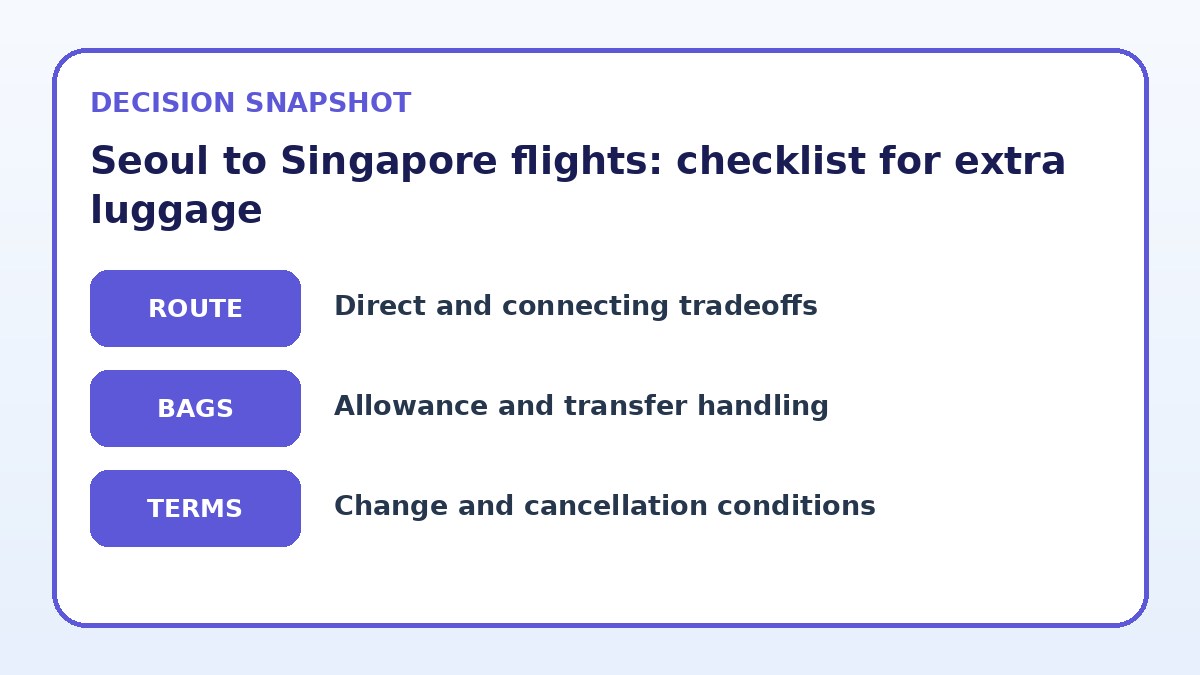
Routing: direct versus connecting options
When planning Seoul to Singapore flights with extra luggage, routing is the first operational decision. Direct flights remove one potential handover and often let you check bags all the way to the destination without rechecking; connecting routings can be cheaper but may require you to reclaim and recheck baggage depending on the carriers and whether your itinerary is sold on a single ticket. Before booking, check whether a connection requires clearing immigration in the transfer country or exiting and reentering the terminal building, because that impacts whether your bags transfer automatically.
To choose a routing, list the absolute maximum number of transfers you will accept and the minimum connection time you need with bulky bags. If you’re comparing a single-ticket connection versus separate tickets, verify on the airline’s booking or customer service pages whether through-checked baggage is available. Also confirm whether the connection airport has efficient transfer processes and whether you will need to switch terminals or airports — these practical details, not price alone, should guide whether to accept a connecting itinerary.
Baggage and connection risk: rules to verify
Baggage rules vary by fare class, route and carrier. The first actionable step is to open the airline’s official baggage policy on the specific flight-search or carrier booking page and confirm allowed pieces, weight limits, and dimensions for both checked and carry-on items. When an itinerary mixes carriers, verify which carrier’s baggage rules apply to the first checked flight and whether interline agreements permit through-checking. Where the booking platform shows estimated baggage fees, cross-check on the airline’s final booking screen because platforms sometimes display different or out-of-date fees.
Connection risk grows with additional legs and with separate-ticket itineraries where the second carrier treats you as a new passenger. For separate tickets, plan large buffers and consider travel insurance or refundable fares to cover missed connections. Ask the carrier whether they can tag bags to the final destination; if not, you will need to collect and recheck baggage — factor time, visas, and terminal transfers into your schedule and avoid overly tight connections if you want to prevent luggage-related disruptions.
Compare flight-selection strategies
| Flight strategy | Best for | Risk to check |
|---|---|---|
| Direct flight, standard fare | Travelers prioritizing the simplest baggage handling and lowest connection risk. | Usually higher base fare and possibly lower included baggage allowance than premium flexible fares. |
| Single-ticket connecting flight | Those wanting lower fares but with protected connections and through-checked bags. | Risk increases if carrier delays occur, and fare rules across carriers can be complex. |
| Separate tickets for each leg | Price-driven travelers who accept higher risk and plan long transfer buffers. | Baggage rarely through-checked; missed connections are the passenger’s responsibility. |
| Flexible/refundable fare with high baggage allowance | Travelers carrying heavy or oversized items who value flexibility and fewer surprises. | Higher upfront cost but reduced risk of expensive last-minute changes or overweight fees. |
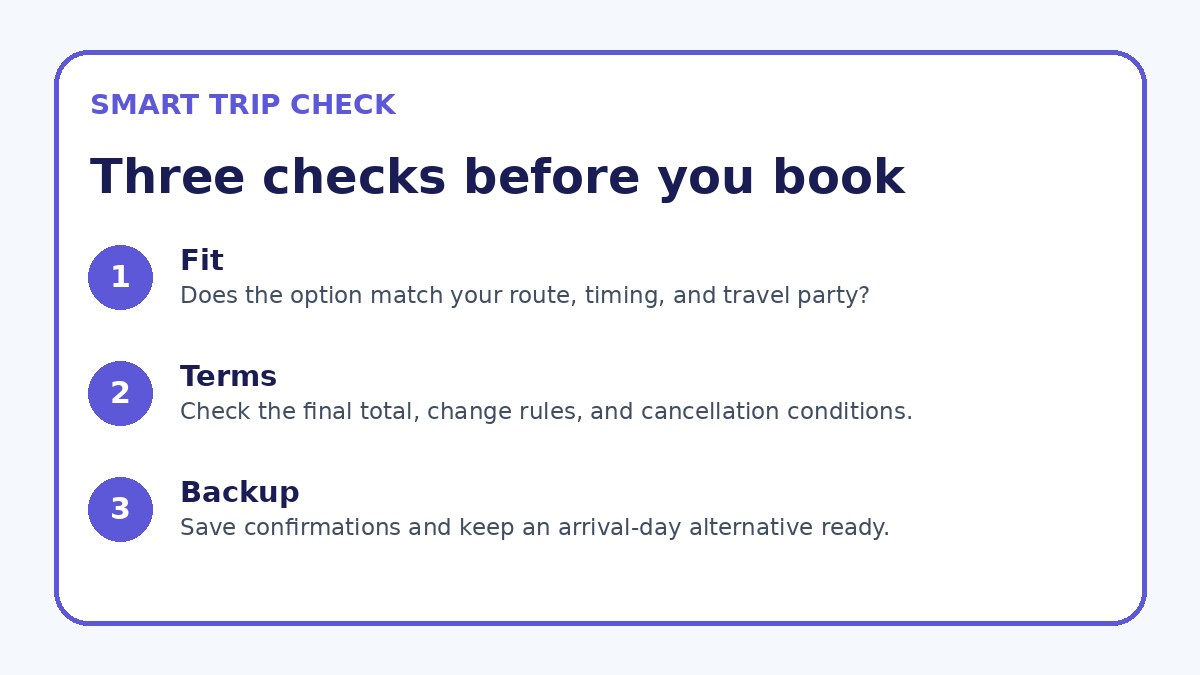
Recheck the complete itinerary
Confirm airports, connection handling, baggage, and change conditions before deciding.
Schedule fit: timing, airport logistics, and flexibility
Extra luggage changes the practical minimums for airport arrival and connection times. Build in more time for check-in and security queues, especially at busy departure airports in Seoul during peak hours. If you plan to check oversized items or want to inspect bag handling procedures, arrive earlier than the carrier’s minimum recommended check-in time. When comparing flight options, match departure and arrival times to how much time you’ll need for ground transport with bulky bags—late-night arrivals that complicate onward travel can add cost and stress.
If you travel with fragile or high-value cargo, prioritize itineraries with stable schedules and lower risk of tight transfers. Evaluate whether the chosen routing has consistent ground handling reputation or facilities for oversized baggage at both ends. If flexibility matters, favor fares that allow modest changes without heavy penalties; if you prefer strict schedules, choose direct flights or single-carrier connections with protected transfers. The schedule you select should balance arrival times, connection robustness, and the practicalities of moving larger luggage through airports.
Flight details to verify
- Confirm exact travel dates, traveler full names, ages, and frequent-flyer numbers before searching fares to ensure accurate baggage rules and fare conditions are displayed.
- On the airline’s official booking page, verify the allowed number of checked pieces, weight and size limits for each passenger and for each flight segment listed.
- If the itinerary includes connections, check whether baggage is through-checked to Singapore or if you must reclaim and recheck at the transfer point.
- Calculate total expected baggage fees by adding online pre-purchase fees (if any), overweight/oversize charges, and potential terminal transfer costs.
- Compare fare change and cancellation rules for the chosen fare class; note the exact change fee amounts and any fare difference conditions on the carrier’s final confirmation.
- If using separate tickets, allow a large connection buffer, buy travel insurance that covers missed connections, and plan for the cost and logistics of rechecking baggage.
Fare conditions: baggage, changes, and the small print
Fare conditions determine what is actually included and what will cost extra. Before purchase, expand the fare rules and read the baggage allowance, change fee, and refund policy specific to the fare class and route. Note whether free checked pieces apply, whether size or weight limits differ by segment, and whether adding a bag online costs less than paying at the airport. If the booking spans multiple carriers, confirm which carrier’s fare conditions control fees and changes, and validate all details on the issuing carrier’s final booking confirmation.
If you expect changes, search for fares sold with flexible change policies or refundable options and know exactly how much a name or date change would cost. When comparing prices, compute the total door-to-door cost including paid baggage, overweight fees, seat selection (if needed for space), and any additional transfer costs. Finally, save screenshots or PDFs of the fare rules and baggage pages shown during booking so you can reference what was offered if there is a dispute at check-in.
Flight Guide questions travelers ask
Can I check oversized or heavy luggage on a Seoul to Singapore flight, and how do I confirm limits?
Yes, oversized and heavy luggage is often accepted, but limits and charges vary by carrier and fare class. To confirm, find your specific flight on the airline’s official site, locate the baggage policy linked to that flight or fare class, and read the sections on oversized and overweight items. Look for maximum linear dimensions, per-piece weight limits, and whether special handling or advance notification is required. If booking through a third-party platform, cross-check the airline’s own booking page before paying because the carrier’s rules control acceptance and fees at check-in.
Should I book the highest baggage allowance available or add bags later during check-in?
Buying the correct baggage allowance at booking time usually costs less and reduces risk of being refused or delayed at the airport. Add-ons bought online or during booking are commonly cheaper than paying at the counter, and pre-purchased allowances allow smoother check-in, especially with multiple or bulky bags. If your plans might change, compare the fare’s change policy and whether paid baggage is refundable or transferable; if not, factor the likely extra cost of buying the higher allowance now versus the uncertainty and possible higher fees later.
How much connection time should I allow when traveling with multiple checked bags?
Allow significantly more time than standard minimum connection recommendations when you have multiple checked bags. Consider time to clear transfer security or immigration, collect and recheck baggage if required, and move between terminals. Practical buffers depend on the transfer airport layout and whether your itinerary is on a single ticket; for single-ticket transfers where bags are through-checked, a moderate buffer may suffice, but for separate tickets or airports requiring terminal changes, add several hours to avoid missed flights. Verify minimum recommended times on airline and airport transfer pages and then add additional margin for large or special-handling baggage.
Final decision note
Booking Seoul to Singapore flights when you have extra luggage is primarily about matching routing and fare conditions to how much risk and complexity you will accept. Start by collecting precise travel dates and passenger details, then verify baggage rules, through-check policies, and fare change conditions on the airline’s official booking pages before committing. Weigh the convenience of direct or single-ticket connections against potential savings from separate tickets, and factor in the time needed for check-in and transfers with bulky bags. Use the checklist items above to run a quick, step-by-step pre-booking audit that prevents surprise fees, missed flights, and stressful airport moments. For current availability and to compare live options, you can check platforms like Trip.com as one of several comparison tools, but always confirm rules on the carrier’s final booking screen.
Continue planning
Check current options and final conditions
Use the provider page to confirm live availability, the final total, cancellation terms, and every condition that matters to your trip.
This evergreen planning guide was created with AI-assisted drafting and a structured quality review. It does not display live prices, schedules, availability, visa guidance, or provider rankings. Verify current details before booking. Some links are affiliate links; we may earn a commission at no additional cost to you.