If you’re traveling between Los Angeles and San Francisco with oversized suitcases, sports gear, or multiple bags, your focus should be on transfer points: where you arrive and where you leave, and how you move between stations and terminals with everything in tow. The practical answer is to plan transfers around stations that offer the simplest walking routes, easy access to ground transport (taxis, rideshare pickup/drop zones, and luggage-friendly shuttles), and clear luggage handling policies. Start by mapping your door-to-door route, then compare options by the number of transfers, the sidewalk distance between platforms or terminals, and how much carrying or stair use is likely. This article walks through the decision factors for trains, buses, and private car options, shows how to evaluate specific station and terminal transfers, and gives a checklist so you can book with confidence and fewer surprises on travel day.
See current options before you compare the details
Availability and final conditions change. Open Trip.com now or keep reading for the practical comparison.
Deciding whether to take train, bus, or car
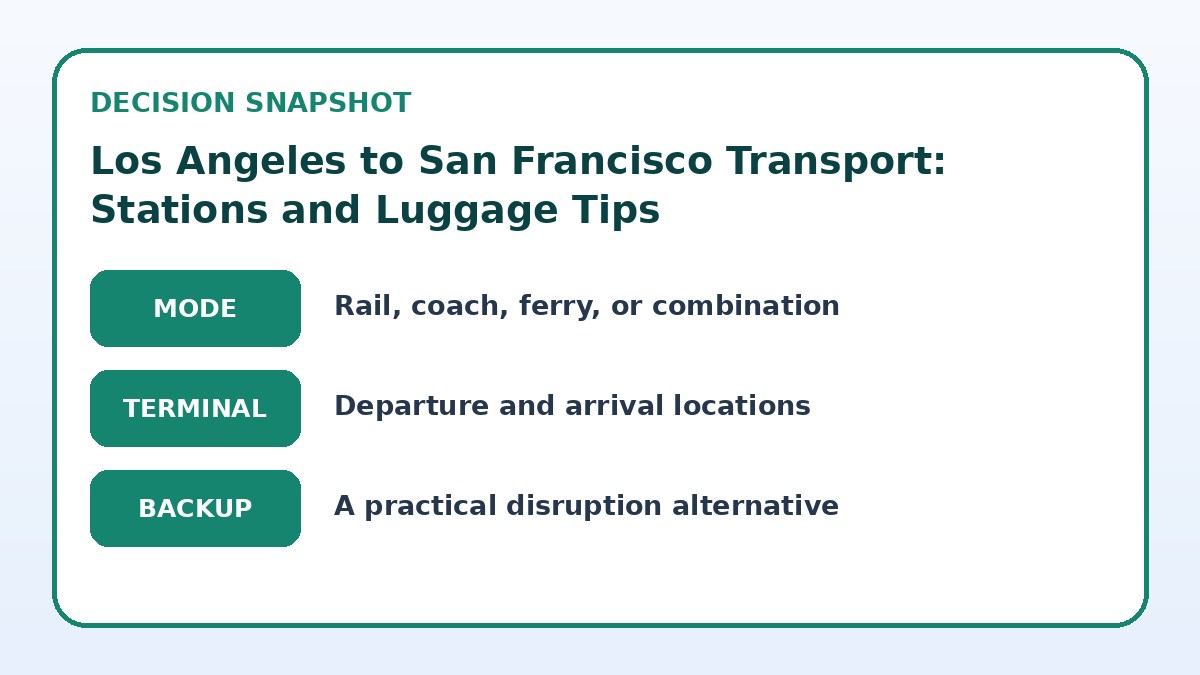
Deciding the mode of transport for Los Angeles to San Francisco when you have extra luggage comes down to three practical factors: how many times you’ll move your bags, whether those moves include stairs or long walks, and how predictable pickup/drop-off locations are. Trains generally offer level boarding at some stations and room inside carriages for wheeled suitcases or larger items, but not every station has step-free paths or convenient drop zones. Intercity buses may allow generous carry-on or checked luggage and sometimes have cargo bays that avoid passenger lifts, yet they require boarding steps and handling at curbside.
Private car options remove multiple transfers because you can load and unload directly at door-to-door points, but you must consider parking, possible size limits for very large items, and the cost. A mixed strategy—such as taking a train but booking a pre-arranged luggage-friendly pickup at the station—often balances comfort and expense. To choose, list how often you want to avoid lifting your bags, whether you prefer someone else to handle heavy items, and which transfers are acceptable to you if a direct, single-segment option isn’t available.
Planning station and terminal transfers in Los Angeles
Los Angeles has several major intercity boarding points; each presents different transfer realities for travelers with extra luggage. Before booking, identify the exact station or terminal name—some services share a city name but use separate facilities—and then look at on-site transfer options like taxi ranks, rideshare staging, and shuttle pick-up zones. Check whether station access involves long pedestrian walkways, escalators, or freight elevators; if you must move heavy bags, aim for stations with short, level walks from curb to platform or a staffed help desk that can assist with heavy items.
Also consider your departure-side logistics: are you arriving at your accommodation the night before or coming directly from a different part of the city? If you need temporary storage or a luggage transfer service, verify those options in advance. Keep in mind that arrival and departure points may differ—for example, an intercity bus company might use a downtown terminal while train services use a separate rail station—so plan the intra-city transfer between those sites explicitly when you carry extra baggage.
| Approach | Best for | Tradeoff to check |
|---|---|---|
| Direct private car or shuttle | Minimal handling and door-to-door service | Typically more expensive and subject to traffic delays |
| Intercity train with station pickup | Stable ride with room for wheeled bags and less traffic risk | Station access can include stairs or long platforms; may need local pickup |
| Intercity bus with cargo hold | Fewer on-board stairs; luggage stored off-bus for long-distance comfort | Curbside boarding and multiple stops increase handling events |
| Mixed mode (train + pre-booked taxi/rideshare) | Balances comfort, cost, and reduced walking with scheduled pickups | Requires coordination and extra time for transfers |
Ready to check the option that fits your plan?
Use your exact dates and traveler details so the provider page can show the current total and conditions.
Planning station and terminal transfers in San Francisco
San Francisco’s geography and transit layout mean transfer distances and vertical movement can be important considerations. Some stations and terminals sit near transit hubs with elevators and short walks to taxis or rideshares, while others require crossing busy streets or navigating steep sidewalks. When booking, examine the pickup and drop-off patterns around your arrival point—know where the designated rideshare zone is, whether taxi stands are curbside, and whether station exits lead directly to ground transport with minimal stairs.
If your arrival point is distant from your final destination, plan the connecting transport with luggage in mind. For example, a short rideshare or shuttle might be preferable to a local transit transfer that includes stairs or crowded platforms. Confirm the location of any station baggage services or lockers before depending on them, and when comparing options, prioritize transfer sequences that minimize repeated handling and the total walking distance between modes.
Before you book
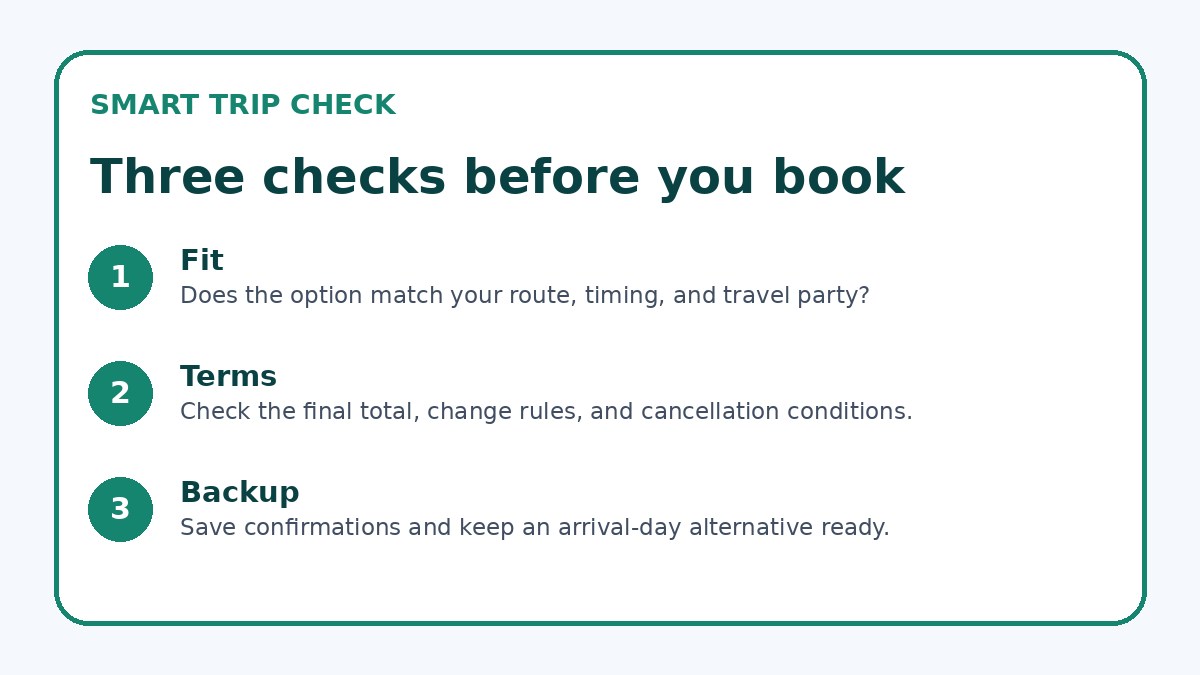
- Confirm the exact station or terminal name for departure and arrival on each provider’s official booking page and note the designated pickup/drop-off locations.
- Measure and photograph oversized or oddly shaped items and check the provider’s baggage size and weight allowances before booking.
- Map the door-to-door route and count each planned bag transfer, stair, and long walk; add 15–30 minutes buffer per transfer.
- Book a luggage-friendly pickup (pre-arranged shuttle or a rideshare with ample cargo space) for any station exit that lacks step-free access.
- Pack a small, easily accessible bag with essentials and valuables to avoid opening large luggage during transfers.
- If you need assistance, contact the station or provider in advance to request help or confirm on-site baggage services and their hours.
How to evaluate and book transfers with extra luggage
Start your booking decision by comparing the total number of times you’ll move your bags and the nature of each move (level curbside loading versus stairs, elevator availability, long ramps). For each itinerary option, sketch a simple path from origin door to destination door and list the transfer points. Factor in the availability of curbside pickup, covered walkways, and staffed assistance at each transfer—those reduce effort and risk. Always check the transport provider’s baggage policy on their official booking page for maximum dimensions, checked-bag allowances, and whether items are accepted in cargo holds or under-seat storage.
When you need on-the-ground help, book a pre-arranged transfer service or a rideshare with additional luggage capacity; many drivers can accept large suitcases if you confirm in advance. If using trains or buses, reserve seats or add baggage services where offered and allow extra connection time to move luggage between platforms or terminals. Verify staging areas for pick-ups, look up step-free route maps of stations, and consider travel insurance or special handling where valuable or fragile items are involved.
Frequently asked questions
Can I bring oversized luggage on trains between Los Angeles and San Francisco?
Policies for oversized luggage vary by carrier. Before you book, check the train operator’s official baggage rules on their booking page for size limits, whether oversized items must be declared, and if they provide assistance or designated storage areas. If the operator lists no clear allowance for large items, contact their customer service to confirm. Also account for station access—some stations have elevators and level boarding while others require stairs—so the operator’s baggage policy is only one part of the practical transfer plan.
What’s the easiest way to move large bags through busy stations?
The easiest approach is to minimize transfers and choose a route with level access and short curb-to-platform distances. If available, arrange a curbside pickup at a designated rideshare or taxi zone to avoid carrying bags through crowded concourses. Consider hiring a pre-booked shuttle or private car to load and unload at street level. When station staff or porters are available, request assistance ahead of time. Always leave extra time for boarding and disembarking because busy periods can mean queues and limited elevator availability.
Should I check baggage or keep it with me when traveling between Los Angeles and San Francisco?
Decide based on how often you want to handle the bags and their fragility. Checking luggage into a cargo hold (if the service offers it) reduces the number of times you physically move items, but you’ll need to understand claim procedures at the destination and allow recovery time. Carrying bags with you keeps valuables on hand and avoids claim lines, but increases effort during transfers—particularly if stairs or long walks are involved. Check the provider’s baggage options on their booking page and plan transfers that suit your tolerance for handling.
Final planning note
Traveling between Los Angeles and San Francisco with extra luggage requires thinking beyond the trip segment itself and focusing on the transfer points. Choose stations and terminals with short, step-free routes and clear curbside pickup zones where possible, and compare total bag-handling events rather than only price or schedule. If minimizing effort is your priority, a private car or pre-booked shuttle reduces lifts and long walks; if you prefer rail or bus for comfort or cost, add planned pickups that bridge the last mile. Verify baggage policies and pickup locations on providers’ official booking pages (you can also compare current options on Trip.com), pack smart, and allow buffer time so transfers are manageable and predictable.
Continue planning
Check current options and final conditions
Use the provider page to confirm live availability, the final total, cancellation terms, and every condition that matters to your trip.
This evergreen planning guide was created with AI-assisted drafting and a structured quality review. It does not display live prices, schedules, availability, visa guidance, or provider rankings. Verify current details before booking. Some links are affiliate links; we may earn a commission at no additional cost to you.