If you have a single business trip from Seoul to Singapore, prioritize three decisions: how much must be in carry-on for meetings on arrival, whether to check luggage for a seamless day, and how much buffer to allow at both airports. For most midweek business trips, a single well-packed carry-on plus a compact personal item will keep you mobile, avoid waits for baggage, and shorten your exit time on arrival. But bringing checked luggage can be right if you need suits, larger equipment, or longer stays—just accept extra time at check-in, baggage reclaim, and the small risk of delay. This guide gives concrete packing rules, airport-timing templates based on common business constraints, and the tradeoffs to weigh when you compare direct and connecting flights, or when assessing fast-track and lounge options.
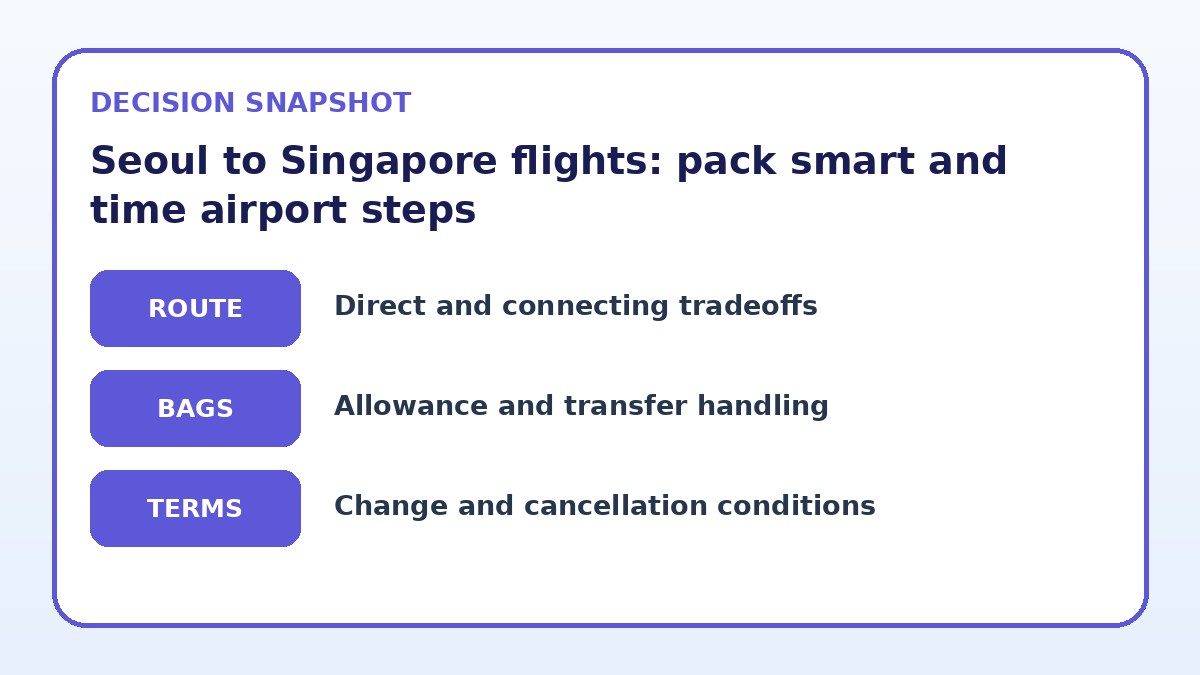
See current options before you compare the details
Availability and final conditions change. Open Trip.com now or keep reading for the practical comparison.
Deciding what to carry on vs. check
Start by listing what you absolutely need on arrival: one presentation outfit, electronics and chargers, and any travel documents. Anything you cannot replace quickly in Singapore should go in your carry-on. Suits and wrinkle-prone shirts can travel carry-on if you use a slim garment folder and plan to steam or hang them on arrival; otherwise, checking a small soft-sided suitcase avoids creases but adds time at both ends and a risk of delay. For bulky or heavy gear—samples, demo equipment, or gifts—checking is often unavoidable; compare size and weight limits on the airline booking page before final packing to avoid surprise charges.
Consider the itinerary length and meetings schedule. For an overnight stay with an evening meeting, prioritize carry-on only to get out of the airport faster. For a weeklong trip, a checked bag can save you repeated outfit compromises. If you expect back-to-back meetings immediately after touchdown, pack a change of clothes and toiletries in your carry-on and put less-essential items in checked luggage. Also factor in customs: expensive items might require declarations or paperwork that are simpler when carried in hand rather than in checked luggage.
Setting realistic airport arrival times
Work backwards from your flight departure, allowing for commute time from your Seoul location, traffic variability, and any preflight corporate security or group check-in. For international departures, a commonly comfortable window for business travelers is arriving at the terminal 90–120 minutes before departure if you have carry-on only and already printed or mobile-checked boarding passes; add 30–45 minutes if you need to check bags. If you’re using premium check-in or fast-track lanes available to certain fares or loyalty tiers, you can shave this cushion—but verify those services on the airline’s booking page and confirm operating hours for your flight.
At the Singapore arrival end, factor in immigration peak periods and the possibility of transportation time to a downtown meeting. Plan at least 30–60 minutes from touchdown to leaving the airport when carrying only cabin baggage and using automated immigration lanes where available; add another 20–40 minutes if you have checked baggage. If you have a tight sequence—like landing and needing to attend a morning meeting—choose flights that land with enough post-landing buffer, or aim for an earlier inbound flight the preceding evening and stay near the meeting location.
| Approach | Best for | Tradeoff to check |
|---|---|---|
| Carry-on only | One- to three-day trips or when you need a quick exit from the airport. | Limits clothing choices and forces tighter packing; may not suit longer stays or shipments of equipment. |
| Checked luggage | Longer stays, bulky items, or when wrinkle-free presentation is critical. | Adds check-in and reclaim time, plus modest risk of delay or mishandling; confirm airline allowance and fees. |
| Priority lanes / fast track | Travelers on a tight schedule who can buy or access priority services. | Usually available only on certain fares or via loyalty tiers; verify availability and hours on the airline page. |
| Arrive a night earlier | High-stakes morning meetings where travel-day delays are unacceptable. | Increases trip cost and may require one extra hotel night; budget and corporate approval needed. |
Ready to check the option that fits your plan?
Use your exact dates and traveler details so the provider page can show the current total and conditions.
Speeding security, immigration, and transfers
Prepare all documents and forms before you reach security: boarding pass and passport should be easily accessible, liquids packed to limits in a clear bag, and laptops removable for screening unless your airline or airport allows leave-in procedures. Use priority lanes if your ticket or corporate card provides access; these can save 10–30 minutes during busy periods. For connections, check whether your arriving and departing flights use the same terminal and whether transfer security is required; if you must reclear security or switch terminals, add at least 30–60 minutes depending on the airport layout and transfer transport options.
For immigration on arrival in Singapore, consider enrolling in any automated clearance programs you qualify for and check whether your nationality needs a visa—always verify entry rules on official government sources or the airline’s final booking page. If you expect to be delayed at immigration (late-night arrivals, peak hours), inform your ground contact and prefer flexible meeting slots. At departure from Seoul, some terminals offer express lanes for passengers with limited time or fixed schedules—confirm availability and eligibility before relying on them.
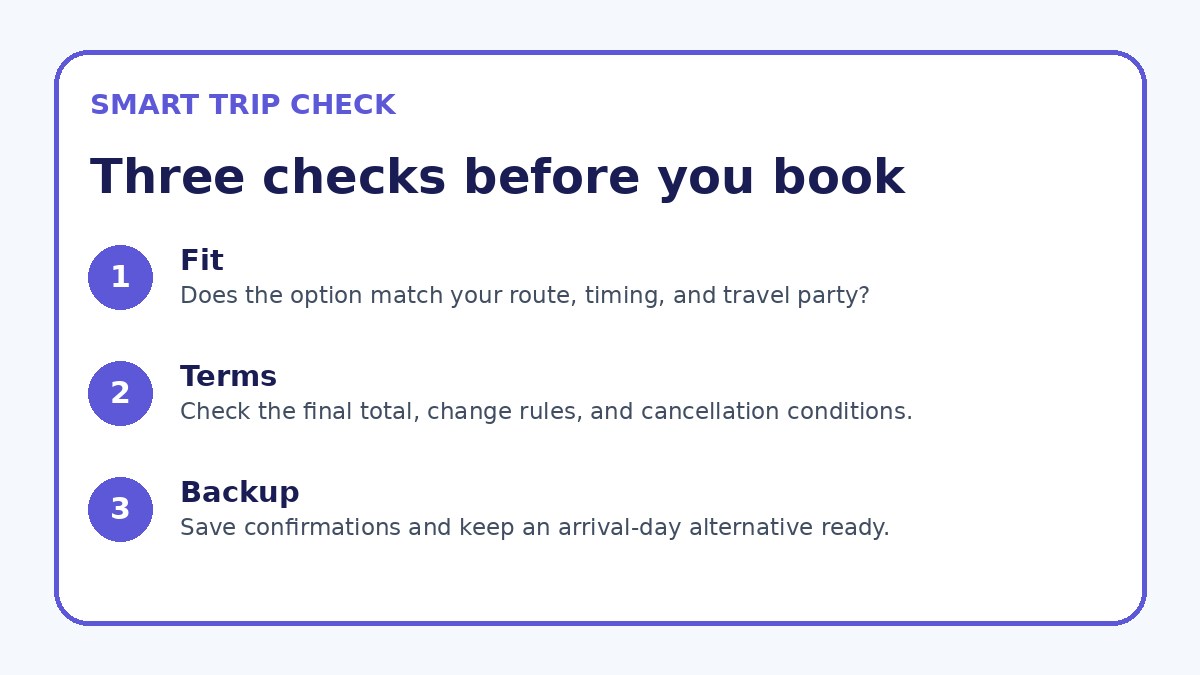
Before you book
- Verify carry-on size and weight limits on the airline’s final booking page and adjust packing to avoid gate checks.
- Pre-pack a meeting-ready outfit and toiletries in your carry-on so you can attend appointments immediately after landing.
- Check whether your ticket includes priority check-in or fast-track security and note operating hours for those services.
- Allow at least 90 minutes for international check-in if you have bags to drop; add 30–45 minutes for heavy traffic to the airport.
- Scan and save digital copies of passport, itinerary, and any visas to a secure cloud folder accessible from your phone.
- If transporting costly or fragile items, arrange insurance, specialized packing, or courier delivery to your Singapore destination.
Packing, carry items, and corporate needs
Organize your carry-on with a small packing system: a dedicated toiletry pouch under 100 ml containers, a slim garment folder or travel steamer for shirts, a cable organizer, and a lightweight pair of shoes you can quickly change into. Keep a photocopy or mobile image of important documents separate from originals, and store spare business cards in an external pocket for last-minute handouts. If your company reimburses luggage fees or offers corporate travel policies, check those policies early to decide whether to pay for extra baggage or book a higher fare class with generous allowance.
For items that may complicate security—portable batteries, sample liquids, and expensive electronics—check airline carry-on rules and any airline-specific restrictions on the booking page. If you regularly travel with sensitive equipment, consider a hard-sided carry case that fits airline cabin size limits and carry proof of ownership or permits when required. Finally, arrange any on-ground logistics such as courier pickup of heavy materials directly to your meeting hotel or office to avoid lugging them through airports.
Frequently asked questions
How much time should I allow at Incheon Airport for a Seoul departure when I need to check a bag?
If you must check luggage, plan conservatively: arrive at the terminal with enough time for transport variability, check-in queues, security, and immigration. For many business travelers that means a 90 to 120 minute arrival before departure as a starting point; busy periods, special checks, or oversized baggage needs can push that higher. Confirm the airline’s recommended check-in cut-off time on the booking page and choose an arrival time that gives at least 30 minutes buffer beyond that recommendation to avoid last-minute stress.
Is it faster to fly direct or connect when traveling Seoul to Singapore for business?
Direct flights usually save total door-to-door time and reduce the risk of missed connections—valuable when meetings are time-sensitive. Connecting itineraries can offer schedule flexibility or lower fares but introduce transfer steps, extra security or terminal changes, and potential delays. When comparing options, calculate total travel time including expected transfer time, the minimum connection time at the transit airport, and whether checked baggage will transfer automatically; verify connection procedures on the airline or booking provider’s page before booking.
What small packing choices speed up airport exits and save time on the trip?
Keep items you need for security (liquids, laptop) in easily accessible compartments, wear shoes that slip on and off for screening, and store passport and boarding pass in one reachable pocket. Remove bulky jewelry or belts before queuing to avoid extra screening. If you frequently need printed receipts or company forms on arrival, scan them to your phone and carry a clean, organized folder—this prevents fumbling through multiple pockets. Also place a small plastic bag for receipts and business cards to hand out or store quickly during transit.
Final planning note
For business travelers between Seoul and Singapore, thoughtful packing and conservative airport timing reduce stress and let you focus on meetings. Choose carry-on only when your schedule demands a quick exit and your needs fit a compact kit; opt for checked luggage when longer stays or bulky materials make it necessary. Always verify carry-on limits, check-in and priority lane availability, and any connection procedures on the airline’s final booking page before you travel. Build buffer time for traffic and security, and use simple packing systems—clean pockets, a garment folder, and digitized documents—to shave minutes at every step.
Continue planning
Check current options and final conditions
Use the provider page to confirm live availability, the final total, cancellation terms, and every condition that matters to your trip.
This evergreen planning guide was created with AI-assisted drafting and a structured quality review. It does not display live prices, schedules, availability, visa guidance, or provider rankings. Verify current details before booking. Some links are affiliate links; we may earn a commission at no additional cost to you.