If you’re traveling solo from Barcelona to Madrid with more than a carry‑on, the single most practical first decision is whether you want door‑to‑door convenience or lower hassle at stations and airports. High‑speed trains usually mean less time handling luggage and simpler city‑center terminals; buses and budget flights can be cheaper but often add transfers, long waits, or strict baggage rules. This article gives a clear decision path: choose an option based on how much luggage you have, how independent you want to be at stations, and how willing you are to transfer between transport modes. Read the quick checklist, then use the detailed tradeoffs to compare train, bus, and flight options and what to verify on provider pages before you book.
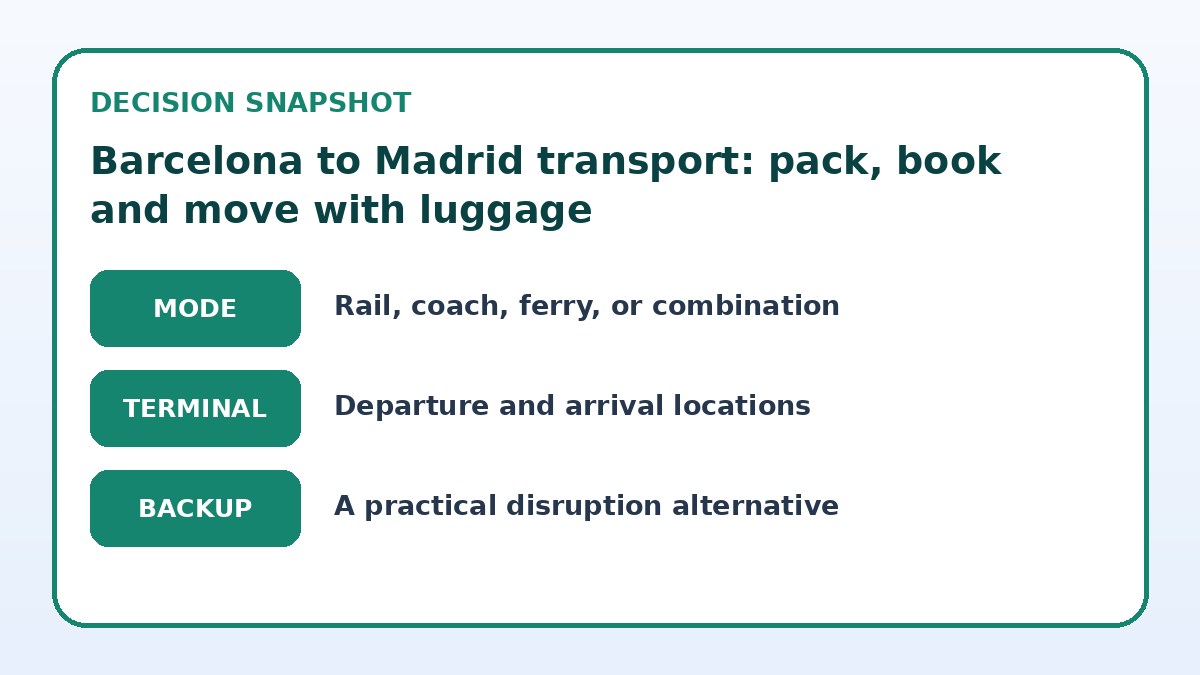
See current options before you compare the details
Availability and final conditions change. Open Trip.com now or keep reading for the practical comparison.
Deciding by luggage type and quantity
Before you pick a transport mode, inventory your luggage. Count hard‑case suitcases, soft bags, a backpack, and any oversize or fragile items such as instruments, surfboards, or photographic gear. Large hard suitcases are easiest to handle on trains because many high‑speed services have dedicated luggage racks and space near doors; you can keep a smaller bag with you at your seat. If you’re carrying multiple large items, a private transfer or hired van removes the need to lift bags on and off platforms and through crowds.
Think also about what you’ll do on arrival. If you’re moving between airports and city centers, the extra transfers multiply the handling. Two backpacks or a suitcase plus a daypack change the balance—buses sometimes have generous underfloor bays but require lifting into compartments, while low‑cost flights may treat even a small roller case as a checked item unless you prepay. Make choices based on how often you want to repack, how mobile you are, and whether you can manage stairs or long ramps with your load.
Train travel: pros, practical packing and platform tips
Trains are often the most luggage‑friendly public option for Barcelona to Madrid journeys because major stations sit in city centers and often have level access between concourse and platforms. Pack so large suitcases are easily wheelable; use luggage covers or straps for protection and a lock for security. Keep essential items—travel documents, a charged phone, medication, a light layer, and a small valuables pouch—in a daypack you can stow under your seat or keep at your feet. Arrive at the station with extra time to find the correct platform and a luggage‑friendly carriage (look for spaces near doors or luggage racks).
On booking pages, verify the train’s baggage allowances and any size recommendations; some high‑speed operators list maximum dimensions for oversized items. If you require assistance at the station, request it in advance via the operator to ensure staff are available to help lift or move bags. For solo travelers, seat selection matters: choose an aisle seat near the carriage end if you expect frequent brief exits, or a window seat with nearby luggage space for longer stretches. Remember you might carry bags up short sets of stairs if elevators are busy or out of service.
| Approach | Best for | Tradeoff to check |
|---|---|---|
| High‑speed train | Travelers with medium to large suitcases who prefer minimal transfers | Typically higher base cost but simpler luggage handling and central stations |
| Long‑distance bus | Budget‑minded solo travelers with standard suitcase and flexible time | Lower fare but more lifting into compartments and slower door‑to‑door times |
| Low‑cost flight | Travelers prioritizing speed and willing to travel light | Faster flight time but extra airport transfers and strict baggage rules |
| Private transfer or rideshare | Solo travelers with oversized or multiple bags seeking door‑to‑door convenience | Most convenient for luggage handling but often the most expensive single‑leg option |
Ready to check the option that fits your plan?
Use your exact dates and traveler details so the provider page can show the current total and conditions.
Buses and low‑cost flights: where handling gets harder
Long‑distance buses between Barcelona and Madrid can be very economical and often have large underfloor compartments, but they also increase the number of handling steps. You’ll typically lift bags into a compartment and may need to retrieve them quickly at stops where loading is fast; this can be awkward when traveling alone with several or heavy pieces. Buses generally have limited on‑board space for bulky carry‑on items, so pack essentials in a small backpack you can keep on your lap and label checked bags clearly.
Low‑cost flights introduce different constraints: airport terminals, security, and transfers add time and effort, and baggage rules can be strict about size and weight. If you choose a flight, compare total door‑to‑door time including transfers to and from airports, and check whether the fare includes cabin luggage or only a personal item—this affects whether you must check a suitcase. On the provider’s booking page verify baggage allowances, permitted dimensions, and whether priority boarding or extra legroom seats include additional baggage options that could save handling time at your departure or arrival.
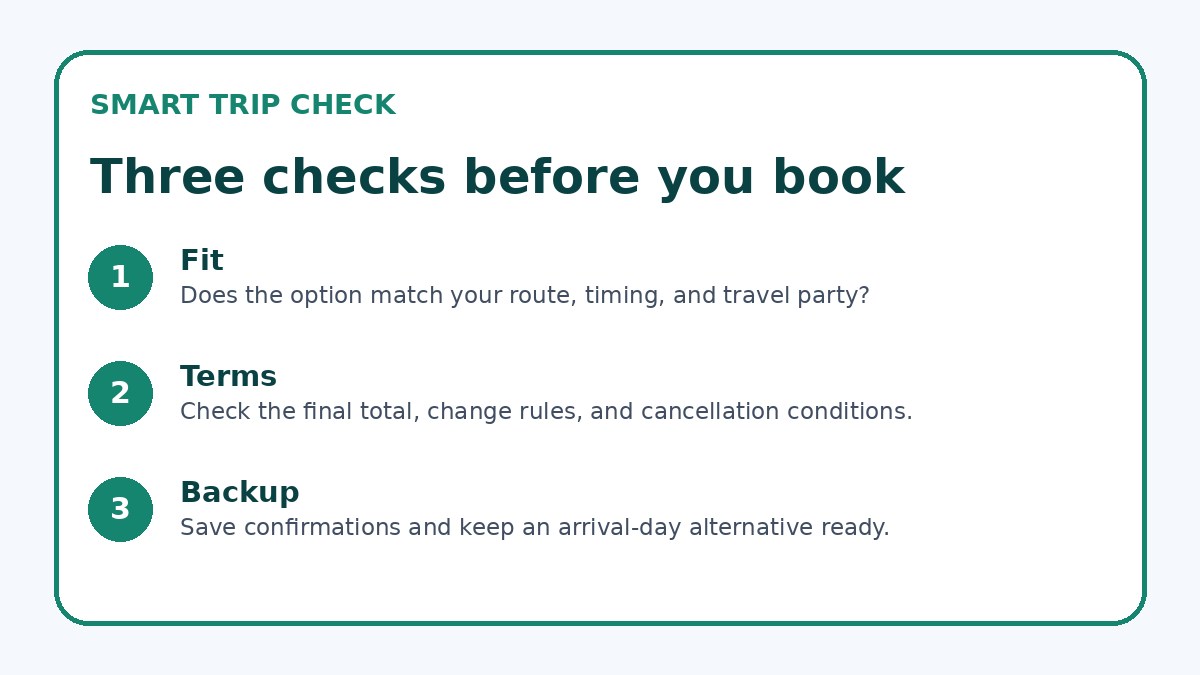
Before you book
- Measure and weigh every bag and note dimensions before comparing transport options or booking.
- Check the operator’s baggage allowances and size limits on the official booking page before purchase.
- Reserve assistance or accessible boarding if you need help lifting luggage at stations or terminals.
- Choose seats near carriage doors or aisle seats to reduce trips with heavy bags on trains.
- Plan at least 45–90 minutes between connections when switching modes to account for luggage handling and delays.
- Label all bags externally and keep a small valuables pouch with your documents and essentials in a daypack.
Combining modes and practical bookings to reduce fuss
Many solo travelers combine modes to balance cost and convenience: a train for the core Barcelona–Madrid leg and a short taxi or rideshare to your final address. If you plan a mixed itinerary, build comfortable connection windows—enough time to move bags between vehicles, clear stations, and handle delays. When booking separate legs, make sure you can comfortably move luggage between terminals or locations; independent tickets rarely protect you if you miss a connection because of baggage handling delays.
When comparing providers, check cancellation and change rules that affect both schedule flexibility and how you handle luggage fees if plans shift. On every provider page verify baggage size/weight limits, whether you need to prebook a place for oversized gear, and specific boarding or check‑in cutoffs. Trip.com can be useful as one place to compare current availability and conditions, but always confirm final baggage terms on the transport operator’s official booking or help pages before you finalize purchase.
Frequently asked questions
How do I compare total travel time when I have to factor in luggage handling?
Total travel time equals scheduled journey time plus time for check‑in, security, transfers, and loading or unloading luggage. For trains, add time to reach the station, locate your platform, and stow bags—usually less than airports. For flights, include time for airport arrivals, security lines, potential checked baggage drop, and transit between airports and city centers. For buses, include loading/unloading windows and any intermediate stops. To compare fairly, map each door‑to‑door segment and add conservative buffers for baggage handling and local transit.
Can I bring oversized or fragile items on trains between Barcelona and Madrid?
Many trains accept oversized or fragile items but policies vary. Operators often allow large pieces if they fit in luggage areas or can be stowed safely, but you should verify dimensions and any special rules on the operator’s official page before booking. For very large, valuable, or fragile items consider advance notice, a seat reservation that allows space, or shipping the item separately. If handling the item yourself, bring protective padding and consider a transport option that minimizes transfers to reduce the risk of damage.
What are practical packing tips for solo travelers to minimize baggage hassle?
Pack light when possible and consolidate into one main suitcase plus a daypack. Use packing cubes, compressible garments, and a small basic kit so essentials are immediately accessible. Choose wheeled luggage with sturdy handles and easy‑rolling wheels for stations and short street transfers. Keep documents, chargers, medication, and a change of clothes in your daypack in case checked baggage is delayed. Finally, practice lifting your loaded bags before travel to ensure you can manage stairs or short carries on your own.
Final planning note
For solo travelers moving between Barcelona and Madrid with luggage, the right choice hinges on how much you carry and how much effort you’re willing to spend on transfers. Trains generally reduce handling by using central stations and roomy carriages, making them a strong default for those with medium or large suitcases. Buses can be economical but demand more physical bag handling; flights suit light‑packers who accept airport transfers. Wherever you book, verify baggage policies, size limits, and any assistance options on the operator’s official page, and allow buffer time for connections. With the checklist and booking priorities above, you can choose the option that minimizes stress and matches your comfort level as a solo traveler.
Continue planning
Check current options and final conditions
Use the provider page to confirm live availability, the final total, cancellation terms, and every condition that matters to your trip.
This evergreen planning guide was created with AI-assisted drafting and a structured quality review. It does not display live prices, schedules, availability, visa guidance, or provider rankings. Verify current details before booking. Some links are affiliate links; we may earn a commission at no additional cost to you.