If you’re traveling overland from Kuala Lumpur to Singapore and this is your first time, start by deciding whether you want the fastest, cheapest, or most scenic route—and whether you’ll stop in other towns along the way. For most visitors building a multi-city ground-transport plan, the core choices are express bus, high- or conventional rail combinations, and driving or hiring private transfer. Each approach changes where you overnight, how often you clear immigration, and which stations or terminals you must use. This article gives the practical answer up front: list your must-see stops, pick a primary transport mode for the longest legs, then mix secondary legs to suit time and comfort. Below you’ll find the tradeoffs, decision criteria, a four-option comparison, a booking checklist, and clear prompts on what to verify on operators’ booking pages before you finalize anything.
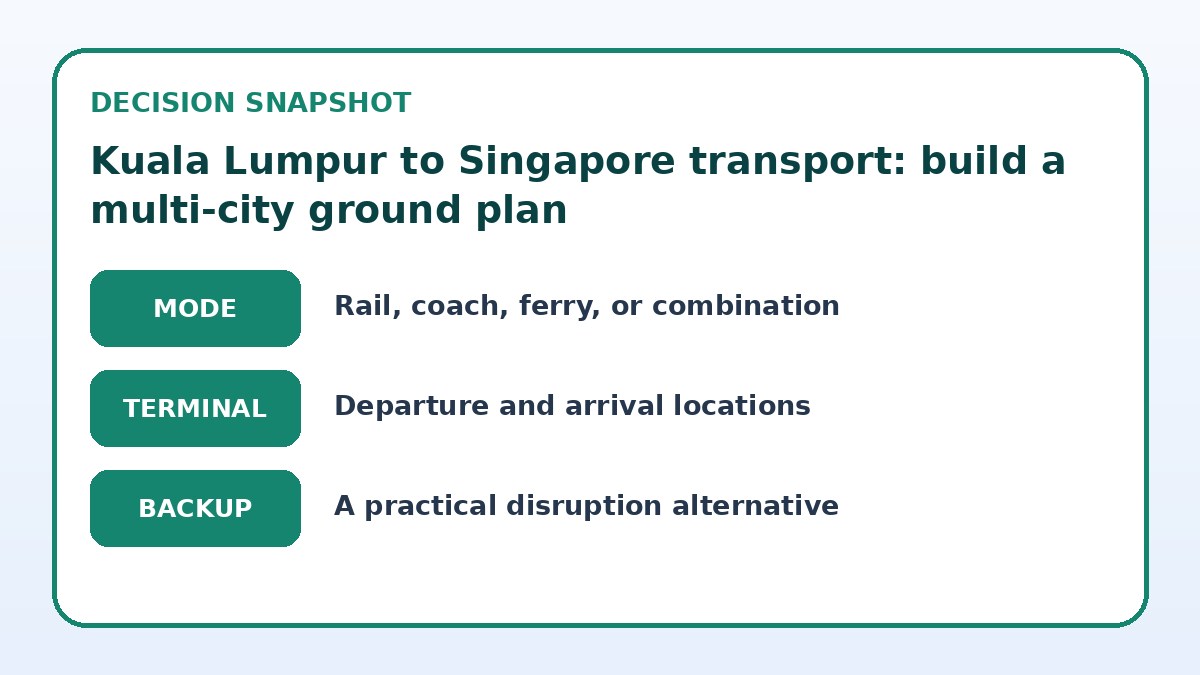
See current options before you compare the details
Availability and final conditions change. Open Trip.com now or keep reading for the practical comparison.
How to frame your multi-city ground plan
Start by listing the cities and towns you want to visit between Kuala Lumpur and Singapore and estimate how many nights you’ll spend in each place. For first-time visitors, realistic daily mileage and local travel times matter more than map distance: road speeds, stops, and border formalities can stretch a short route into a full day. Sketch two itinerary variants: a relaxed pace with overnight stays in two or three intermediate towns, and a compact express plan with fewer stops. That lets you compare total trip days against comfort and cost tradeoffs.
Next, decide whether you want a single continuous booking or a series of point-to-point tickets. Single-book multi-leg itineraries can reduce coordination effort but may limit flexibility if plans change. Separate tickets give flexibility to linger in a city but require careful timing between arrivals and departures—missing a connection can mean buying another leg at short notice. For either approach, allow buffer time for customs and local transit between stations and accommodations.
Choosing between bus, rail, and driving
Buses are often the simplest cross-border ground option: they run frequent departures on popular corridors and typically handle border procedures for passengers. Trains can be more comfortable and scenic on certain segments, and may connect major stations that sit close to city centers—useful if you want to avoid taxi time. Driving or hiring a private car gives the most control and the flexibility to stop en route, but requires attention to border-crossing vehicle paperwork, local driving rules, and parking arrangements in city centers.
When comparing modes, ask yourself whether you value predictable seat space and restrooms, the chance to walk and stretch at stops, or the ability to carry extra luggage without restrictions. Also consider how many times you’ll clear immigration: some options mean a single border crossing, others require exit/entry formalities at both sides. Finally, think about local onward travel at each stop—rail stations usually tie into local transit, while some bus terminals are outside city centers and need extra transfer time.
| Approach | Best for | Tradeoff to check |
|---|---|---|
| Express bus | Budget-conscious travelers who want frequent departures and direct point-to-point travel. | Longer journey time and variable comfort compared with premium rail or private cars; check luggage limits and terminal locations. |
| Train (combined legs) | Passengers who prefer stable seating, scenic route sections, and central stations. | May require transfers and schedule matching; trains can be less frequent on cross-border corridors and need connector transport. |
| Self-drive or private car | Groups or travelers wanting flexible stops, door-to-door pickup, and control over daily pacing. | Responsibility for border vehicle paperwork and parking; potentially higher cost and more planning for permits and insurance. |
| Mixed-mode plan | Visitors building a multi-city itinerary who want to optimize each leg for time or experience. | Requires more coordination and buffer time between different providers; separate tickets raise rebooking risk if delays occur. |
Ready to check the option that fits your plan?
Use your exact dates and traveler details so the provider page can show the current total and conditions.
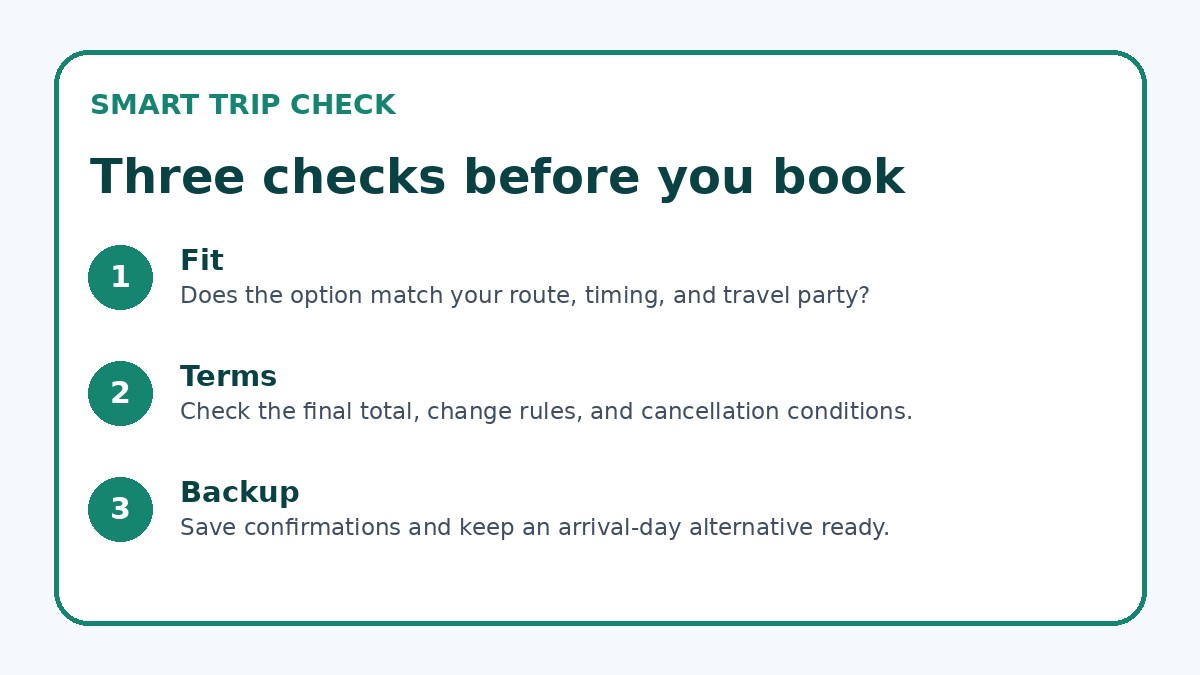
Practical booking and verification steps
Before you reserve anything, gather reliable details for each leg: exact departure and arrival locations, approximate journey duration, luggage allowances, and whether the operator manages border processing on board. When provider-specific facts can change, check the operator’s final booking page for baggage rules, boarding addresses, and cancellation or rescheduling policies. If you use a comparison site (Trip.com can be one option to view current availability), treat it as a convenience but confirm critical details on the transport provider’s official page before committing.
Time buffers are essential. Build in at least moderate layover time between independent legs to allow for border delays, local transfers, and unforeseen slowdowns. If you’re booking separate tickets, avoid tight connections; if you book a through-ticket, confirm how the operator handles missed connections. Keep digital and printed copies of travel documents, and note contact numbers for stations or operators so you can rebook quickly if needed.
Before you book
- List all planned stopovers and preferred overnight locations, then assign approximate travel durations between each to create a workable daily schedule.
- Verify departure and arrival addresses (station or terminal names) for every booked leg and map local transfer options to your accommodation.
- On each transport provider’s final booking page, confirm luggage allowances, boarding procedures, and any passenger data required for immigration.
- Allow substantial buffer time at border crossings and between independently booked connections; add contingency time for delays.
- Ensure your passport meets entry and transit requirements and keep digital and printed copies of your passport and travel documents.
- If driving, confirm vehicle permits, cross-border insurance rules, and parking arrangements at each stop before committing to a rental or private transfer.
Border, visa, and document considerations
For overland travel, the border process can be the most time-variable part of the journey. Research the entry requirements for each country you’ll cross and ensure your passport has the required validity. Some ground routes require passengers to disembark for passport checks, while others carry out formalities onboard or at designated terminals. Know whether you need separate arrival stamps or if a single crossing covers both exit and entry formalities for your itinerary.
If you require a visa or travel authorization, apply well before your trip and keep proof accessible during travel. Travelers with transit visas or multiple-entry conditions should verify that their itinerary conforms to those rules. For vehicle-based travel, confirm any vehicle permits or insurance requirements that allow border crossing; for public transport, confirm whether operators require passenger data during booking to pre-populate immigration forms.
Frequently asked questions
How do I choose between a direct bus and a combined train plus bus plan?
Compare total door-to-door travel time, transfer complexity, and comfort. A direct bus may be simpler—one boarding, one fare—but could be slower and less spacious. A rail-plus-bus combination can offer a more comfortable main leg and local access at intermediate cities, yet requires coordinating schedules and possibly separate tickets. Factor in luggage handling, the locations of terminals versus city centers, and whether you prefer predictable seating or the flexibility to disembark during long stops. Always verify connection rules and boarding addresses on the provider pages before booking.
Can I expect immigration to be quick on overland routes between Kuala Lumpur and Singapore?
Border processing times vary by time of day, season, and the type of service you use. Some services process passengers onboard or at dedicated checkpoints, while others require you to queue at official counters. Avoid planning tight same-day connections that leave little margin for border delays. Carry all required travel documents readily accessible and check whether the operator requests passenger information in advance to speed up formalities. For exact procedures, consult the transport provider’s booking details and official border authority guidance.
Is it better to book all legs together or separately when building a multi-city ground plan?
Booking all legs together reduces the need to manage separate reservations and may simplify rebooking if an operator handles missed connections, but it can limit flexibility if you decide to extend a stay. Separate tickets let you linger in a city without changing a through-ticket, but they increase the risk and cost if you miss a connection. If you choose separate bookings, pad your schedule with generous buffers and know where to rebook fast. Confirm cancellation and change terms on each booking page to understand your options.
Final planning note
Building a multi-city ground-transport plan from Kuala Lumpur to Singapore is about tradeoffs: speed versus flexibility, cost versus comfort, and single-book convenience versus independent-ticket freedom. Start by mapping your desired stops and how much time you want in each place, then choose a primary mode for the longest legs and fill in connectors that match your pace. Always verify key details—departure/arrival locations, baggage rules, boarding procedures, and change/cancellation policies—on the provider’s final booking page before you pay. With thoughtful buffers for border checks and transfers, a mixed-mode ground itinerary can deliver a richer, more adaptable experience than a single nonstop transfer.
Continue planning
Check current options and final conditions
Use the provider page to confirm live availability, the final total, cancellation terms, and every condition that matters to your trip.
This evergreen planning guide was created with AI-assisted drafting and a structured quality review. It does not display live prices, schedules, availability, visa guidance, or provider rankings. Verify current details before booking. Some links are affiliate links; we may earn a commission at no additional cost to you.