If you and your partner wonder whether a Munich car rental will improve your trip, the short answer: most central-city stays are easier without a car, but driving makes sense for flexible day trips, alpine access, or when you carry bulky gear. Couples who plan to stay mainly in central districts, visit museums, stroll beer gardens, and use airport or train links will usually find Munich’s S-Bahn/U-Bahn/tram/bus network fast, frequent, and comfortable. Conversely, if your schedule includes early starts for the Alps, wine-country routes, or multi-stop countryside touring, a car can save time and let you chase light for photos. This guide lays out the practical tradeoffs—mobility, parking, stress, and cost—so you and your partner can decide which approach fits your pace, priorities, and preferred kind of togetherness on the trip.
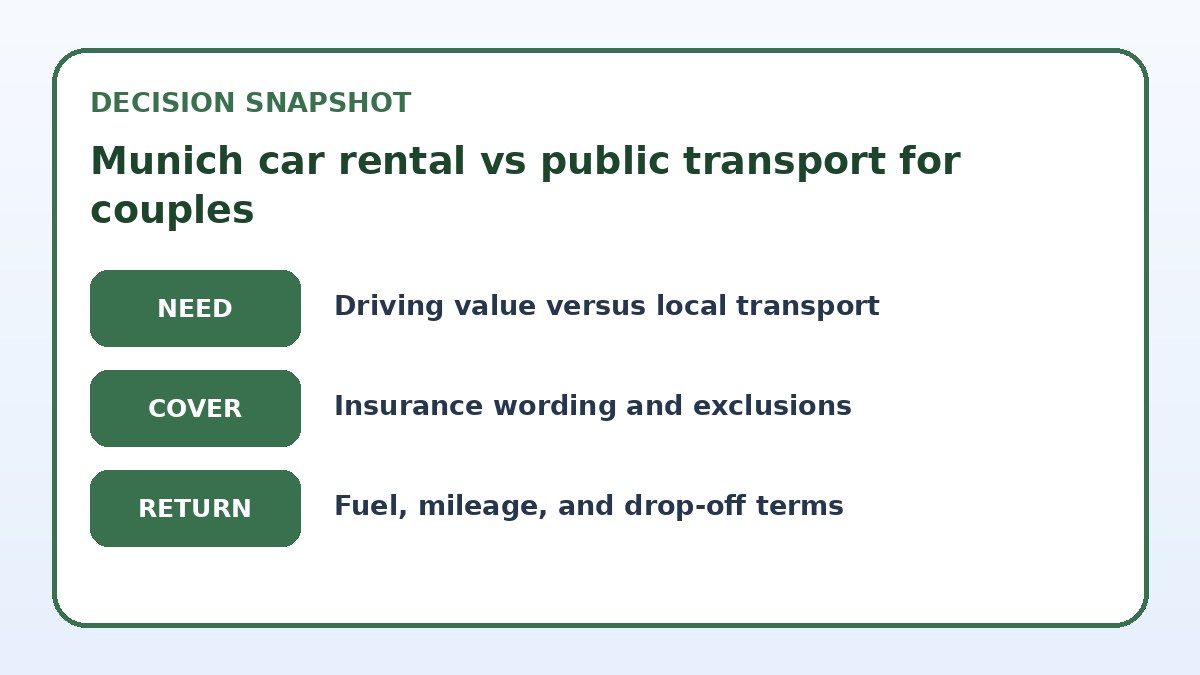
See current options before you compare the details
Availability and final conditions change. Open Trip.com now or keep reading for the practical comparison.
Convenience within the city
Munich’s city center is compact and highly walkable, with a layered public-transport network that connects key neighborhoods, cultural sites, and main train stations. For couples staying in central districts (Altstadt-Lehel, Maxvorstadt, Schwabing), the U-Bahn and tram can route you close to most attractions, removing the need to hunt for parking or navigate one-way streets. Public transit also allows relaxed evenings: you can enjoy a long dinner or beers without worrying about driving home, and frequent service reduces time lost waiting.
A car in the city can feel more like a liability than a convenience because of limited curbside parking and local parking fees in many central zones. If you plan only occasional journeys outside the core, consider combining short car rentals or rideshares for specific days with transit the rest of the time. Also account for luggage transfers on arrival and departure—taxi, airport express, or a single one-way rental may be better for couples who dislike the repeated hassle of parking.
Day trips, scenic drives, and couple-focused escapes
For couples who want to explore Bavarian lakes, castles, or mountain valleys on their own schedule, a car dramatically increases reach and spontaneity. Public transit can take you to some popular day-trip destinations, but many scenic roads, alpine passes, and small towns have limited or infrequent service that requires careful timetable planning. With a car you can chase sunrise or golden-hour light, layer stops for a picnic, and carry bikes, hiking boots, or a picnic without juggling connections.
That freedom comes with planning responsibilities: decide whether you want to base yourselves in Munich and make day drives, or include overnight stops outside the city. Long single-day drives can be tiring for the driver, so consider splitting driving duties. If you plan to visit multiple small towns or photographic viewpoints, the ability to alter your route spontaneously often outweighs the convenience of relying solely on trains and buses—especially for couples who prioritize intimacy and flexibility over a fixed itinerary.
| Approach | Best for | Tradeoff to check |
|---|---|---|
| Rely on public transport | Couples staying centrally who want relaxed evenings, cultural visits, and less logistical hassle. | Less flexibility for countryside or alpine day trips and dependence on timetables for some destinations. |
| Rent a car for your whole stay | Couples prioritizing freedom to explore rural Bavaria, multiple small towns, or driving scenic routes. | Higher parking effort and stress in the city; increased planning for parking and fuel. |
| Hybrid: transit plus short car rentals | Couples who want city ease and a few self-driven day trips without full-stay parking hassles. | Requires coordination of pickup/return and careful timing to avoid extra fees or wasted time. |
| Use transit and point-to-point taxis/rideshares | Couples seeking convenience for occasional off-network trips without driving responsibility. | Potentially higher per-trip costs and dependence on availability late at night or in rural areas. |
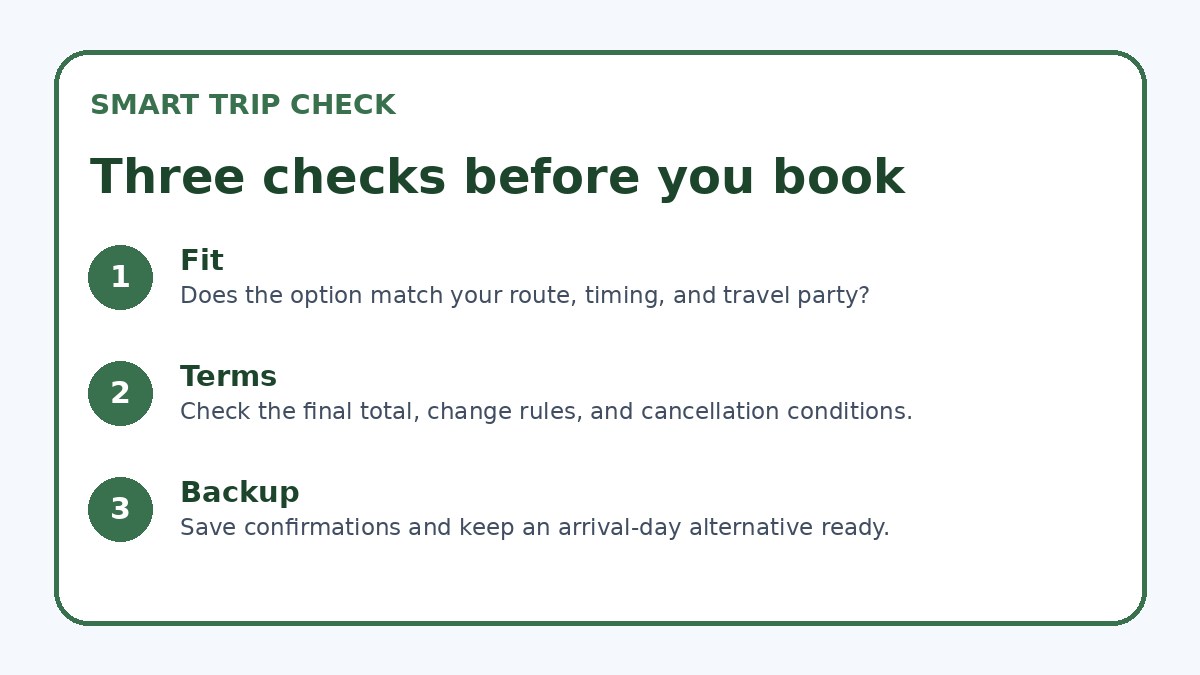
Ready to check the option that fits your plan?
Use your exact dates and traveler details so the provider page can show the current total and conditions.
Costs, parking, and practical burdens
Comparing costs for couples isn’t just daily rental versus transit fare; consider parking, congestion zones, fuel, and the time cost of finding spots. Parking in central Munich can be expensive and limited; many hotels have restricted or no guest parking. When you add the friction of feeding meters, booking parking in advance, or using public garages, the effective daily cost and annoyance can tilt the decision toward transit for shorter stays.
Public transport tickets often cover both partners on a day pass or regional pass depending on the ticket rules—you’ll want to verify whether a single ticket covers two adults or if couples need separate fare products. If a rental car is essential to your plans, research hotels with on-site parking and read the provider’s terms about where to return the vehicle and any mileage rules. Always check the final booking pages for the rental provider and for local parking options before you commit, since provider policies and parking availability can change.
Before you book
- Decide which days you want full flexibility; book a car only for those days to reduce parking burden in the city.
- Check your hotel’s parking policy and reserve a spot if you plan to use a car during your stay.
- Compare travel time and connection options for intended day trips—use the provider’s schedules to confirm transit feasibility.
- If renting, read the rental agreement carefully for mileage limits, fuel policy, and insured drivers before booking.
- Factor driver rotation and rest time into long-day plans so one partner isn’t exhausted after a full day of driving.
- Confirm luggage transfer options from arrival (train station or airport) to your hotel to avoid carrying heavy bags on transit.
Stress, comfort, and the couple experience
A holiday’s emotional tone matters in the decision. Public transit removes driving stress and leaves couples free to converse, nap between sites, or enjoy a drink. It also reduces logistical decisions—no tolls, fewer narrow streets, and no worry about unfamiliar traffic laws if you prefer letting someone else handle travel navigation. For many couples, relaxed, unstructured time together in cafés and parks outweighs the marginal freedom a car provides within the city.
Driving can create memorable shared experiences—sunset drives, remote picnic spots, and those small confrontations that become funny stories later. But it can also introduce tension if one partner dislikes city driving or parking. Talk through who will drive, how many hours you want to spend behind the wheel, and how important spontaneous side trips are to your plans. If concerns remain, consider a hybrid plan: rely on transit in the city and rent a car for one or two predetermined days to reach places private transport serves best.
Frequently asked questions
Can couples rely on trains and buses to reach Neuschwanstein or nearby castles from Munich?
Yes, many castles and popular Bavarian sights are reachable from Munich by a combination of regional trains and local buses, though schedules and journey lengths vary. For each target destination, check current rail and bus timetables and connection details before deciding whether to go by public transport or rent a car. If you prefer fewer transfers and direct control over timing, a car can reduce travel time for multi-stop castle routes. Use official rail and regional bus pages or a consolidator like Trip.com to compare current connections, and verify whether station-to-attraction transfers are required.
Is parking in Munich hotels easy to book when renting a car?
Hotel parking availability differs widely; some central hotels include spaces, others have limited guest garages or rely on nearby public garages. Before confirming a rental, contact your hotel or check its booking page to confirm whether a space can be reserved and if there are height or size limits. If a guaranteed hotel spot isn’t possible, research nearby public parking garages and their access rules. Remember to verify any additional parking charges directly on the hotel or garage booking page since policies and capacities can change.
How do congestion rules and low-emission zones affect couples driving in Munich?
Munich and many German cities have low-emission zone rules that affect which vehicles can enter certain areas. If you plan to drive into the city, confirm whether your rental vehicle meets the local emissions sticker requirement and whether any inner-city restrictions apply to your intended routes. Rental providers will usually note emissions compliance on the booking page, but always verify the vehicle’s allowed status before pickup. If in doubt, plan to park on the outskirts and use public transit for the central area to avoid fines or unexpected access limitations.
Final planning note
For most couples spending time in Munich’s central neighborhoods, public transport offers the smoothest experience: it reduces stress, avoids parking headaches, and lets you linger without worrying about a car. Choose a rental if your plans prioritize Alpine mornings, flexible multi-stop rural days, or carrying outdoor gear that’s awkward on trains. A hybrid approach—using transit for city days and renting a car for one or two preplanned excursions—often delivers the best balance of romance, flexibility, and relaxation. Whatever you choose, verify rental terms, hotel parking, and transit connections on the provider’s final booking pages before you commit.
Continue planning
Check current options and final conditions
Use the provider page to confirm live availability, the final total, cancellation terms, and every condition that matters to your trip.
This evergreen planning guide was created with AI-assisted drafting and a structured quality review. It does not display live prices, schedules, availability, visa guidance, or provider rankings. Verify current details before booking. Some links are affiliate links; we may earn a commission at no additional cost to you.