If you’re a first-time visitor planning a family road trip in Fukuoka, start by combining a convenient base with a car that fits people, luggage, and the kinds of roads you’ll drive. For most families that means staying inside or near Hakata or Tenjin for easy access to rental agencies, supermarkets, and parks, then driving out to coastal attractions, islands, and onsen towns. Decide whether you need a compact for city parking and narrow streets or an estate/van for longer drives and more luggage. Check child-seat policies, driver license rules, and whether your preferred pick-up and drop-off locations match your itinerary. Below you’ll find practical tradeoffs and clear decision points so you can compare options, confirm what to verify at booking, and build a family-friendly driving plan that fits your pace.
See current options before you compare the details
Availability and final conditions change. Open Trip.com now or keep reading for the practical comparison.
Where to base your family in Fukuoka
For first-time visitors, the neighbourhood you choose as your base shapes the car rental experience. Staying in Hakata keeps you close to Fukuoka Airport, major train lines, and many rental counters, which simplifies pick-up and drop-off logistics. Tenjin offers more hotels, shops, and dining options within walking distance, useful when you want a night without driving. Both areas have supermarkets and baby supply shops where you can buy travel essentials, so you won’t need to pack everything from home.
If your plan includes early starts for day trips, choose accommodation that offers parking or confirms nearby short-term parking options. Hotels in central districts sometimes charge for parking or have height restrictions; verify these details before booking. Consider a place with kitchenette facilities for easy family meals and flexible schedules—especially helpful after long travel days. Prioritize a location with easy access to a rental office that offers English support if you prefer in-person help.
Picking the right vehicle for family comfort and island drives
Car type matters more than many travellers expect. For city-focused itineraries with occasional day trips, a compact or small estate is easier to park on narrow streets around historic districts and coastal villages. If you plan multi-day routes, longer drives, or trips with grandparents and lots of luggage, choose a midsize estate or a 7-seat van. These provide clearer visibility, more cargo space, and easier child-seat installation, but they reduce manoeuvrability in tight parking lots and on some rural lanes.
Also consider fuel type and transmission. Automatics are standard and easier for first-time drivers in Japan; confirm this at booking. Hybrid or fuel-efficient options reduce refuelling stops on island routes but offer less towing or load capacity than larger petrol models. Always measure the boot with your luggage and kids’ gear in mind and ask the rental agent to test-fit child seats you’ll use. When comparing vehicles, prioritize safe installation points for child seats and clear instructions in English if possible.
| Approach | Best for | Tradeoff to check |
|---|---|---|
| Stay in Hakata and rent a compact | Families wanting easy airport access and tight-city parking | Less space for luggage and long drives; you may need to downsize day-trip plans |
| Stay in Tenjin and rent a midsize estate | Families prioritizing comfort, shopping access, and longer road days | Larger car harder to park in narrow streets; central parking may cost more |
| Base near the coast and rent a 7-seat van | Multi-generational groups or island-hopping with lots of gear | Reduced manoeuvrability and potentially higher fuel use on long trips |
| Use public transport for city days and rent per-day | Families who prefer not to drive in the city but need a car for excursions | More planning around pick-up/drop-off times and less spontaneous flexibility |
Ready to check the option that fits your plan?
Use your exact dates and traveler details so the provider page can show the current total and conditions.
Planning family-friendly routes and daily pacing
With children, shorter driving stints and flexible stops make the difference between a relaxed day and a stressful one. Plan drives so no single stretch exceeds two hours without a meaningful stop—parks, seaside promenades, or roadside rest areas are ideal. Build one 'anchor' attraction per day (an aquarium, a castle, or a nature park) and sprinkle smaller activities—convenience-store snack breaks, playground time, or scenic viewpoint pauses—around it.
Factor in ferry schedules if you intend to visit islands like Nokonoshima or travel along the Genkai Sea coast. Ferries can change seasonally; verify sailings on provider pages before booking. Keep a few alternative stops in the same direction as backups in case of weather or delays. Finally, check parking availability at key sites: some smaller attractions have limited space, so consider arriving earlier in the day or parking in a nearby town and walking in.
Before you book
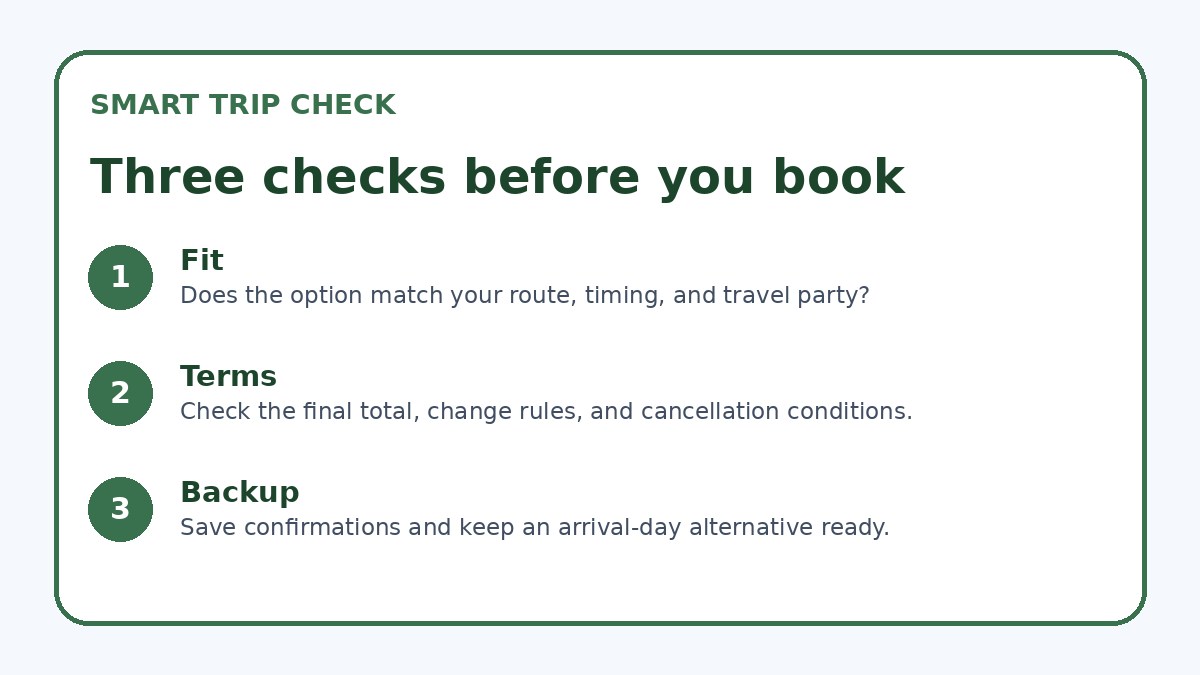
- Confirm which driver’s license format the rental company accepts and carry the original document plus any required translation or IDP.
- Reserve child seats or boosters in advance and request written confirmation of make and size so you can check fit at pick-up.
- Measure your luggage and request a vehicle with enough boot space; ask the agent for exact cargo dimensions if you have bulky items.
- Verify pick-up and drop-off locations and hours, including whether after-hours returns are possible and if extra fees apply.
- Read the insurance excess and optional waiver terms on the rental contract; screenshot the final terms page before payment.
- Plan one realistic daily driving segment under two hours between major stops and identify a nearby fallback town per day.
What to verify before you book a Fukuoka car rental
Before finalising a rental, confirm the driver's license requirements for Japan (International Driving Permit or recognized translation if required), the minimum driver age, and any additional driver fees. Ask about child-seat types, booster cushions, and installation fees, and whether these items are available at pick-up or require advance reservation. If you’ll drop the car at a different location, verify one-way drop fees and where the return office is precisely located to avoid last-minute transfers.
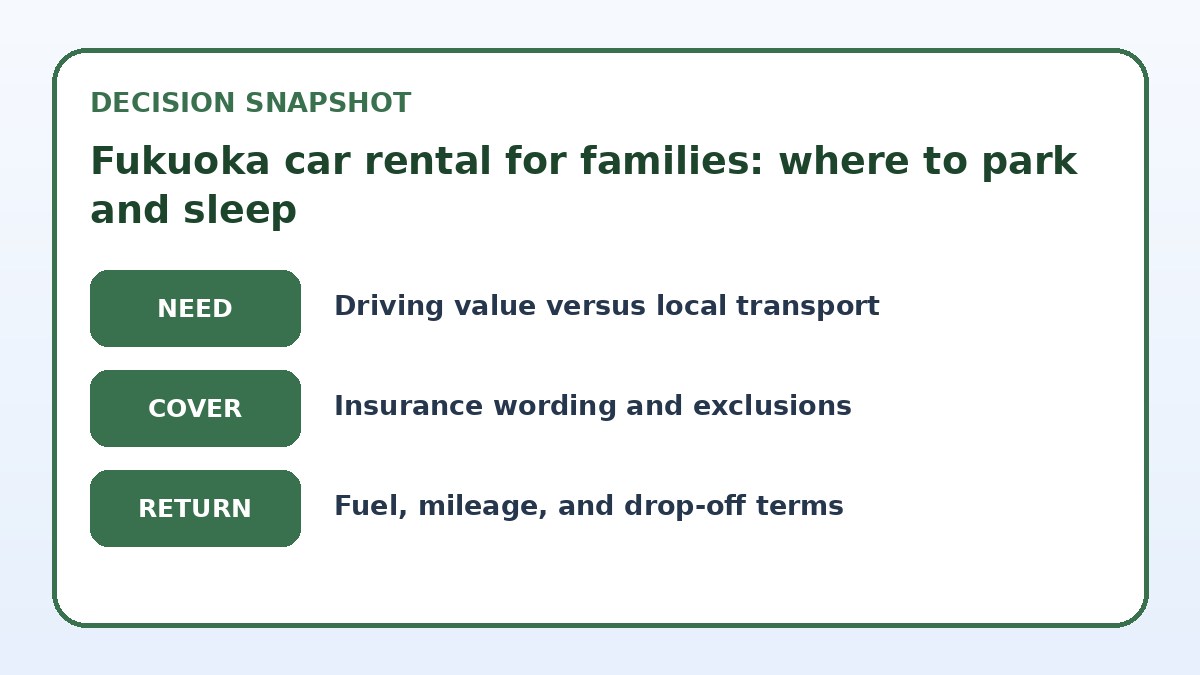
Also check the rental agreement for insurance coverage levels and the excess amount you would be liable for after an incident. Many providers offer supplemental waivers; understand what they cover and what they exclude by reading the final booking conditions. Confirm fuel policy, mileage limits, and whether toll payments are cashless or require an in-vehicle device. For live availability and detailed terms, compare booking pages directly—Trip.com can be one of the places to check current options, but always read the provider’s own final terms before payment.
Frequently asked questions
Do I need an International Driving Permit to rent a car in Fukuoka?
Many visitors need either an International Driving Permit (IDP) or an official translation of their home licence depending on their country of issuance. Rental companies and traffic authorities look for specific document formats—so confirm the accepted licence type with your chosen provider before you travel. If you arrive without the correct paperwork, agencies may refuse to let you drive. Always carry your passport along with driving documents while driving, and verify final requirements on the rental company’s booking page or the relevant government transport site.
What child-safety options should I expect and how should I arrange them?
Rental firms commonly offer infant seats, toddler seats, and booster cushions, but availability varies and sizes differ between suppliers. Reserve the exact seat type you need at booking and ask for confirmation; on pick-up, check that the seat installs securely and matches your child’s height and weight. Bring any harness extenders or back-up straps you trust, and allow time during pick-up to have staff demonstrate installation. If your child is particularly large or needs a specific medical restraint, bring your own and verify compatibility with the vehicle.
Are tolls and parking difficult for visitors driving around Fukuoka?
Tolls are common on expressways and some bridges; many rental cars have electronic toll devices or cashless systems, but policies vary. Ask whether the rental includes an ETC device or how tolls are charged to the renter. City parking is generally available near major attractions but can be limited in older towns or along narrow streets; expect paid parking near central sites. Plan routes that include rest areas and larger public lots, and keep a credit card or cash accessible for parking and toll payments until you know how your rental handles them.
Final planning note
Planning a family road trip in Fukuoka becomes manageable when you match your base and vehicle to your travel rhythm. Start by choosing a central neighbourhood—Hakata or Tenjin—for easy rental access and backup transport options, then pick a car that balances parking needs and passenger comfort. Map daily drives with short segments and fallback stops, and verify driver-license rules, child-seat availability, insurance excess, and toll handling before you book. Take time at pick-up to test-fit seats and confirm return logistics. With those checks done, you’ll have a flexible, family-friendly plan that keeps travel stress low and maximizes time exploring Fukuoka’s coast, parks, and islands.
Continue planning
Check current options and final conditions
Use the provider page to confirm live availability, the final total, cancellation terms, and every condition that matters to your trip.
This evergreen planning guide was created with AI-assisted drafting and a structured quality review. It does not display live prices, schedules, availability, visa guidance, or provider rankings. Verify current details before booking. Some links are affiliate links; we may earn a commission at no additional cost to you.