Practical answer up front: for most couples visiting central Berlin, public transport is the smarter default—efficient, dense, and easier for short stays. Choose a rental car if your itinerary focuses on day trips beyond the city (picturesque Brandenburg countryside, Potsdam gardens, or the Baltic coast) or if one partner has mobility needs that make transit changes difficult. Decide by comparing where you’ll sleep, how many day trips you’ll take outside the S-Bahn/U-Bahn network, and how comfortable you are navigating wider roads and parking. Bring your itinerary, estimate door-to-door times using transit planners and navigation apps, and check parking options at your accommodation. Later sections explain tradeoffs—costs, flexibility, stress, and environmental factors—plus a checklist to confirm before you book and three FAQs couples ask most often.
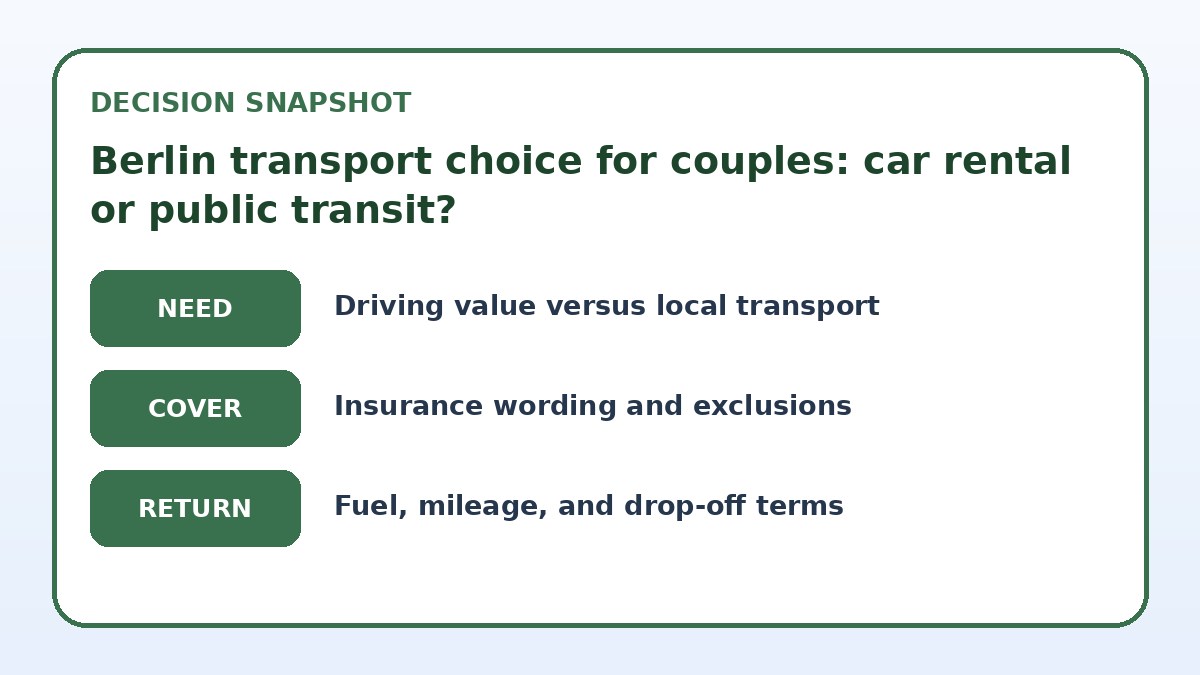
See current options before you compare the details
Availability and final conditions change. Open Trip.com now or keep reading for the practical comparison.
How central lodging steers the choice
Where you sleep is the single most practical determinant for couples. If your accommodation is inside the Mitte, Friedrichshain, Kreuzberg, Charlottenburg, or Prenzlauer Berg neighborhoods, you’ll likely be within a short walk of frequent U-Bahn or S-Bahn connections and many tram or bus lines. That proximity makes sightseeing, dinner changes, and spontaneous neighborhood exploration straightforward without a car. Walking and short public transport hops often save time compared with finding and paying for parking, and they reduce the stress of navigating Berlin’s one-way streets and occasional construction detours.
If you plan to stay outside the inner core—near the airport, in Potsdam, or in a village-style guesthouse—public transport remains possible but slower and less frequent. For couples who value flexible morning departures or late returns without checking timetable gaps, a car can be a sensible convenience. Before booking, map your key addresses against transit lines to see whether door-to-door times are acceptable; if transit legs require many transfers or long waits, renting becomes more defensible.
Daily rhythm: sightseeing in town versus day trips
For a typical city-focused eight- to ten-stop itinerary (museums, neighborhoods, markets, and a riverside stroll), public transport usually wins. Berlin’s network links major sights and neighborhoods and performs well for predictable flows—morning museum runs, midday markets, and evening dining. Couples who like to meander, pop into galleries, or split up for short solo detours find transit combined with walking especially convenient. Using tickets that cover zones you need and checking connections with a transit app will make those days smoother without the overhead of fuel, parking, and city driving stress.
By contrast, if your plan includes multiple full-day trips to places outside the core—Potsdam palaces, Spreewald canals, or day trips to nearby towns—the car shows its strengths. A car reduces transfer time, lets you carry picnic gear or cycling equipment, and makes small detours possible without worrying about return connections. Consider mixed strategies: pick a car for multi-day regional legs and rely on transit while in the city. Renting only for the days you need keeps costs and urban parking hassles down—confirm flexible pick-up/drop-off locations with the rental provider before booking.
| Approach | Best for | Tradeoff to check |
|---|---|---|
| Public transport (U-Bahn/S-Bahn/tram) | Couples staying in central neighborhoods who prefer stress-free city sightseeing and easy access to cultural sites. | Less flexibility for rural day trips and dependent on scheduled services and station accessibility. |
| Renting a car for day trips only | Couples who want transit ease in the city but also plan several regional excursions beyond Berlin’s core. | You must coordinate pick-up/drop-off logistics, and short rentals may still incur fuel, insurance, and parking costs. |
| Full rental car for entire stay | Couples basing themselves outside central Berlin or with mobility needs that make frequent transfers impractical. | Higher parking hassle and urban driving stress; potentially unnecessary cost if most time is in the city. |
| Mixed approach: transit + occasional rideshares/taxis | Couples seeking maximum flexibility without driving; use transit for planned legs and rideshares for late nights or awkward connections. | Rideshares can add up on frequent use and may be slower for distant day trips compared with a private car. |
Ready to check the option that fits your plan?
Use your exact dates and traveler details so the provider page can show the current total and conditions.
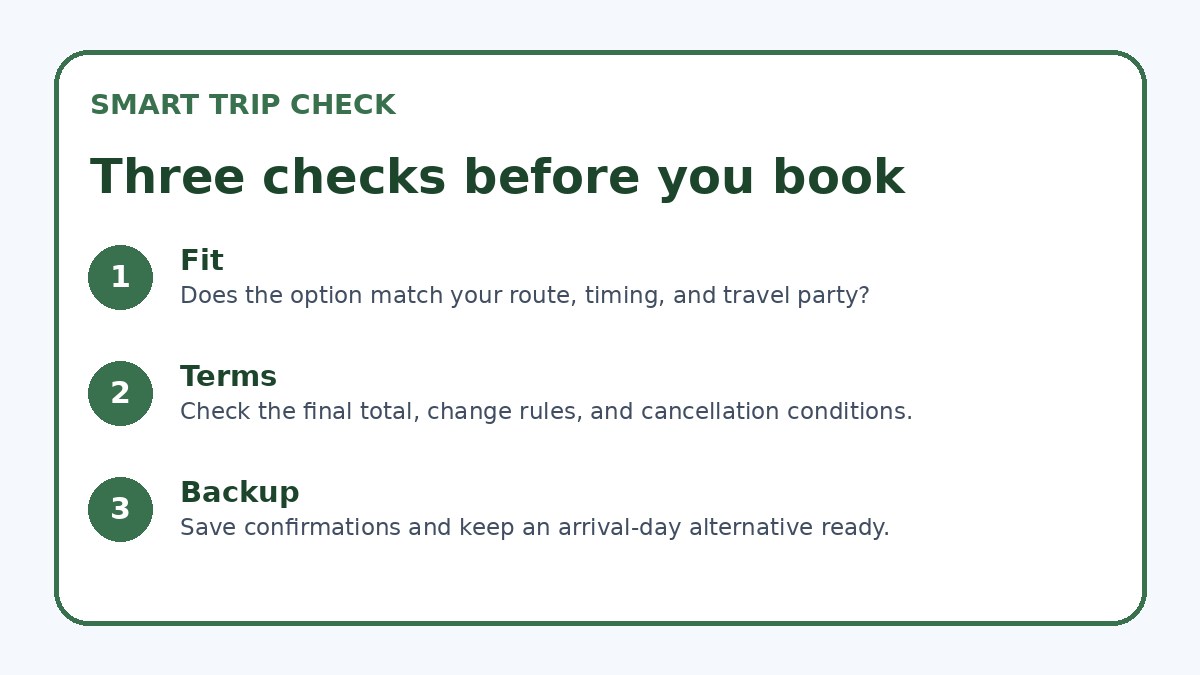
Cost, convenience, and hidden practicalities
Comparing headline rental rates against a stack of individual transit tickets can be misleading. The true car cost package includes fuel, city parking fees, potential congestion charges outside Berlin (check destination rules), tolls on certain roads, and insurance add-ons. Beyond money, account for time spent finding parking and the cognitive load of urban driving. For couples who prefer to split roles—one driving, one navigating—a car can be sociable; for those who want to relax together during travel legs, public transit lets you read, plan the next stop, or enjoy a drink without the responsibilities of a driver.
Public transport’s convenience can also hinge on luggage and physical access. If you travel with bulky bags or a stroller, check station step-free access and elevator availability on the transit operator’s site before relying on trains alone. Likewise, rental cars introduce other practicalities—fuel type, manual or automatic transmissions, and insurance coverage levels. Verify those specifics on the rental company’s booking page; don’t assume coverage or fuel policies. Trip.com is one option to compare current rental availability, but always confirm vehicle class and terms on the provider’s final booking page.
Before you book
- Map your accommodation and each planned attraction to nearby U-Bahn/S-Bahn/tram stops to estimate realistic door-to-door times.
- If renting, compare pick-up/drop-off locations, vehicle size, transmission, and mandatory insurance options on the rental company’s final booking page.
- Confirm parking availability and fees at your hotel or apartment—ask the host to specify on-site, nearby public garages, or street parking rules.
- List planned day trips beyond Berlin and measure their public transport connectivity; mark any legs requiring multiple transfers or long waits.
- Decide who will drive, how you’ll split fuel and parking costs, and carry a printed or downloaded copy of rental terms and emergency contact numbers.
- Check station accessibility for luggage or mobility aids and identify elevators or step-free routes for key transfers if you plan to rely on public transport.
Environmental and relationship tradeoffs
For environmentally minded couples, choosing transit or active travel (walking and cycling) typically lowers your carbon footprint versus a private car for urban use. Berlin is bike-friendly in many districts; pairing cycling with transit (where bikes are allowed) can be a great balance. Choosing not to drive also reduces the friction of parking and the stress of negotiating busy arterial roads, letting couples focus on shared experiences and easy conversation rather than navigation and city traffic—an underrated benefit for a relaxed holiday together.
Driving can create its own dynamics: shared playlists, scenic detours, and a sense of control over timing. But it can also introduce stress if one partner dislikes driving in foreign cities or if patience wears thin in slow traffic or while hunting for parking. Discuss expectations before booking: who will drive, who will navigate, and how you’ll split costs and responsibilities. A short trial—renting for a single day trip—helps couples test whether car travel suits their rhythm without committing to a longer rental.
Frequently asked questions
Can couples rely entirely on public transport to see Berlin’s main attractions?
Yes—most central attractions are connected by U-Bahn, S-Bahn, and tram lines, making it feasible for couples to visit museums, markets, historic sites, and nightlife without a car. That said, confirm walking distances from stations to any attractions with less obvious stops (small galleries, waterwayside restaurants) and check elevator availability if mobility or luggage is a concern. For occasional late-night returns, factor in how comfortable you are waiting for a night bus or using a licensed taxi or rideshare.
How do we judge whether a rental car is worth the cost for our Berlin trip?
Start by listing non-city destinations you want to reach and calculate door-to-door times using route planners for both transit and driving. If multiple days require long transfers or slow regional connections, a car may save time and let you visit more. Then tally expected car-related costs—fuel, parking, insurance add-ons—and compare them to transit passes and occasional taxi fares. Finally, consider intangible costs: stress of city driving, parking searches, and whether you’ll actually enjoy the freedom a car brings versus relaxed transit travel.
Can we mix transport methods to get the best of both worlds?
Absolutely—many couples combine city transit with a short-term car rental for specific day trips. Pick a central base and rely on U-Bahn/S-Bahn for daily sightseeing; reserve a car for the days when you head to Potsdam, the countryside, or coastal areas where public options are sparse. When arranging this, verify flexible rental pick-up and return times and whether providers allow one-way returns if you plan different start and end points. Confirm vehicle details on the provider’s final booking page before committing.
Final planning note
There’s no one-size-fits-all answer for couples visiting Berlin. If your trip centers on museums, neighborhoods, cafés, and evenings in the city, public transport plus walking is usually the most convenient, lower-stress choice. If your plans include multiple rural day trips, a car adds flexibility and opens destinations that are awkward to reach by scheduled services. Many couples find a middle ground—use transit for urban days and rent a car only for regional excursions. Use the checklist to map your logistics, verify rental terms on the provider’s booking page, and agree on driving roles before you go; that clarity will keep the trip cooperative and pleasurable for both partners.
Continue planning
Check current options and final conditions
Use the provider page to confirm live availability, the final total, cancellation terms, and every condition that matters to your trip.
This evergreen planning guide was created with AI-assisted drafting and a structured quality review. It does not display live prices, schedules, availability, visa guidance, or provider rankings. Verify current details before booking. Some links are affiliate links; we may earn a commission at no additional cost to you.