
Practical answer first: prioritize one through-leg (train or bus) between Hanoi and Da Nang, then add shorter regional hops or overnight stops at places you want to explore en route. For a first-time visitor, start by deciding travel style—sleeping on a train, breaking the trip into city stops, or renting a car for flexibility—then map sensible day lengths and overnight stops that match that style. This article walks you through the decision points, tradeoffs and a simple planning workflow to build a complete multi-city ground-transport plan. You’ll learn which factors to compare when booking, what to verify on a provider’s booking page, and how to sequence transport and accommodation so your itinerary stays realistic and enjoyable.
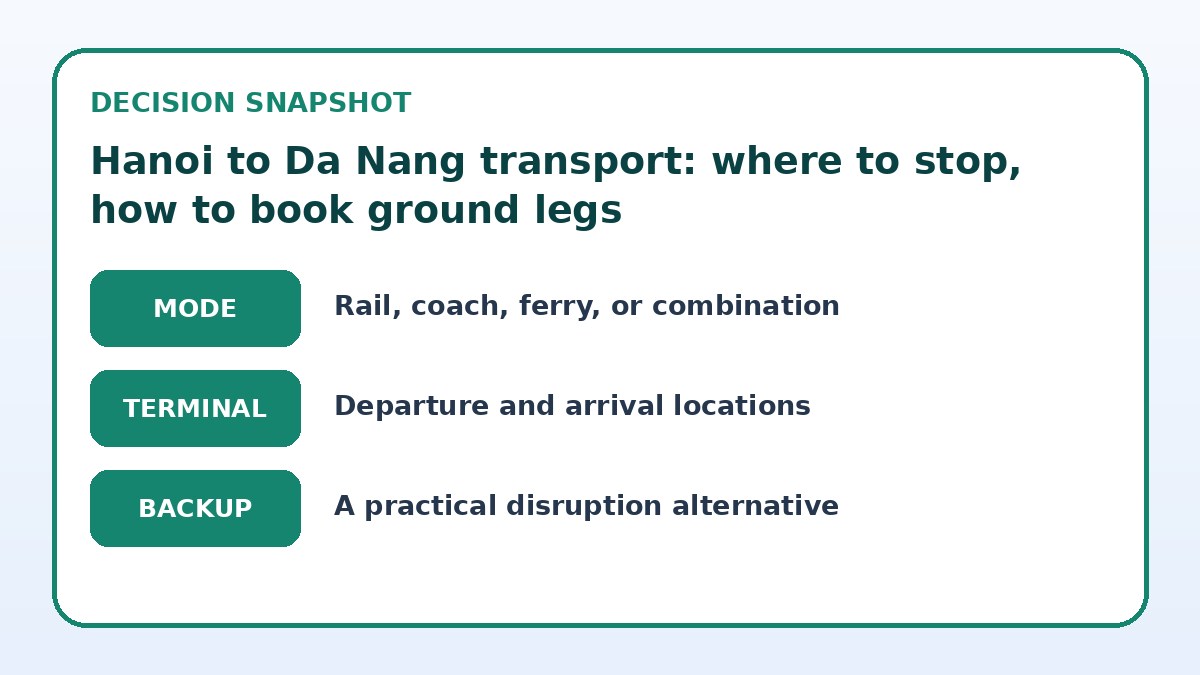
See current options before you compare the details
Availability and final conditions change. Open Trip.com now or keep reading for the practical comparison.
Choose a primary travel spine: train, bus, or self-drive
Your primary travel spine is the long-haul method that connects Hanoi and Da Nang and shapes the rest of your plan. Trains offer a steady route with built-in overnight options and predictable stop patterns that work well if you want to sleep between cities and wake up in a new place. Buses provide more departure frequency and often more direct daytime options, but they vary widely in comfort, stop frequency and luggage handling. Renting a car or hiring a private driver gives the most freedom to create bespoke stops, but it requires more local navigation, fuel planning, and awareness of driving conditions.
When choosing, think about how many intermediate stops you want, how much daylight sightseeing is important, and whether you prefer scheduled public services or flexible private legs. Each spine has tradeoffs for travel time, fatigue, sightseeing potential and logistics complexity. Use the spine to set the rhythm—overnight spine legs reduce hotel nights and daytime transit, while daytime spine travel preserves sightseeing on arrival but may require more nights overall. This framework keeps multi-city planning manageable while you pick exact routes and providers.
Build logical multi-city legs and sensible overnight stops
Work backward from Da Nang and list places you want to visit between Hanoi and Da Nang, then group them into sensible day-length legs. Avoid designing too many short hops that require repeated packing and transfers; instead aim for 1–3 intermediate stops that give at least one full day for exploring. Consider geography and transport corridors—coastal and inland routes offer different attractions and different travel speeds—then slot your chosen towns into a sequence that minimizes backtracking and respects transit frequency.
For each proposed stop, estimate whether you’ll arrive in the morning or evening, how much time you’ll need to see main sights, and whether you prefer to sleep there. Make contingency space for delays and an extra rest day if your plan includes overnight spine travel. When in doubt, choose a slightly larger hub as an overnight base: it usually offers more transport options, a broader range of accommodations, and easier onward connections for the next leg of your ground trip.
| Approach | Best for | Tradeoff to check |
|---|---|---|
| Overnight train spine | Travelers who want to sleep through most of the long distance and reduce daytime transfers | Less daytime sightseeing en route and fewer flexible stop options between cities |
| Daytime bus spine with short hops | Travelers who want to sightsee between stops and arrive during daylight | More frequent packing and potential fatigue from multiple daytime transfers |
| Self-drive or private driver | Travelers seeking full flexibility to detour, stop frequently and control pace | Greater logistical responsibility, local driving conditions and higher planning effort |
| Mixed-mode spine (train plus bus or car) | Travelers balancing comfort and flexibility, using different modes for different legs | Requires extra coordination at transfer points and careful alignment of schedules |
Ready to check the option that fits your plan?
Use your exact dates and traveler details so the provider page can show the current total and conditions.
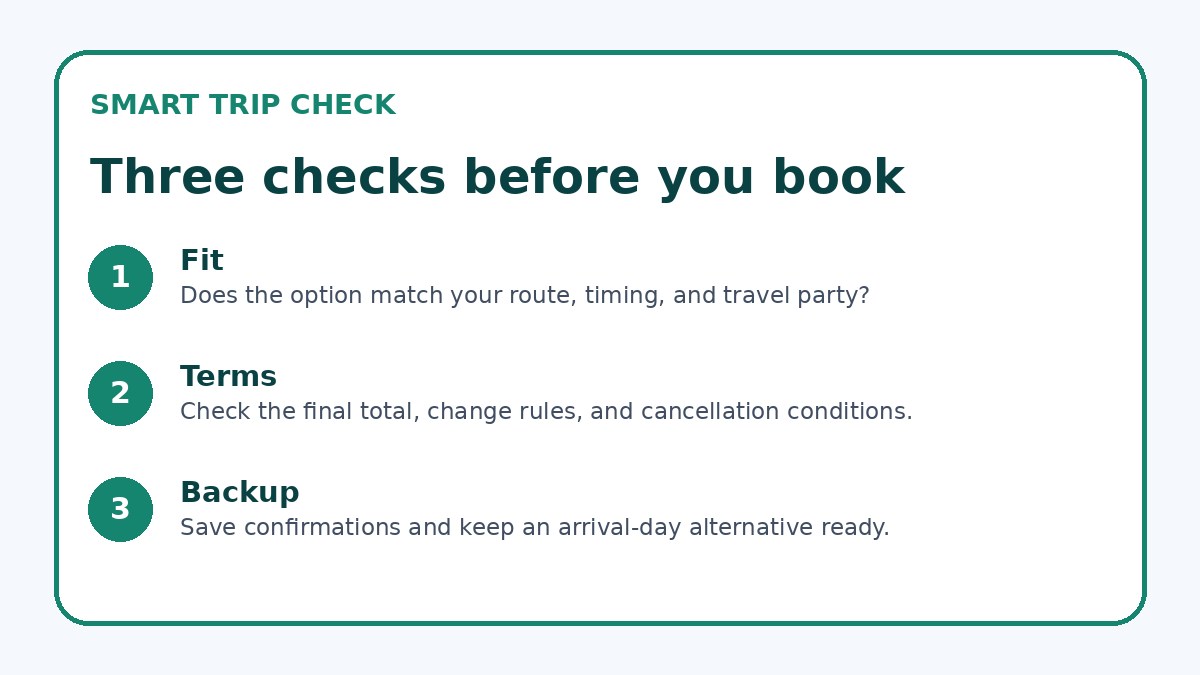
Compare and verify provider details before booking
Once you know the legs you want to book, compare operators on the concrete details that affect your experience. Look for departure and arrival locations (stations vs coach terminals), transfer time between station and hotel, baggage allowances, seat or berth types, and explicit change and cancellation terms. Because schedules and rules can change, always confirm those specifics on the provider’s final booking page—don’t rely solely on third-party summaries or past reports. If using an aggregator, you can consult Trip.com as one comparison source but verify terms on the operator’s site before committing.
Also check how each option handles delays and missed connections: some services publish compensation or rebooking policies, while others do not. If a leg is critical to a tour or a fixed booking, consider adding buffer time or booking a slightly earlier service to reduce risk. For self-drive, verify insurance cover, pick-up/drop-off locations and any cross-region restrictions. Clear verification at booking time prevents surprises and keeps your multi-city plan reliable.
Before you book
- Decide your primary spine (train, bus, or self-drive) to set the rhythm of your whole itinerary.
- Map intermediate stops and confirm which ones merit an overnight versus a same-day visit.
- Check final booking pages for departure/arrival addresses, baggage rules, and refund/change policies.
- Book the long-haul spine leg first, then align accommodations and local transfers to those arrival times.
- Add at least one buffer day mid-trip to absorb delays or to extend a stop you enjoy.
- Prepare printed and digital confirmations plus clear directions from stations to your booked hotels.
Sequence bookings and prepare practical contingencies
Book the spine leg first to lock the main movement, then reserve hotels or secondary transport that align with the spine’s arrival times. If you expect to change plans, choose flexible room rates or transport tickets with reasonable change options. Keep digital and paper copies of confirmations for all legs, and note transfer times between arrival points and accommodations so you can estimate taxi or transfer needs. Planning this way reduces stress on travel days and helps you manage local pick-ups, especially where station to hotel transfers are not well coordinated.
Prepare contingencies: build at least one buffer day in the middle of your itinerary, note alternative transport methods for each leg, and prepare local contacts or maps for station exits and common taxi stands. If you rely on public transport late at night or in smaller towns, have a list of nearby accommodations as a backup. These contingencies let you adapt if a leg is delayed or if you decide to extend a stop for unexpected discoveries.
Frequently asked questions
Should a first-time visitor choose the train or bus between Hanoi and Da Nang?
Neither choice is universally best; it depends on your priorities. Choose the train if you prefer overnight travel that reduces the number of hotel nights and lets you wake up in a new city. Choose daytime buses if you want more frequent departures, more direct daytime arrival times, and the chance to see countryside en route. Compare seat comfort, night-versus-day tradeoffs, and how each option fits your planned stops. Always verify exact departure and arrival locations and service details on the provider’s booking page before you buy.
How many intermediate stops should I include on a multi-city ground plan?
For first-time visitors, limit intermediate stops to one to three well-chosen places to avoid packing fatigue and wasted transit time. Pick stops that are on or close to the main travel corridor to minimize backtracking. Allocate at least one full day in each stop so you can see key sights without rushing. If you crave flexibility, plan a slower pace with fewer stops; if you want to sample many places, group nearby towns for quick daytime visits and use a larger hub as an overnight base.
What must I verify on the provider’s booking page before finalizing tickets?
On the provider’s booking page verify exact departure and arrival locations (station or terminal names and addresses), baggage allowances and size rules, seat or berth class descriptions, and the operator’s cancellation or change policy. Also confirm any required ID or check-in deadlines, pick-up or drop-off procedures, and whether transfers to local hotels are included or need separate arrangement. If using a third-party site to compare options, double-check these details on the operator’s official page before completing payment.
Final planning note
Building a Hanoi to Da Nang ground-transport plan for the first time is mainly about picking a travel spine, grouping realistic intermediate stops, and verifying the practical details before you book. Start by selecting whether you want an overnight spine, daytime hops, or full flexibility with a car, then sketch your route around one to three meaningful stops. Book the main long-haul leg first, align accommodations and local transfers to arrivals, and include buffer time to handle delays or pleasant detours. With clear verification of departure points, baggage rules and change policies, you’ll have a manageable, adaptable plan that keeps travel days efficient and sightseeing enjoyable.
Continue planning
Check current options and final conditions
Use the provider page to confirm live availability, the final total, cancellation terms, and every condition that matters to your trip.
This evergreen planning guide was created with AI-assisted drafting and a structured quality review. It does not display live prices, schedules, availability, visa guidance, or provider rankings. Verify current details before booking. Some links are affiliate links; we may earn a commission at no additional cost to you.