
Practical answer up front: many first-time visitors do not need a Los Angeles car rental if they plan to stay in one neighborhood (Downtown, Hollywood, West Hollywood, or Santa Monica) and rely on rideshares, local buses, and the Metro for sightseeing. Rent a car if you want easy access to wide areas—Malibu, Griffith Observatory, the Getty, Joshua Tree day trips, or a flexible beach-hopping itinerary—or if you value a predictable schedule and private space for family gear. Traffic and parking are the tradeoffs: driving gives freedom but adds time, expense, and stress. Use this guide to compare what you plan to do, where you’ll stay, and what you’ll tolerate in terms of driving, parking, and navigating L.A.’s spread to decide whether to book a rental.
When a rental car makes sense
A Los Angeles car rental is most useful when your plans span distant neighborhoods or regional attractions that are poorly served by transit. If your itinerary includes day trips to Santa Barbara, Joshua Tree, Palm Springs, the Malibu coastline, or a mix of beach and mountain sights, a car reduces dead time and removes the need to coordinate multiple transfers. Families with small children, travelers with bulky equipment like surfboards or photography gear, and groups traveling across the region often find a rental more practical than depending on rideshares for every trip.
Driving also matters if you value spontaneity: a car lets you alter plans mid-day, follow sunset light along the coast, or detour to viewpoints without waiting for a driver service. Keep in mind the extra effort: navigating freeway interchanges, finding parking at popular destinations, and budgeting for fuel add layers to the trip. If that convenience outweighs the hassles for you, a rental is a strong choice; otherwise, weigh alternatives like a short-term car share for a single day trip instead of renting for your entire stay.
When to skip a rental and use transit or rideshares
If your stay centers on areas with good transit and compact walking routes—Downtown L.A., Koreatown, West Hollywood, Hollywood, and Santa Monica—you can often get by without a Los Angeles car rental. The Metro rail lines link several major attractions and can be faster than driving during rush hours. Rideshares fill in gaps for neighborhoods with fewer rail stops, and many hotels are located near major bus or rail lines. Avoiding a rental saves money on airport pick-up hassles, parking fees, and the stress of finding spaces in busy areas.
Choosing not to rent also means planning around schedules: transit can slow nighttime returns, and rideshare surge pricing may affect costs. Consider the convenience tradeoff versus the cost and stress of driving. If you primarily want museums, a few walkable neighborhoods, dining, and nightlife near a base neighborhood, transit plus occasional rideshare will usually give you more time to enjoy the city than spending hours in traffic searching for parking.
| Approach | Best for | Tradeoff to check |
|---|---|---|
| Rent for the whole trip | Travelers doing multiple day trips, families, or those with heavy gear who need full flexibility. | Higher total cost, parking hassles, and more time spent driving and navigating traffic. |
| Skip renting entirely | Visitors staying in a compact neighborhood and planning to use Metro, buses, and rideshares. | Less flexibility for distant attractions and potential reliance on rideshare surge pricing. |
| Rent only for specific days | Visitors who want a car for one or two excursions but prefer transit the rest of the time. | Extra logistics to pick up and drop off; may lose convenience of a single vehicle for luggage. |
| Use short-term car-share or one-way rental | Solo travelers or small groups needing a few hours or a single point-to-point trip without a long booking. | Limited vehicle choices, potential geographic restrictions, and variable hourly costs compared with daily rentals. |
How to decide based on where you’ll stay
Neighborhood choice is a key decision factor for a Los Angeles car rental. Determine whether your hotel or rental apartment includes on-site parking, what type of parking it is (free, validated, or paid), and whether you'll access attractions from that location. Staying in Santa Monica or Venice makes beach visits simple and reduces dependence on a car for coastal time, whereas a base in Glendale or near Griffith Park may require a vehicle to reach beaches or other distant sites. If your lodging lacks easy or affordable parking, the cumulative cost of garages and daily lot fees can eclipse rental savings.
Beyond parking, check transit connectivity from your chosen base. Some neighborhoods are transit-friendly with frequent services that let you reach downtown or the Westside without a car. If you prefer not to drive, factor proximity to Metro stations and major bus routes into your accommodation decision. For mixed plans, another approach is to rent a car only for specific days when you need it and use transit or rideshares for routine outings; compare local car-share or one-way rental options to keep flexibility.
Before you book
- List the exact attractions and neighborhoods you want to visit and mark which require a car for reasonable access.
- Confirm whether your accommodation includes parking, the type (on-site or off-site), and any associated daily fees.
- Compare transit times and typical driving times between key points of your itinerary during peak hours and off-peak.
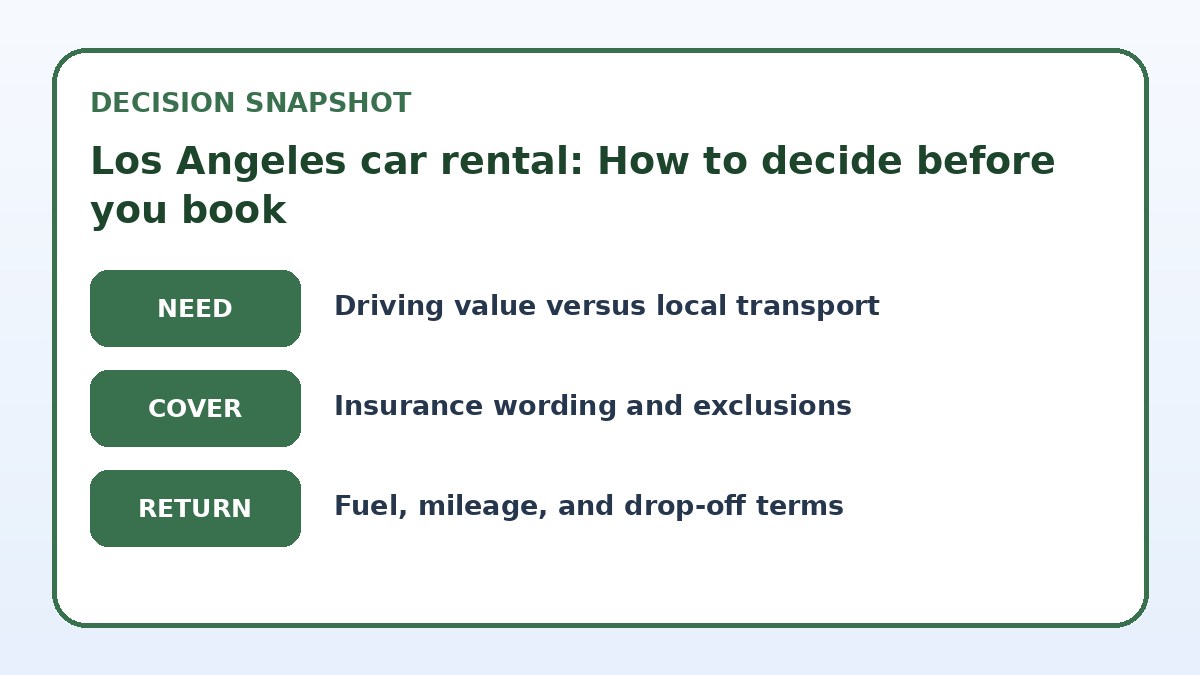
- Check your personal auto insurance and credit card rental coverage, then decide whether to buy extra protection from the rental company.
- Estimate parking and toll costs for at least three typical days and add them to daily rental estimates before booking.
- If renting, choose a compact vehicle for easier parking unless you need extra space for gear or passengers.
Practical checks before you book a rental
Before reserving a Los Angeles car rental, verify a few changing details on provider pages: pick-up and drop-off locations (airport vs. neighborhood counters), required documents and ID rules, age and driver restrictions, and the exact fuel and mileage policies. Confirm insurance coverage differences between your personal auto policy, credit card protection, and the rental company’s options—don’t assume full coverage. If collecting from LAX, check the current shuttle or off-airport pickup arrangements on the rental provider’s booking page; procedures and terminal logistics change.
Also research parking options where you’ll drive: hotel policies, typical garage availability near attractions, and any residential permit restrictions you might encounter in certain neighborhoods. Estimate likely daily parking costs for your planned stops and add them to your rental cost comparison. Finally, choose a vehicle size aligned with parking expectations—compact cars are easier to slot into tight garages, while larger SUVs may be helpful for gear but tougher to park. Confirm whether toll payment devices are offered and how tolls are billed to avoid surprises.
Frequently asked questions
Can I pick up a rental car at LAX or nearby locations?
Yes, many rental companies serve Los Angeles International Airport, but pickup procedures and shuttle or terminal arrangements can change. Before booking, check the rental company’s official booking page for the current pickup location, shuttle instructions, and whether off-airport counters require an additional transfer. If you prefer a neighborhood pickup to avoid airport traffic or shuttle waits, compare downtown and Westside rental locations and verify their operating hours and any one-way fees that could apply when returning the car.
Is driving in Los Angeles difficult for visitors?
Driving in Los Angeles is manageable for most visitors but requires planning for congested highways and unfamiliar interchanges. Expect slower-than-expected travel during morning and evening rush hours; allow extra time between appointments. Use a reliable navigation app that shows live traffic, lane guidance, and alternate routes. Be prepared for limited parking at popular destinations and read local rules—some areas have timed street parking, permit zones, or clearance limits. If you’re uncomfortable with heavy traffic, consider using transit, rideshares, or a driver for difficult segments.
How should families or groups decide about a rental?
Families should weigh convenience against cost: a rental car simplifies logistics with children, car seats, strollers, and luggage, and makes door-to-door travel easier. Confirm whether car seats are available from the rental provider or bring your own, and check the size of the vehicle against your cargo needs. Also add parking fees and the time cost of traffic to your budget. For groups splitting costs, a single larger vehicle may be cheaper than multiple rideshares, but factor in the added challenge of parking and navigating a bigger car in crowded areas.
Final planning note
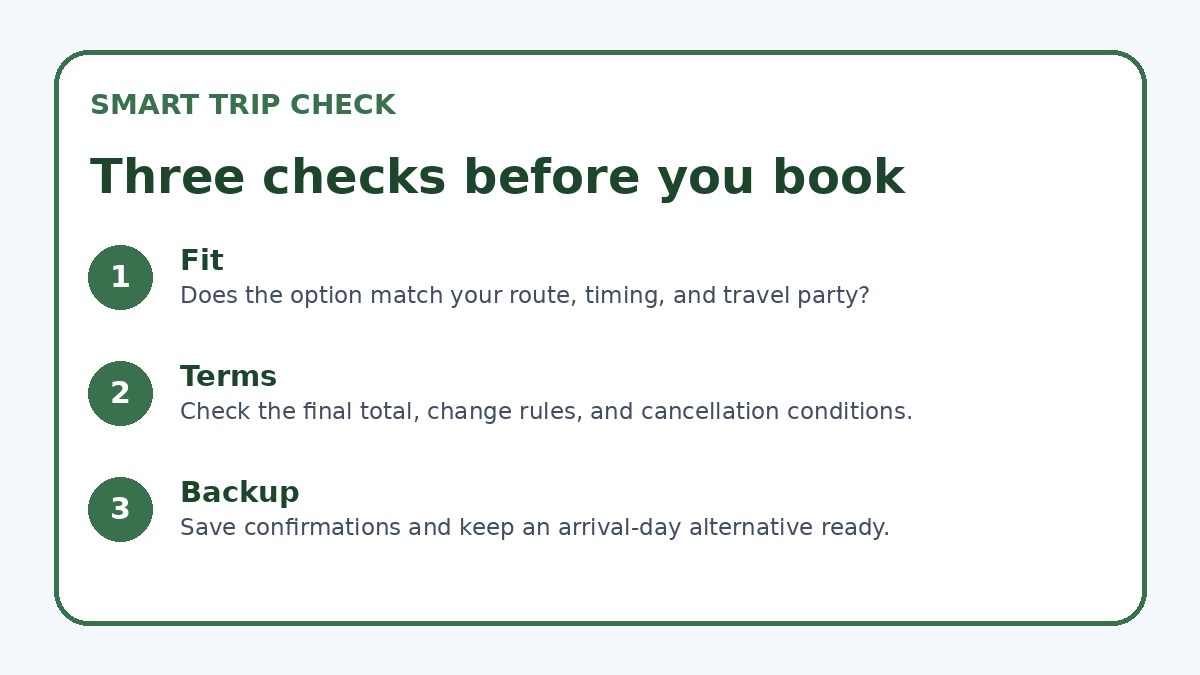
Deciding whether a Los Angeles car rental fits your first visit comes down to three factors: where you’ll stay, what you want to see, and how much driving you’re willing to tolerate. If you plan to stay in a compact neighborhood and concentrate on museums, restaurants, and nightlife, skip the rental and use transit plus rideshares; you’ll save money and avoid parking headaches. If your plans include multiple regional outings, traveling with children or bulky gear, or you value full itinerary flexibility, rent a car but factor in parking, tolls, and traffic into your schedule. Use the checklist above, verify rental and parking details on provider pages before booking, and consider a hybrid approach—rent only for the days you truly need a vehicle—to get the best balance of convenience and cost.
Continue planning
Check current options and final conditions
Use the provider page to confirm live availability, the final total, cancellation terms, and every condition that matters to your trip.
This evergreen planning guide was created with AI-assisted drafting and a structured quality review. It does not display live prices, schedules, availability, visa guidance, or provider rankings. Verify current details before booking. Some links are affiliate links; we may earn a commission at no additional cost to you.