If you’re planning Hong Kong alone, the short answer is this: for most solo visitors, Hong Kong’s public transport network will be faster, cheaper, and easier for getting around urban areas and between main islands; renting a car makes sense only if your itinerary focuses on more remote New Territories locations, flexible day trips, or if you value complete schedule control. Read on for concrete decision criteria—time, comfort, luggage, mobility needs, and cost structure—and the practical tradeoffs you’ll face when choosing between a Hong Kong car rental and public transport. I’ll also list the specific things to verify on rental and transit provider pages before you book, plus a compact checklist to prepare your solo trip so you don’t get stuck with the wrong option mid-trip.
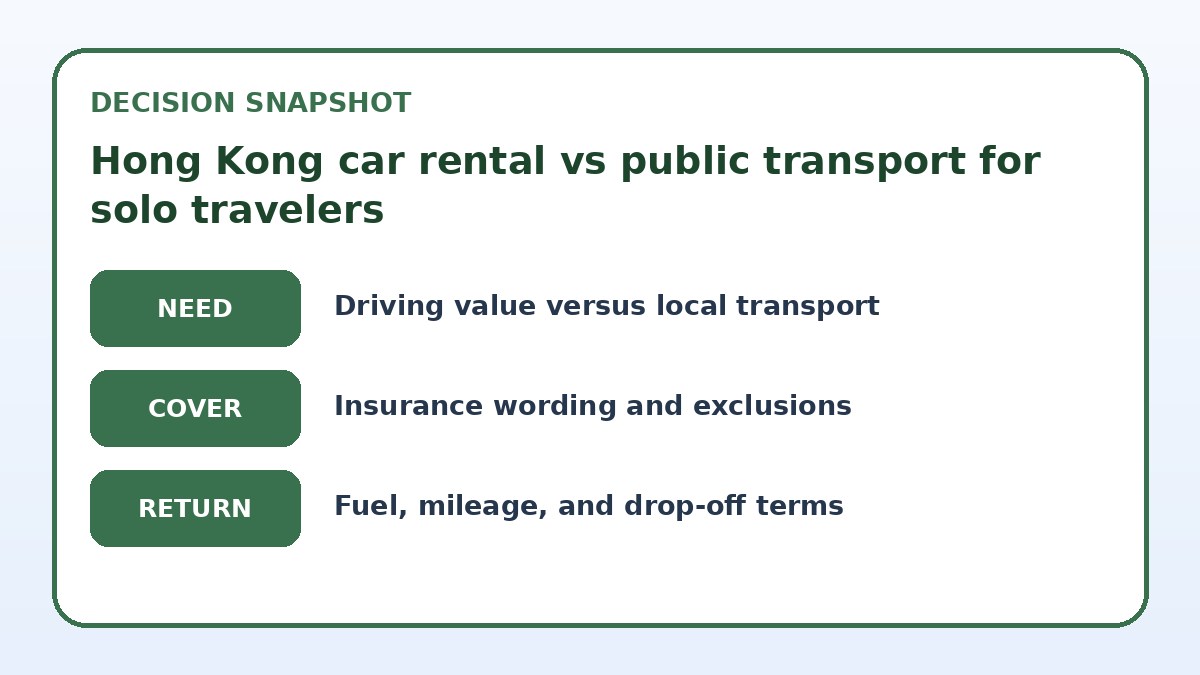
See current options before you compare the details
Availability and final conditions change. Open Trip.com now or keep reading for the practical comparison.
How Hong Kong’s transport landscape affects solo travelers
Hong Kong’s built environment concentrates population and attractions into compact, transit-friendly corridors. The Mass Transit Railway (MTR) connects major neighborhoods and tourist sites with frequent service, while buses, minibuses, ferries, and trams fill in coverage gaps and reach many islands and coastal areas. For a solo traveler whose days center on urban sightseeing, dining, museums, markets, and short hikes, the public network offers predictability and avoids the stress of parking, unfamiliar traffic rules, and congested roads.
At the same time, Hong Kong includes quieter rural areas, country parks, and outlying islands where public options are less frequent or require transfers. Solo travelers planning to reach trailheads far from transit hubs, or to travel between dispersed rural destinations on a flexible timetable, may find a rental car’s door-to-door convenience valuable. Weigh the frequency of services on your exact route and whether the places you want to visit sit within easy walking distance of a station or pier.
Practical tradeoffs: cost, time, and convenience
Cost comparisons aren’t just daily rental rates versus a transit card top-up. Include parking fees, fuel, mandatory insurance, tolls, and the time cost of finding parking and driving in congested zones. Public transport often wins on time in congested areas because buses and the MTR avoid peak traffic. A solo traveler without company to split costs tends to find single-trip transit fares and tourist passes more economical unless multiple long drives are planned.
Convenience also covers luggage and comfort. For minimal luggage, transit is straightforward: stations and ferries are designed for commuter flows. But if you travel with bulky sports equipment, photographic gear, or many bags, a car eliminates multiple transfers and storage hassles. Note that some ferries and smaller services may have luggage limits, so check those specifics on the operator’s site when planning.
| Approach | Best for | Tradeoff to check |
|---|---|---|
| Public transport only | Solo visitors focused on urban sightseeing and tight schedules | Less flexibility for remote rural or multi-site day trips; luggage transfers can be awkward |
| Rent a car for whole trip | Travelers with remote itineraries or bulky gear needing door-to-door access | Higher responsibility, parking hassles, traffic stress, and additional insurance checks |
| Rent car for specific days only | Solo travelers who need flexibility for a few remote excursions | Requires planning pickup/drop-off logistics and comparing daily rental versus transit convenience |
| Public transport plus occasional guided trip | Those who want local access without driving responsibilities | Less spontaneity than self-driving, and guided options may follow fixed timetables |
Ready to check the option that fits your plan?
Use your exact dates and traveler details so the provider page can show the current total and conditions.
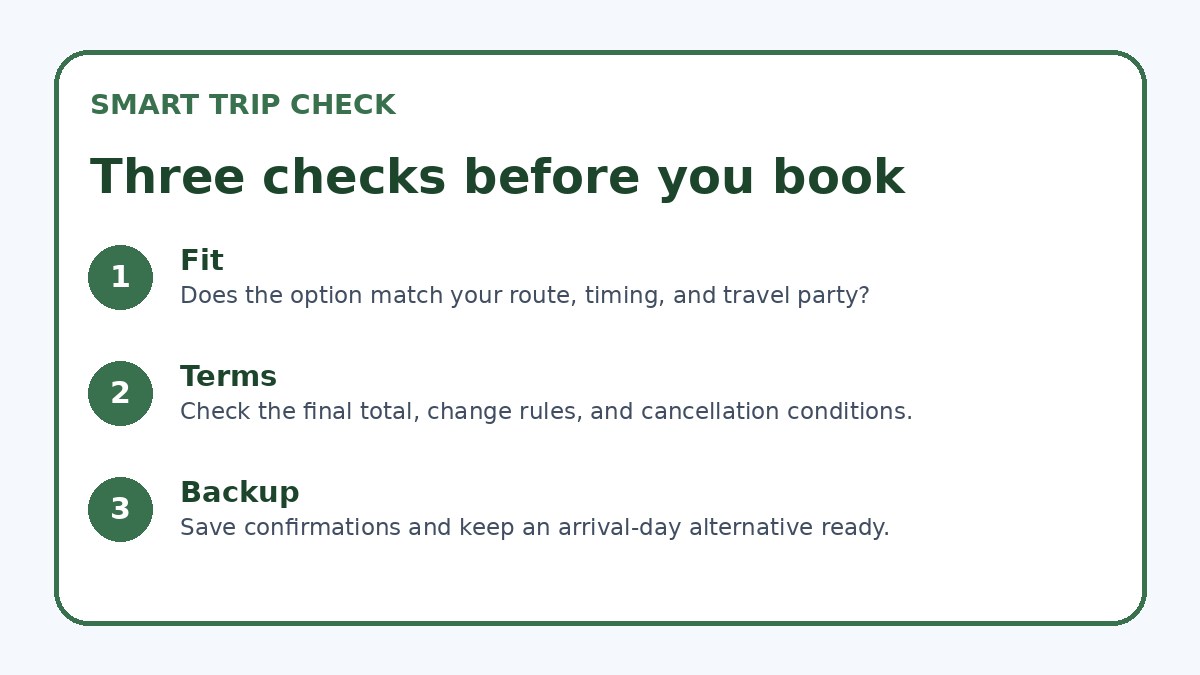
Safety, rules, and logistical checks before you book a car
Driving in Hong Kong follows left-hand rules and urban streets that can be narrow, especially in older neighborhoods and parts of the New Territories. If you decide on a Hong Kong car rental, verify the required driver’s license format and whether an international driving permit is accepted for your nationality. Confirm the rental provider’s insurance coverage levels, excess/deductible amounts, roadside assistance policy, and what actions to take in an accident or breakdown. These are provider-specific details you must check on the final booking page.
Also confirm cross-border and island rules: some rentals restrict travel to certain islands or forbid crossing into mainland China. Understand the fuel policy, the condition reporting process at pickup and drop-off, and whether the car comes with GPS or mobile hotspot options if you rely on navigation. Finally, ask about parking recommendations near your planned stops—parking availability and rates can change rapidly.
Before you book
- Map your daily itinerary and mark which stops lie within 10–15 minutes’ walk of an MTR station or ferry pier to assess transit practicality.
- If considering a car, verify driver license requirements, whether an International Driving Permit is needed, and any age restrictions on the rental provider’s final booking page.
- Check the rental’s insurance details: excess amount, what’s covered, roadside assistance phone number, and penalties for cross-border or island travel on the provider’s terms page.
- Estimate parking needs for each day—look up parking garages or on-street rules near major attractions and accommodation to avoid unexpected searches or fines.
- Compare door-to-door travel time for key days (public transport total time including transfers versus driving plus parking time) to see which option saves you time.
- Confirm luggage and equipment policies for ferries, minibuses, and smaller services if you plan to avoid driving but carry bulky items.
When public transport is the smarter solo choice and when driving wins
Choose public transport if your itinerary focuses on Hong Kong Island, Kowloon, or the most-visited outlying islands that are linked by regular ferries. The MTR, buses, and trams are time-efficient, frequent, and well-suited to solo travelers who prefer stepping off a train and walking to attractions. If you value low-stress movement, avoiding the responsibility of driving and parking will make your trip more relaxed and often faster during peak periods.
Opt for car rental when your plan includes rural hikes with limited transit, visiting multiple dispersed coastal villages in a single day, or carrying large equipment that is impractical on ferries or crowded trains. Bear in mind the tradeoffs: the freedom to set your own schedule versus the need to navigate, find parking, and accept parking fees. For many solo travelers, a hybrid approach—public transport for city days and a short local rental or guided day trip for remote excursions—offers the best balance.
Frequently asked questions
Can I drive a rental car in Hong Kong with my home country license?
Whether your home license is accepted depends on nationality and the rental company’s rules. Many visitors can drive using a valid foreign license or an International Driving Permit, but some nationalities must present additional documentation. Always check the rental provider’s final booking page and the local transport authority’s guidance to confirm what specific documents you must bring to pickup, and whether translation or notarization is required. Don’t assume acceptance until you verify the provider’s terms.
Is parking easy to find and affordable for solo travelers?
Parking availability and cost vary widely between dense urban districts and rural or suburban areas. In central Hong Kong Island and busy Kowloon districts, parking is limited and typically charged by the hour; in more rural New Territories areas you’ll frequently find more spaces though some trailheads and village streets are narrow. For a solo traveler, the time spent searching and paying for parking can outweigh the convenience of a car for city days, so plan parking locations near your primary stops and factor estimated search time into your decision.
How should I decide whether to rent a car for a day trip or use guided options?
Start by listing the exact destinations and check public transport connections and total travel time including transfers. If public transport connections are multi-step or infrequent, a car gives flexibility. Compare that to guided day-trip options which remove driving responsibilities but operate on fixed schedules; guided trips often include local knowledge and route planning. Evaluate cost, flexibility, and how important spontaneous stops are to you. If you need maximum freedom for remote spots or equipment transport, renting a car for specific days may be preferable.
Final planning note
For solo travelers, the pragmatic default in Hong Kong is to rely on public transport for most city-based and island sightseeing—its frequency, coverage, and convenience typically beat the logistical and cost overhead of driving. Reserve Hong Kong car rental for clearly defined needs: remote destinations poorly served by transit, carrying bulky equipment, or a flexible multi-stop day when transfers would be impractical. Before you commit, compare door-to-door time for your key days, verify rental insurance and license requirements on the final booking page, and plan parking. Many solo travelers find a mixed approach—transit for the city and selective car days—delivers the best balance of cost, freedom, and low stress.
Continue planning
Check current options and final conditions
Use the provider page to confirm live availability, the final total, cancellation terms, and every condition that matters to your trip.
This evergreen planning guide was created with AI-assisted drafting and a structured quality review. It does not display live prices, schedules, availability, visa guidance, or provider rankings. Verify current details before booking. Some links are affiliate links; we may earn a commission at no additional cost to you.