
Practical answer up front: when booking Dubai to Doha flights as a solo traveler, prioritize the ticket’s change and cancellation allowance, the fee structure (flat fee versus percentage), and whether the fare includes a voucher or credit for future travel. If you need to commit quickly, choose a refundable or low-fee-change fare even if the base cost looks higher; if you’re confident of travel dates, a low-cost nonrefundable ticket can be fine but check the provider’s rules for involuntary changes and schedule changes. Always verify the final fare rules on the airline or agency’s booking page before paying, because provider policies — including how they handle rebookings, bundled fees, and deadline windows for free changes — vary. For a quick comparison of live options, you can look at Trip.com but confirm terms on the carrier’s official page before you accept any penalties or credits.
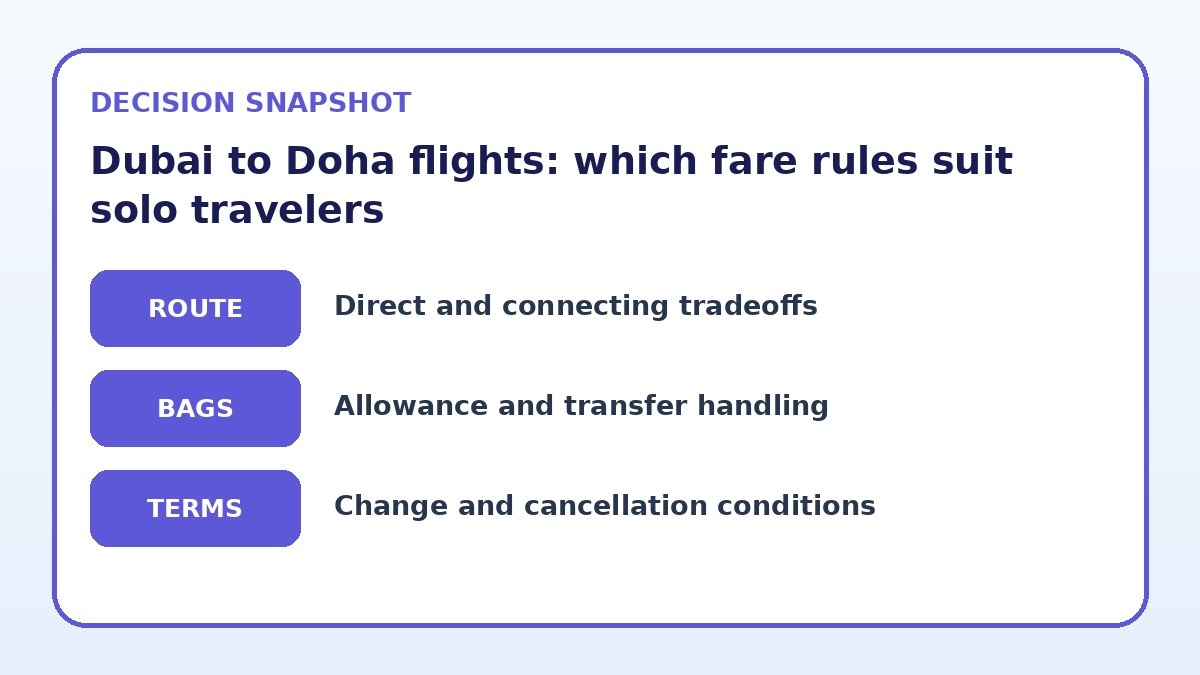
See current options before you compare the details
Availability and final conditions change. Open Trip.com now or keep reading for the practical comparison.
Understand fare categories and what flexibility they actually buy
Airlines and reseller platforms typically sort tickets into categories (basic, standard, flexible, refundable) but the label alone doesn’t tell the whole story. A “flexible” fare may allow same-day changes or waive change fees but still require you to pay any difference in fare; a “refundable” fare usually gives a cash refund but can carry the highest price. As a solo traveler, think about how likely your plans are to shift. If you expect a small chance of change, a mid-tier flexible fare that waives the penalty but charges fare differences often balances cost and protection well.
When comparing options, read the explicit bullet points under “changes” and “cancellations” on the booking page: look for whether changes can be made online or require calling the airline, whether there’s a time cutoff for free changes, and whether refunds are automated or require a claim. Note also whether the provider issues refunds to the original payment method, or only as travel credit — credits can be useful but less helpful if you don’t fly the same carrier again. Always capture a screenshot or save the confirmation that displays the fare rules at purchase; it matters if you need to contest a charge later.
Fees, credits, and how schedule changes are handled
Change and cancellation costs appear in two parts: a penalty (flat or percentage) and any fare difference when rebooking. For example, if you change to a more expensive flight you’ll pay the fare difference plus any change fee; changing to a cheaper flight might yield a credit or no refund depending on policy. Solo travelers should weigh the predictability of flat fees versus the potential variability of percentage fees, particularly when flying during volatile demand periods when fare spreads are large. Also check whether taxes and surcharges are refundable in the event of a cancellation.
Carrier-initiated schedule changes or cancellations are handled differently from voluntary cancellations. Many airlines will rebook you on the next suitable flight or offer a full refund without a penalty if they significantly alter your itinerary. However, the definition of “significant” varies; confirm the provider’s threshold and the remedies offered — immediate rebooking, refund to the original form of payment, or travel credit. If a smooth rebooking option matters to you, prioritize carriers or booking channels that commit to same-day alternatives and clear refund timelines, and keep the booking confirmation with rule excerpts handy.
| Approach | Best for | Tradeoff to check |
|---|---|---|
| Buy refundable/flexible fare | Travelers who value peace of mind and quick refunds | Higher upfront cost but simpler refunds and fewer disputes |
| Buy lowest nonrefundable fare | Confident travelers with fixed dates and limited budget | Lower price but penalties or no refund if plans change |
| Buy low fare + add change waiver | Those wanting a middle ground on cost and protection | May save money but check waiver’s exclusions and deadlines |
| Book through agent vs. direct with airline | Travelers who want booking support or compare many options | Agents may add fees and processing time; direct usually simplifies claims |
Ready to check the option that fits your plan?
Use your exact dates and traveler details so the provider page can show the current total and conditions.
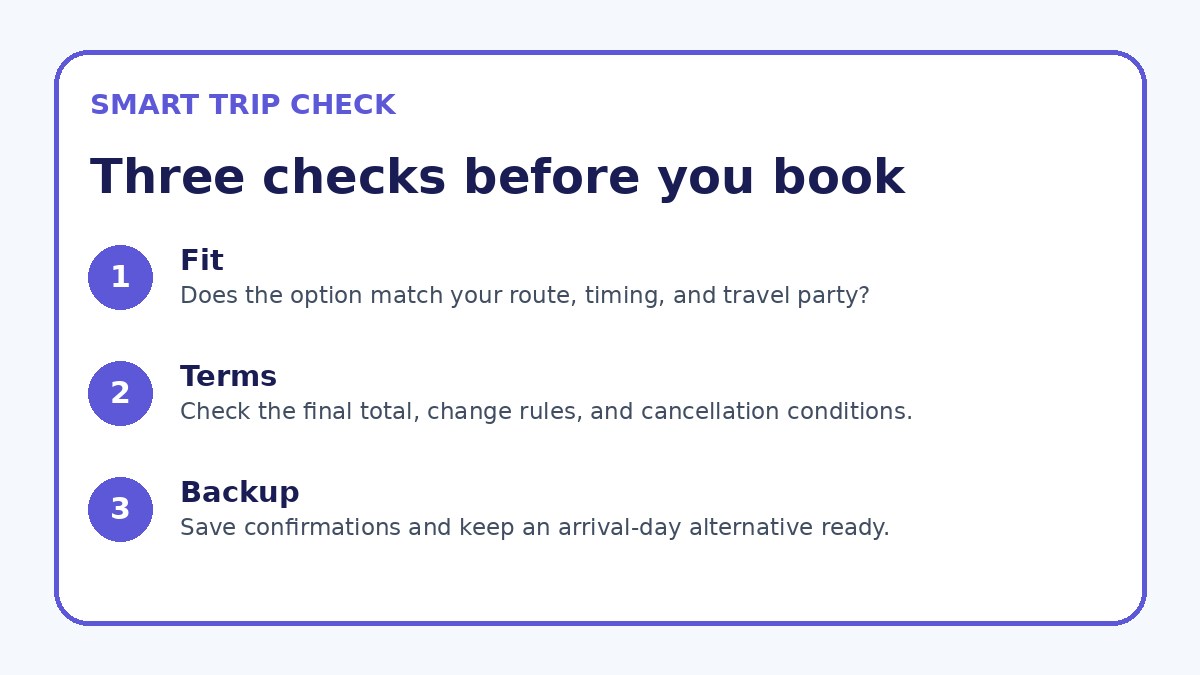
Booking channels and who controls your remedy
Whether you book directly with an airline, through an online travel agency, or via a consolidator affects how changes and cancellations are processed. Airlines generally control the fare rules and make final decisions about refunds; agents can facilitate changes but may add their own service fee or have different turnaround times. For solo travelers, direct booking often simplifies communication when things go wrong; you'll usually interact directly with the airline for rebooking or refunds. If you prefer an agent, check their cancellation handling and whether they will pass through airline refunds or issue store credit.
Before finalizing a booking, verify on the payment page who will hold the ticket and who to contact for changes — airline, OTA, or third-party. If a low-cost reseller looks cheaper, read its small-print about refund processing times and service fees. Keep in mind that during irregular operations (strikes, weather, regional travel restrictions) response times can be slower; choose a channel that matches how much post-sale support you want. Save contact numbers and the exact wording of refunds and change allowances from the confirmation email.
Before you book
- Read the fare rules on the final booking page and save a screenshot of the changes and cancellations section.
- Confirm whether cancellations produce a cash refund or travel credit, and note any time limits or expiration on credits.
- Compare flat change fees with percentage-based fees and estimate likely fare differences for alternate dates.
- Check who — airline or booking agent — processes refunds and the contact method for urgent changes.
- Verify carrier policies for schedule changes and the threshold that triggers a no-penalty refund or rebooking.
- If uncertain, consider a flexible fare or add a change-waiver product, then record any confirmation or waiver code.
Practical decision criteria for solo travelers
Start with three self-check questions: how likely are your dates to change, how much time can you tolerate sorting problems if something goes wrong, and how important is getting cash back instead of travel credit? If your plans are firm and minimal support is acceptable, a lower-fare, nonrefundable ticket might be fine. If there’s even a moderate chance of needing to change plans or you travel alone and want simple, fast service, a refundable or flexible fare removes a lot of stress, even if the upfront fare is higher.
Also weigh schedule risk: flights between Dubai and Doha can be frequent but may include different levels of service or routing; compare direct versus connecting itineraries if both appear. A direct flight reduces the chance of missed connections and complicated rebooking; connecting options might be cheaper but increase potential change complexity. Finally, keep a lightweight contingency plan — travel insurance that covers missed connections or independently purchased cancellation protection — and check whether it complements or duplicates the fare’s existing protections.
Frequently asked questions
If I buy a cheap nonrefundable ticket between Dubai and Doha and then need to cancel, what should I expect?
Expect limited options: most nonrefundable tickets won’t return cash, but policies vary. You may receive travel credit, a voucher, or a partial refund of taxes depending on the carrier and fare class. A change fee plus any fare difference typically applies if you rebook. Check the exact cancellation text on the booking page and note whether credits expire. If a schedule change or carrier cancellation caused your need to cancel, airlines often offer different remedies; confirm those specifics directly with the airline or the booking agent after receiving the official change notice.
How do airline-initiated schedule changes affect my ability to change or cancel?
Airline-initiated changes are treated differently from voluntary cancellations: if the carrier makes a significant schedule change or cancels a flight, many airlines allow free rebooking or a full refund to the original payment method. The definition of what’s ‘significant’ varies, so verify the carrier’s threshold and remedies on the booking page. Keep your booking confirmation; if you’re offered rebooking options that don’t suit you, you can request a refund. Always document the airline’s notification and the available remedies in case you need to escalate.
Should I buy travel insurance instead of a flexible fare for Dubai to Doha travel?
Travel insurance can complement or replace flexible fares depending on coverage. Standard trip-cancellation insurance often requires a covered reason for reimbursement and has claim windows and documentation needs; it may not reimburse for a simple change of plans. If you need broad, no-questions-asked flexibility, a refundable or flexible fare is more direct. If your concern is illness, missed connections, or specific disruptions, an insurance policy with clear covered reasons might be more cost-effective. Review policy exclusions, claim procedures, and whether the insurance duplicates protections already included in the fare.
Final planning note
For solo travelers on the Dubai to Doha route, the most useful booking decision is about flexibility, not solely price. Read the fine print on change and cancellation rules, confirm whether refunds are cash or credit, and understand the combination of penalties and fare differences that will apply if you rebook. Prefer direct bookings if you want faster resolution, and keep screenshots of the final fare rules at purchase. If you think plans might shift, leaning toward flexible or refundable options reduces headaches; if your dates are firm, a careful low-fare purchase paired with saved rule excerpts and insurance for specific risks can do the job. Finally, always verify any provider-specific details on the carrier or agent’s final booking page before you pay.
Continue planning
Check current options and final conditions
Use the provider page to confirm live availability, the final total, cancellation terms, and every condition that matters to your trip.
This evergreen planning guide was created with AI-assisted drafting and a structured quality review. It does not display live prices, schedules, availability, visa guidance, or provider rankings. Verify current details before booking. Some links are affiliate links; we may earn a commission at no additional cost to you.